NZ Wars: Waerenga-a-Hika is necessary viewing for healing the past
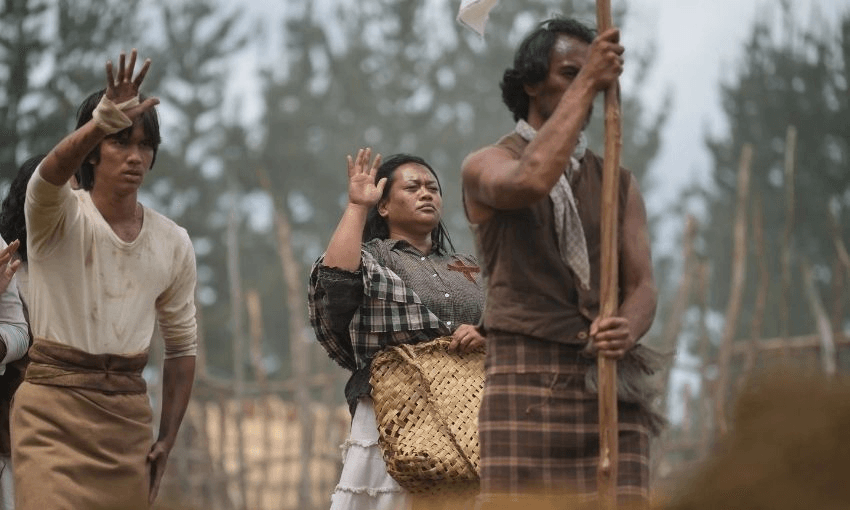
The latest episode adds another chapter to RNZ’s invaluable NZ Wars series.
I remember a friend from the East Coast once explaining to me that throughout the region, Pākehā lived inland, while Māori lived along the marginal lands of the coastline. It fascinated me, but also made a lot of sense.
As a delivery driver for one of the few home appliance stores in the area, my friend had travelled to several Pākehā-owned properties there, which he described as “rich mansions”. Many of the owners were hardly ever there – usually only a couple of weeks every year. Their belongings remain draped in dropcloths in between sporadic visits.
However, despite not maintaining a physical presence on the East Coast, these wealthy land owners controlled vast amounts of land. Exactly how these people came to own more than 23,000 hectares of whenua in the Tūranga district – commonly referred to as Gisborne – is the focus of NZ Wars: Waerenga-a-Hika, the latest in RNZ’s NZ Wars documentary series.
Produced by Annabelle Lee-Mather and Mihingarangi Forbes, the 40-minute documentary explores the Crown-controlled attack on the pā of Waerenga-a-Hika in November 1865, and subsequent “questionable deeds of cession and confiscation”. A combination of dramatic reenactment, 3D graphics and modern interviews tell a story of grief, survival and hope for Te Aitanga-a-Māhaki, one of the principal iwi of the region.
A sorrowful pure full of mamae rings out at the beginning of the show, before the scene cuts to a striking image of a woman dressed in a white dress standing in an awa, performing the ritual cleansing. The pain in her voice sets the tone for the documentary. Chants, haka and waiata relating to the tragic invasion and massacre of Waerenga-a-Hika feature throughout the documentary, each adding a layer of authenticity and depth to the kōrero being shared.
While historian Vincent O’Malley leads the retelling from an academic perspective, it’s the tears streaming down the face of the descendants as they speak about the pain the loss has caused them that reverberates. These are the people who have been forced to endure the intergenerational impacts of the fateful events of 160 years ago. Events that led to the death of 71 Māori, 11 Crown soldiers, exile of many, and the dispossession of tribal lands.
It’s hard to not share the feeling of helplessness held by the tribe. From the outset, it seems their fate is inevitable. We’re told that despite their best efforts to abide by the Crown’s requests in the lead-up to the siege – including asking members of the Crown-feared Pai Mārire faith to leave – Te Aitanga-a-Māhaki are still attacked.
“They had come for land, and they were going to take land,” one descendant says.
The merciless shooting of tribal members delivering a wero to the troops as they prepared to attack the kainga shares an eerie similarity with the first encounter between Captain Cook and members of his ship Endeavour. Vivid imagery of blood on a bayonet and kuia crying as they rub whenua on themselves, knowing they will likely never return, hit home.
As someone with whakapapa in the north, I’ve always been acutely aware of the losses iwi along the East Coast suffered in the early 1800s – particularly at the hands of Ngāpuhi. What I didn’t know much about was the internal wars within the region. According to the documentary, a large number of Ngāti Porou joined forces with the Crown as they prepared to attack Waerenga-a-Hika – a decision put down to being a matter of life or death.
I also already knew of the Pai Mārire faith and its leader Te Kooti, though this was very surface level compared to what I learned through the documentary. The brief history lesson on the faith and its followers highlights tension between the Crown and Māori. As someone with mixed Māori and European ancestry, I feel conflicted learning about the two groups living harmoniously, before Pākehā settlers begin scheming and provoking local Māori into a battle they would always struggle to win.
Stinging references to members of the faith as refugees and other iwi members as prisoners make me ponder what it must feel like to know your people suffered so immensely. Nearly 300 men, women and children were exiled to the Chatham Islands without trial, including Te Kooti. How they’ve managed to survive as a people – how they held on to hope that things would improve – is astonishing.
There was great irony in hearing one of the descendants talk about how the Pākehā settlers couldn’t entirely banish their iwi, as they needed workers for their allotted 50-acre sections. It highlighted the fact these people remain connected to their whenua, even if they don’t control it. While there was some solace in that, the fact they were serving the descendants of the people who effectively stole their land was not lost on me.
However, hope comes in many forms for Te Aitanga-a-Māhaki. Iwi leader Willie Te Aho appears briefly near the end of the documentary, but his words stick with me: “It is the people that’ll carry us out.” It speaks to the long-term vision the iwi has. As images of the 160th anniversary play on screen, Te Aho says “it’ll take us another 160 years” to achieve restoration of the people and the land.
Despite the hardships, deaths and displacement, it’s clear Te Aitanga-a-Māhaki are not using the events of 1865 as an excuse for failure. Instead, they’re using it as motivation to remain resilient in the face of adversity.
NZ Wars: Waerenga-a-Hika is essential viewing for anyone interested in our nation’s history. It’s only through acknowledgment and understanding that the wrongs of the past can begin to be corrected, and new paths formed for future generations. This documentary – and entire series – plays a small role in that journey.
NZ Wars: Waerenga-a-Hika is available to stream now on RNZ.