Why boil up is having a moment
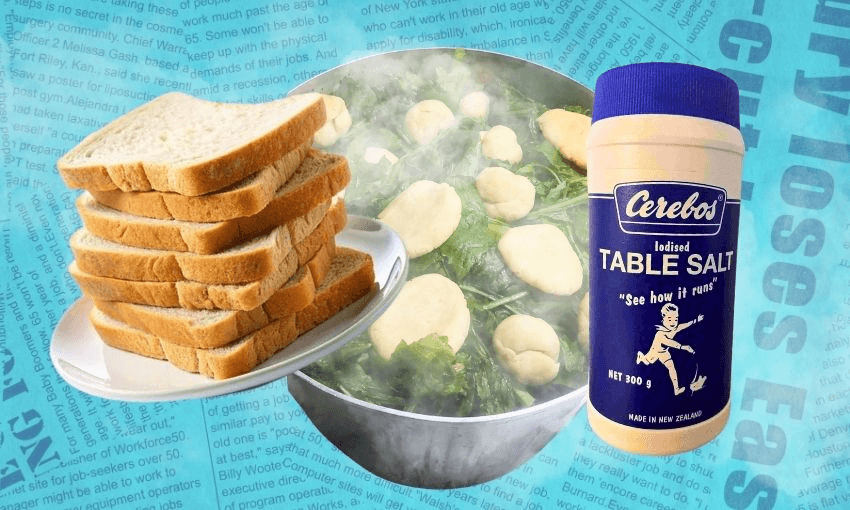
Traditionally considered a cheap and humble meal, the Māori staple is finding new fans, writes Ātea editor Liam Rātana.
There I was, watching Hilary Barry roll doughboys I knew would be far too dense. “She’s overworking the dough!” I shouted at the television as a Seven Sharp Matariki special played. I was already sceptical after I saw they were using a mirepoix of celery, carrots and onion for the boil up. I didn’t call it sacreligious – I’m aware people like to add depth of flavour to their stock – but I thought it was a bit posh.
Boil up is having a moment. It’s traditionally a simple and inexpensive meal of boiled meat, starchy vegetables and some kind of greens, but now gourmet versions of boil up are appearing at fancy restaurants – from Ben Bayly’s pāua and crayfish bisque boil up or pāua fish finger offerings at Ahi to Nancye Pirini’s crispy pork belly at Te Kaahu. Even politicians are posting themselves cooking a big pot of the good stuff.
My earliest memories of boil up are at my grandfather’s pensioner flat in Avondale. My dad and I would visit every Saturday, always arriving to a full pot of pork bones boiling away on the stove, a loaf of buttered white bread, and a big shaker of table salt. We’d sit down and slurp away, leaving no trace of meat on any of the bones.
Growing up, I always considered boil up a meal people ate out of necessity. Whenever I saw my dad’s big silver pot on the stove, I knew that’s what we were eating for breakfast, lunch and dinner over the next three days. I still have that pot, and plan to hand it on to my son one day. It’s a taonga for our whānau.
What was in the pot was determined by how much money we had that week. I knew we were doing OK if it was pork bones and watercress. If it was sausages or chicken pieces topped with cabbage, then we were probably a little skint. Beef brisket would hardly feature in our boil ups when I was a kid – likely because it was slightly more expensive than other protein options. No matter what though, every last piece of mushy potato and kūmara would be eaten.
It’s these memories of boil up that have stuck with me throughout my life. The comforting aroma of watercress and pork bones wafting through the air on a cold night. The blissful combination of slightly melted butter, white bread and flavourful juice exploding in your mouth. It always left me with a full stomach and a warm wairua. Boil up is Māori soul food.
However, the growth of New Zealand cuisine and the forging of an independent culinary identity has inevitably led to an evolution of Māori kai. While it was once renowned for its simplicity and inexpensive ingredients, traditional Māori kai has been elevated into something that can be served at a Michelin-starred restaurant as New Zealand chefs experiment and push the boundaries.
For me, it seems a large part in the rise of popularity of modern Māori cuisine can be traced back to two Māori sisters from Kawerau. Kasey Bird and Karena Bird won season five of Masterchef in 2014. Along the way, the duo elevated traditional kai Māori into fine dining creations – one memorable dish being a deconstructed, elevated boil up. It was a pivotal moment showcasing Māori cuisine. In 2016, renowned Māori chef Monique Fiso returned to New Zealand, launching pop-up dining series Hiakai, opening a restaurant of the same name in Wellington in 2018 and releasing a book to go with it in 2020. The book became a bestseller and Māori cuisine continued to grow in popularity.
At around the same time, the country was plunged into lockdowns and a little-known app called TikTok began its meteoric rise. With limited options for eating out, a growing food influencer scene and a hyper health-conscious population, New Zealanders soon began baking rēwana bread and perfecting their doughboy recipes.
Matariki was also quickly gaining in status, becoming a national holiday in 2022. As the country began honouring the occasion, they wondered what food to eat to mark it. Cooking a boil up is much easier than putting down a hāngī – and the perfect meal to have in winter time – so many began making it part of their Matariki tradition.
Add to the mix New Zealand’s Chinamaxxing obsession, and you have the perfect recipe for boil up gaining maximum popularity. Like Māori, many Chinese and other Asian cultures have long enjoyed boiled pork bones and watercress, notably in the Cantonese dish sai yeung choy tong. The health benefits of watercress and pork bone broth mean it is not only delicious, but also pretty good for you.
Nowadays, you will still find boil up being served in households around the country as a staple filler meal. But you’ll also find it on high-end restaurant menus. However you make yours – no matter the shape of your doughboys – the most important ingredient is love salt. Lots of it.
Liam’s boil up recipe
Here’s how I make my boil up. It’s a simple recipe that doesn’t require much effort. Be sure to cut your vegetables into large chunks so they don’t all turn to mush before the meat is cooked. If you’re using pork bones, including a few ham bones can add great flavour. If using beef brisket, I usually add some beef bones for flavour too. My doughboys are only ever round, however some prefer flat ones (or a combination of both). If cooking a vegetarian boil up, try adding vegetable stock for extra flavour and reduce cooking times accordingly. Adjust quantities depending on how many people you’re serving.
Ingredients:
Boil up
- Soft pork bones + bacon bones / beef brisket + beef bones (or whatever you feel like eg chicken pieces or sausages)
- Kūmara, peeled and chopped into large chunks (purple or red work best)
- Potatoes, chopped into large chunks
- Kamokamo, chopped into large chunks (squash, pumpkin or carrots can be used as substitutes)
- Watercress, pūhā or cabbage (others sometimes use silverbeet)
- Doughboys
Doughboys
- 3 cups plain flour
- 3 tsp baking powder
- 3/4 tsp salt
- 1.5 cups warm water or boil up broth
- 1-2 tbsp softened butter
Method:
Boil up
- Cover your protein in cold water. The water should only be just above the meat.
- Add an ungodly amount of salt (keep going until you think it’s too much and then add some more).
- Bring to a boil.
- Cover and turn down to a very gentle simmer (just a few bubbles) and allow to simmer for 2 hours.
- After 2 hours, add chunky kūmara, potatoes and carrots. Add another pinch of salt. Cover and continue to gently simmer for 30 minutes.
- While the vegetables are cooking, make the doughboys (recipe below).
- After 30 minutes, lay your watercress or cabbage across the top of the pot. Gently place your doughboys on top of the leafy greens so they can steam. Cover tightly and allow to cook for at least another 15 minutes. The meal is ready once your greens are just cooked and doughboys are light and fluffy inside.
- Serve immediately on a plate or bowl with a ladle of broth poured over the top.
Doughboys
- In a mixing bowl, combine flour, baking powder, salt and butter.
- Gradually add water or broth.
- Mix with a fork until the dough just comes together.
- Pinch off golf-ball sized pieces of dough.
- Roll very lightly and just smooth into round-ish shapes. Do not compact them – keep them airy.