Who gets to decide what happens to assets held on behalf of all Māori?
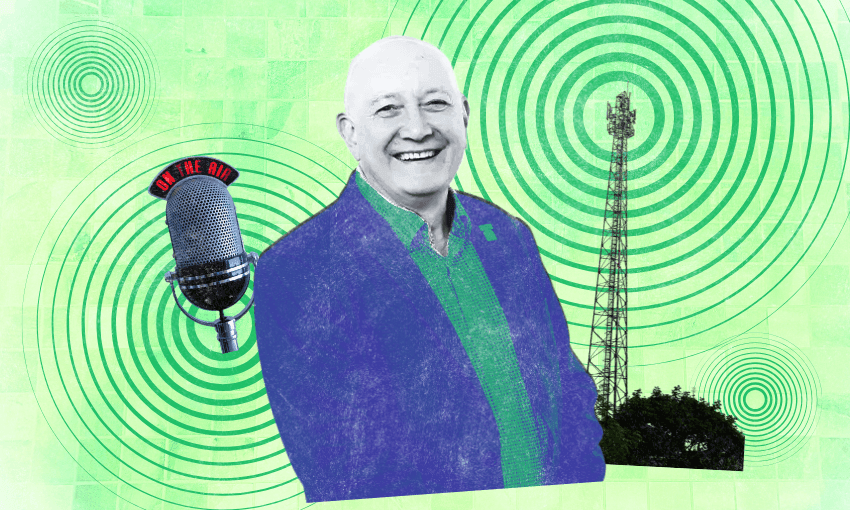
Antony Royal helped build one of the country’s largest Māori technology organisations. Now his successor must answer an increasingly difficult question.
I was recently scrolling LinkedIn when I came across a post promoting capital grants for Māori-owned businesses.
The organisation behind the scheme was Tū Ātea, a telecommunications entity established through the Māori spectrum claims. Successful applicants could receive up to $35,000 to help grow their businesses.
While I appreciate the benefits of supporting Māori entrepreneurship, the post left me wondering about something bigger – who decides how organisations established to manage assets on behalf of all Māori should spend their money?
It’s a question that extends beyond Tū Ātea. Over the years, various pan-tribal entities have been established to receive and manage assets secured through treaty settlements and Waitangi Tribunal claims. Te Ohu Kaimoana was established following the Sealord deal to manage Māori fisheries assets. Tū Ātea exists because of successful Māori claims to radio spectrum. Both were established to manage resources that, in one way or another, were negotiated on behalf of Māori collectively rather than a specific iwi or hapū.
Still, many Māori would struggle to tell you exactly what these organisations do, how they are governed, or how decisions are made about the assets they control. I wanted to know where they get their mandate from, who chooses their leadership, who decides what success looks like, and – perhaps most importantly – what are they actually delivering for Māori?
A few weeks after seeing the grant announcement, another LinkedIn post caught my attention. Antony Royal, the founding CEO of Tū Ātea, announced he would be stepping down at the conclusion of his contract in August.
Royal has spent more than 26 years advocating for Māori interests in telecommunications. The past six years have been dedicated to leading the Māori Spectrum Working Group and then Tū Ātea itself.
If there was anyone who could help me understand how organisations like Tū Ātea operate, I figured it would be him. A couple of weeks later, I found myself sitting across from Royal in the company’s Auckland headquarters.
From the outside, it’s an unassuming place. A tall white commercial building tucked away down a dead-end street just off the Mount Wellington Highway. Inside, it’s a different story. The first floor houses a modern office filled with people working on telecommunications infrastructure projects around New Zealand. Engineers, project managers, administrators and executives move between the latest telecommunications hardware and technology. It’s a long way from where the spectrum claims began.
Royal gives me a rundown of four decades of history.
The origins of the claims date back to the 1980s and efforts by Māori advocates to secure recognition and protection for te reo Māori and broadcasting. Those claims eventually evolved into broader arguments that Māori also held rights and interests in radio spectrum – the electromagnetic frequencies that make broadcasting, telecommunications and wireless internet possible. The outcomes were significant.
The claims contributed to the establishment of iwi radio stations, Whakaata Māori and Māori broadcast funding agency Te Māngai Pāho. They also helped create pathways for Māori participation in the telecommunications sector, including the eventual establishment of 2degrees.
For much of that journey, Royal was busy building a career as an electrical engineer. His work took him throughout New Zealand and overseas. Banks, councils and organisations in China all drew on his expertise. The person who eventually drew him into the spectrum kaupapa was his uncle, the late Whatarangi Winiata.
Winiata was a leading figure in the spectrum claims and a prominent advocate for Māori rights in telecommunications. Throughout our conversation, Royal repeatedly returns to his influence. At one point, he becomes visibly emotional. “I just wish he could’ve seen what we’ve built it up to today,” Royal says.
As our discussion moves from history to governance, I return to the question that brought me here: Where does the mandate come from? For organisations like Tū Ātea, the answer is complicated.
Royal says the mandate to negotiate with the Crown and manage spectrum-related assets emerged through decades of engagement involving groups like the New Zealand Māori Council, Ngā Kaiwhakapūmau i te Reo, Whakaata Māori, the National Māori Congress and, more recently, the Iwi Chairs Forum.
However, he also acknowledges there has never been universal agreement about what the ideal governance structure should look like. “The mandate for Te Huarahi Tika Trust came through the government, which the claimants at the time completely disagreed with,” he says.
Part of a groundbreaking agreement with the Crown envisaged the creation of legislation establishing a dedicated entity to permanently receive and manage spectrum assets. Work on that legislation stalled following the change of government.
Royal says discussions around governance have continued, with various models being explored. “It’s very difficult to design an arrangement that everybody’s happy with,” he says.
“Treaty settlements create behaviours that are not conducive to kotahitanga.”
The challenge facing Tū Ātea is not unique. It sits at the heart of many pan-tribal entities – how do you create governance arrangements capable of representing Māori collectively when Māori themselves are not a single political entity?
The issue becomes even more complicated when money enters the equation. Royal is candid when I ask about criticism directed at pan-tribal entities. “When we had no money, we could get on and do stuff,” he says. “People would give us the mandate: ‘You’re the expert – get on and do it, make it happen.’ Money changes people’s motivations.”
Royal’s highlighting a tension many Māori organisations face – the more successful they become, the more questions emerge about accountability, representation and who benefits. Those questions are particularly relevant for Tū Ātea.
In just four years, the organisation has transformed itself from a quasi-settlement entity into a significant telecommunications business. It has acquired four telecommunications infrastructure companies and expects to generate around $50 million in annual revenue, controlling approximately $100m in assets.
Royal says the objective has always been financial independence from the Crown. “We do not want to have to come back and argue for our budget for each year, knowing that government policies change, governments change, ministers change, priorities change,” he says. “We didn’t want to be one of those Māori governmental organisations that had to continue to fight to have access to resources.”
The focus on commercial growth has attracted criticism from some who believe pan-tribal entities can become too focused on building balance sheets rather than delivering benefits to the people they are meant to serve. “That’s a valid criticism,” Royal says.
His argument is that long-term financial independence is a prerequisite for delivering meaningful outcomes. Now that Tū Ātea has reached a level of scale, he believes it is entering a new phase.
The organisation is investing in scholarships, internships, education programmes, business workshops and Māori-owned start-ups. It is creating employment pathways into the telecommunications sector and building relationships with iwi around the country.
Royal thinks the next challenge is making sure more Māori know the organisation exists. A significant part of his successor’s role, he says, will be spending time in the regions, building relationships and growing awareness of Tū Ātea and the opportunities it hopes to create.
As the interview comes to an end, I reflect on the questions that brought me here. I still don’t know whether grants for Māori entrepreneurs are the best use of pan-tribal assets. I’m not sure there is a single answer that would satisfy everyone. What I do understand better is the complexity of the challenge.
Building an organisation that operates on behalf of all Māori is never going to be straightforward. Neither is deciding what success looks like.
What seems clear is that Tū Ātea is no longer simply a settlement entity managing a niche telecommunications issue. It is becoming a significant Māori commercial organisation with growing resources, influence and expectations.
Whether it can successfully balance those expectations while maintaining its mandate may ultimately define the next chapter of the spectrum story. But Royal will leave that challenge to somebody else. “All I hope is that we can find somebody who has the right skill set to take up this,” he says.