Fresh on the shelves: 11 new books worth checking out
A round up of recently published books that deserve a spell in the spotlight. Curated by books editor Claire Mabey, who has road tested them all.
The internet is teeming with bestseller lists and top 100 book lists and top 100 book lists in response; and Insta reels and #BookTok posts and stories and whatnot. Such lists and spruiks are wonderful, reflective, inspirational. They can also obscure, by sheer force of repetition, the enormous breadth of publishing that takes place very single month.
This new (aspirationally monthly) list is all about shining a light on hidden gems that deserve a moment in the spotlight and quite possibly some time in your hands and head.
Non-fiction
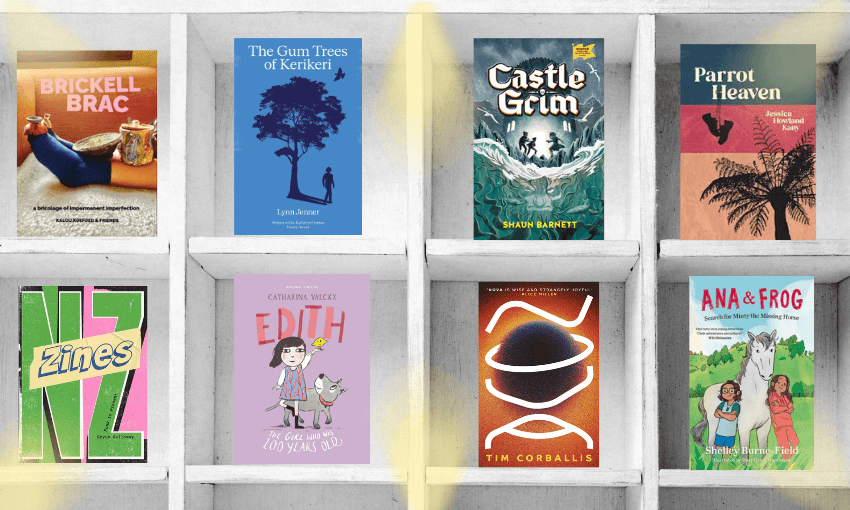
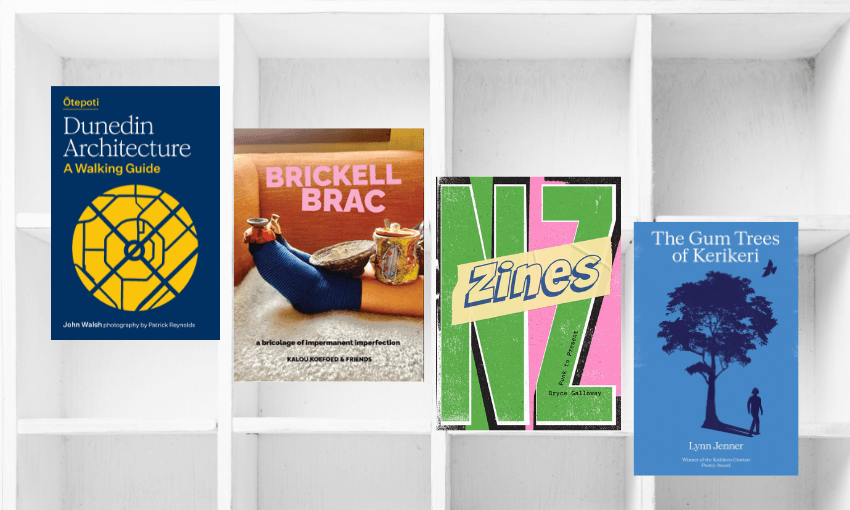
Brickell Brac: A bricolage of impermanent imperfection by Kalou Koefoed and Friends
This is a book that shows the mess and magic of art-making; about the coming together of collectives and the ongoing influence of potter Barry Brickell. Essays, interviews, abstractions, diary entries, artist bios, photos, photos, photos: this is a scrapbook, a lively memory machine that will energise anyone in need of a creative jolt this winter. It features maverick artists such as jeweller Karl Fritsch, potters Laurie Steer, Monique Robinson and Alison Low Madigan; and a foreword by artist and art writer Greg O’Brien who says: “if Barry Brickell’s poetry and railway at Driving Creek were a volcano then this book is what the eruption would look like.”
Brilliant work – thoroughly kicked me out of a glum, wintry mood and into a period of energetic, messy creativity.
Zines: Punk to Present by Bryce Galloway
Zines are the ultimate antidote to AI. I have a collection of them that I’ve both made and bought from various ZineFests that happen all around the country. They’re often weird in their idiosyncrasy – there’s no doubting they’re from the hands and brain of an individual – and range from meandering to urgent, whimsical to anarchic, or they’re an artefact capturing one prism of a live thing long passed. Unlike the perpetually iterative nature of machine world, zines are papery, hand-made, limited edition instances of art, culture, politics, protest. Bryce Galloway’s epic history of zines in Aotearoa nicely contextualises them with their historical movements and happenings, and balances text and image so you’re walking through visually as much as through commentary and interviews.
Like Brickell Brac above, Zines is lively and energising. It reminds you what you can do with pen and paper – how much power and freedom is there.
Ōtepoti Dunedin Architecture: A walking guide by John Walsh and Patrick Reynolds
When this book arrived I got a thrill. So small, so compact! You really can go walking around with it and notice buildings and learn about them and peel back the layers of time and space. It’s probably cheating putting this book into a hidden gems list because this one isn’t actually out yet – it’s coming early next month (you can pre-order it) – but guides are such humble publications that they can easily be overlooked. I am a big fan of Ōtepoti Dunedin and frequently wish I could teleport there. Part of my love for the place is to do with the gothic architecture that matches the weather. Walsh and Reynolds transport me there in concise fashion: full page pictures go with a full page of information, and it’s all fascinating. (There are guides to Te Whanganui-a-Tara, Ōtautahi, and Tāmaki Makaurau already out).
The Gum Trees of Kerikeri by Lynn Jenner
Lynn Jenner’s collection, which won the Kathleen Grattan Poetry Award 2025, reads like a series of small essays, each adding up to the whole. Over a series of numbered prose poems Jenner considers the land she lives on: the history, the shifts, the colours, the poet’s own activities and relationship to the place. It’s a soothing, curious, slim book that reads like a diary and is, in that way, terrifically compelling.
Fiction
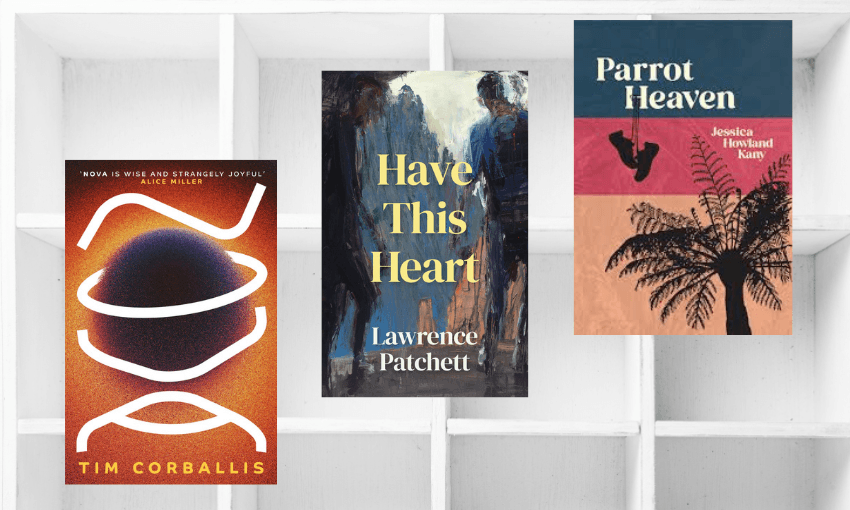
Parrot Heaven by Jessica Rowland Kany
Murder on Rakiura! This mildly hectic, inventive, crime-adjacent novel set on Rakiura (where the author lives) is a fun winter read. Rakiura librarian Maudie Sanderson turns detective when her father-in-law (called Dogbox) is arrested for the murder of a man whose body washes up on the beach with a date stamped into his forehead. Books, birds, cults, toddlers: they’re all here on this small island at the bottom of Aotearoa where plenty of shit goes down. Entertaining, funny and a punchy riff on the power of stories, too.
Nova by Tim Corballis
Now, I wouldn’t recommend this novel to just anyone. It’s a really brainy, unconventional sci-fi novel so I’m recommending it to anyone who is keen on brainy, unconventional sci-fi novels. If you loved Pip Adam’s Audition (up for an Ursula K. Le Guin prize for fiction!) then you should definitely give Corballis’s latest a go. The basic premise: Nova is a spaceship heading for an exoplanet because Earth is cooked. Over the course of the novel we learn about life on Nova via a collection of its inhabitants as well as through elements of the ship itself; and through an “interlude” we learn more about what went down on Earth. I have to admit I was tentative at first, but was quickly mesmerised by the voice of “The System” in particular: a beautiful contemplation of language and what it means to a machine fundamentally integrated into human life but without an “I” of its own (reminded me, in some ways, of the philosophical questions at the heart of the TV show Pluribus). This is a rewarding read and a strangely mesmerising, comforting one for these dark, slow, wintry nights.
Have this Heart by Lawrence Patchett
It’s been a great year, so far, for the short story, capped by Ingrid Horrocks’ All Her Lives winning the prestigious Jann Medlicott Prize for Fiction at the Ockhams. Lawrence Patchett’s collection could be called All His Lives given its focus on men – their work, what work means in their lives. Patchett is a precise and steady writer and each story feels well cared for, perfectly shaped and honed, not a superfluous sentence to be found. The men are ordinary: workers, fishers, fathers, dog owners, husbands, and they are all carefully, tenderly observed – we, the reader, watch what they do, how they react, and therefore discover who they are underneath. It’s a lovely collection and one that deserves to ride the wake of the current enthusiasm (also generated by the Sargeson Prize, closing shortly) on the short story form.
Children’s Books
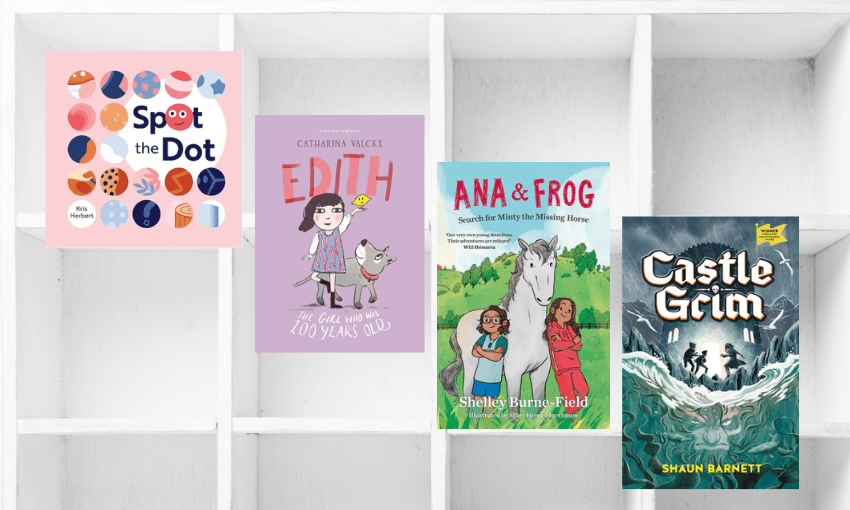
Spot the Dot by Kris Herbert
Dot is a spot but can’t quite figure out where they come from and therefore where they fit. This sweet, spotted hardback considers where Dot might have come from and considers language, images, objects along the way. A fun book to read aloud to little ones (who can spot Dot among the dots) and a wise lesson about defining your own spot in the world.
Castle Grim by Shaun Barnett
Shaun Barnett sadly died before he could see his terrific book in print. The Castle Grim is a rollicking dystopian adventure story set in a future Wellington after a couple of cataclysms have obliterated the internet, seen books become rare, left scant resources, inspired pirates to roam the seas and kidnappers to haunt the land. When 12-year-old Herman’s stowaway idea goes wrong he ends up at monastic-ish Castle Grim, a dire orphanage run by Brothers and Sisters and populated by a cast of kids. Cue daring escapes and tense times! Keen readers aged 10+ will have fun with Herman, whose plight provides lots of opportunity for conversation about society and compassion and what your values might be if capitalism collapsed.
Ana & Frog Search for Minty the Missing Horse by Shelley Burne-Field
Where has Minty, Whaea McCready’s horse, gone? Cousins (gorgeous, lively, quirky kids) Ana and Frog turn detectives and take on the case. This is Burne-Field’s third novel for young readers in as many years and is my favourite so far. The world is so familiar, so Aotearoa – the kids’ lives feel warm and lived-in. The illustrations scattered throughout remind me of novels I loved as a child – getting that visual hit every once and while between being absorbed by the daily, domestic world of the words. Perfect for kids looking for a bit of mystery, new characters to love and … horses!
Edith: The girl who was 100 years old by Catharina Valckx
My copy of Edith went missing the day I bought it. I found it a week later in my son’s bedroom: he’d stolen it, read it, and then told me all about it, cracking up. Edith is a Gecko Press book which means that it’s bound to be a bit different and unlike anything else. Valckx (who is Dutch but grew up in France) is master of the absurd and Edith’s story is funny, weird, poignant play on fairy and parental trickery. When Edith is little her parents take her to two fairies: one gives her the power to animate objects and the other ensure she’ll never age … There’s a talking lemon, a wise dog and a quest to reverse a well-intentioned but essentially terrible idea. Delightful.