The ultimate summer trip to Chugoku, the Japanese region with something for everyone
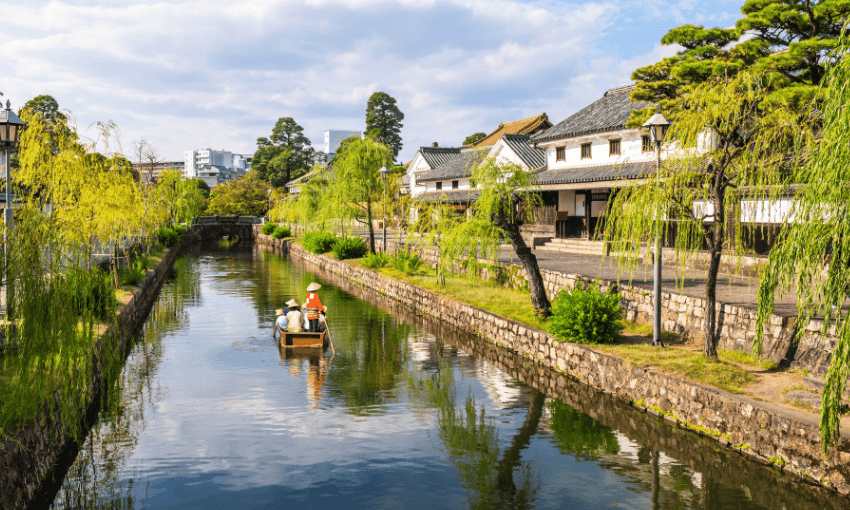
It’s home to ancient traditions, epic outdoor adventures and one of the world’s most important historic sites – and that’s just the start of the story.
Done Kyoto and Tokyo already and interested in a quieter side of Japan? The Chugoku region – five prefectures on the southwestern end of Japan’s main island – could be just the place you’re looking for this (northern) summer.
Into the wild
For cyclists, the Shimanami Kaido is a real bucket-list route. The beautifully maintained 70-kilometre path connects Onomichi in Hiroshima Prefecture, to the port town of Imabari in Ehime Prefecture. In between, the cycling route island-hops across nine bridges above the Seto Inland Sea. You can hire a bike at either end, stop for ramen at small restaurants along the way, and feel like you’ve earned a cold beer at the finish.
If you want to go up rather than across, head to Mt Daisen in Tottori Prefecture. This is the region’s highest peak and one of its best summer hikes. The mountain, a dormant stratovolcano (like Mt Fuji), is considered sacred; this has been a place of worship since the 8th Century. On a clear day, your climb is rewarded with views across the Sea of Japan.
At the other end of the topographical spectrum are the Tottori Sand Dunes, which stretch 16 kilometres along the region’s northern coast. Walk the dunes at dawn before the heat arrives, or in the late afternoon as the light turns everything gold.
Festival season
Chugoku has two summer festivals worth planning a trip around. The Kangensai, held at Itsukushima Shrine on Miyajima Island around midsummer, is among the oldest in the country. Held at nighttime, the Kangensai sees ancient court music – “kangen” means wind and string instruments – performed on lantern-lit ceremonial boats that move slowly through the water around the famous floating torii gate.
In Yamaguchi City in July, the Yamaguchi Gion Matsuri is a smaller, more intimate version of the famous Kyoto festival. The parade features the haunting Heron Dance, performed by dancers dressed as white birds; in the evening, goldfish-shaped lanterns set the streets aglow.
Art and culture
Don’t expect a run-of-the-mill botanic garden experience at Adachi Museum of Art in Shimane Prefecture: the garden is viewed only through the museum’s windows and framed openings, each one arranged so that the landscape reads as a living painting. The effect is meditative and exquisitely beautiful – so much so that the garden is consistently named one of Japan’s best.
Back on the Seto Inland Sea, the small island of Inujima in Okayama Prefecture is home to one of the region’s most distinctive art sites. The Seirensho Art Museum was built around the ruins of a copper refinery that operated here in the early 20th century – the brick chimney stacks and blackened slag heaps are incorporated into the building’s structure, so that you move between ruin and gallery without quite being able to tell where one ends and the other begins.
A short ferry ride away sits another of the area’s “art islands”. Naoshima is technically in Kagawa Prefecture rather than Chugoku, but it’s so naturally paired with an Inujima visit that the distinction makes little difference. The largest and most famous of the three art islands in the Seto Inland Sea, Naoshima is home to multiple museums, public art installations (including Yayoi Kusama’s iconic yellow polka-dot pumpkin), restaurants and guesthouses. British travel writer Pico Iyer calls Naoshima “the single most soul-expanding and essential place in the land”. Any art lover is likely to agree.
Where to stay
Chugoku’s ryokan culture is one of its strongest suits, and a night or two in a good one is worth treating as a destination in itself rather than just a place to sleep. The process is consistent: check into a tatami room, change into a yukata, eat a multi-course kaiseki dinner of seasonal local produce, and make your way to the onsen before bed. What varies is the setting.
Near Hiroshima City, Kinsuikan gets you up close and personal with Miyajima Island, a World Heritage Site. Once the day-trippers leave on the last ferry, Kinsuikan guests have Itsukushima Shrine’s stone paths largely to themselves. In Shimane Prefecture, Shiraishiya at Tamatsukuri Onsen has been welcoming guests for three centuries, and sits close enough to Izumo Taisha Grand Shrine – one of Japan’s most important Shinto sites – that an early-morning visit before the crowds arrive is easily managed. In Tottori Prefecture, Mansuirou at Misasa Onsen draws visitors for its radon springs, said to be among the most potent in the world. Book all of these ryokan well in advance; summer books fill up fast.
Start your Chugoku trip at the essential Hiroshima Memorial Peace Park, then fan out from there. Give it a week, and Chugoku will give you back considerably more.