Beyond the beach: Fiji’s best hiking adventures
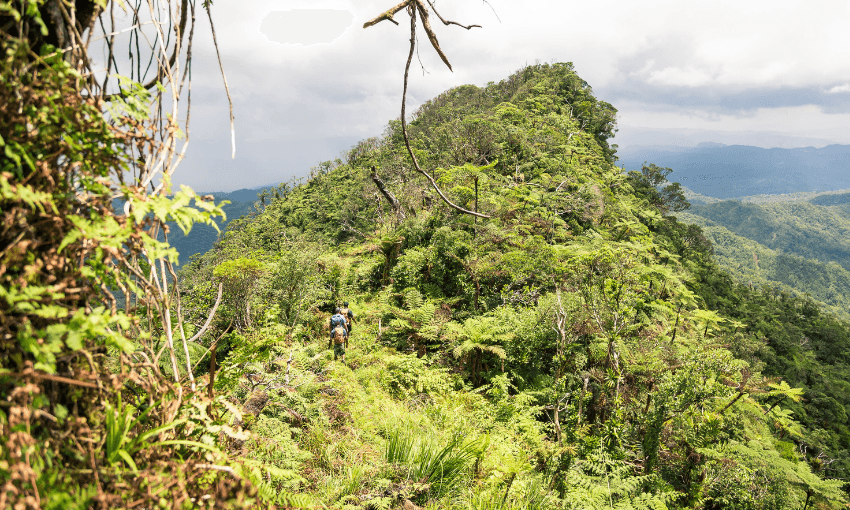
New Zealanders know their way around a great walk – and as it turns out, so does Fiji.
Think “Fiji holiday” and you probably picture lounging by the pool or snorkelling coral reefs. But lace up your hiking boots and you’ll discover a world beyond the resorts – lush cloud forests, spectacular waterfalls and remote villages brimming with Bula spirit.
“We had one guest recently who had been to Fiji several times,” says Marita Manley, founder of Talanoa Treks. “She said, ‘I thought I knew Fiji, but I had no idea.’”
The idea to bring guided hikes to the rugged highlands came from the communities who live there, she says. The social enterprise Talanoa Treks was created to make this happen. “Almost 90% of the land in Fiji is Indigenous owned,” Manley says. “That makes hiking here really special. We are here at the invitation of the landowners.”
Manley and the Talanoa Treks team have a wealth of insider info – here’s what you need to know to explore Fiji by foot.
Trek the highlands
High above the palm-fringed beaches, the interior of Fiji’s main island Viti Levu is a spectacular setting for an immersive adventure across jungle-clad volcanic ridges and via villages way off the beaten track.
Talanoa Treks offers three- and four-day itineraries with trip leaders like Ratu Peni, AKA Ben. Ben is in charge of safety, guiding and making sure visitors are schooled up on cultural protocols when they enter villages. He’s also a master storyteller, bringing to life the rich highland history – it was the site of Fiji’s last stand of resistance against colonisation, and remains a stronghold of traditional culture.
Manley describes the hiking as “technical” with hills and river crossings galore – although you only have to carry a day pack and you’ll be the only group on the trail. Along the way, there are swimming hole stops, including one with a natural water slide. The four-day option includes a steep climb through fern-laden cloud forest to the summit of Fiji’s highest peak, Mount Tomaniivi. Here, you might encounter some of Fiji’s endemic birds – like the duetting giant honeyeater, which sounds like a car alarm.
Part of the hike winds through agricultural land, where you can see crops planted by local villages. Then, you’ll feast on the fresh-picked bounty from these farms during overnight stays in the Naga and Nubutautau villages. “I guarantee it’s nicer than a freeze-dried packet meal,” Manley says.
Alongside the cuisine, these stays open a window to local culture, with hikers experiencing kava ceremonies and sleeping in the community hall – “basically a big DOC hut that’s much friendlier”, Manley says. The highlands encourage you to disconnect – no electricity, and no noisy technology – and connect with nature and people instead.
Beyond the centrepiece highland hike, you can find shorter daywalks across many of Fiji’s islands. Most walks carry an entrance fee to support the local community, with guides available for hire.
Summit Mount Batilamu
Mount Batilamu rises 1,100m above Nadi, and is “the peak everybody who’s flying into Fiji will see on their arrival,” says Manley.
Located in Koroyanitu Heritage Park, it’s a steep climb to the top – but not as muddy and slippy as the highland trails. You can opt for a shorter stroll instead, exploring a waterfall and swimming hole on the lower slopes. The summit hike can be done in a day, or there is a simple hut at the peak for overnighters keen to enjoy the sweeping sunset and sunrise views across to the Mamanuca and Yasawa islands.
Chase waterfalls on Taveuni
On Taveuni, Fiji’s “Garden Island”, find a “choose your own waterfall adventure” in Bouma National Heritage Park.
The Tavoro Waterfalls track has three to explore, starting with an easy 10 minutes along a flat path to the first falls with the perfect pool for a dip. The second and third waterfalls involve an uphill climb along a well-signposted path.
The Lavena Coastal Walk winds for 10km (out and back) alongside beaches, before crossing a creek and heading up steep steps to the Wainibau Falls, viewed through a perfect rocky frame. Swimming past the rock ledges to the interior pool will reveal a second, hidden waterfall.
Shorter adventures on foot
The Sigatoka Sand Dunes National Park – an important archaeological site for ancient pottery and early human remains – is home to two walks on the shorter side. Choose a pithy 2km stroll through grassland and forest, or extend your walk up to the dunetops for coastal views.
Inland from the Sun Coast, a short 1.5km undulating walk from the remote Nabalesere village will land you at the base of Fiji’s highest waterfall, Savulelele, cascading an impressive 70 metres down mossy cliffs.
When to go and what to expect
Once the hot, rainy season concludes, April to November offers the best season for walking. But, being a tropical island, you can still expect the weather to be humid and sticky, and you’ll likely sweat buckets. Carrying plenty of water is a must.
You also shouldn’t underestimate the distances, Manley warns. While 12km might sound like a cruisy few hours on a New Zealand walk, in Fiji it can take much longer – due to the heat, the hills and the unconstructed nature of the trails, which can be muddy and slippery. Manley recommends wearing light trail runners that dry quickly, especially for walks with lots of river crossings. There aren’t really any dangerous critters to watch out for, except maybe stinging nettle.
What you will find, though, is a side of Fiji rarely experienced by those who stick to the coasts. Fascinating stories, banger views and heartwarming village hospitality. The chance to “talanoa” – which literally means to talk or share stories – is one of the best parts of a Fiji hike, Manley reckons. “It’s moments you interact with people on a personal or genuine level. Maybe chatting with the ladies in the kitchen washing dishes after dinner, or sharing coffee with a village elder. Or on the trail, you get a lot of time with the guides who are from those communities.” That famous Fijian friendliness goes deeper when you slow down to walking pace.