Huffer, the AI accusation and the question that remains
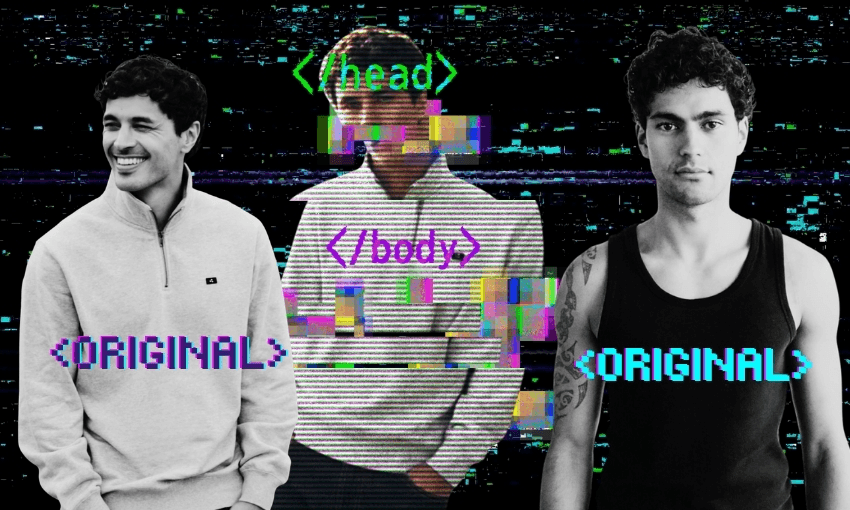
Aside from posting on Instagram, what can you do if you spot an AI image that you think looks like you?
By now, we all know who New Zealand model Elijah Timmins-Scanlon is and that he has beef with Huffer. But what no one seems to know is what you can do if you find an AI image that you think looks like you.
We know what Timmins-Scanlon did. He saw an image posted by Huffer that he thought resembled him and his brother, who have both modelled for the brand, and went on to post on another of the label’s pictures “yo that AI model actually goes hard”. Then he outlined his AI theory in a series of videos on Instagram.
We know what Huffer did. It blocked him, then its managing director, Kate Berry, told RNZ any likeness was a “coincidence” and The Post that Timmins-Scanlon “maybe should just think about why he’s not getting work”. She refused to say whether the image in question was AI-generated. She told The Spinoff, via email, that she was in Japan “taking Huffer to the globe” and wouldn’t comment further unless Timmins-Scanlon made a complaint to Huffer, but she did say: “Shame on the broadcasters and journalists for fueling [sic] this”.
As the scandal rolls on – Timmins-Scanlon says his Instagram account had been disabled and he has started a new account to keep posting about the issue – the question it has prompted remains: What can you do if you spot an image that looks like you?
Intellectual property lawyer Narly Kalupahana is upfront. “This is a really, really difficult area because the Copyright Act doesn’t explicitly deal with AI.” Nor does New Zealand have any existing copyright protection for a person’s image or likeness. Trademarking a likeness is difficult. “You’ve got to register it for each thing that you don’t want others to be using it for,” he says. For example, you have to specify you’re trademarking your likeness for clothing, movies or advertising. So, just trademark your likeness for everything, right? Not so fast, he says. “You also have to be using it yourself [for that specific purpose].” This is happening overseas, with Matthew McConaughey and Jeremy Clarkson both trademarking their faces.
What about that oft-cited rule that if you change something by 10-20% you get around copyright law? “It’s all made up,” Kalupahana says. Instead, infringement rests on whether a substantive part has been copied.
There’s more: New Zealand does not have strong personality rights – the right to control the commercial use of your identity – in the way some countries do. The closest we get to it is the Fair Trading Act; if your image was used commercially then “you could argue it’s a false endorsement”.
The upshot is it’s the wild west. “The toughest thing is that legislation is simply not keeping up with the real world and the politicians we’ve got legislating don’t really understand it,” Kalupahana says.
Models don’t need to give up, though. Kalupahana says the way to tackle AI is through contracts. “I think the thing that can stop all of this is really good, tight agreements from the modelling agencies.”
Usage agreements – how and where images from a photo shoot will be used – are a critical part of a booking and it’s an agency’s job to negotiate on behalf of their models. Agreements protect a model’s likeness (that wording is explicitly used in many agency contracts) and ensure the agreed fee is appropriate to the scope of the use, the size of the brand and work involved to create the images.
Katherine Lowe is well schooled on this. The co-founder of model agency Super, updated all terms and conditions after H&M introduced “digital twins” – versions of real-life models, who retained ownership of their synthetic selves – in 2025. Lowe says agreements must be detailed to be fair, and she thinks New Zealand could do with tightening these, like agencies in other countries do. “You’re paying for where [the model’s image] is going and for how long, like six months on a billboard or in-store on a printed card or in the newspaper.”
Regardless of the agreement, though, AI is a threat, she agrees. An AI likeness can do two shoots in one day and doesn’t need to get on a plane. “It’s not ideal for the models,” says Lowe. “I think it’s even worse for shooting teams [stylists, photographers and makeup artists] than it is for the models at the moment.”
A fight back is underway. International advocacy organisations like The Model Alliance and Models Trust have been sounding the alarm about the potential for the fresh exploitation of an already “vulnerable” workforce. The Fashion Workers Act, progressing through New York state legislature, includes the consent and usage of a “digital replica”. The British Fashion Model Agents Association has petitioned the UK government over the non-consensual use of a model’s likeness with AI and is developing a code of conduct that, while not legally binding, would set a precedent. Meanwhile, Timmins-Scanlon says brands should declare AI-generated images.
Will any of this dissuade brands? Some seem happy to be up-front about their usage. In 2023 Levi’s announced a partnership with Lalaland.ai to create AI-generated models for improved “diversity” (that didn’t go down well). Guess used AI models, created by AI marketing firm Seraphinne Vallora, for advertisements it ran in Vogue magazine and the Financial Times last year. And this week New Zealand-founded brand Salasai unveiled a “digital muse” called Tia, tagging its posts with an AI disclosure label.
Is it wise to use AI? Time will tell but Kalupahana advises brands to tread carefully. “A lot of this AI stuff is not illegal and a lot of this stuff is not explicitly covered by legislation, but you can cause your brand huge damage by going down that path.”