Survivors’ trust in police has taken another blow. If it’s to be rebuilt, what happens next is crucial
When failures keep emerging at the most senior levels of an organisation, the problem is not a few individuals. It is a culture in which the safety of institutions is still, too often, weighed above the safety of victims, write Sandra Fuller and Kyla Rayner of Wellington Rape Crisis.
Every week, survivors of sexual violence sit in our rooms and weigh a decision that will shape the rest of their recovery: whether to report to police. That decision is theirs alone. Our role is to support them with the information and space to make it on their own terms – never to steer them. But we see, up close, what the decision costs. Reporting means entrusting a system with the most painful truths of a person’s life, and it is the system that asks that of them.
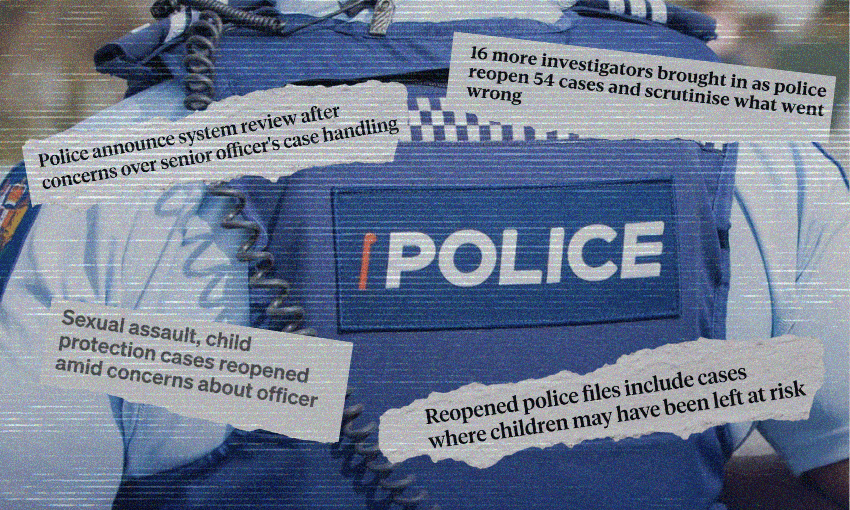
This month, that trust took another blow. Fifty-four cases – 40 involving child protection, 12 involving adult sexual assault – have had to be reopened after concerns about how they were handled under the oversight of a single senior officer. Nearly a thousand files were reviewed before those 54 were identified. None had gone to prosecution. Police cannot rule out that alleged offenders went on to harm others while those files sat closed.
Sit with that for a moment. Behind each of those 54 files is a person – many of them children – who did the hardest thing. They disclosed. They trusted. And then, for years, nothing happened.
At the same time, the police commissioner himself is under investigation by the Independent Police Conduct Authority following complaints from two separate women. Those allegations are unproved, and he strongly rejects them; due process must run its course, for the complainants and for him. But we cannot pretend the context away. This is the same organisation whose former deputy commissioner was convicted last year of possessing child sexual exploitation material – and whose leadership, the IPCA found, had interfered in the handling of sexual misconduct allegations against him while the woman who came forward was prosecuted. The commissioner, now under investigation, was the one who called that conduct inexcusable.
And how has the government responded? The police minister declared within hours that the commissioner “still holds my confidence”, describing him as outstanding and doing a very good job – adding that police officers attract complaints and the IPCA is the place for them. We understand that ministers must avoid prejudging investigations. But that caution should cut both ways. Publicly vouching for one party while two women’s complaints are still being investigated is not neutrality; it is a thumb on the scale. Every survivor weighing whether to complain about a powerful person hears that message loud and clear: the institution has already decided whose account is credible. If “let the process take its course” is the standard, it must apply to endorsements as much as to criticism.
We take no pleasure in writing this. Wellington Rape Crisis works alongside dedicated police staff every week – specialist investigators who do this gruelling work with skill and genuine care, and who will be as gutted by these revelations as anyone. This is not about individual frontline officers. It is about what happens, again and again, at the level of systems and seniority.
Because here is what we know from more than four decades of walking beside survivors: a pattern is not a coincidence. When failures keep emerging at the most senior levels of an organisation – in how complaints against powerful men are handled, in how files quietly stall, in who gets protected and who gets prosecuted – the problem is not a few individuals. It is a culture in which the safety of institutions is still, too often, weighed above the safety of victims.
We have been told that this is an isolated incident. Survivors have heard that before. They heard it after the Bazley inquiry. They heard it after McSkimming. Each time, they are asked to extend their trust again on the strength of an internal audit and a reassuring statement. Trust is not rebuilt by press release. It is rebuilt by what happens next – to every one of those 54 people, and to every survivor who reports from today onwards.
So, this is what we are asking for.
Genuine, survivor-centred contact with everyone affected. Being told years later that your case is being reopened can rip a wound back open. Every person affected must be offered specialist, independent support – not just a phone call from the organisation that failed them – and control over how, when and whether they engage with the reinvestigation.
Transparency that goes beyond the current employment process. The public reassurance that quality assurance systems are sound sits uneasily beside the fact that these cases went undetected for up to three years. We need independent scrutiny of how sexual violence files are supervised, closed and audited nationally – and the findings made public.
Accountability at the top, whatever the findings. The investigations into the commissioner must be demonstrably independent, thorough and free of the interference that so disgracefully shaped the McSkimming case – and free, too, of political signalling about the outcome before the process has run. Survivors are watching how these complainants are treated. So are the women and children who have not yet decided whether to come forward.
Investment in the specialist community services survivors actually turn to. When institutional trust fractures, survivors come to services like ours – and to our colleagues across the motu – often instead of, or long before, they go to police. Those services remain chronically underfunded. If the government is serious about survivors’ access to justice, that is where the commitment must show up.
To any survivor reading this who is shaken by these headlines: what happened to you matters, whether or not a system responded the way it should have. You are entitled to support that is yours, on your terms, whether or not you ever engage with police. We are here, we believe you, and we are not going anywhere.
The measure of these next months will not be how well police manage the story. It will be whether a child who discloses abuse in 2026 can be certain – not hopeful, certain – that someone will act. Survivors owe the system nothing. The system owes them everything it has promised: to listen, to investigate, and to be worthy of the trust it asks for. It is long past time it delivered.