When women are ignored and disbelieved every day, what options do we have left?
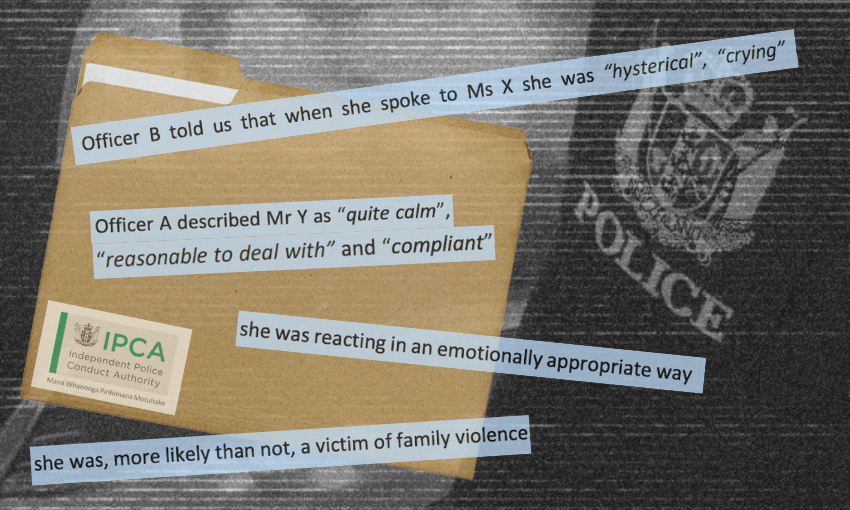
An IPCA report released this week reveals how police, doubting a ‘hysterical’ woman’s claim that there was a protection order in place against her ex, decided she was in fact perpetrating ‘psychological abuse’ against him. It’s a pattern that goes back years, across the criminal justice system, writes Michelle Duff.
These days, when your abuser turns up at your house even though you have a protection order against him, it’s hard to know what to do. Should you:
- Call the police and hope they turn up, even though they’re pulling back on responses to family violence?
- Call the police and hope they side with you?
- Call the police and hope they don’t decide you are hysterical, believe the perpetrator, issue a police safety order against you and kick you and your kids out of the house for 24 hours while allowing him time to “get his stuff?”
- Run.
These days, it’s hard to know whether to gasp when confronted with the news that police let an ex-partner into a woman’s home even though a family court judge deemed him dangerous enough to issue a protection order against him.
It’s hard to know if screaming into the abyss is the right response while reading that police didn’t believe the woman had a temporary protection order issued in court that day – despite her showing them on her phone – that they assessed the man as being “calm” (read: rational, believable) while she was “really panicked” and “hysterical” (read: making it up).
It truly is a mystery as to whether throwing yourself on the floor, pounding the ground with your fists and tearing your hair out is the right level of horror at discovering that not only did the police refuse to believe the woman was at risk, but considered her behaviour “psychological abuse” and issued a police safety order against her so that her ex could more easily enter the home and remove items from it.
How hysterical is too hysterical? In this case, the woman called the police. She was visibly upset. Some might consider this a natural reaction to the arrival of someone who has allegedly harassed, sexually assaulted and threatened you, and/or frustration at being disbelieved. The police did not. Her clear distress was dismissed, and she and her kids were locked out of their home for 24 hours.
When she laid a complaint, police continued to back themselves, finding no fault in two reviews of the incident. It took an Independent Police Conduct Authority (IPCA) investigation released this week to unequivocally find the wrong decision was made.
I occasionally like to give cops the benefit of the doubt, like when they say Jevon McSkimming was an anomaly and there’s great work being done on the front line, or when former top cop Andrew Coster uses the word “hysterical” to describe McSkimming’s accuser in an interview. Maybe these things aren’t indicative of the criminal justice system, I think, hopefully.
This IPCA report puts paid to that. It shows an absolute lack of fundamental knowledge about the dynamics of family violence among those tasked with keeping us safe.
It’s a known tactic of perpetrators to make it look like it is the survivor’s fault. There are even letters for it: DARVO, which stands for “Deny, Attack, and Reverse Victim and Offender.” (This means denying any wrongdoing, attacking or undermining the person making the accusation, and assuming the role of victim, while turning the true victim into the offender.)
The police’s own policy states this. “Predominant aggressors are often charismatic and manipulative and will often have excuses for their bad behaviour,” the IPCA report quotes. Yet it turns out hoodwinking the cops is quite easy, as long as you’re the kind of guy who seems like he’d be good for a yarn over a pint down at the clubrooms. Poor dude, just trying to get his washing machine!
It also shows a deadly disconnect between the family court and the police. The without-notice protection order was issued that day – it’s meant to be served on the perpetrator first, a delay issue already raised by family violence researchers – and didn’t show up in the police system. It took five days to be issued.
At the time, the police decided to just go with their gut.
How is this working out for us? There were 133 women and girls killed by their current or ex-partners in New Zealand between 2009 and 2022, according to data from report Femicide: Deaths resulting from gender-based violence in Aotearoa New Zealand.
That’s around one woman killed every month. The government’s dedicated taskforce into domestic violence is about to be slashed by one in three of its workforce, the same number of women in Aotearoa who will be abused by an intimate partner or sexually assaulted in their lifetime. While its most recent report cites data suggesting overall rates of domestic violence are slowly trending down, incidents are increasing, meaning some victims face greater danger.
Gender-based violence is steeped in misogyny, in the belief that men are entitled to women’s bodies, and that women deserve it. This IPCA report confirms what the stats tell us: that women continue to be ignored and disbelieved every day, including by the police. This isn’t just a one-off incident; it’s a pattern that goes back years, across the criminal justice system; it explains why women have to pay to get their own protection orders, or are killed by ex-partners who harassed and stalked them for weeks before stabbing them 55 times in front of their children.
It explains why women continue to die at the hands of men, and why we as a country sit back and let them do it.
It’s hard to know what to do. As we can see, crying doesn’t work. I’m not sure what’s left.
Oh, that’s right. RUN.