Vale Sam Neill, 1947–2026
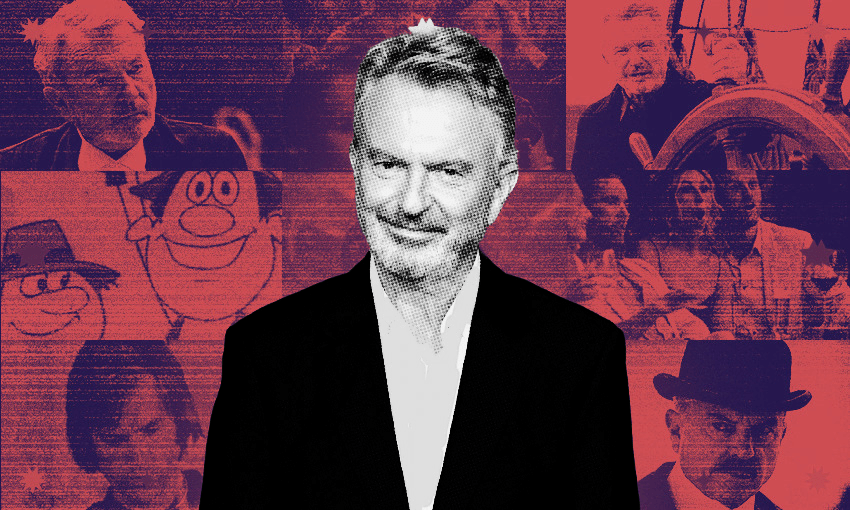
The world-renowned New Zealand actor has died in Sydney, aged 78, writes Henry Oliver in today’s excerpt from The Bulletin.
To receive The Bulletin in full each weekday, sign up here.
Sir Sam Neill, the New Zealand actor who found global fame as palaeontologist Alan Grant in Jurassic Park, has died in Sydney, aged 78. His family announced the news in a statement carried by RNZ, saying he was “surrounded by family and passed with the dignity that has characterised his whole life.” The loss was “sudden and unexpected,” the family said – but they noted Neill remained cancer-free at the time, months after he announced in April he had beaten the rare blood cancer he’d been treated for since 2022.
From Sleeping Dogs to Jurassic Park to Hunt for the Wilderpeople
Born Nigel John Dermot Neill in Northern Ireland in 1947, he moved to Christchurch with his family as a child and adopted the name Sam at school. His breakout came in Roger Donaldson’s Sleeping Dogs in 1977 – the first feature made in New Zealand in over a decade and heralded as the rebirth of the local film industry – before international roles in My Brilliant Career and Reilly, Ace of Spies built his reputation and well before Spielberg genetically engineered dinosaurs made him a household name in 1993.
That same year he starred in Jane Campion’s Oscar-winning The Piano, and he later found a new generation of fans as Uncle Hec in Taika Waititi’s Hunt for the Wilderpeople, New Zealand’s highest-grossing local film at the time of its release. On television he played the title role in Merlin and the corrupt Chief Inspector Chester Campbell in Peaky Blinders.
A vineyard, and a fight for the land
Neill spent much of his life away from film sets at Two Paddocks, the Central Otago winery he founded in 1993, tracing his family’s connection to the wine trade back to their arrival in New Zealand in 1861. “It’s been a very rewarding thing for me to be part of such a young industry,” he told the Herald in 2024. “You take your work seriously, but never, ever take yourself seriously – that’s where the madness lies.”
That same connection to the land fed a fierce environmental streak: Neill spoke out last year against a proposed open-cast mine near Cromwell, and RNZ reported the Department of Conservation remembered him as a “fierce and passionate champion” for New Zealand’s landscapes, one who “walked the talk.”
‘We’re so full of potential, but we lack leadership’
Ten years ago, I profiled Neill for Metro on the occasion of the release of Hunt for the Wilderpeople. He was one of the kindest and most gracious interview subjects I’ve ever talked to. I remember listening back to our conversation with amazement at his seriousness and generosity. Most of the recording was just the two of us talking about the things he wanted to talk about, completely useless for the purpose of writing a portrait of an actor as a means to promote a film, but I worked hard to shoehorn in his fierce advocacy for the arts in Aotearoa.
“We’re so full of potential, but we lack leadership,” he told me. “There’s ‘okay jokers’ running things. But have a look at the New Year Honours List and see where the priorities lie in this country at the moment. Have a look at the last one. Jane Campion gets knighted. Apart from that, the arts are almost entirely ignored. And without the arts, we’re rooted. We’re rooted.”
“Just try and imagine New Zealand without McCahon and Hotere. And Janet Frame and Frank Sargeson. And Taika Waititi. Try and imagine a New Zealand without the New Zealand Opera, and without the New Zealand Film Commission. And without Kevin Ireland and Grahame Sydney. Without the Okareka Dance Company. Try and think of New Zealand without a voice. A voiceless place that just does business. Because it’s business that’s valued now. We’re becoming increasingly philistine. The arts are what people do in their spare time. Like knitting. Crochet.”
Tributes from home and abroad
Over yesterday evening and early this morning, tributes poured in from across New Zealand’s political spectrum. As quoted on RNZ, Christopher Luxon called Neill “one of the greats,” while Jacinda Ardern said she had “caught up with Neill just a few weeks ago” and described him as “principled, unafraid of speaking his mind, and willing to take up a fight when he saw injustice.” On social media, Winston Peters said he was a “Kiwi icon” and Helen Clark called him “legendary”.
His reach abroad was just as wide. Stuff’s coverage of the international reaction included Richard E Grant, who worked with Neill on 2018’s Palm Beach and called him “an officer and a gentleman in the truest sense,” alongside a wave of tributes from other actors marking his passing – some raising a glass in his memory. Australian Prime Minister Anthony Albanese paid tribute: “Wry and dry, thoughtful and laconic, Sam fought illness with the same dignity, humour and conviction that gave strength to his every performance. May he rest in peace.”
At Large with Toby Manhire will post a special episode with a collection of tributes later today.