Analysis: Fainga'anuku's head knock puts concussion protocols in spotlight
The most disturbing images of the first Super Rugby Pacific playoff weekend of the season were easily those of Chiefs loose forward Wallace Sititi after his double head knock.
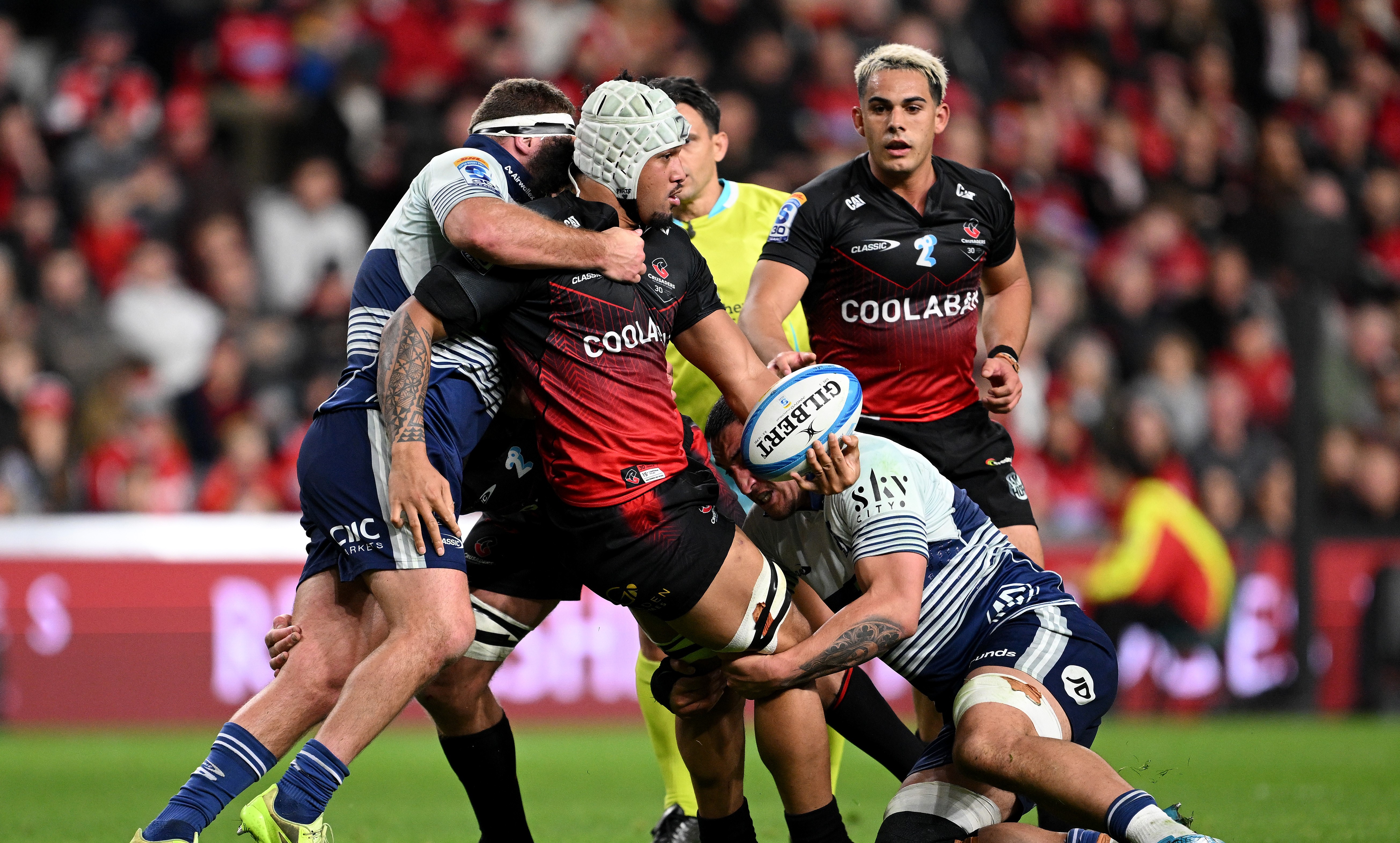
Second were the replays of Crusaders loose forward Leicester Fainga’anuku’s head movement after he was high tackled by Blues opposite Malachi Wrampling for which the No.8 was red carded.
Fainga’nuku’s head rocked backwards violently after it was hit by Wrampling’s shoulder in the first half of the Crusaders’ 52-31 victory yesterday afternoon. How the All Black got up shortly afterwards is anyone’s guess.
Indeed, Sky commentator and former All Blacks halfback Justin Marshall wondered just that on the broadcast: "Boy oh boy, how did Leicester Fainga'anuku absorb that and still be on the field?"
But while Sititi, whose shaking legs were difficult to watch after the high tackle by Reds Lukhan Salakaia-Loto was made worse by an accidental head clash from behind by Chiefs prop Sione Ahio, received instant medical treatment (and was taken to hospital), it was unclear what checks were made on Fainga’anuku, who did not leave the field.
“Smart” mouthguards which register deceleration events are compulsory for Super Rugby players and questions remain about why Fainga’anuku’s, if he was wearing it, did not register an alarm on a sideline computer.
Super Rugby “tweaked” the mouthguard protocol two years ago after several Crusaders players were forced off the field in round one for what appeared to be false alarms.
The changes meant players did not have to immediately depart if there was no obvious cause for concern but there remained an expectation medical staff on the sideline would withdraw a player for checks if so.
That did not appear to happen with Fainga’anuku, who did not receive a head injury assessment despite the force and severity of the impact.
That will raise questions about the effectiveness of the mouthguard technology as well as the HIA protocols. Both teams have medical staff on alert for injuries and there is also an independent match day doctor on the sideline.
Hopefully for his and the Crusaders’ sake Fainga’anuku suffers no symptoms and is available to play in next Friday's semifinal against the Chiefs in Hamilton.
The Blues, despite being well beaten and losing their last four matches in a row, are beneficiaries of the “lucky loser” playoff rule and finish as the fourth seeds. Their reward is a trip to Wellington and a match on Saturday against the Hurricanes, who thrashed the Brumbies 66-12 in their playoff qualifier.
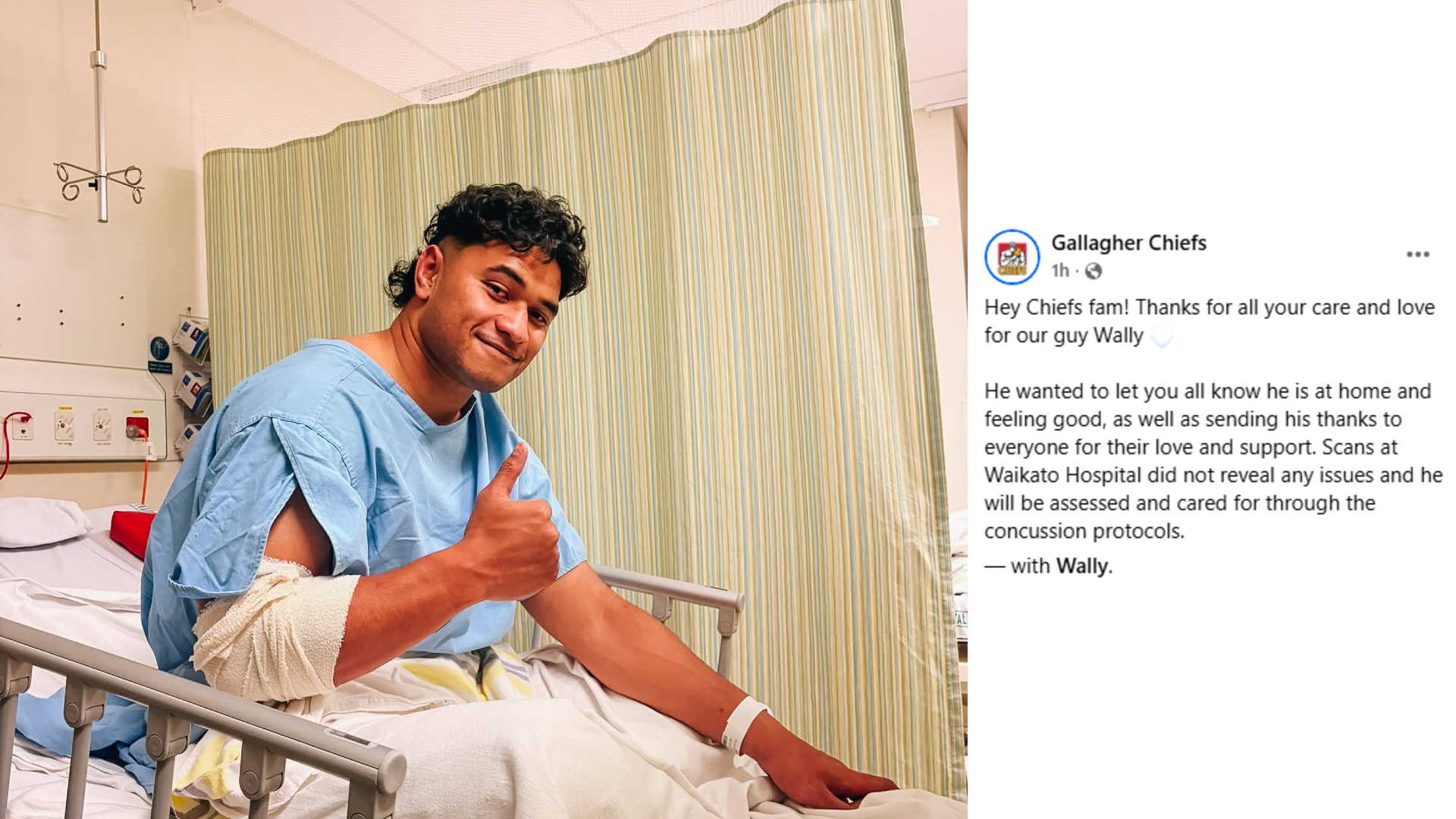
Sititi will be unavailable next weekend and is likely to be out for the final too should the Chiefs do what they couldn't in the last year's grand final in Christchurch and beat the Crusaders.
In a social media post this morning, the Chiefs announced the All Black was healthy and at home.
“He wanted to let you all know he is at home and feeling good, as well as sending his thanks to everyone for their love and support. Scans at Waikato Hospital did not reveal any issues and he will be assessed and card for through the concussion protocols.”
The Chiefs, who were tested by the Reds last night before they pulled away thanks to their remarkable depth of firepower, and return of No.10 Damian McKenzie, will be slight favourites to beat the Crusaders, who have won their last four matches in a row and are on a roll.
They will travel to Hamilton with confidence but their uptick in form has coincided with the opening of their new stadium - the venue for their last four games.
The consistently excellent Hurricanes are playing an irresistible brand of attacking rugby and many neutrals will be hoping they repeat their success of 2016 for that reason alone.
As for the Blues, they have snuck in through the back door. There will be criticisms of the "lucky loser" concept, which even the Blues called "weird" last week, but it has been in place for two years now.
Other competitions would have granted the top two seeds – in this case the Hurricanes and Chiefs – a week off and a guaranteed place in the semifinals, allowing the Crusaders, Blues, Reds and Brumbies to fight it out for the remaining two.
That would have meant one fewer playoff match; potentially good for the competition and the top two seeds, but not so much the broadcasters. One suspects the latter had a say in the format.