Auckland councillors urged to back zoning for six-storeys near buses
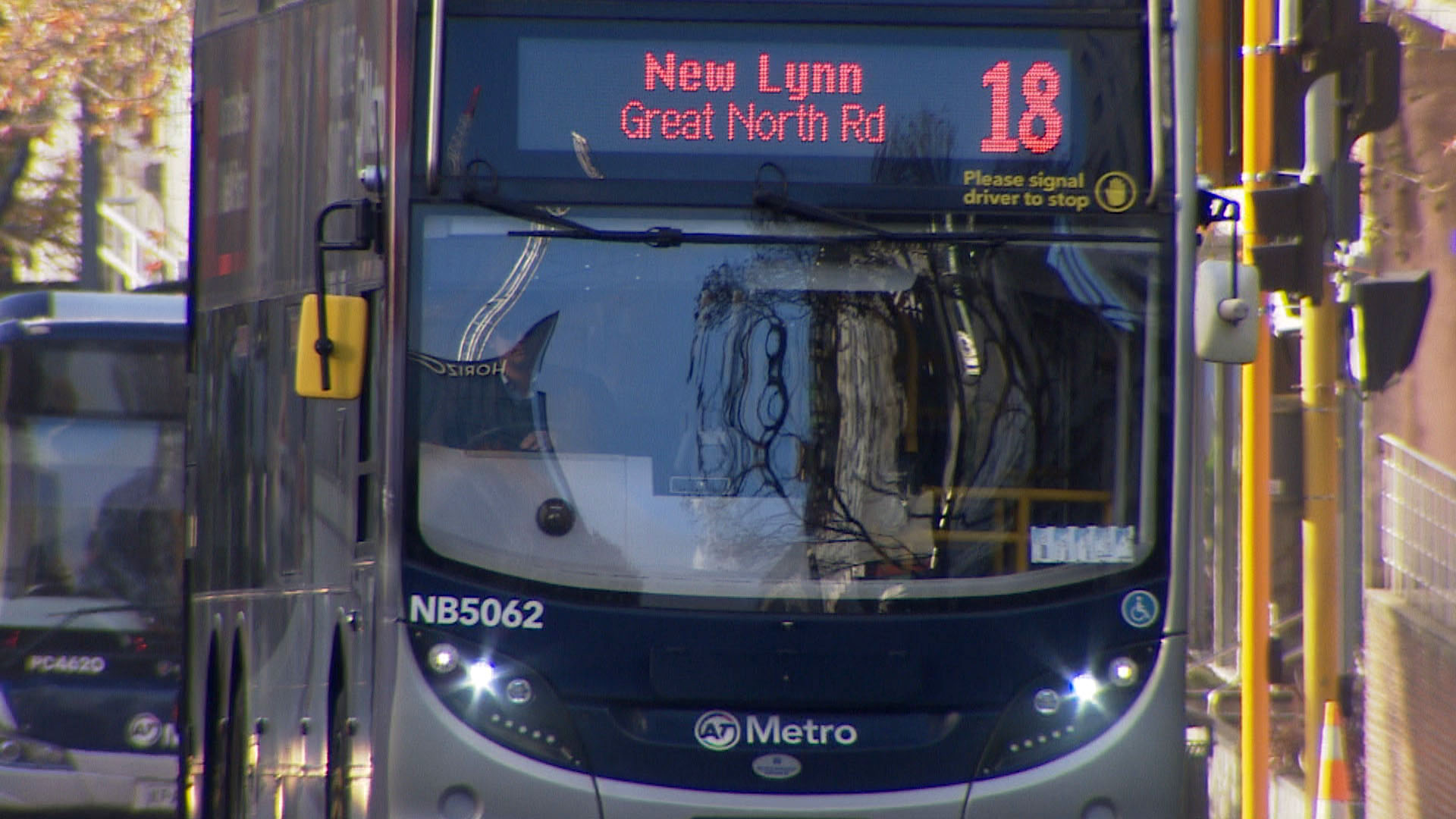
Auckland councillors have been urged to back a mid-range option for winding back controversial housing intensification plans — recommending apartment zoning be retained along bus lines closer to the CBD with taller building heights also kept at central isthmus rail stations.
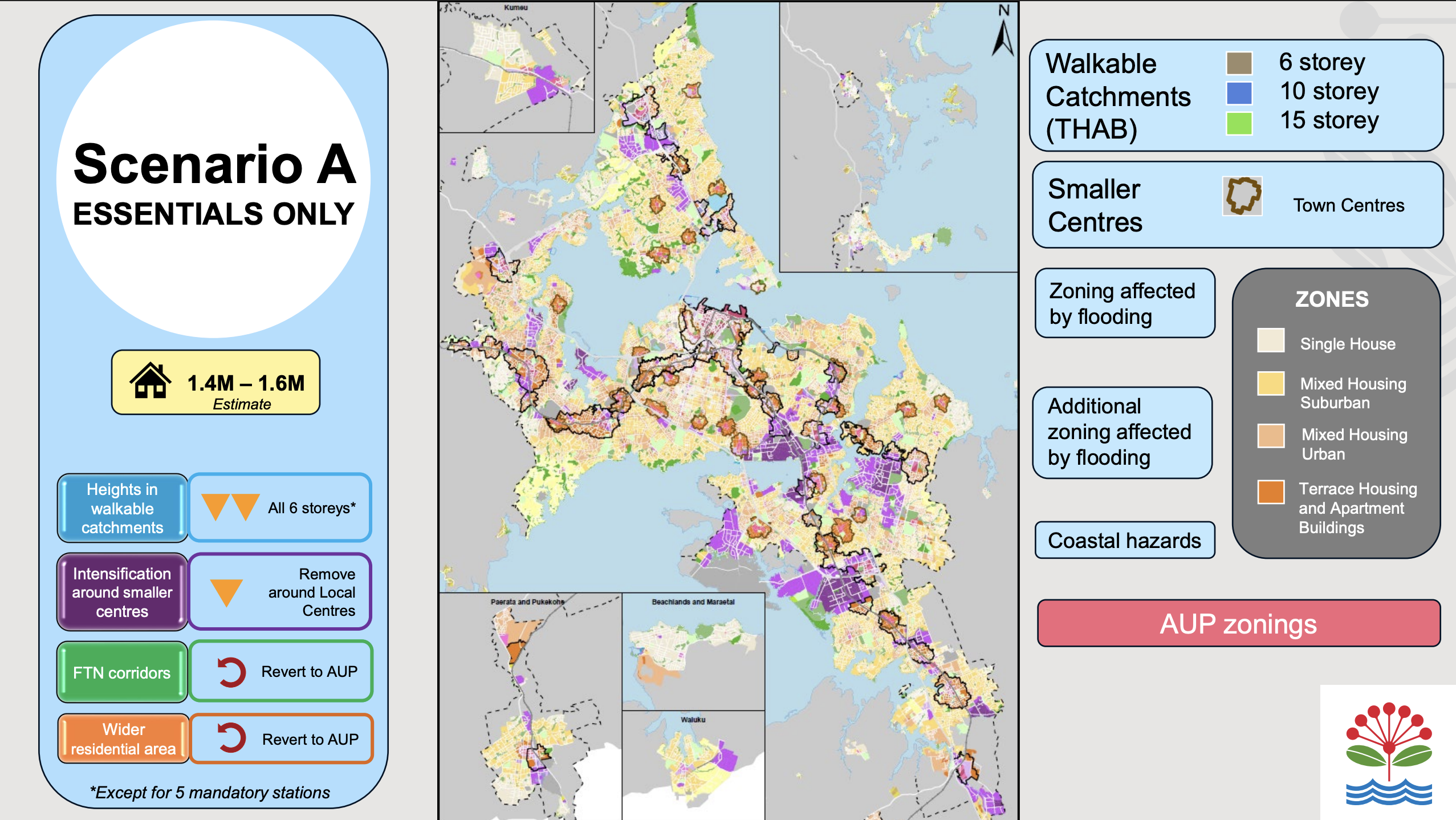
In a report released ahead of a planning committee meeting tomorrow, council staff formally recommended "Scenario B" – one of four options for scaling back Plan Change 120, the divisive Government-instigated rezoning plan intended to lower housing costs.
Councillor and planning committee chairperson Richard Hills told media earlier today the staff recommendation amounted to a "significant change" from the original plan change.
He said most Aucklanders would see no difference from the current zoning rules.
"The overwhelming majority... won't be affected at all, as in there will be no up-zoned difference from the Unitary Plan (existing zoning rules) under that Scenario B."

Hills said the recommended scenario would deliver intensification "around walkable catchments, around the metro centres, train stations, bus stations" as well as some up-zoning along frequent bus corridors close to the CBD, "where infrastructure already is".
The recommendation marks a shift since an earlier options workshop, where councillors were presented with the scenarios but staff had not yet landed on a preferred path.
Auckland mayor Wayne Brown has previously expressed frustration with the complexity of the process, saying "people will be pissed off if we wreck their houses".
From two million to between 1.5 and 1.7
Scenario B is described as "further elective intensification" and is estimated to retain capacity for between 1.5 and 1.7 million homes – slightly above the Government's new minimum floor of 1.4 million dwellings and designed to give a hearings panel a "buffer".
It's more ambitious than what some councillors had signalled at a recent workshop, where several endorsed a legally compliant but "essentials only" approach.
The Government slashed the minimum housing capacity Auckland must zone for from two million to 1.4 million earlier this year, after Housing Minister Chris Bishop initially flagged a reduction to 1.6 million in February before legislating the lower figure in March.
Staff have overhauled Scenario B since a workshop on May 27.
Under the scenario, six-storey zoning would be retained along frequent bus corridors within roughly 10km of the CBD, while four suburban corridors would be dropped.
Zoning for six-storey apartment and terraced housing would be kept along some of the city's busiest bus corridors, such as Onewa Rd, Dominion Rd, and Sandringham Rd among others.
Those bus corridors now excluded include Howick to Botany via Meadowlands, Botany to Manukau, New Lynn to Henderson, and Papatoetoe to Sylvia Park.
The option would also retain six-storey apartment zoning around more than 20 local centres, including Grey Lynn, Balmoral and Mt Roskill, which like the bus corridors, would be removed under the most stripped-back option known as Scenario A.
Tuesday's vote is not a final decision as councillors are being asked to select a preferred scenario to send to local boards and iwi authorities for consultation, with a binding decision on amendments to be made in July, before the plan is sent to a hearings panel.
Taller heights spread beyond the western line
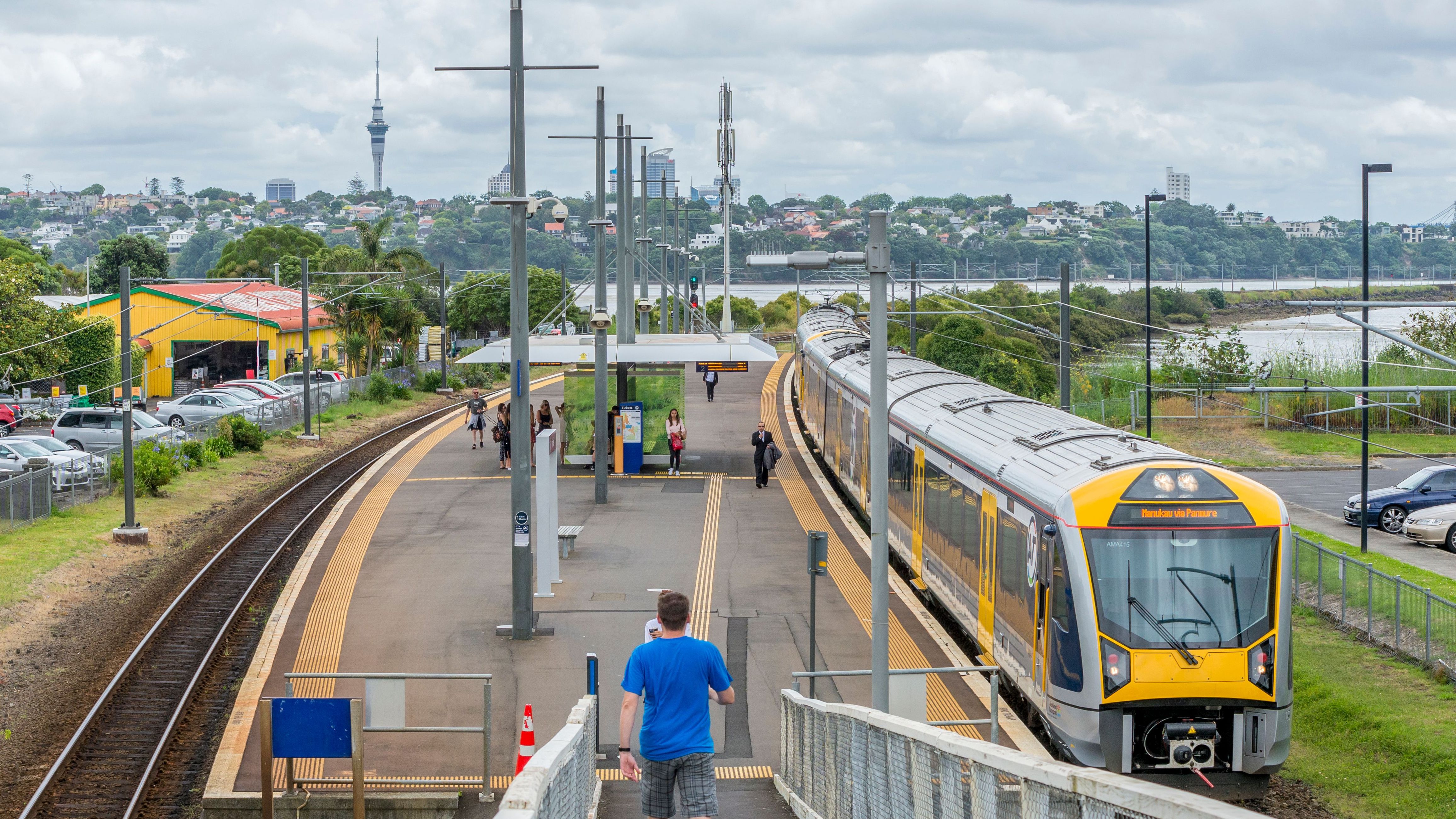
The scenario would also allow taller apartment buildings along the Eastern and Southern rail lines, with up to 10 and 15 storeys allowed near stations within 10km of the city.
On the changes, Hills said the scenario would lift heights across the inner-city network to match what was already mandated for inner-western suburbs.
"It includes treating all train lines sort of the same as the Western line, so having some of those 15-storey and 10-storey walkable catchments along those," he said.
Earlier this year, Government legislated for the council to allow taller buildings around stations in the west, which were set to benefit from the City Rail Link.
Housing Minister Chris Bishop mandated zoning to allow for 15-storey apartments around the Maungawhau (Mt Eden), Kingsland and Morningside train stations, and at least 10 storeys around Baldwin Ave and Mt Albert.
Under Scenario B, train stations in the central isthmus such as Newmarket, Remuera, Grafton, Parnell, Panmure and Glen Innes would keep room for 15-storey buildings, while others including Ellerslie, Ōrākei, Penrose and Meadowbank would allow up to 10 storeys.
By contrast, outer centres such as Henderson, Manukau and Albany would be lowered to six storeys, which remains a government mandate for all town centres and rail hubs.
'It's been a confusing ride'
Hills acknowledged some residents who had expected to develop their properties under Plan Change 120 and the previous medium-density rules would lose that ability.
"There'll be a lot of people who maybe thought they had three-storey availability, or they could subdivide their property, or they could increase the yield on their section that will now no longer have that ability, apart from they could go through a resource consent."
The councillor also said the council had received conflicting signals from central government on intensification, after five years of chopping and changing of plans.
"If I'm being completely honest here, I've had completely different views from parts of government, parts of Cabinet, MPs from different parties," he said.
"It has been a confusing ride of direction from different people, so it has been hard for the council. It's hard for the community when we've had very strong views on either side within the same governments."
Deputy Prime Minister and Epsom MP David Seymour has previously been a vocal critic of the original intensification plan, despite it being advocated by Housing Minister Bishop.
At a workshop last week, councillors had been divided on how far to go.
As 1News reported on Friday, Waitākere councillor Shane Henderson and Albert-Eden-Puketāpapa councillor Julie Fairey preferred options for more intensification.
Manurewa-Papakura councillor Daniel Newman and North Shore councillor John Gillon had both endorsed Scenario A, the most stripped-back approach of four options.
Council modelling presented at the workshop had shown the scenarios would produce different economic outcomes, with house prices estimated to be between 1% and 2% lower under the most stripped-back option and 5% to 8% lower under the full plan.
The total estimated economic benefit over 10 years ranged from $700 million at the low end to $3.9 billion, with greater benefits when more housing was zoned for.