Bid to strip Auckland housing plan to bare minimum defeated
Auckland councillors have agreed to consult with local boards and iwi on two options for scaling back the city's divisive housing intensification plans, after a tight vote on whether to strip the proposal to a legal bare minimum.
The council's planning committee today addressed winding back Plan Change 120, the Government-driven rezoning of Auckland designed to boost housing affordability.
Councillors voted to consult on both Scenario A, an "essentials only" option, and Scenario B a slightly more ambitious plan, that retains apartment zoning along frequent bus lines and taller building heights near train stations, within 10km of the city centre.
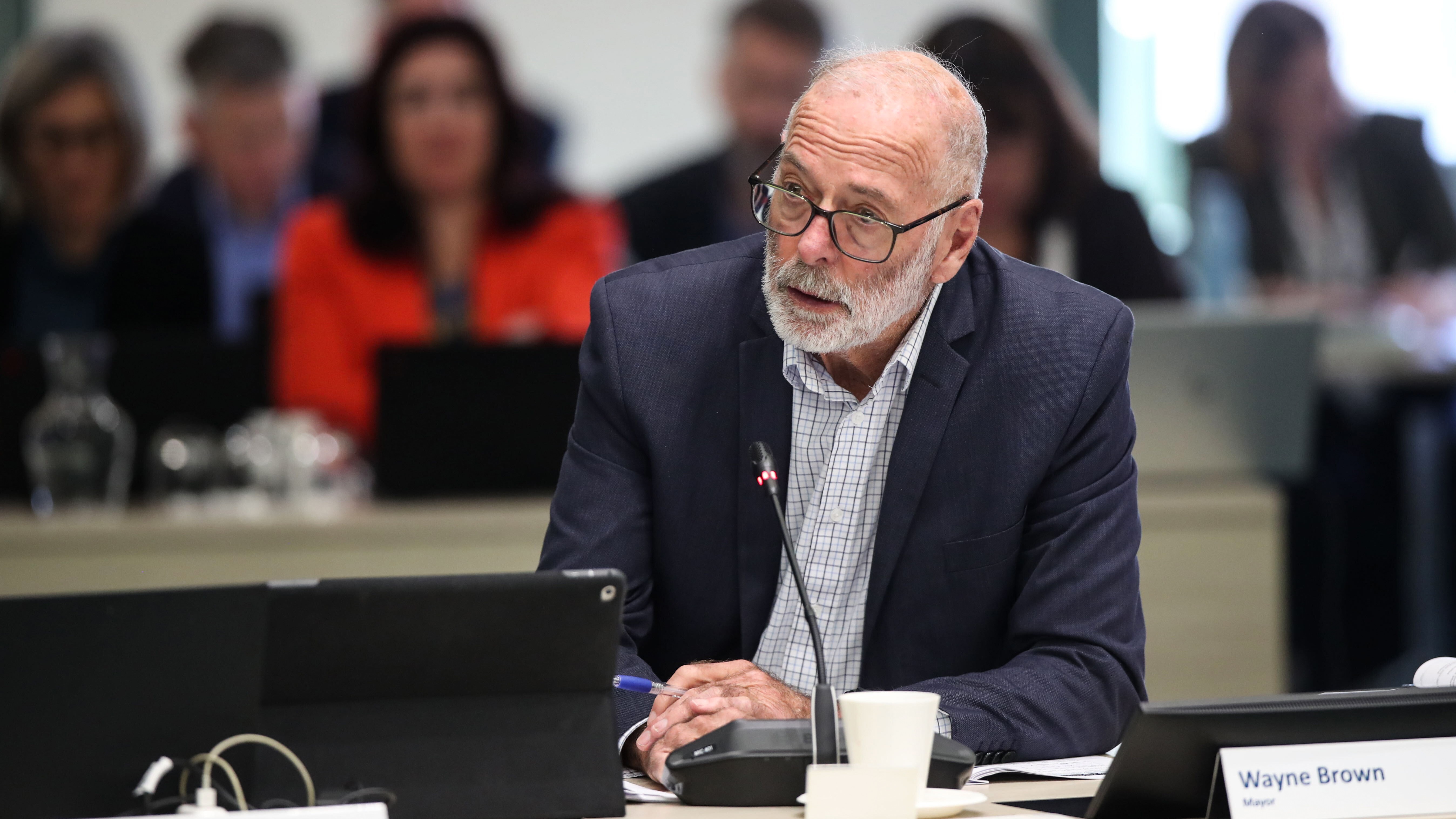
The resolution, moved by planning committee chairperson Richard Hills and seconded by mayor Wayne Brown, departed from the staff recommendation, which had put forward Scenario B alone. It passed on a voice vote with councillor Christine Fletcher abstaining.
It came after Manurewa-Papakura councillor Daniel Newman moved an earlier amendment to replace Scenario B with the more stripped-back Scenario A entirely.
That amendment, seconded by councillor Matt Winiata, was defeated 12 to 10.
Brown said he wanted a plan focused on density in the right places, rather than "simply hearing from the loudest groups and individuals who are against virtually everything".
"That means focussing on allowing more housing near stations that benefit the most from the City Rail Link, and along frequent bus routes," he said.
"It's completely illogical that we would vote for intensifying along the train lines to the west, but not to the east."
"Despite the fact that there were a range of views, almost nobody that's approached me has not supported the idea that Auckland should decide what Auckland liked, not Wellington politicians.
"The amendment was just a move to pander to a couple of minor Wellington politicians that people don't know the names of. Local board and iwi feedback is important to get the plan right as local understand their areas best."
The two scenarios now heading to consultation differ in scope.
Scenario A, described as "essentials only", would limit the plan change to what the Government legally requires, enabling capacity for between 1.4 and 1.6 million dwellings.
It would concentrate changes to about 13% of Auckland's urban area, council staff said.
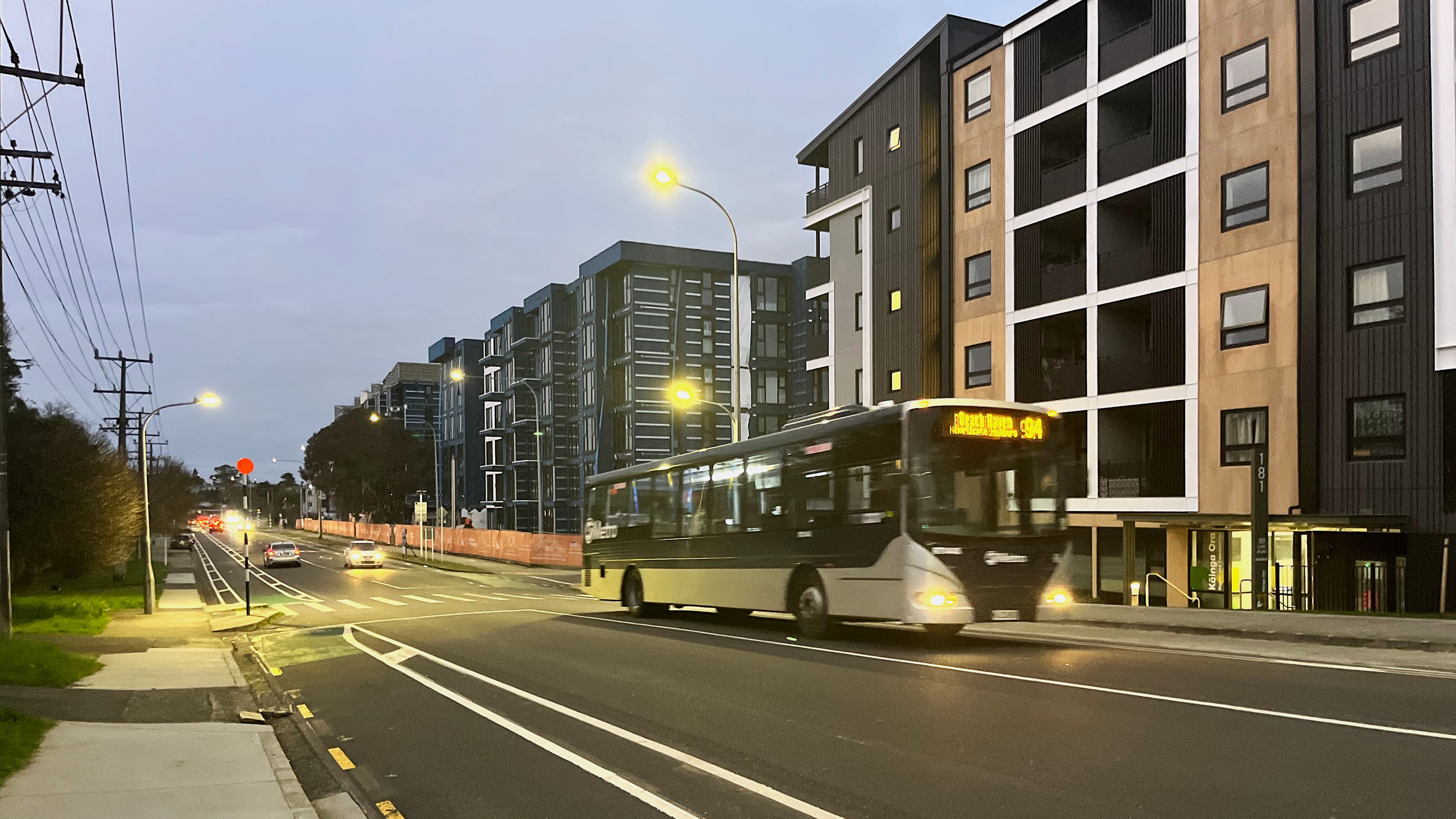
Scenario B, labelled "further elective intensification", would go further by retaining six-storey apartment zoning along busy bus corridors within roughly 10km of the CBD and allowing buildings of up to 10 and 15 storeys near inner train stations on all rail lines.
The option also introduces intensification around other smaller, local centres.
It would enable capacity for between 1.5 and 1.7 million homes and affect about 15% of the city. Both figures sit above the Government's new minimum floor of 1.4 million dwellings but well below the minimum of two million originally planned.
Under both scenarios, about 85% of Auckland's residential land would see no change from existing zoning rules except for legally mandated up-zoning, council planners said.
Those mandated legal rules included six-storey apartment up-zoning around town centres and train and bus stations, with 10 to 15 storeys on five Western line rail stations.
Hills said today's decision was not about making changes to Plan Change 120, but about seeking feedback on two possible scenarios before any decisions were made.
"We're taking forward two scenarios in detail so local boards and iwi authorities can compare both scenarios in detail and provide feedback to help inform any future decisions," he said.
He stressed housing capacity was "not a target for how many homes will be built", but a measure of how many homes the rules could theoretically allow if every property was fully developed. The existing Unitary Plan enabled around 1.2 million homes.
Both scenarios also retain stronger rules to protect people and property from flooding and other natural hazards, including additional downzoning in the most vulnerable areas based on updated flood modelling, Hills said.
A final decision on plan change amendments is expected in late July, with a further round of submissions to follow before the plan goes to an independent hearings panel.
The more than 10,500 submissions already made on Plan Change 120 remain valid.
An independent hearings panel will hold public hearings and make recommendations before final decisions are made in mid-2027.
The Government slashed Auckland's housing capacity requirement earlier this year, after Housing Minister Chris Bishop initially flagged a reduction to 1.6 million in February before Parliament legislated the lower figure of 1.4 million in March.