SpaceX Dragon shuttle captures 'ethereal' view of Southern Lights
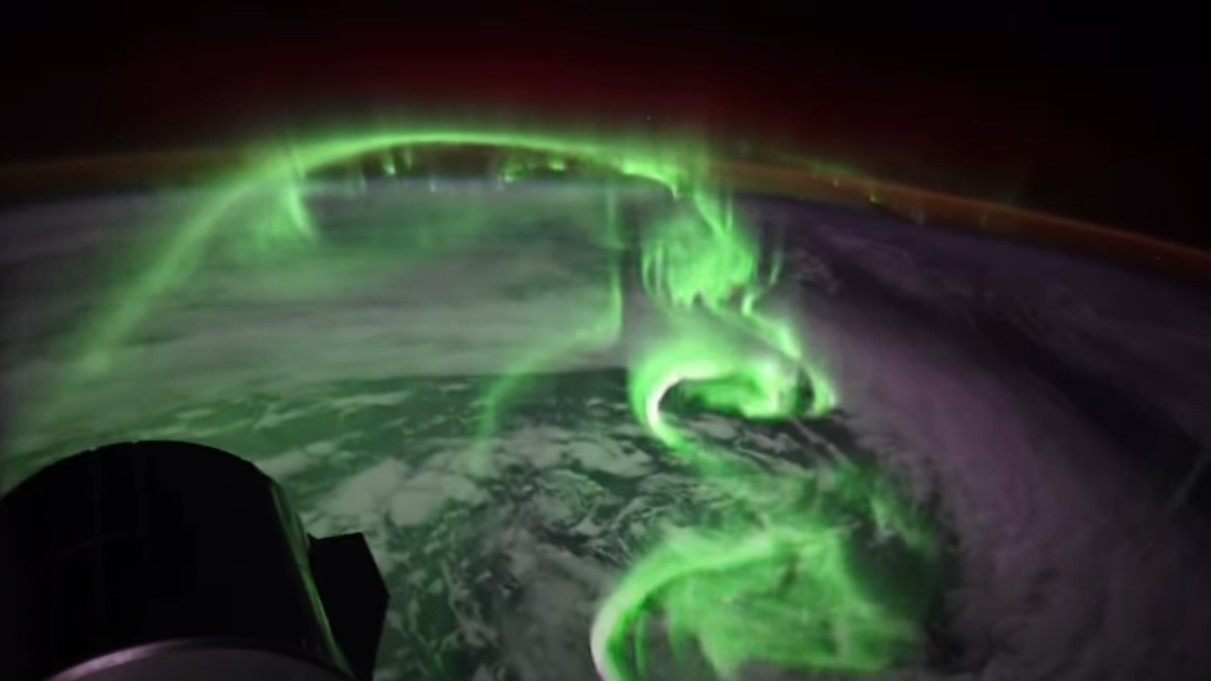
NASA astronaut Jessica Meir has shared a time-lapse video of spectacular Southern Lights from the SpaceX Dragon Shuttle.
The video showed vivid green ribbons of light rippling beneath the spacecraft, as a result from a recent solar event.
"As opposed to the previous aurora I’ve seen, this one danced and snaked its way directly below us, putting on quite a show.
"I am in awe of this ethereal and emotionally evocative phenomenon," Meir said on her post.
Stardome astronomer, Josh Aoraki said we can thank the sun for the Aurora Australis light show.
"When the sun's letting off a bunch of charge as it heads to Earth, it interacts with our magnetic field and it gets channelled down to the north and the south poles. That's actually what creates the Aurora."
While auroras were typically observed from the ground, astronauts aboard spacecraft and the International Space Station occasionally witness them from above.
"The astronauts at the International Space Station have had a really good view of it because, when solar storms occur, the intensity pushes those Aurora to higher latitudes so they visible," Aoraki said.
"They get a lot brighter, much more visible with the naked eye, and also much more visible here on Earth."
He added that the Aurora themselves were not rare as they were always happening.
The Southern Lights are just as common as the Northern Lights, and regularly take place over Antarctica.
"The time lapses that we get from the space station show the orbit of aurora, it doesn't go over the pole, so they [International Space Station] don't see it constantly. When we do get those solar storms and it's pushing Aurora to higher latitudes, that's when they can see them and get a really good view.
"We are still in a pretty high period of solar activity so they'll likely see some more over the coming year. But it's slowly getting less and less at the moment," Aoraki added.
– by Tyra Harrison for 1News.