KiwiSaver mandated for all workers if National re-elected
KiwiSaver would become compulsory for every New Zealand worker from July 2028, if National is re-elected, under a major election proposal the party unveiled today.
The newly announced policies also included a $1500 payment and automatic KiwiSaver enrolment for every child born from July 2027, a government top-up for parents on paid parental leave, and a mandate that employers keep contributing for over-65s.
Today's announcements were just one part of what observers expect from the party to be sweeping proposals on retirement, including potential changes to Super eligibility.
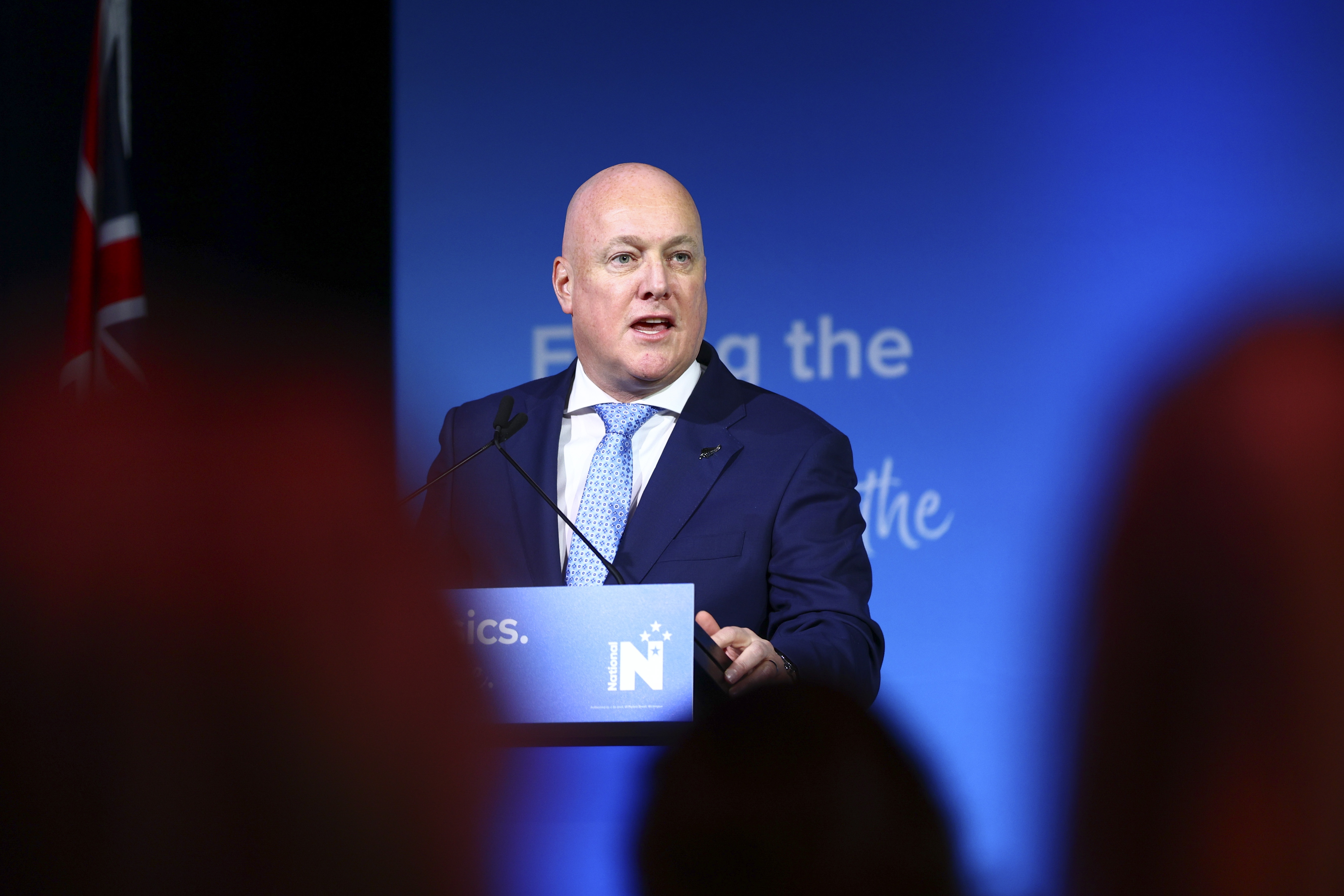
Party leader Christopher Luoxn made the announcements from National's annual conference held in Lower Hutt, where he rallied party faithful for the election ahead.

Under the policy, everyone in work would be required to contribute to KiwiSaver, or an equivalent retirement savings scheme, from July 2028. The change builds on another National commitment to gradually lift contribution rates to match Australia.
Contributions would be set at the default rate, meaning that by 2032 employers and employees must each contribute 6%, for a combined 12%.
Luxon said the existing scheme was working for most, but more needed to be done.
"For many Kiwis, especially those on low incomes, the self-employed, and many young people, saving for their future isn't a priority. I think that's a mistake," he said.
"The truth is the single best time to start saving is when you're young, because that's when every dollar has the most time to grow.
"And while finding the room to save in a tight budget is tough, life in retirement without a reliable pool of savings can be so much tougher.
"In November last year, when National released the first tranche of our KiwiSaver policy, we said at the time that we would not make contributions compulsory.
"In the months since I’ve heard a consistent message from New Zealanders that they believe we can go further, with a policy of compulsory savings that sets more Kiwis up for a financially secure retirement.
"With so many Kiwis already contributing, I just think that’s the right call.
"Now is the time for a last big push to get the remainder of the country enrolled, contributing, and building for their own financial future.."
He said the move would deliver a stronger pool of national savings while pushing people to have a bigger nest egg, allowing them to "retire with greater financial security to give them a better quality of life and more choices in their retirement".
Self-employed workers would be required to contribute only the 4% employee-equivalent rather than the combined 8%, while those already in another employer-managed super scheme, and those on paid parental leave, would be exempt.
People would be able to suspend their contributions only if they met the existing hardship test, currently used when people apply to make an early withdrawal.
'Baby Boost' also part of National's plans
From July 2027, every baby born would be automatically enrolled into the savings scheme and receive a $1500 "Baby Boost" payment to kick-start their KiwiSaver.
"It's not enough to understand the impact of interest rates and investment in theory, National will make it a practical, financial reality," Luxon told the conference.
National said a $1500 investment at birth, growing at a long-run average return of about 7% a year, would be worth around $5000 by the time a child turned 18.
Speaking to media, Luxon pointed to the long time horizon for the youngest savers.
"Kids being born today are going to be retiring in 2090, and so we want to make sure that we are setting every Kiwi kid up, irrespective of their circumstances, from day one."
National finance spokesperson Nicola Willis said "in most cases, we would expect parents to choose which KiwiSaver fund provider their child's baby boost goes into.
"But where they don't actively make a choice, there will be default funds that that funding goes into, and what we expect is that all children under the age of 18 will have this money invested in a high-growth default."
Changes would cost state $1bn over years
National costed the package announced today at $110.1 million in 2027/28, rising to $323.4 million the following year, $342.2 million in 2029/30, and $361.6 million by 2030/31.
Much of the cost comes from the Government itself stepping in as a contributor. Requiring more people to save means more become eligible for the annual government contribution, while the Crown also faces higher bills as an employer matching KiwiSavers.
Willis said the party had been deliberately cautious with its numbers.
"We've got a track record in government of delivering our priorities within tight operating allowances, and we've achieved that through being very careful to get value for every dollar that we spend," she said.
"We believe that this is a very high-value investment in every New Zealander's future."
The Baby Boost payment accounts for $90 million a year, while the parental leave top-up starts at $20.1 million and grows to $35 million over the forecast period.
The move to make KiwiSaver compulsory for all workers marks a shift from the party's position when it was first introduced by a Labour government 20 years ago. It also worked to strip back parts of the scheme when it came to power in 2008.
Asked about the party of personal responsibility now forcing people to save with KiwiSaver, Luxon said National remained true to its values.
"We believe very strongly we are the party of personal responsibility. People have a choice about how they invest those funds," he said.
"Most important, they're going to have more choice about how they get to live their lives, because they'll be fundamentally wealthier as a result of this."
When asked about possible employer backlash, Willis said she had expected some when default contributions were lifted at last year's Budget, but found the opposite.
"The experience I had almost everywhere I went was that business people themselves said that's a great policy, because on the one hand they care about their employees and their financial future, and on the other hand they can see that New Zealand needs a deeper pool of savings and capital available for investment and growing this economy."
Luxon also confirmed to media that National would have more to say soon about superannuation, including the retirement age, but framed it as a separate conversation.
"We've had a long-standing position about gradually lifting retirement ages, giving people lots of time to adjust," he said.