Missing climate briefing note: Z Energy boss speaks out

The boss of Z Energy says his team "followed the instructions of government" when handing over a document to a former Beehive staffer with suggestions for a law change.
By Lillian Hanly of RNZ
In a sit-down interview with RNZ, chief executive Lindis Jones accepted the briefing note was seeking a law change.
He told RNZ he understands the perception of handing over a piece of paper, "and that's deeply unfortunate", but there was nothing surprising in it.
"What really matters here, I believe, is the substance of what was in that note, and there's nothing in that note that we hadn't said before publicly or to the court or to the government."
It comes as the company releases a report commissioned by Z Energy, Fonterra, and Genesis Energy concluding the impact of a landmark climate case, if successful and implemented immediately, would see GDP decline by $21.9 billion over five years, or 0.9%.
It also comes as climate activist Mike Smith is denied an application to release documents relating to his case as part of his oral submission on the legislation.
Oral submissions are being made to the Justice Committee on Tuesday on the Climate Change Response (Tort Liability) Amendment Bill.
The legislation would amend climate laws to prevent companies from being sued over damage caused by greenhouse gas emissions, stopping a landmark case in its tracks.
In 2024, Smith was granted permission by the Supreme Court to sue Fonterra, Z Energy and other major fossil fuel companies.
Z Energy, as part of its submission, has released a number of documents relating to the case, including the Z Energy addendum document referred to by the Ombudsman as part of his investigation into the handling of official information by the Prime Minister's Office.
The investigation followed the court-ordered release of a briefing document provided to the Prime Minister's Office regarding Smith's case, which suggested how the law should be changed.
Smith accused the Government of a "co-ordinated campaign of secret lobbying, political interference and corporate influence at the highest levels of power" at the time.
The landmark climate case
When the Government announced it would change the law, Smith said the Government had told New Zealanders that if "powerful corporations damage your future through climate pollution, your right to seek justice can simply be taken away".
Speaking to RNZ, Jones said the word justice implied there were "no laws", but he pointed to the Climate Change Reduction Act as being a "very precious" piece of legislation governing how the country would manage reducing emissions.
"This litigation, if it carried on, would put that under threat, and that's something that would impact all households and potentially have catastrophic economic effects."
Legal expert Vernon Rive was consulted on the Government's law change and released his advice publicly, explaining his opposition to the proposal at the time.
In his view, the prospects of injunctive relief that would create a parallel judicial regulatory framework requiring the corporate defendants to achieve quantified emissions reductions were "very low".
Asked why he couldn't have his day in court, Jones said it ran the risk of setting a precedent where emissions reduction was managed via litigation, "which would be ad hoc and kind of arbitrary, and lead to other organisations potentially be taken to court".
"There's no guarantee that emissions would reduce any more quickly, but it's very clear that those impacts would be significant economically."
He said reducing emissions required a lot of "trade-offs" and would occur "unevenly" if New Zealand did so through a court-directed process. Jones said the Government was best placed to make those trade-offs, because it had the most information, rather than the courts.
Jones said the defendants would have spent several million dollars on the proceedings so far.
Smith has asked for a declaration from the courts that the companies are contributing to climate change through their emissions.
He also wants the courts to either order them to start lowering their emissions immediately, achieving net-zero by 2050, or put in place a 'suspended injunction' that would force the businesses to stop emitting entirely, from a start date that the court would determine.
An economic report
Three of the defendants - Z Energy, Fonterra and Genesis Energy - commissioned a report by an independent economist, Dr Niven Winchester.
It examined the potential economic and emissions impacts of legal remedies sought in the case.
Winchester concluded if an immediate cessation order was applied to the defendants in the case, GDP would decline by $21.9b (0.9%) over five years (2028-2032), with 2028 alone seeing a $7.5b (1.6%) fall.
Winchester also considered if cessation orders were applied more broadly to other participants in the defendant sectors, it would cause "deeper economic disruptions".
He modelled that GDP would drop $112.6b (4.8%) over the same five year period.
The report also acknowledged a reduction in emissions.
"In both these immediate cessation scenarios, emissions are lower than CCRA targets in all years, but the GDP costs are substantial."
Jones said it would look like a "dramatic reduction in investment, consumption, services".
"High energy prices, lower energy security, and that's just speaking on behalf of Z.
"The impact on Fonterra is very clear in their submission, where they talk to their inability to pick up milk from farms and impact unemployment and export earnings, so it's an economy-wide impact that would, because of its scale, impact all New Zealanders."
Asked whether the companies had commissioned a report modelling the impacts of continued emissions released by the companies and the ongoing impacts of climate change, Jones said it was a good point but reiterated "there were real trade-offs".
"I do not want to couch that as the economy versus the environment."
Deloitte's Turning Point report from 2023 showed "decisive action on climate change could add $64b to New Zealand's economy by 2050, while inadequate action could cost it $4.4b over the same period".
The Sustainable Business Council said earlier this year that a "focused shift" toward a productivity-led economy, underpinned by "plentiful renewable energy and stable policy settings", could deliver an estimated $22b increase in GDP per year by 2035, in comparison to a carbon price path reliant economy.
Asked about these reports, Jones acknowledged it wasn't an either or, "it's not whether we should transition to a lower carbon economy or not - we absolutely should. It's how we do it that matters".
Jones referred to the current legal framework in place for emissions reduction, but RNZ pointed out a number of carbon auctions had failed to clear over a number of years.
"In terms of it not working, what's the alternative?" asked Jones in response, and reiterated a litigation process "cannot be a better choice".
Z Energy's emissions are higher than they were in 2019, but have been trending down since 2023.
Documents released
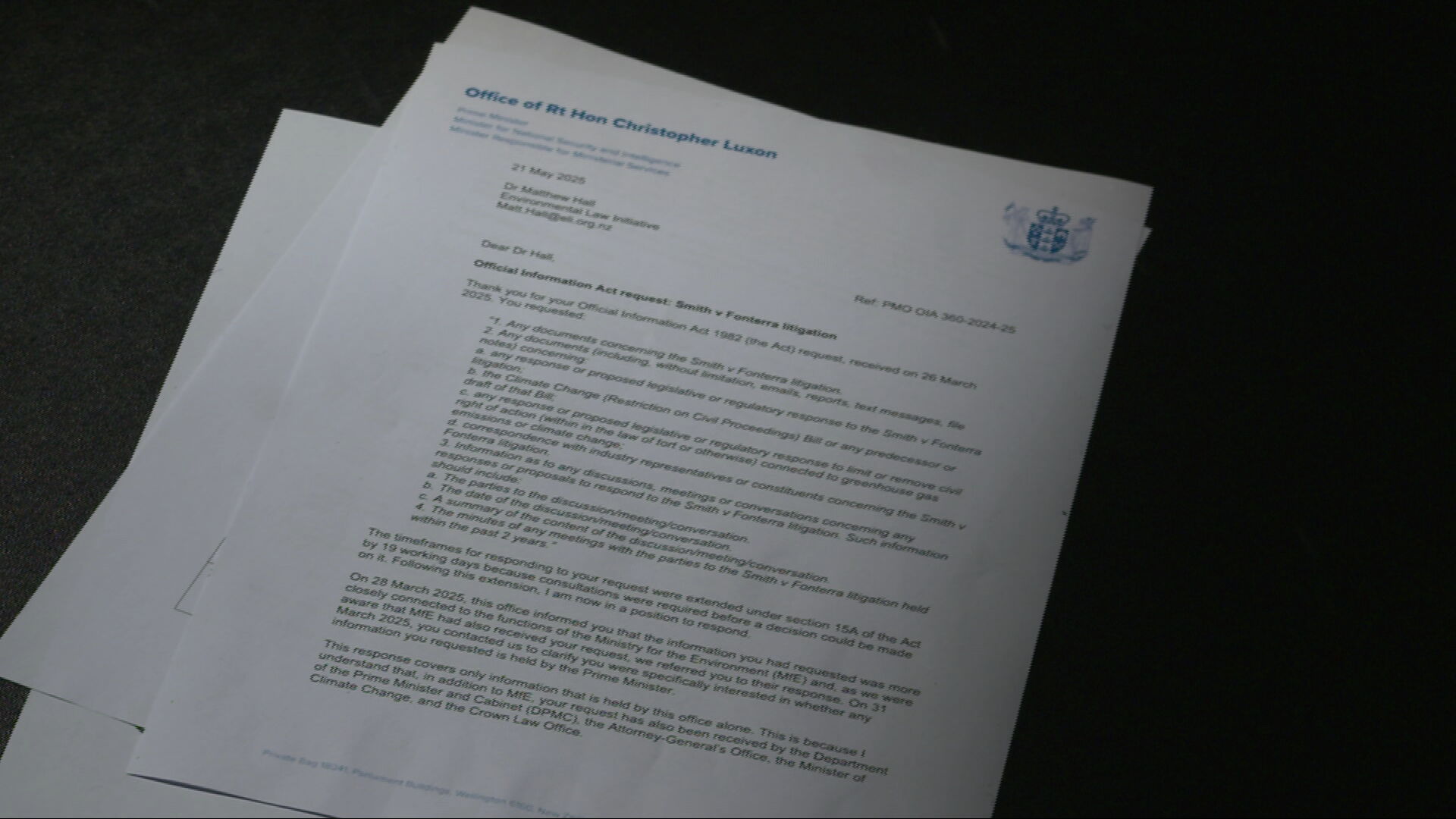
The economic impact report was released as part submissions made on the Bill on Tuesday, alongside the Z Energy addendum document.
This document, while still partly redacted, references the landmark climate case appearing on a risk register of a global risk report of what Jones called an international capital provider.
Z was approached by the Australia-based team of the provider, who provides financing facilities to the Z Group, seeking "clarity and assurances around the potential implications of the judgment and proceeding".
"In particular, concern was raised regarding any anticipated financial implications in light of the Group's arrangements with the provider."
Last week, Smith applied to the courts for permission to refer to documents provided by the defendants as part of the court proceedings in his submission.
The High Court granted this, but the defendants took it to the Court of Appeal, which held a hearing on Sunday and stayed the High Court's order, meaning that Smith won't be able to provide the documents to the select committee.
Asked why the defendants fought this release, Jones said the information Smith was seeking to release reflected an internal discussion within Z Energy and was "in fact incorrect".
"What it speculated didn't actually happen. It's not relevant at all to any discussion we had with the Government. It didn't reflect content that we shared with the Government."
The missing document
The briefing note handed over to former chief policy adviser Matt Burgess released by court order was also delayed in its release by the defendants.
Smith explained the defendants in his case had been ordered to release documents relating to their lobbying efforts by the end of March 2026, but he only learned of the briefing note after they were disclosed to him by Fonterra and Z Energy, following the government's announcement it would change the law.
Asked about the delay, Jones said it was a "pretty challenging set of circumstances" with litigation afoot involving several defendants.
"A lot of the information that is shared as part of that litigation is subject to confidentiality."
Jones said the company was releasing further information today "at a point in time that really matters", where the Government was considering the change to legislation, "all the information that has been shared with the Government is made available now to the Government and to New Zealand".
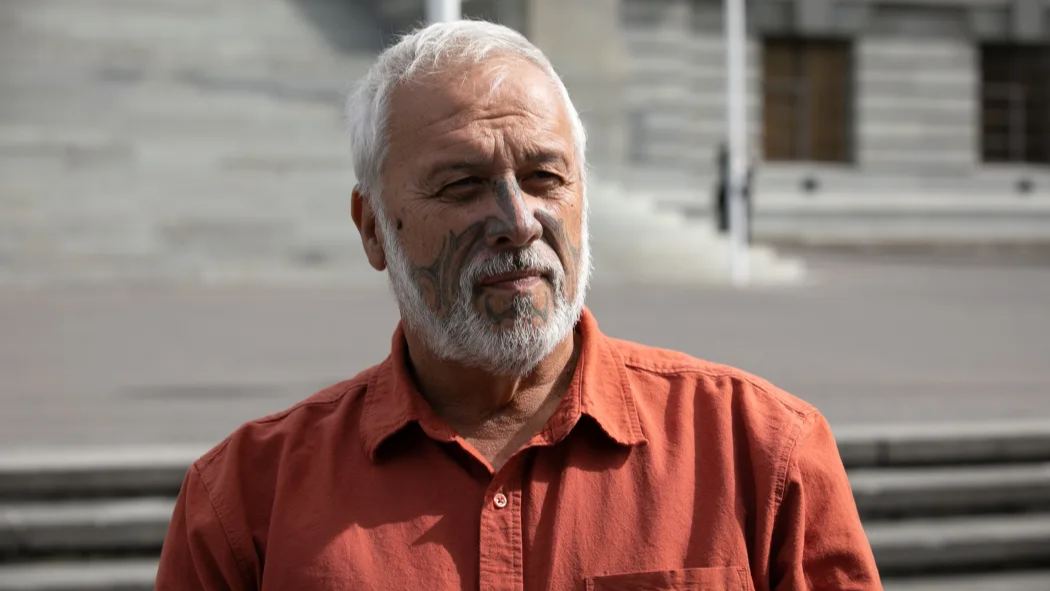
RNZ put to Jones the company had released the content on its own terms at a time when the legislation had already been introduced and it reflected what the company hoped it would be.
"You see there's nothing surprising in that," Jones said.
He maintained the briefing note handed to Burgess contained nothing surprising, and nothing Z Energy hadn't said before.
Jones said his understanding was Burgess made the request for it to be hand-delivered and acknowledged it was unfortunate and the perception it created.
Asked about the use of personal email addressed, Jones said this was "absolutely out of bounds, and that's generally accepted by my team".
He said when there's information relevant for the Government acting, "we should be sharing it with them".
"It was then up to the Government to choose its own course of action."
He said the Ombdusman report made it "clear where the responsibility lies".
Asked if this was how Z Energy behaved when seeking changes to legislation, Jones said it doesn't seek changes.
"I can't think of another time that we've specifically sought a change in legislation.
"Have we made our position clear on lots of matters that eventually could show up in regulation legislation? Yes."
But regarding this briefing note, Jones accepted Z Energy was seeking a change to legislation with the information in it.
Asked about Smith's accusation of a "co-ordinated campaign of secret lobbying, political interference and corporate influence at the highest levels of power", Jones said the documents have been released and Kiwis can decide.
He also said when multiple defendants were taken to court, they had to be co-ordinated.