'Simply, you will slam on the road': How dangerous are e-scooters?
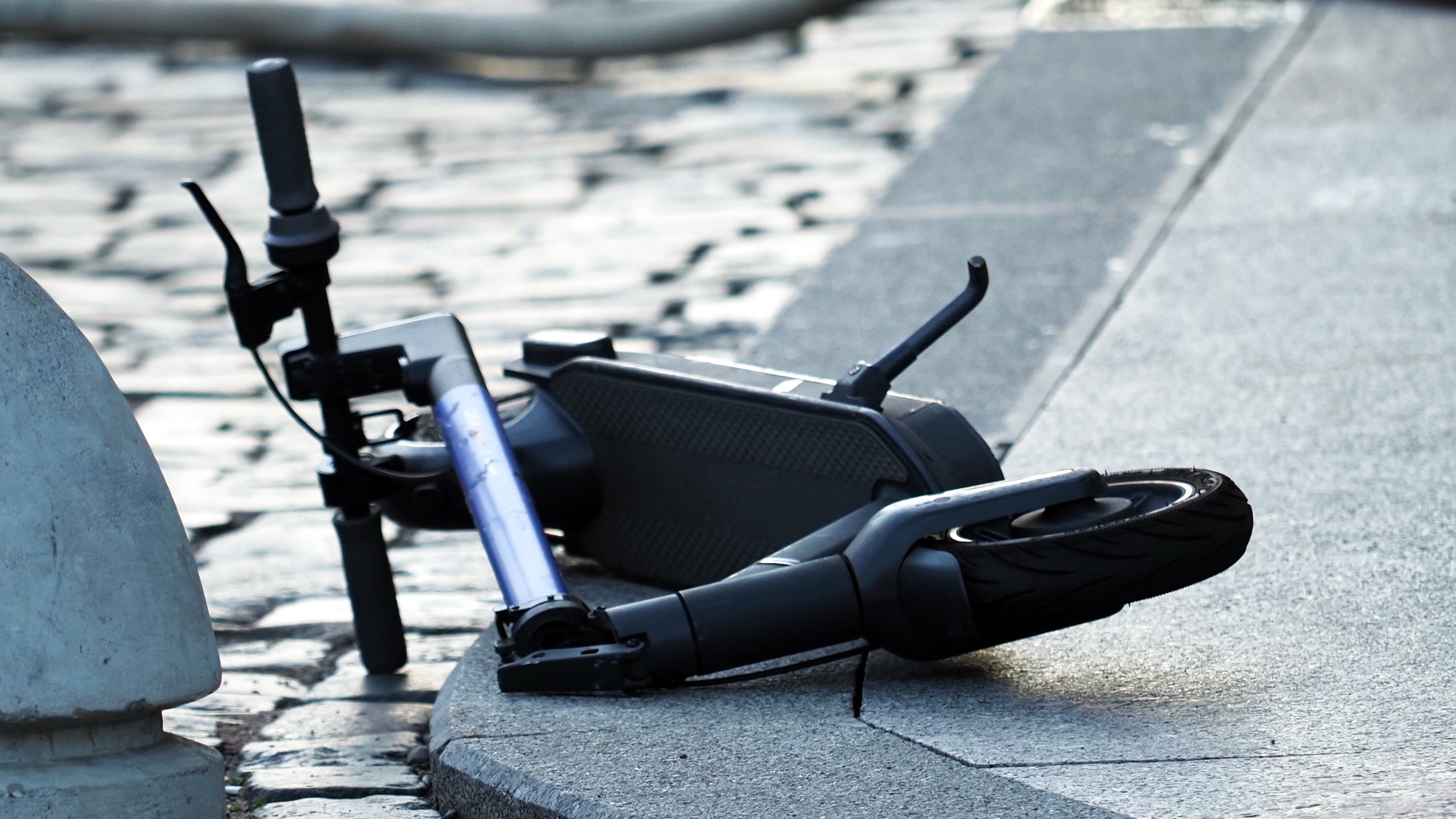
The "unstable" design of e-scooters makes them easier to crash, with a higher chance of serious injury than similar modes of transport, a mechanical engineering professor says.
The warning comes after a series of incidents involving injury and even death since e-scooters came into common use in recent years. A coroner's report into a fatal crash involving Lime e-scooter rider Toben Hunt was released this week.
Dr Milan Paudel, an AUT lecturer with a PhD in mechanical engineering, has conducted several studies into the design of e-scooters and how they crash. He told 1News a combination of unstable design, fast speed, careless operation and the nature of urban environments can make riding e-scooters a risky business.
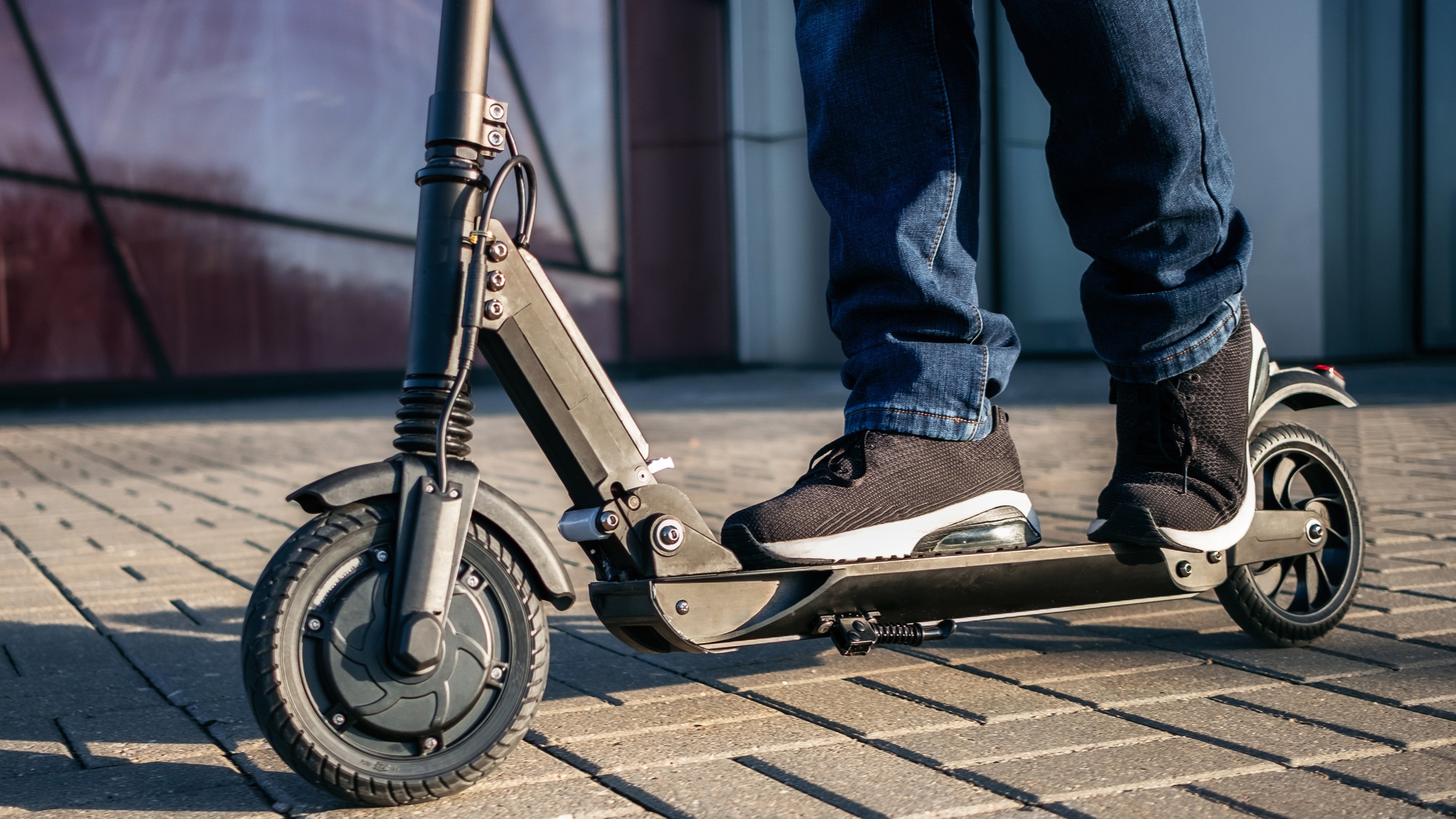
Paudel said the design of e-scooters makes them "unstable" and more dangerous when operated incorrectly. Compared to bicycles, e-scooters are harder to control with one hand, require more effort to balance, and are prone to "external disturbances".
Small wheels, short wheelbase, and high centre of gravity when a rider is standing are some of the factors behind these vulnerabilities.
"Riders constantly have to provide some kind of control, either by moving their body left and right, or continuously adjusting the steering to maintain the balance," Paudel said.
Because they're regularly used on footpaths, scooters often share the same space as pedestrians.
But according to Paudel, pedestrians only account for around 10% of e-scooter-related injuries. He said 60% of crashes were isolated accidents. This is because e-scooters' small wheels mean riders can "easily get thrown off" when they encounter obstacles on the footpath or road.
"Maybe they encounter potholes, maybe they encounter loose pebbles on the ground. They can easily be destabilised, and their steering can become very chaotic."
Because some scooters do not have indicator lights, riders may have to use hand signals to let others know which way they're going, making balance tricky.
Scooters also travel faster than pedestrians, creating more conflicts and risky scenarios.
New road rules set to take effect at the end of the year will allow people on e-scooters to ride in cycle lanes.
"The cycling path seems to be much smoother, which may be beneficial for these scooterists," Paudel said.
Tragic cases
The findings of a coronial inquiry into the death of 23-year-old waiter Toben Hunt were released earlier this week. Hunt died in hospital following a September 2019 e-scooter crash where he flew over the handlebars, flipped in the air, and hit his head on the road. Before the crash, Hunt was travelling at 25km/h, was four times over the legal driving limit for alcohol, and was not wearing a helmet.
In June, a man was killed in an e-scooter crash in Christchurch. Police did not believe another vehicle was involved.
The number of people making e-scooter-related injury claims to ACC is on the rise.
In the first six months of 2026 (January 1 to June 30), a total of 2761 new claims were made for scooter-related injuries, with 3295 active claims. It's led to over $9.2 million in costs. A total of 3992 new claims were made in 2025, leading to nearly $16 million in active costs.
A risk of head injury
According to Paudel's research, e-scooter riders have a higher probability of suffering a severe head injury in a crash than those on bicycles. His research found there was a 30% to 50% chance of a severe head injury when travelling between 10 and 15km/h – this sharply increased to 91% past 15km/h.
In Toben's crash, his head's sudden contact with the road fractured his skull and bruised his brain, the coroner found.

Paudel said e-scooters' design changes the way riders fall to the ground after a sudden stop. They have two points of contact – the deck where the rider stands, and the handlebars – which sit lower than those on bikes.
"It has little effect when it crashes to prevent forward motion," Paudel said. "You do not have anything in between to dampen that motion, to cushion that motion. So, simply, you will slam on the road."
Bikes, on the other hand, have three points of contact, with the driver sitting, creating friction that weakens the momentum of a crash. Head injuries however, are still common after bike crashes.
When high speeds come into play, the effects of a crash get worse, as more speed means more energy pushing the rider forward.
"Although the energy might be the same, the speed at which you are likely to hit the ground is much higher in the case of a scooter compared to a bicycle," Paudel said.
In New Zealand, scooters must have a maximum combined power output of 300W, and in many areas, companies limit the speed at which they can travel.
There was a "grey area" here, Paudel said, saying he has seen "many" scooters whiz past at 40 to 45km/h. He said it is easy to modify motors to exceed this output, and models over 300W are available online.
Risky riding
The best way to reduce the risk of serious injuries, Paudel said, was to simply wear a helmet.
According to an Auckland Transport micromobility risk study, 11% of shared device users and 44% of private device users wore helmets.
Paudel said it was "essential that we start changing our behaviour".
It was also a good idea to use scooters as intended by not riding with two people, as it made the devices harder to control.
"It increases the chance of injuries because not only is there a person at the front, but a person at the back," Paudel said. "The front person is impacting the ground. At the same time, there is a person behind who also has a tendency to land on top."
"It increases the amount of impact force that the person is experiencing, which could further worsen the outcome of an injury."
Paudel explained the effects of alcohol impairment - including delayed reaction time, a lack of postural stability and reduced risk averseness - make scooters harder to control.
"Sometimes it may encourage you to go faster, make abrupt steering motions, and weave in and out of crowds. It encourages risky behaviour at the same time; when you are intoxicated, you lose the ability to balance the scooter."
How can we make e-scooters safer?
For riders, Paudel recommended wearing a helmet, using scooters that have a seat, and keeping up with regular maintenance if they own one.
"Not only changing the batteries but also the routine inspection, especially for the air brakes and whether the tyres are worn out."
He said it was good to see shared scooters in Auckland, such as Lime and Flamingo, come with helmets, but wanted the law to go further.
"Making it mandatory rather than recommended could have increased the percentage of helmet use."
This was something also supported by the coroner in his recommendations following Hunt's crash.
Paudel said it was good that scooters now have better suspension, though providers could go further by increasing the number of seated models.
"It's why the bicycles seem to feel much safer than the e-scooters."
He wanted to see some kind of regulation around motor power as there was currently "ambiguity".
Education around scooter safety is also something that could help reduce crashes, as a large number of those claiming ACC are aged between 15 and 30. Paudel said this could be done in schools.
"We have to make them aware. What happens when you are riding an e-scooter and not paying much attention. When you crash, what happens to your body. What kind of injuries you may sustain.
"All these things could lead to better riding behaviour."