Donald Trump entrances me. But compartmentalising our US loyalties with China trade is tricky – Simon Bridges
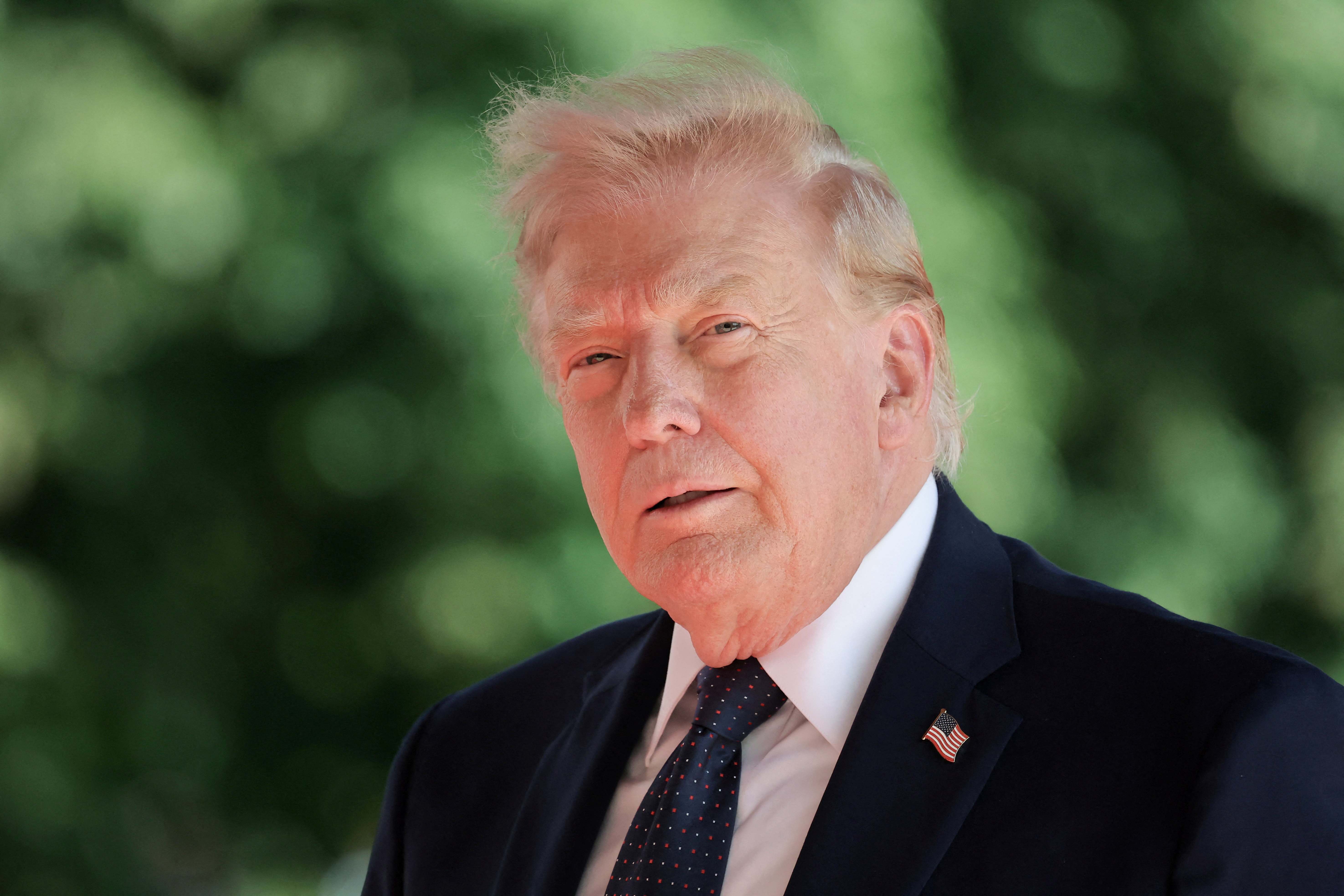
I have a secret to tell you. I really like Donald Trump.
Or rather, I really enjoy him the way my late father enjoyed WWF wrestling on TV in the days of Andre the Giant and Jake the Snake. His style and peculiarities are pure entertainment.
Sometimes in bed when my wife’s asleep, I watch reel after reel of him on social media, careful not to laugh and chortle too loud in case it wakes her. He’s capable of entrancing me.
And in truth – don’t tell other Kiwis this either – some of his culture stuff, or “anti-wokeism”, as the MAGA base might call it, was in my view a necessary corrective, given the Western world was on a path to ridiculousness.
Yet regrettably, Donald J. Trump snr isn’t merely an entertainer. And indeed, there’s little doubt he’s been bad for Kiwi business.
Recovery seemed on its way before he announced his Liberation Day and tariffs scared us all back into our shells in 2025. The same but different happened in an even more pronounced way this year. Economic upturn was clearly upon us. But then war was launched and a strait most of us had never heard of before badly interfered with business conditions here. I would have thought he’s off Nicola Willis’ Christmas card list.
Even more consequentially, he’s disregarded the international rule books around defence, diplomacy and trade, which little countries like ours have come to rely on.
His style isn’t particularly Kiwi, nor are the substantive actions behind his rhetoric. It’s little wonder then that New Zealanders don’t seem to see his good side the way I do. In fact, recent private polling for business I’ve seen shows over seven out of 10 Kiwis disapprove of him.
More broadly, a recent Asia New Zealand Foundation perceptions report shows that for the first time in a decade, more New Zealanders view China as a friend than America (43% versus 39%).
I’m a great admirer of China, as I am of America, but given one of them isn’t a liberal democracy like us, this data should probably be surprising. Others have argued that something fundamental has changed with the United States’ relationship to the rest of the world.
The United States of America celebrated its 250th anniversary earlier this week and we had a new ambassador, Jared Novelly, arrive in New Zealand just days before that. Let’s be cognisant of the fact that His Excellency has his work cut out, and on more than just our “nuclear thing” – which is how he described our country’s nuclear-free policy to media not long after his arrival.
Novelly is surely right, though, when he said: “In advancing the President’s agenda, we have few better partners than New Zealand. The Government of New Zealand consistently supports our goals in the region and beyond.” This I would argue has been true across governments but more palpable in the period since Dame Jacinda Ardern was our boss and Sleepy Joe was leader of the free world.
Recently, I was involved in the China Business Summit, where we spoke of China as New Zealand’s number one economic partner, which it clearly is. Trade with China is still growing and, at close to double our next two markets (the USA and Australia) combined, it dwarfs the rest. The blurb for the summit also noted that governments of New Zealand continue to “navigate closer alignment with traditional security partners [the United States and other Five Eyes pals] alongside its commercial commitments to China”.
When Christopher Luxon spoke at the event around this bifurcation of the economic and the geopolitical and the strategic, he said we should “compartmentalise”. This intrigued me and I think I agree with him. But don’t we also need to recognise that officially aligning ourselves more closely with the USA is increasingly discordant with New Zealanders’ views? This is not to mention discordant with where much of the money comes from. How long will we get away with this doublethink?
For its part, China is portraying itself as the sure, stable, and predictable superpower in stark contrast to Uncle Sam, and it’s an approach that seems to be working. It’s increasingly observed that China is winning favour across swathes of the Asia-Pacific in the nation-to-nation PR stakes. I acknowledge, though, that last week’s missile test in the Pacific is a significant aberration from this picture.
I support increased defence investment in New Zealand. There are more nasty wars across the globe than at any time since World War II. Regrettably, that might be the new normal. I doubt we’ll be great at defending ourselves against a serious onslaught, regardless of what we spend. But that isn’t the point. We must pull our weight and spending in this area supports a wider economic ecosystem of so-called “dual use” businesses (where products may have both military and wider civilian purposes) that we are surprisingly good at – from rockets and drones to electronic systems and more.
Trickier, however, is what to do when Novelly says his key priority is “expanding our defence partnership”. Especially when Trump and many others out there no longer compartmentalise business, trade, foreign affairs and defence the way they used to.
Indeed, in this “you scratch my back” world, these areas often transactionally all roll into one. More to the point, could you actually bet your house on the USA coming to our rescue in the event of war? This week, the President warned European nations again that he might not come to their aid in their time of need if they didn’t meet his demands.
A couple of weeks back, the Auckland Business Chamber I run held an event on Iran, the Strait of Hormuz and where to from here? Phil Twyford of Kiwibuild fame was a speaker, and a point he made seems relevant. We can’t just have an independent foreign policy in New Zealand in the banal sense that we make our own decisions. An independent foreign policy must mean making decisions unbeholden to the superpowers and in alignment with our interests and our values. This will require a careful, deft touch on areas ranging from trade and economics to defence.
Catch up on the debates that dominated the week by signing up to our Opinion newsletter – a weekly round-up of our best commentary.