IBM shares plunge 25% as AI spending boom disrupts business
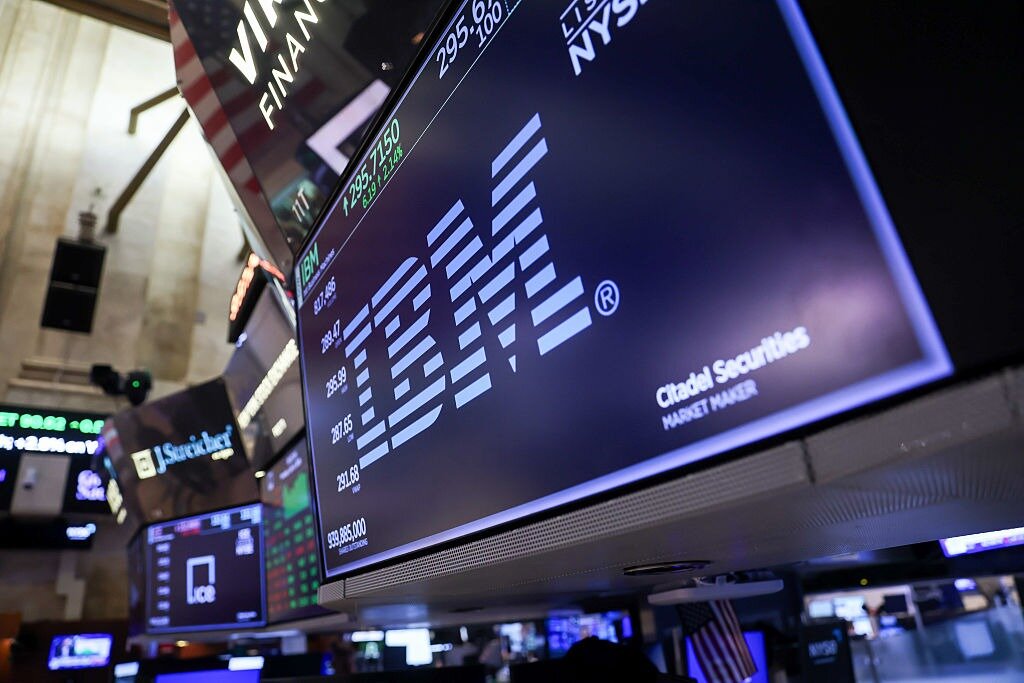
Shares in IBM plunged 25% on Tuesday local time after the United States tech giant released disappointing preliminary second-quarter results, blaming a shift in spending by customers because of expected higher prices for memory chips and other AI-related infrastructure.
In late trading, the stock had recovered minor ground and was 23.8% down to US$221.25. The fall has wiped around US$64 billion from the firm’s market cap.
“We did not adapt and move quickly enough,” IBM chief executive Arvind Krishna said in a letter to investors. The company said revenue for the three months ending in June came in at US$17.2b ($29.6b), up just 1%.
A global rush by tech companies to build out artificial intelligence infrastructure has sent demand for servers, memory chips and storage soaring, driving up prices and creating supply shortages across the industry.
IBM said that towards the end of June, many of its big corporate customers rushed to buy up hardware to get ahead of expected price increases.
That shopping spree pulled spending away from IBM’s higher-margin mainframe computers, the powerful machines used by banks and large corporations to process millions of transactions, and related software.
IBM’s infrastructure business – which includes its flagship mainframe line – fell 7% in revenue.
Software revenue grew 5% but still came in below expectations.
Cybersecurity concerns across the tech industry also distracted clients during the quarter, IBM said, and a number of large deals failed to close on time.
Those concerns were brought on by the release of Anthropic’s Mythos AI model, which has raised alarm bells for its capabilities to find weaknesses in computer networks that can be taken advantage of by hackers.
In response, companies have worked to build up their cyber defences instead of previously planned spending, analysts said.
The tailspin by IBM will increase talk of the consequences of the AI revolution on traditional software companies – known as Software as a Service, or SaaS firms – of which IBM is an important member alongside companies like Salesforce, Adobe and Intuit.
Shares in those companies were trading lower after the IBM warning.
Earlier this year, Wall Street went into a brief frenzy, dubbed the SaaS-pocalypse, after analysts predicted that the sector was doomed because of the ability of AI models to provide everyday users with the same capabilities.
On the positive side, IBM’s Red Hat unit, which sells open-source software, posted 11% revenue growth.
The company’s server and storage business outside of mainframes surged 37% as clients snapped up that equipment.
IBM also announced Lightwell, a US$5b initiative to fix vulnerabilities in open-source software, with backing from major banks including Bank of America, JPMorganChase and Goldman Sachs.
- AFP