Lotto eyes new player behavioural tool; several hundred players ban themselves from Lotto, Instant Kiwi, other games

Lotto Powerball is rising to a $25m jackpot on Saturday, but the game is not for everyone. A small percentage of Kiwis have blocked themselves from playing Lotto, Instant Kiwi and other games – this comes as Lotto NZ looks to upgrade its player behavioural tool.
Several hundred New Zealanders have voluntarily blocked themselves from playing Lotto, Instant Kiwi and other online gambling games.
While that’s a tiny percentage of those who play Lotto and other games each week, Lotto NZ is looking to strengthen its online harm minimisation programme with an upgraded tool to monitor players’ behaviour and “support proportionate interventions that encourage safer play”.
Interventions could be automated and delivered in real time.

Lotto told Media Insider that hundreds of Kiwis had voluntarily blocked themselves from playing almost 1600 games as of last week: 862 people blocked Instant Kiwi; 304 blocked Keno; 259 blocked Bullseye; and 156 blocked Powerball/Lotto/Strike. Some might have blocked all four games, while others might have blocked a selection or only one.
Bans can be in place for one day and up to one year.
Aside from DIY blocking, the other limit on players is a mandatory weekly online spending limit – currently $150.
Lotto believes that’s the lowest of any lottery globally but adds: “We have no plans to review the spending limit at the moment.”
While that statement initially appeared to leave open the possibility that the online spending limit might be reviewed in future, Lotto reiterated in a later statement: “Increasing the spending limit on MyLotto is not something we’re considering.”
New behavioural tool
Lotto has released a request for proposal (RFP) for a behavioural analytics tool “to strengthen our online harm minimisation programme”.
“With a focus on our online web and native app sales channel ... the BA tool will analyse player behaviour using a proven, research-backed approach, provide insights and reporting to Lotto NZ, and support proportionate interventions that encourage safer play.”
The RFP says Lotto is currently redesigning and transforming MyLotto for “go-live” in mid-2027.
“As part of that programme, Lotto NZ intends to introduce a more integrated and player-facing responsible gambling experience, including the ability for behavioural analytics to inform player insights and support automated, event-triggered interventions, delivered in real time and integrated into the front-end play experience.”
How many people play Lotto?
Lotto has around 1.92 million registered players across its digital channels, with 710,000 monthly active players, based on a 12-month average. Its digital channels now contribute about 50% of all revenue.
There are also 1117 physical Lotto outlets across the country.
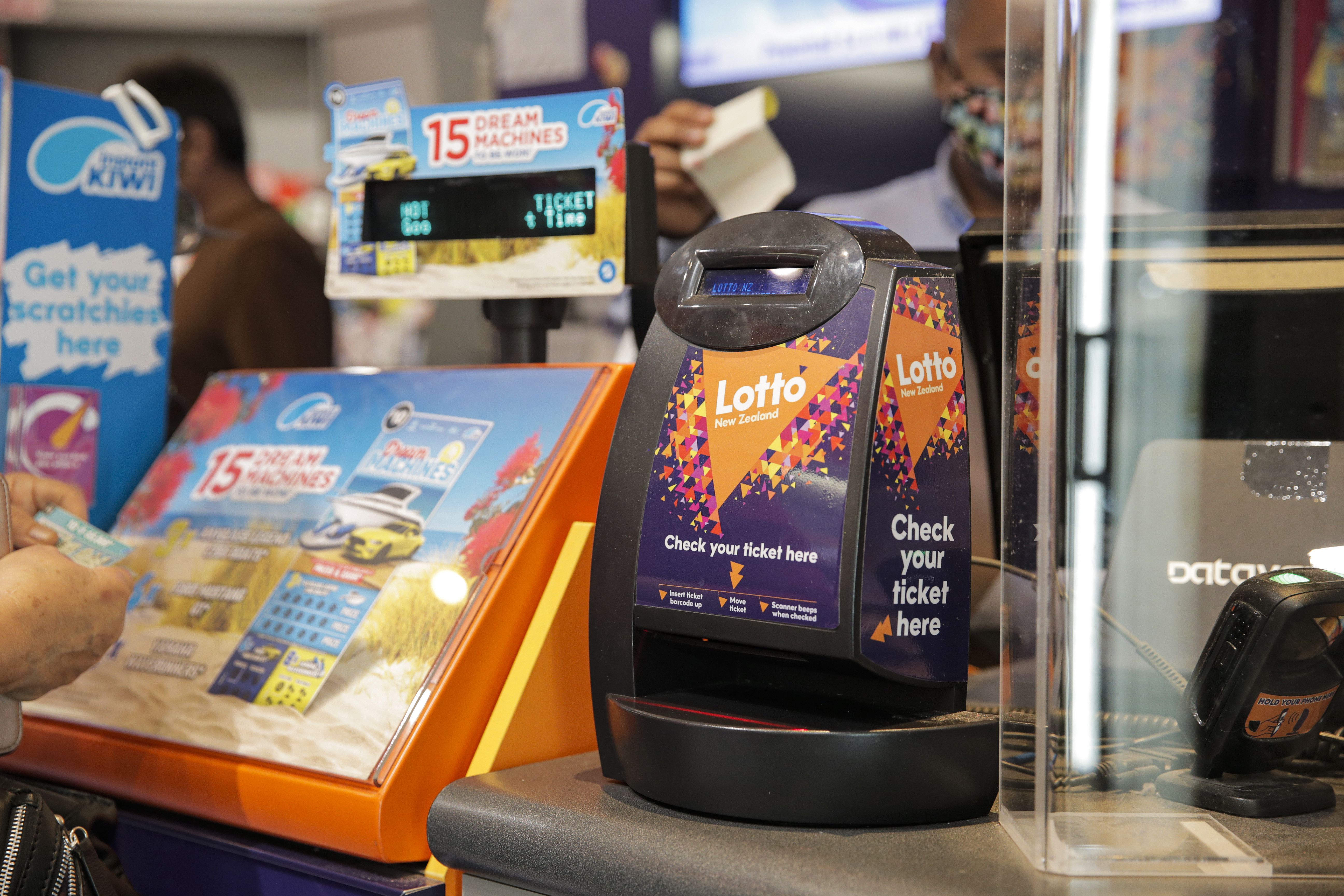
Lotto/Powerball/Strike drew annual revenue of $1.368 billion in the 12 months to June 30, 2025. In the same period, Instant Kiwi generated revenue of almost $194 million; Keno $51.1m and Bullseye $14.3m.
From that revenue, 54% was distributed as prizes; 24% went back to the community (essentially Lotto’s profits); 12% to taxes; 6% to operating costs; and 4% to retailer commission and MyLotto transaction fees.
According to the RFP, a new behavioural analytics tool would need to “identify potentially at-risk gambling behaviour within the $150 weekly spend limit (across all games) currently in place”.
“We intend the BA tool to equip Lotto NZ with the information and reporting needed to inform players about their play behaviour, improve gambling literacy, and support actions such as suppressing marketing to players identified as potentially experiencing harm,” says the RFP.
“The data generated by the tool will also help inform and strengthen Lotto NZ’s broader responsible gambling programme.
“To do this, we are seeking a tool grounded in the psychology of gambling that complements Lotto NZ’s existing responsible gambling controls and provides meaningful analysis of player behaviour.
“Ideally, the BA tool will also include a self-assessment function to help players better understand the relationship between their perceived and actual play behaviour.”
‘The lowest of any lottery globally’
In a statement to Media Insider, Lotto NZ chief innovation and product officer Ben Coney said online customers were protected by a “wide range” of safer gambling measures.
“Our overarching control is a mandatory $150 per week spending limit, which includes spending of any winnings. To our knowledge, this is the lowest of any lottery globally. Customers can set this limit lower and/or block themselves from online games if they choose.”
He said Lotto’s current behavioural analytics tool was working well: “We have issued the RFP for the next iteration of our tool to comply with Government procurement rules and to ensure we’re considering all available opportunities in the market.”
The behavioural analytics tool complemented other controls, he said.
“It looks beyond spending alone to assess a range of data that research tells us could indicate signs of gambling harm, so that we can offer appropriate support.
“It’s important to note that behavioural analytics tools do not identify or diagnose problem gambling. Instead, the tools flag indicators of risk, such as the frequency and type of game purchasing and deposits, or any sudden changes in purchasing behaviour.
“The tool then gives weightings to the behaviour, according to the risk it represents.
“Any customers categorised as higher-risk – about 0.002% of MyLotto customers – are contacted by Lotto NZ.
“This process involves us getting in touch with customers by email and phone to check in with them on how they’re playing and provide safer gambling support – with the goal that they will adjust their play and drop out of the higher-risk category. We also suspend automated marketing to these customers. Where appropriate, we encourage customers to seek professional support, and we can provide contact details for those services."
He said some of the customers who had been contacted were among those who had put blocks on 1581 games.
Lotto NZ hadn’t taken drastic action itself. “We haven’t excluded anyone online to date, but are able to do so if we have ongoing concerns about player behaviour.
“Most customers exit the higher risk classification after our initial contact, with around 8% of them going on to lower their spending limit or block games following our encouragement to do so,” said Coney.
“In future, we anticipate using ‘pop-ups’ to nudge customers while they are using MyLotto.”
It was harder to track players who were buying physical tickets.
“Because purchasing in our physical stores is anonymous, it’s more difficult to assess and track purchasing habits.
“However, our retailers complete mandatory harm-minimisation training, in which they are trained to look for signs of potential gambling harm, and we have an escalating intervention process where we have concerns about a customer.”
Editor-at-Large Shayne Currie is one of New Zealand’s most experienced senior journalists and media leaders. He has held executive and senior editorial roles at NZME including Managing Editor, NZ Herald Editor and Herald on Sunday Editor and has a small shareholding in NZME.