Media Insider: Last call? The stand-off over (and possible demise of) New Zealand’s remaining telephone booths
Is it the last call for public phone booths? Spark has a plan to save and modernise them across New Zealand cities and towns, and make calls free. But it says Auckland Council is standing in the way – an assertion rejected by the council.
A high-stakes stand-off between Spark and Auckland Council over digital advertising could spell the demise of New Zealand’s nearly 2000 remaining public telephone booths.
Spark’s multimillion-dollar national modernisation plan for telephone booths, complete with free calling, Wi-Fi, and phone charging, is on hold and facing possible cancellation.
The stand-off boils down to proposed digital advertising on the booths – sources on both sides of the debate have confirmed the council wants its share of a return from the proposed new booths.
The council views footpaths as highly valuable public property, whereas Spark doesn’t receive government funding for payphones and considers the council’s position a project-killer.
Spark says without digital ads, its modernisation plan, previously reported to be costing $50 million, is not feasible.

It points out that telephone booths have always had a funding mechanism – people paying for calls with coins or cards – and that the Telecommunications Act prohibits councils and roading authorities from imposing any rent-style charges on booths.
Spark considers that this applies to charges through commercial licences or revenue-sharing arrangements.
But the council says: “Auckland Council considers that commercial digital billboards on public footpaths fall outside the infrastructure that can be installed in the road corridor under the Telecommunications Act.”
Why do we even need phone booths?
Many readers will undoubtedly be asking: do we even need phone booths, given most Kiwis now have mobile phones?
Payphones have featured on New Zealand streets for the past century and have been operated for the past 40 years by Spark/Telecom.
There are still almost 2000 booths dotted around New Zealand.
Big international cities such as London, New York and Sydney have all modernised their public phone booths, and Spark says they’re used far more than people might expect.
In Australia, for example, Telstra reported more than 25 million calls – including more than 300,000 emergency calls – in a year once calling was made free from upgraded public phones.
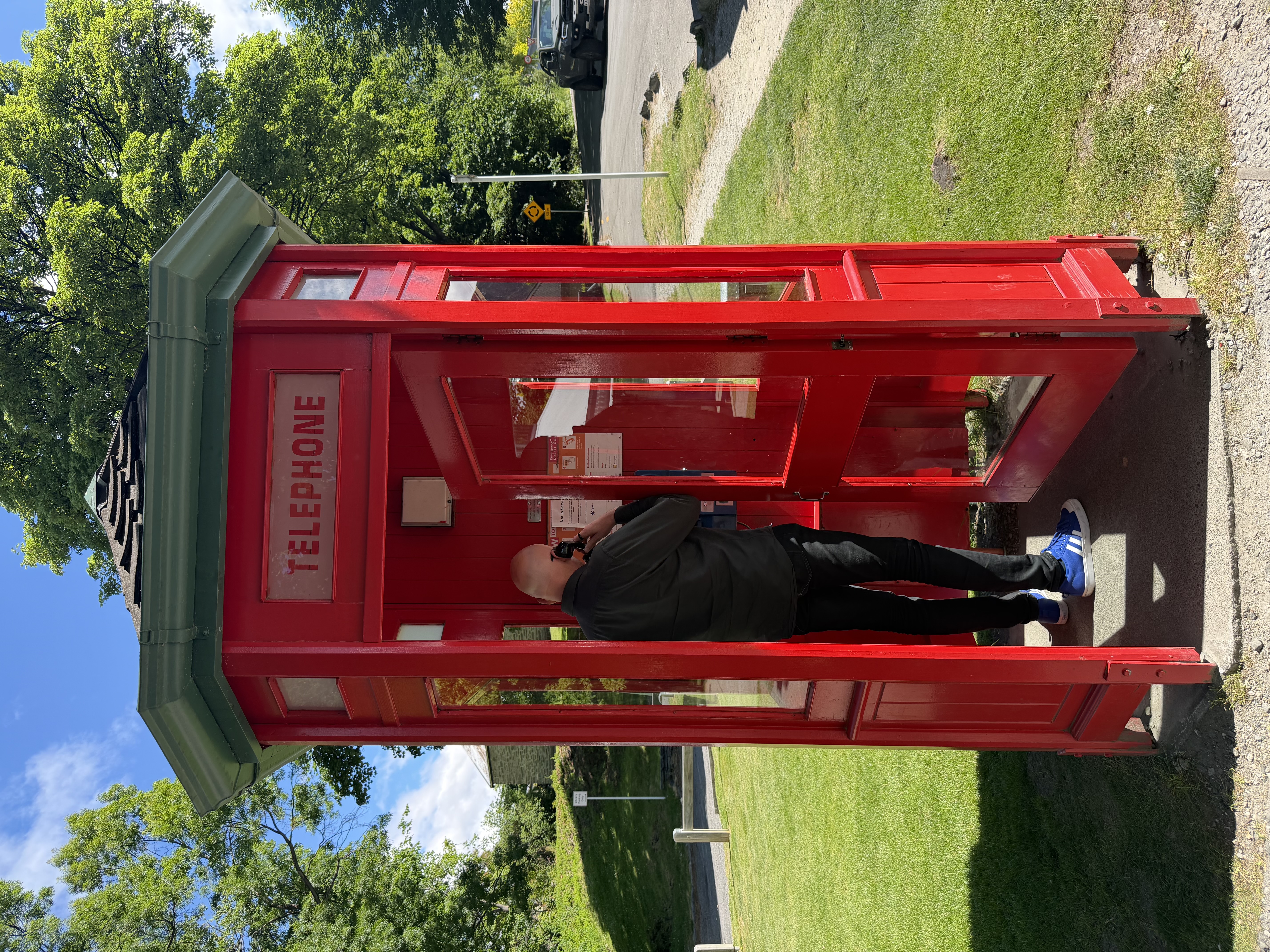
Spark chief brand and corporate affairs officer Leela Ashford said in a statement the existing New Zealand booths had reached the end of their life.
The network is loss-making.
“As copper is retired, the booths will be disconnected and removed unless there’s a viable way to replace them with a modernised version, connected with fibre,” she said.
“Spark isn’t required to operate phone booths, and we don’t receive government funding to do so, but we still see value in public connectivity – particularly for vulnerable communities and for access to social and emergency services.”

Spark has proposed replacing the old booths with a smaller number of modern booths – about 400 nationwide (including about 150 in Auckland) – through a joint investment with outdoor digital advertising firm oOhmedia.
“Digital advertising would fund the initial capital investment and ongoing operation of the booths and would enable free calling and Wi-Fi for the public, as well as better resilience in emergencies, with some satellite‑enabled,” Ashford said.
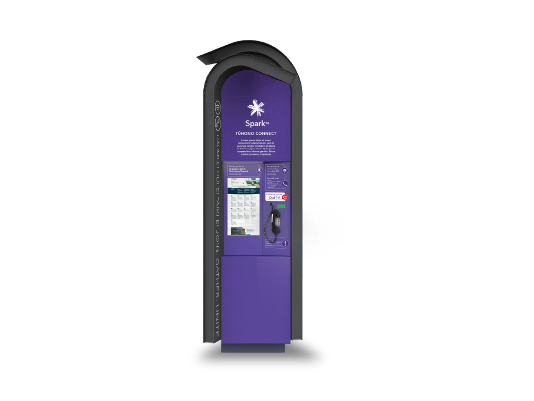
Councils, she said, would also get free space for public messaging, including during Civil Defence emergencies.
“The programme is on hold because we haven’t been able to reach [an] agreement in Auckland,” Ashford said.
“Auckland matters because without it, the national rollout isn’t financially viable, and that means communities across the rest of the country miss out too.
“We’ve asked the Government to clarify the Telecommunications Act so there’s certainty for everyone, and we’re waiting to hear back.”
Auckland Council’s position
Auckland Mayor Wayne Brown said he was aware of the issue. “It’s an effort by Spark to use our land to put their advertising on – and make money. Whereas it’s our land and we’re saying, ‘no, you’ve got to pay us to be there’.”

In a statement, council group strategy and CE office director Max Hardy said council staff had engaged with Spark on a proposal to modernise telephone booths, “which included the installation of commercial digital billboards on public footpaths”.
“The council provided guidance on how proposals of this kind could be progressed.
“While, as a result of Auckland’s transport reform programme, decision-making responsibilities in this area will transition to Auckland Council, the key decisions on this still sit with Auckland Transport.
“No formal application has yet been made to AT. If Spark wishes to progress the proposal any further, the council and Auckland Transport staff are open to further discussions and guidance.”
Another factor likely in the mix is that the council, through Auckland Transport, already has a lucrative outdoor advertising contract for bus shelters and buses.
That contract is run by QMS, a commercial rival of oOhmedia.
Hardy said the council was “open to innovative proposals that make good use of public space and deliver benefits for Aucklanders”.
“Public space is valuable and in high demand, and we aim to balance different uses while continuing to look for better and more creative ways to use it.”
In general terms, he said, the council considered that those wanting to place commercial billboards in the road corridor should follow an approval process that managed competing uses in those spaces and protected the public interest.
Spark said it was aware of relevant bylaws that governed digital screens and it was happy to comply with those.
“In Auckland, the installation of phone booths with digital screens of the type and specification we are proposing is a permitted activity under the Auckland Unitary Plan and we have already applied for and obtained certificates at over 50 sites,” Ashford said.
“We have engaged in discussions with council and AT on the significant public value that upgrading our phone booths will have.
“We have not proceeded with formal applications, because in these discussions it was made clear to Spark that our proposed activity would be subject to rent-like charges, which we believe are not permitted under the Telecommunications Act.
“Given the significant upfront capital investment required and the ongoing cost of free connectivity and maintenance (which would be borne solely by Spark and our out-of-home partner), this requirement would make the project commercially unviable.
“This is why we have sought clarification on the act, rather than continuing to proceed with applications in Auckland.”
Ministry of Business, Innovation and Employment communications policy manager Deborah Crawford said the Ministry for Regulation, as part of its Telecommunications Sector Regulatory Review, had made recommendations relating to modernising phone booths.
“MBIE is considering this issue as part of work to implement Cabinet decisions from the review and will provide advice to the minister in due course. As this work is ongoing, we are unable to comment further at this stage.”
Editor-at-Large Shayne Currie is one of New Zealand’s most experienced senior journalists and media leaders. He has held executive and senior editorial roles at NZME including Managing Editor, NZ Herald Editor and Herald on Sunday Editor and has a small shareholding in NZME.