Media Insider: TVNZ v Julian Batchelor defamation case - Jim Grenon fights costs claim

Is businessman Jim Grenon liable for up to $300,000 costs in a defamation case that TVNZ successfully defended against anti-co-governance campaigner Julian Batchelor? A court has heard the arguments.
Businessman Jim Grenon’s lawyer stood early in Auckland District Court room 9.2, eyeing the TVNZ news camera. The state broadcaster had been given permission to film proceedings.
Lawyer Chris Patterson questioned the way that permission had been granted, given that TVNZ was a party to the case itself. “It’s not exactly an independent media agency,” he told Judge David Clark.
More specifically, he was worried about what was about to unfold in front of the camera and other media representatives in court on Thursday.
“My main concern is that [Grenon’s] reputation isn’t attacked,” said Patterson, saying that he understood Grenon had been targeted “quite vigorously” in an earlier defamation hearing.
During that hearing in December, TVNZ and academic Sanjana Hattotuwa successfully defended a defamation claim brought against them by anti-co-governance campaigner Julian Batchelor.
Batchelor – the Stop Co-Governance campaigner who was adamant he had been wronged by TVNZ in an August 2023 news report that essentially labelled him as racist – revealed during the defamation hearing that his case was being funded by Grenon.
Grenon - who decided to support Batchelor’s case soon after seeing the TVNZ story in 2023 - became a director and major shareholder of NZME, owner of the NZ Herald and Newstalk ZB, in 2025. He now holds more than 19.90% of the company.
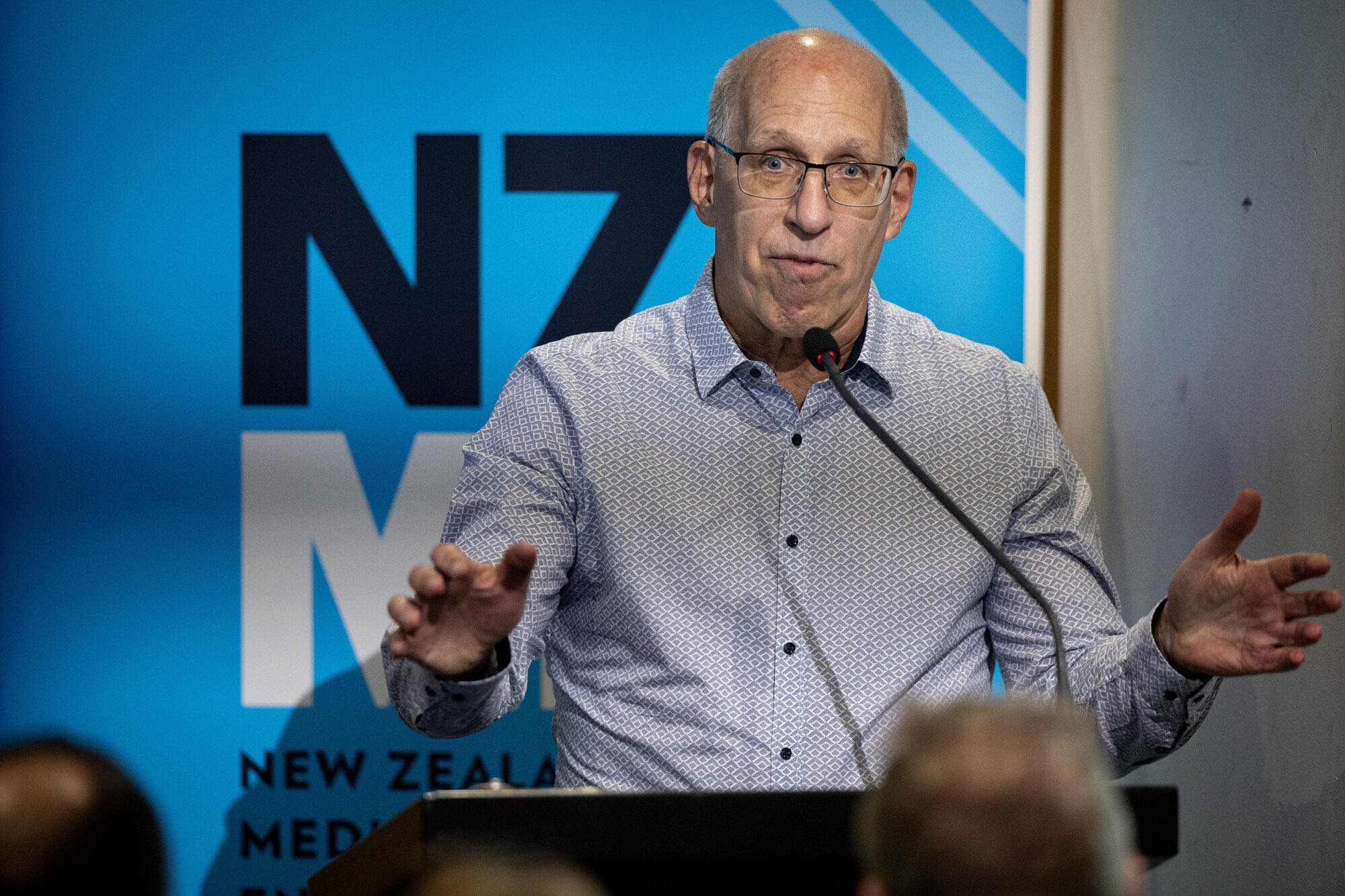
Back before Judge Clark on Thursday, lawyers for TVNZ, Hattotuwa and Batchelor were joined by Grenon’s lawyer to lay out their positions on the question of costs - and who should now pay the hefty legal fees.
But before that, Patterson strived to have media reporting on the case restricted.
“The concern that I have is that having the camera now in court - under the protection of absolute privilege - is that the non-party’s reputation will be attacked with absolute impunity, knowing that if the same comments were made outside of the courthouse, those comments would be on the receiving end of a defamation claim immediately,” Patterson said.
“I’m just relying on what I’ve been told. If there was a repeat of that again today, that’s going to be an abuse of the process of this court, and I think that’s highly improper.”
He suggested one “workaround” was that the judge could make an order that the non-party’s name - Grenon - could not be reported by the media.
But Judge Clark rejected that, saying one of the fundamental difficulties with Patterson’s argument was that Grenon himself had wanted to be heard and that was “why we’re not dealing with it on the papers”.
“It’s Mr Grenon who decided to fund the litigation of Mr Batchelor. That’s not a disputed issue in terms of his own evidence.
“So it’s also Mr Grenon’s risk that in making that decision, he gets criticised for doing so.
“There is nothing wrong [with that].
“Whether I take it to the point of whether he is now liable for the cost or not, that’s something which I have to determine as a result of this hearing.
“But he takes the risk himself ... he put his hand up and wanted to be involved in these proceedings.
“He can’t now come to me and say, ‘Oh gosh, there should be rules around how this is done’.”
The judge said Grenon was entitled to be heard, and the media were entitled to be in court.
The case
Patterson told the judge that Grenon - who was not present in the courtroom - had funded Batchelor’s case against TVNZ and Hattotuwa as a “concerned citizen” performing a “personal civic duty”.
He argued against any costs order against Grenon and “the $300,000 that they’re asking [Grenon] to pay for”.
But lawyers for TVNZ and Hattotuwa say the entire defamation case was “meritless” and a “political claim”.
They accused Grenon of using the case as a “Trojan horse”, an assertion also raised during the substantive hearing.
Patterson took exception to that phrase and used it as an example of abuse of his client.
“There’s no basis for that submission and of course ... TVNZ are now going to go and broadcast something unless the court puts some restraint on that ... there is no Trojan horse being run with this.”
The costs hearing
The lawyers acting for TVNZ and Hattotuwa, Daniel Nilsson and Davey Salmon KC, said the two big issues to be addressed were whether an indemnity costs order should be made and whether Grenon was also liable.
“TVNZ now seeks costs against both Mr Batchelor and Mr Grenon,” Nilsson said in a written submission.
“It says that costs should be paid on an indemnity basis. That is because Mr Grenon’s involvement in the proceeding was champertous and an abuse of process.”
Champertous refers to an agreement whereby an uninvolved third party funds a lawsuit in exchange for a share of any court-ordered financial reward.
“TVNZ has suffered loss, in the form of the significant costs incurred in defending the claim; that it would not have incurred but for Mr Grenon’s unlawful interference in the issue,” wrote Nilsson.
“If the court is not prepared to award indemnity costs, then TVNZ says that increased costs are appropriate to reflect Mr Batchelor’s and Mr Grenon’s conduct, the impact it has had on TVNZ’s costs, and the inadequacy of a scale costs award.”
According to written submissions, TVNZ is seeking at least $125,818.65 and Hattotuwa is seeking at least $107,137.
Indemnity costs are the actual legal costs incurred by the successful party or parties.
Salmon told the court that Batchelor’s case “was conducted in a problematic way”.

He criticised Batchelor’s behaviour during the substantive hearing and his approach to discovery, where he took an “utterly remarkable” approach to relevance.
Salmon said that Batchelor was an unreliable witness in court, refusing to answer questions and thumbing his nose at the court.
He described it as extreme, “disgraceful conduct” and the worst behaviour he had ever seen by a civil litigant.
Meanwhile, Nilsson, citing emails, outlined more details of how Grenon came to be involved after seeing the TVNZ story in 2023.
He said Grenon contacted Batchelor after seeing TVNZ’s news report.
Nilsson said Grenon met Batchelor, along with the chief executive of The Centrist - an independent media firm that Grenon owned at the time - at Grenon’s home.
“Here we have a situation where Mr Grenon comes up with the idea of suing, seeks out the plaintiff, [and] promises him that he’s going to pay for everything.”
Nilsson said Grenon initially spoke to lawyer Stephen Franks to discuss the matter, before turning to another lawyer, Matthew Hague, with whom he already had a standing arrangement.
At one stage, said Nilsson again citing emails, Batchelor raised the issue of any costs order and said he was out if he was on the hook for anything.
“And Mr Grenon says, don’t worry, I’m going to cover it. So I think we can say pretty confidently that this is not a proceeding that would have existed...
“It doesn’t matter how angry Mr Batchelor was, if these promises had not been made, including the promise to indemnify him for an adverse cost, we would not be here.”
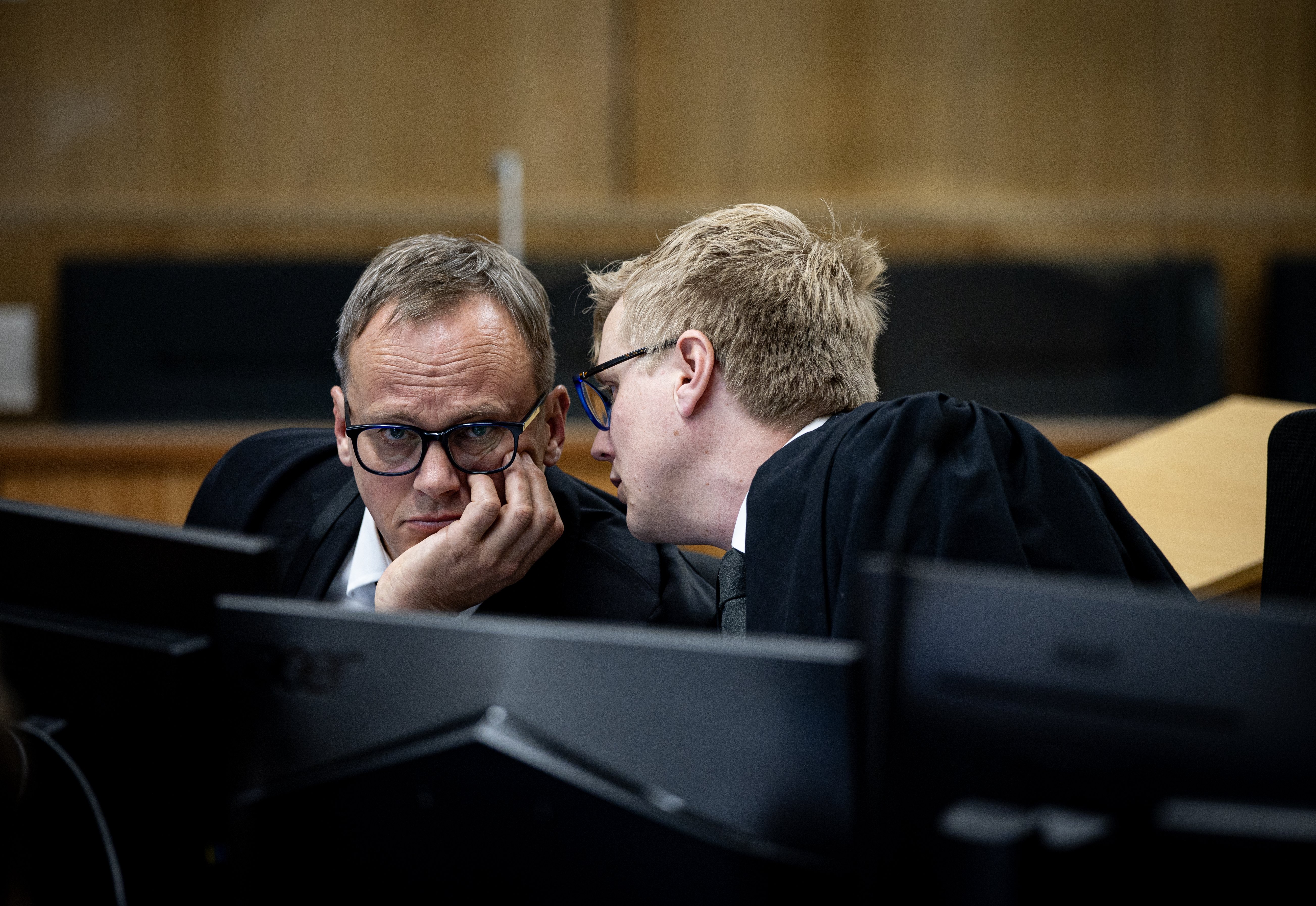
Further citing emails, Nilsson reiterated that Batchelor told Hague he couldn’t pay any costs: “If there’s a chance of liable costs... I am out...
“Response from Hague: ‘Jim has agreed to meet your costs and any costs that are found’.”
Nilsson said Grenon followed that up with an email: “Yes, Matthew’s description is correct.”
‘Dog-whistling’
Lawyer Chris Patterson told the court that Grenon did not control the proceedings.
“This isn’t a case about the most disgraceful conduct ever seen or a case that lacked no merit whatsoever.
“That’s not what this case is about - that is just effectively dog whistling and should be given no time whatsoever by this court.”
Both he and Hague pointed to the court’s finding that Batchelor had been defamed.
Hague said there was no need for uplifted or indemnity costs as TVNZ and Hattotuwa had not outlined a specific prejudice.
While Judge Clark found comments in the TVNZ story were defamatory, the state broadcaster and Hattotuwa successfully defended their position on several points of defamation law, including honest opinion and responsible communication in the public interest. Hattotuwa also successfully employed the truth defence.
Patterson said Grenon was not a party.
“He didn’t control the proceedings. The fact that he funded them doesn’t mean that he controlled the proceedings.
“Proceedings are often funded by non-parties. Insurance companies do it all the time, I donate every year to Forest and Bird who bring proceedings, and I know that money goes to enable them to do that because it’s something I want them to do.
“Should I be suddenly liable because I think that what Forest and Bird are doing is the right thing, despite other parties, including our great country, saying otherwise?
“He simply provided it like many New Zealanders do, as part of his personal civic duty.
“It wasn’t for commercial reasons. There’s no evidence to say otherwise.
“His role was as a concerned citizen who funded access to justice, and certainly, there’s never been a time in our history when we’re facing the greatest crisis of access to justice.
“I say more power to those who are here to assist other citizens to be able to access this court to enforce their rights because if they can’t, then they might as well not have rights.”
Both Patterson and Hague pointed to an interview that Batchelor had done with Sean Plunket of The Platform in early 2024 in which he had said he had a funder supporting him. They said TVNZ knew about this no later than April 2024, about 20 months before the hearing.
“They had every opportunity to seek better and further discovery,” said Hague. “They knew about funding support ... it wasn’t hidden by Mr Batchelor.”
Judge Clark, who ruled in March that Batchelor’s defamation case was “wholly unsuccessful”, has reserved his decision on costs.
Judge’s earlier decision
In his earlier substantive decision, Judge Clark grouped various issues under one subheading: “Lack of Discovery; Inadmissibility of Evidence; Who was Paying Mr Batchelor’s Legal Costs? Assignment of the Claim? Abuse of Process?”
He noted: “What occupied some focus during the hearing were issues of [a lack of] discovery by Mr Batchelor; admissibility objections of some evidence; the refusal by Mr Batchelor to answer a question about who funded [the Stop Co-Governance] pamphlet and the discovery Mr Batchelor was not paying his legal costs but instead, they were being paid by a Mr Grenon.
“To a greater or lesser extent, each issue led to the point that in closing, the defendants were highly critical of Mr Batchelor’s conduct, which they say has led to an abuse of the court’s processes.”
However, said the judge, the distractions “had little or no impact on my assessment of the merits of Mr Batchelor’s claim”.
Issues over the lack of discovery, for example, had not “hindered my assessment of the evidence”.
“However, in saying that, I reserve the right for the defendants to refer to this issue again when costs are considered.”
He said that right extended to the issue of Grenon’s involvement in the proceedings.
“His involvement comes in two forms,” Judge Clark said.
“The first is the question of who is the real plaintiff in this proceeding? The second goes to the question of costs. If Mr Grenon is paying the legal costs of Mr Batchelor, then what exposure does Mr Grenon have to an adverse costs award against Mr Batchelor?”
The judge noted the issue of costs would not be straightforward.
Editor-at-Large Shayne Currie is one of New Zealand’s most experienced senior journalists and media leaders. He has held executive and senior editorial roles at NZME including Managing Editor, NZ Herald Editor and Herald on Sunday Editor and has a small shareholding in NZME.