What’s going on with petrol prices, and will they fall fast enough to turn the economy around? – Liam Dann
Saving money at the petrol pump yet? You should be.
To be fair, it probably doesn’t feel like much.
But it looks promising, so promising in fact that some of our biggest banks have pulled back expectations for a rise in the Official Cash Rate in July.
Westpac has even lifted its economic growth forecasts for the rest of the year.
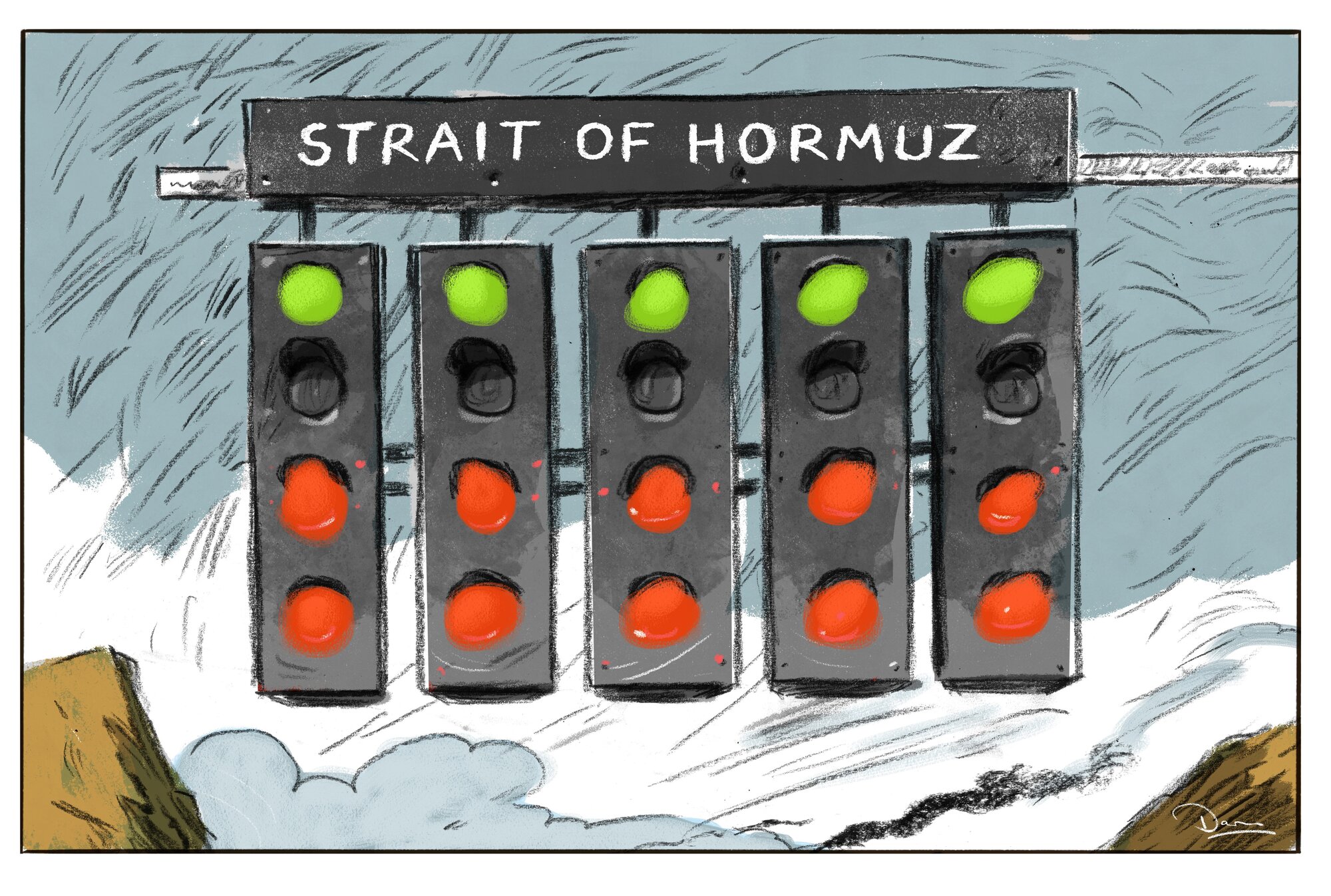
Ironically, the geopolitical machinations in the Strait of Hormuz continue to go quite badly.
It doesn’t look like tension will end any time soon.
But the weary world appears to have become used to it all.
As Pie Funds founder Mike Taylor assured me back in April, markets get bored with war.
I went down sick this week, and so I checked out of the economic and financial soap opera for a couple of days.
On Friday, feeling better, I woke to grim news that Iran had attacked a container ship to send a message about its ongoing control of the waterway.
The price of oil jumped. Bugger, I thought. I hope this doesn’t push petrol prices back up.
Then I checked the oil price. Brent crude had jumped to US$75 a barrel – a lower price than it had been when I took to my sick bed.
In the intervening days, it dropped to US$72 a barrel – basically back to the upper end of its pre-war range.
How can traders be so unperturbed by the precarious nature of the peace deal?
Clearly, the weight of investment money is already tuned to a post-war trading environment.
It would take a lot to derail the situation now, it seems.
Despite the bluster, posturing and occasional firing of missiles, both sides have a lot riding on this peace deal sticking.
Trump and his administration need to get oil prices down to make consumers feel better about the economy before the US midterm elections.
Iran has emerged from the conflict with relatively favourable terms and conditions; it seems unlikely it will want to provoke another full-scale US bombardment.
Anyway, back to the petrol pump and what you are paying to fill up this weekend.
Despite oil prices being well back within a range we were used to pre-war, petrol prices remain elevated.
The latest update on the fuel tracking website Gaspy has the average price of 91 octane at $3.04 – a 6.5% fall in the past 28 days.
But some places are selling it for as little as $2.70 a litre, so the odds are you can fill up for under $3 if you shop around.
At its peak, 98 octane petrol topped $4 a litre in some places and 91 went above $3.60.
So that’s more like a 15% fall from the peak we were paying in March.
That’s a bit of a cash bonus for most people, but not enough of a saving to have consumers spending for joy yet.
We can expect to see more savings flowing our way, though.
Brent crude oil prices are now off by about 35% since their peak (US$114.44).
It’s just going to take a few more months of stability to get those kinds of gains at the pump.
It takes a bit longer for cheaper oil to flow through to refined fuel prices.
There has also been a slump in the value of the Kiwi dollar in the past few weeks (from US60c to US56c), which will mean we’re all paying nominally more for petrol than we might otherwise have done.
And, as Z Energy chief Lindis Jones told me last week, fuel companies took a hit on their margins as prices were rising in March.
They are going to claw some of that back as their costs fall, within whatever limits the Commerce Commission deems acceptable.
But still, there’s no question that falling fuel prices will be good for the outlook for the New Zealand economy.
There’s the psychological boost of watching prices fall rather than rise, for starters.
We need to bear in mind that, as petrol prices hit those March peaks, there were acute fears about supplies running out and expectations that prices were going to keep rising.
That delivered a significant confidence blow to the economy and its fledgling recovery.

Westpac chief economist Kelly Eckhold has been depressingly accurate with his grim assessments of the geopolitical situation in the Middle East.
But by his own admission, he has been pleasantly surprised by how oil markets have coped.
He and his team put out a comprehensive note last week, reassessing New Zealand’s economic outlook – mostly for the better.
They don’t see the Official Cash Rate rising until September, and then see it going up just once more to end the year at 2.75%.
They also now see headline inflation peaking at 4% in the (current) June quarter and ending 2026 at 3.5% – possibly lower if the most recent fall in oil prices is sustained.
They have lifted their 2026 GDP growth forecast to 2% from 1.5% previously (although this remains lower than their pre-war forecast).
ASB economists have taken a similar approach, pulling back their forecast for the first RBNZ hike until September.
“Recent US-Iran developments, while fragile and uncertain, appear to be consequential,” says ASB senior economist Mark Smith. “As a consequence, the hurdle for the internal Monetary Policy Committee members (who hold the balance of power) to switch to vote for an OCR increase does not look to have been cleared.”
It is worth noting here (for worried mortgage holders) that everyone still expects the OCR to rise later this year and keep rising next year.
The current OCR setting is stimulatory. The less bad scenario for inflation only buys a longer window for low interest rates.
As the economy improves, rates have to rise at least back to neutral levels. I’ve seen that assessed by various banks at anything from 2.75% (two hikes) to 3.25 (four hikes).
Then, ideally, we’ll see a plateau while the economy builds up a head of steam.
Caveats to that are the usual rogues’ gallery of possible external shocks: another escalation of trade war or another real war, or a major market meltdown (I’m looking at you, tech stocks) or a doozy of a natural disaster.
But as I argued last week, everyone always says they are cautiously optimistic, and that doesn’t seem to be working very well.
Let’s try some reckless optimism.
I’m sticking with that view, despite all the worrying and negative news coming out of the Middle East.
Liam Dann is business editor-at-large for the New Zealand Herald. He is a senior writer and columnist, and also presents and produces videos and podcasts. He joined the Herald in 2003.
Catch up on the debates that dominated the week by signing up to our Opinion newsletter – a weekly round-up of our best commentary.