I ate like a Boomer grandparent for a week. They’re wrong about our diets
Ask a Boomer grandparent and they’ll swear their generation ate healthier than yours.
Check the statistics (and the vintage recipe books) and know they are lying through their Sunday roast-stained teeth.
There is not enough lard in the world to cook like the 1960s. In the 1970s, green vegetables were boiled grey and, in the 1980s, New Zealanders ate a record 10kg of cheese per person, per year. Nostalgia tastes like deep fried camembert with apricot sauce and a heart attack.
“Classic” Kiwi meals were red-meat and animal-fat heavy. Garlic was rare, curry was an impotent all-purpose powder and, while everybody had a garden, what they did with the things they grew in it was unspeakable.
Chef Peter Gordon was raised in Whanganui. His sister worked at the local Chinese takeaways.
“Once we were eating there with Dad and we asked ‘what’s this crunchy vegetable?’ Dad said ‘oh, it’s cabbage’.”
Could you eat like your grandparents? Should you even try?
When an editor proposed a story on intergenerational dining, my RSVP was rapid – who doesn’t want to mix one cup of cooked crayfish with cream cheese, blue cheese, sour cream and sherry? (Serve with potato chips and your own shredded dignity.)
1960s: Salmon rissoles and canned green beans
At Auckland’s Central City Library, I turn the brittle, yellowing pages of a 1965 New Zealand Woman’s Weekly.
The cover teases stories about how to grow fuchsias and the amazing possibilities of human deep-freezing. Inside, there are advertisements for pre-flaked rice, pre-blended mustard mix, processed luncheon sausage and five-minute “packet-to-plate” frozen fish cakes.
The 1960s as a bastion of home-cooked health? Hold my cup of steaming Gregg’s.
I flip the magazine pages and wonder if the entire decade was sponsored by Big Pig. A “holiday sausage platter” sounds grand but is essentially half a kilogram of pork sausages and one can of tomato soup. It is unclear whether the “twist” in the sausage twist is a large jar of pickled cabbage – or the eight-ounce vacuum pack of streaky bacon you wrap around the sausages.
Judge a decade by the contents of its Consumers Price Index basket – the items Stats NZ uses to track price changes over time, selected because they reflect typical household expenditure. Think of the basket as an historic snapshot of what we were (and weren’t) eating.
In the 1960s, for example, runner beans and herrings in tomato sauce were dropped – and frozen beans, canned beans, canned salmon, fruit juice, “roaster” chickens and instant coffee added.
Life was getting faster and, arguably, more fun. Could the classic Kiwi dinner keep up?
In the 1960s, our per capita coffee consumption skyrocketed to 1.5kg (compared to just 140g three decades earlier). Meanwhile, one study shows that between the 1950s and 1960s, the proportion of international, entertaining and party recipes in New Zealand-published cookbooks jumped from 20% to 53%.
The sophisticated hostess served red wine punch made with six teaspoons of Tang drink powder and (more) sugar to taste. The “new products” recipes in the 1968 Edmonds Cookery Book included a sweet and sour fish pasta made with instant onions and the “cocktail savouries” section paired steamed prunes with cream cheese and saveloys with pickled onions, threaded onto toothpicks and jabbed into an orange, apple or (inexplicably) “a large pumpkin”.
It would be another nine years before saveloys made it to the CPI basket. I reluctantly put away the toothpicks and found a can opener. We were having salmon rissoles and tinned green beans.
In 1960s New Zealand, demand for canned salmon was so great that shortages made the headlines. I contemplate a bowl of pink and grey sludge that smells a bit like cat food and find this quite hard to believe.
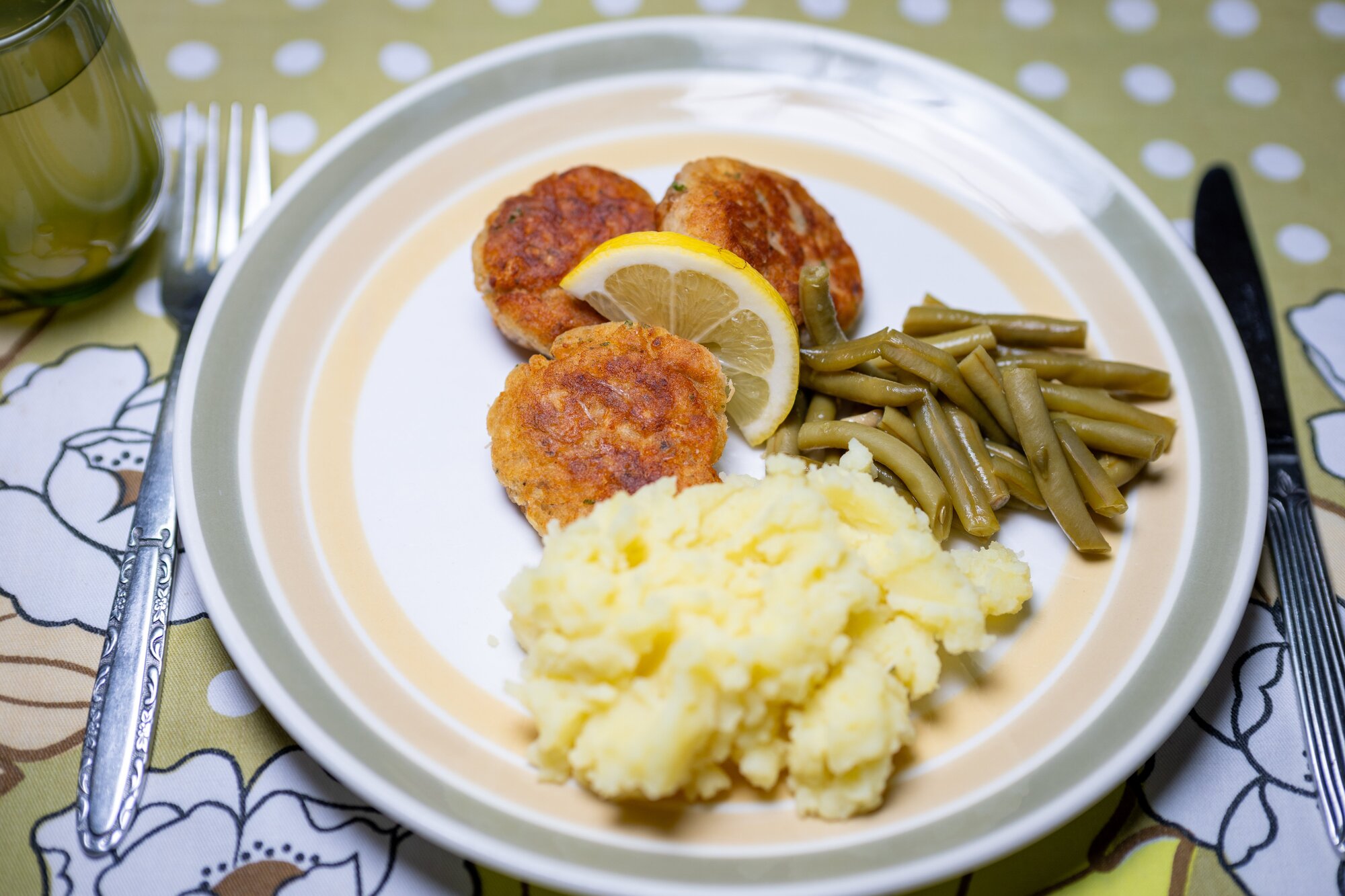
Smoosh the canned fish with equal parts cold mashed potato and flour. Grated onion is optional but also crucial if you possess taste buds. The only other ingredients in this 1960s Edmonds classic are baking powder, salt, pepper and “smoking hot fat”.
The ugly ducklings hit the pan with a sizzle and emerge as swans – crisp on the outside, soft and salmony on the inside. If I was running a 2026 cafe, I would put these on the menu stat. I would not, if my life depended on it, pair them with canned green beans – a product that will truly test your comprehension of the words “green” and “bean”.
The verdict: it’s hard to love a decade that fried in dripping, promoted recipes for tongue (“boil until tender; peel and slice”) and gardened on a quarter-acre section but chose to eat beans from a can. But at around 60c a rissole, that salmon was a tasty, low-cost banger – as you’d expect from a dish that, at its heart, was fat-fried potato.
1970s: Meatloaf with green salad
“A man spins a hollandaise in his blender with no more effort than he spins a frozen daiquiri.”
In 1972, The Playboy Gourmet ($5 from Auckland’s Central Flea Market) boldly declared “the sheer variety of sensual pleasures in the world’s cuisines can supplement those of sex itself”.
This is a sentence you can only get away with in a book that contains 27 recipes for oysters.
In 1971, The New Zealand Woman’s Weekly Cookbook suggested “stews fall into two main groups – brown and white”.
The Weekly acknowledges that finger foods are ideal for pre-dinner drinks or “in front of TV” but read on and know we are still a nation that serves mutton with a caper sauce made from the water we boiled the meat in. (“With careful cooking and attention to the removal of excess fat, mutton is very pleasant.”)
In the 1970s, the CPI basket lost rhubarb, canned peas, canned beans (RIP), tripe, sheep’s tongue and fruit extract liquid. New additions? Kiwifruit, cucumber, yoghurt, margarine, vegetable oil, takeaways and saveloys.
I ask a 20-something colleague if she knows what a saveloy is. “A type of cabbage?” she guesses.
Fifty years ago, processed meat loomed large in the Kiwi diet. Consider the key ingredients for this Woman’s Weekly late summer, time-saving salad: salami, cooked ham, ham and chicken luncheon sausage, cooked chicken and a tin of asparagus pieces.
It looks like a medical emergency.
“Meat mix makes for really tasty eating and is a way of using up leftover meats you may have in the refrigerator,” reassures the recipe writer.
Sally Mackay, nutritionist and senior lecturer at Auckland University’s school of public health, recalls meat, potatoes and overboiled greens dominating her childhood dinner plates. Food was brown and beige and a greyer shade of green.
“I guess we always had tomatoes, but things like red capsicums I don’t remember eating until the 1980s ... my mother was a good cook, but not an adventurous cook. She was a really good gardener, but what she did to the veggies did not enhance their flavour or nutrition.”
Mackay says 1970s diets contained less packaged food than now, but “looking back to when I was a child, particularly with a farming background, there was a lot of meat. Processed meat, cheese, whole-fat milk, saturated fat – Mum would have the thing of dripping in the pantry ... and our heart disease rates were very high. I remember men in their 50s and 60s, dropping dead of heart attacks.”
And in urban Aotearoa, they were having fries with that.
The country’s first Kentucky Fried Chicken opened in 1971, Pizza Hut arrived in 1974 and McDonald’s in 1976, but these were a city phenomenon. In the provinces, we ate tinned tuna mixed with cold pasta and condensed milk mayonnaise, and saveloys split down the middle and stuffed with mashed potatoes, bacon and cheese. What to cook to represent a “classic” dinner? In the Woman’s Weekly I find the Holy Grail – a meatloaf that only this processed meat-obsessed decade could love.
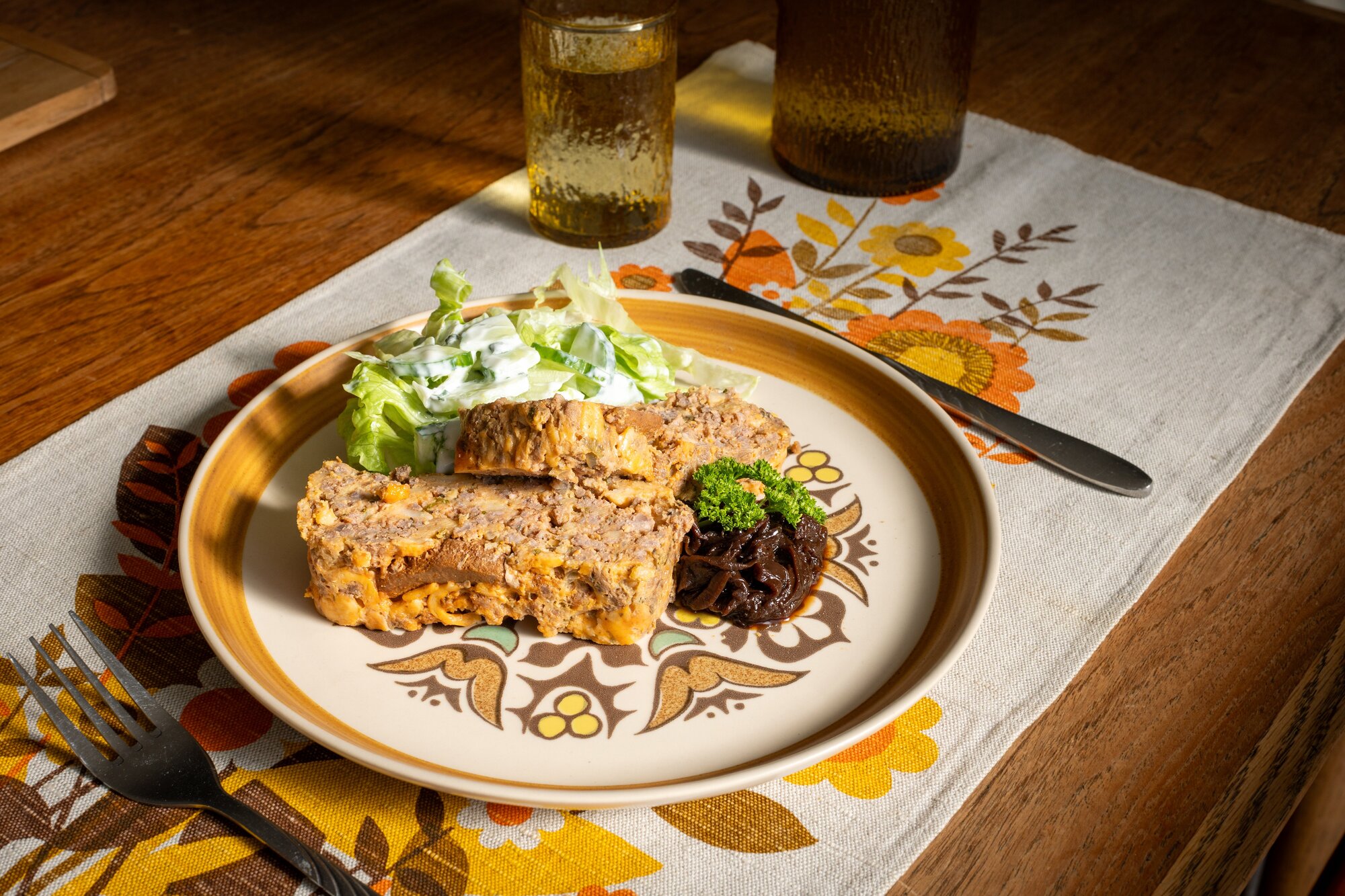
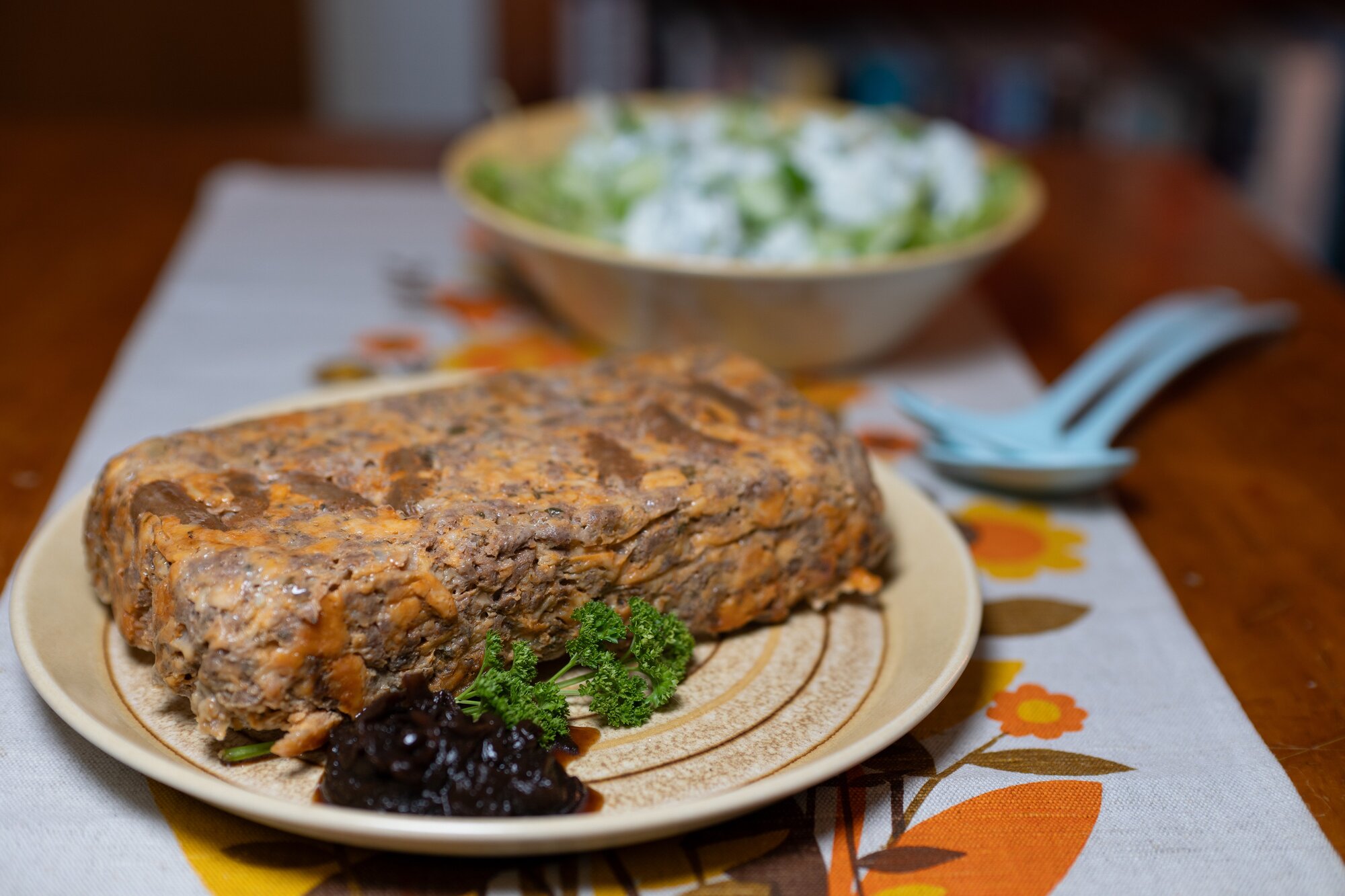
“Remove sausages from the tin of spaghetti and sausages. Arrange sausages in the bottom of a greased loaf tin. Combine mince, breadcrumbs, onion, spaghetti, parsley, dried mixed herbs and well-beaten eggs ... turn out and serve cold with a green salad.”
When I describe this recipe to chef Peter Gordon, he says “when I make meatloaf, a can of baked beans always goes in”.
He says “it’s not quite a pate en croute from Paris” but it does look interesting when you slice it. (He also confesses that, until he moved to Melbourne’s Lygon St in 1981, he didn’t know spaghetti came dried and in a packet.)
Gordon’s family dinner memories are rooted in the 1970s. In Auckland, where he visited his mum, there was mayonnaise in bottles and fish and chips were fried in vegetable oil. In Whanganui, there was a pot of dripping on the stove and a whitebait net on the roof of the car.
“Did you ever have curried sausages? If you were flash, you might have sultanas in them. We only ever had rice with curried sausages. We’d ask ‘can we have rice with anything else?’ No.”
In Whanganui, vegetables came from the garden and fish was freshly caught. There was a chest freezer in the dining room containing “half a sheep, a couple of pigs, a whole lot of whitebait, frozen paua, crayfish, ice cream” and it doubled as somewhere to sit.
Gordon remembers his stepmum cutting the top off a head of garlic and wiping it around the inside of a Tupperware salad bowl.
“When I think back, that head of garlic would last a year ... it was never peeled and chopped and added to anything. We had lots of slow-cooked meats, which I think was probably good, and we had barbecue. But we definitely had meat for at least one meal a day.”
Gordon moved to Melbourne one week after Charles married Diana and she became the people’s princess. He ate at Vietnamese, Moroccan and Japanese restaurants and discovered olive oil was not just for putting in your ears. At Queen Victoria market, his sisters bought green, pear-shaped things that they ate with a bag of triangular yellow things.
“The world of ingredients suddenly just exploded and I was just so happy to be there.”
I wish I was writing this story in Melbourne.
At the supermarket, I buy tinned spaghetti and sausages and spend $13 on 500g of mince that is 18% fat and, in 1971, would have cost me 39 cents or around $7.50 in today’s adjusted-for-inflation dollars.
It pains me not to throw garlic in the bowl, but a teaspoon of dried mixed herbs smell as ‘70s as patchouli and I’m chopping a beautifully crisp iceberg lettuce that I’ll coat with a yoghurt and cucumber dressing I found on page 99.
That dressing is terrific (it’s basically a raita) but the meat loaf is a sludgy chunk of congealed fat. Its tastiest components are the tiny processed sausages infused with notes of spaghetti sauce. I can’t eat more than a spoonful. In an act of desperation, I crumble the loaf into the mashed spud and mucilaginous “beans” left over from the ‘60s and fire up the frying pan. Sadly, meatloaf rissoles are meatloaf by any other name.
The verdict: I had such high hopes for the decade we consumed on a vinyl couch (black and orange) in front of The Osmonds (black and white). But it turns out that while city kids were eating KFC and misogyny disguised as the sexual revolution was giving us 27 different recipes for oysters, most of us were still eating too much fatty meat with overcooked veg and spuds.
1980s: Six-minute camembert and bacon chicken rolls
Spirits and shoulder pads were high. The stock market crash was a full two years away and, in the country’s most famous test kitchen, they had finally stopped putting luncheon sausage in salads.
“Whatever happened to the idle rich?” asked the New Zealand Woman’s Weekly in March 1985.
I suspect they were on their yachts eating cheese.
The magazine that gave us family fruit loaf and carrot and beef bake in the 1960s was now offering recipes for scallop mornay, steak with bearnaise sauce and avocado with everything.
But while home cooks were stuffing chicken with camembert, they were also learning to stir fry. Dinner was not as predictable as it used to be and the CPI basket changes reflected international influences.
In: nectarines, pasta, novelty ice cream, mandarins, broccoli, salami, muesli, muesli bars, a greater range of takeaway foods and “cheese (exotic)”.
Out: silverbeet, swedes, ground coffee, cocoa, marmalade, grapefruit, parsnips, weiner schnitzel, lambs fry (liver), dripping, baking powder, custard powder, jelly crystals and salt.
“Things are changing fast – gone are the days of endless roast dinners and vegetables cooked to sludge,” said the introduction to Annabel Langbein’s Cookbook, her first ever, published in 1998.
“There are increasing numbers of new and exciting foods on the market and a range of ethnic restaurants”.
Chapter headings in Langbein’s book reflect the decade’s prevailing culinary and social concerns: think “free food” (watercress soup et al), “when the money’s gone” (hummus), and “battle of the bulge” (smoked mussel and corn chowder with low-fat milk).
Sally Mackay’s first job, in the early 1990s, was with the Heart Foundation. She recalls the major, government-funded focus on cutting the consumption of saturated fats – a shift that was already underway, as indicated by the results of 1977 and 1989 nutrition surveys that showed New Zealanders’ energy intake from fat had dropped. (Ministry of Health data from 2022 shows heart disease deaths had fallen by 82% since 1970 – from 240 deaths per 100,000 people to 42).
“Margarine came in, we started switching from whole milk to trim ...
“There was a big push to reduce smoking, but also saturated fat,” says Mackay.
An unintended consequence? “If you take the fat out, you’ve got to put something in ... so this is where some of the sugar or refined carbohydrates crept into our food supply.
“Really, what we wanted was for people to move more to whole grains and complex carbohydrates.”
Celia Hay, New Zealand School of Food & Wine director, says our grandparents simply didn’t have access to the highly processed, packaged foods of today.
“They ate seasonally and more wholesomely but it was pretty boring ... the idea of steaming or sauteeing vegetables came out of Asia in the 1970s but it was probably more like the 1980s before you see it in New Zealand.”
Bok choy and other Asian greens didn’t exist in the mainstream, says Hay. Even the idea of pan-seared meat (unless it was outside on the barbecue) took time to catch on.
“They would stew meat and slow cook some of those tough cuts and not use the premium cuts because they were expensive. You’d have them in a restaurant – a sirloin, or a fillet – but [at home] it was the stew, the boil up, the grilled chops, mashed potatoes and overcooked vegetables. Those things started to change in the late 1970s and ‘80s.”
We might have stopped roasting fatty legs of mutton but, in 1988, we had not gone completely lentil. This, from the “meatless meals” chapters of Langbein’s book: “There is now a lot of scientific evidence which shows lean red meat to be a health food with valuable amounts of high quality protein, minerals and vitamins ...”
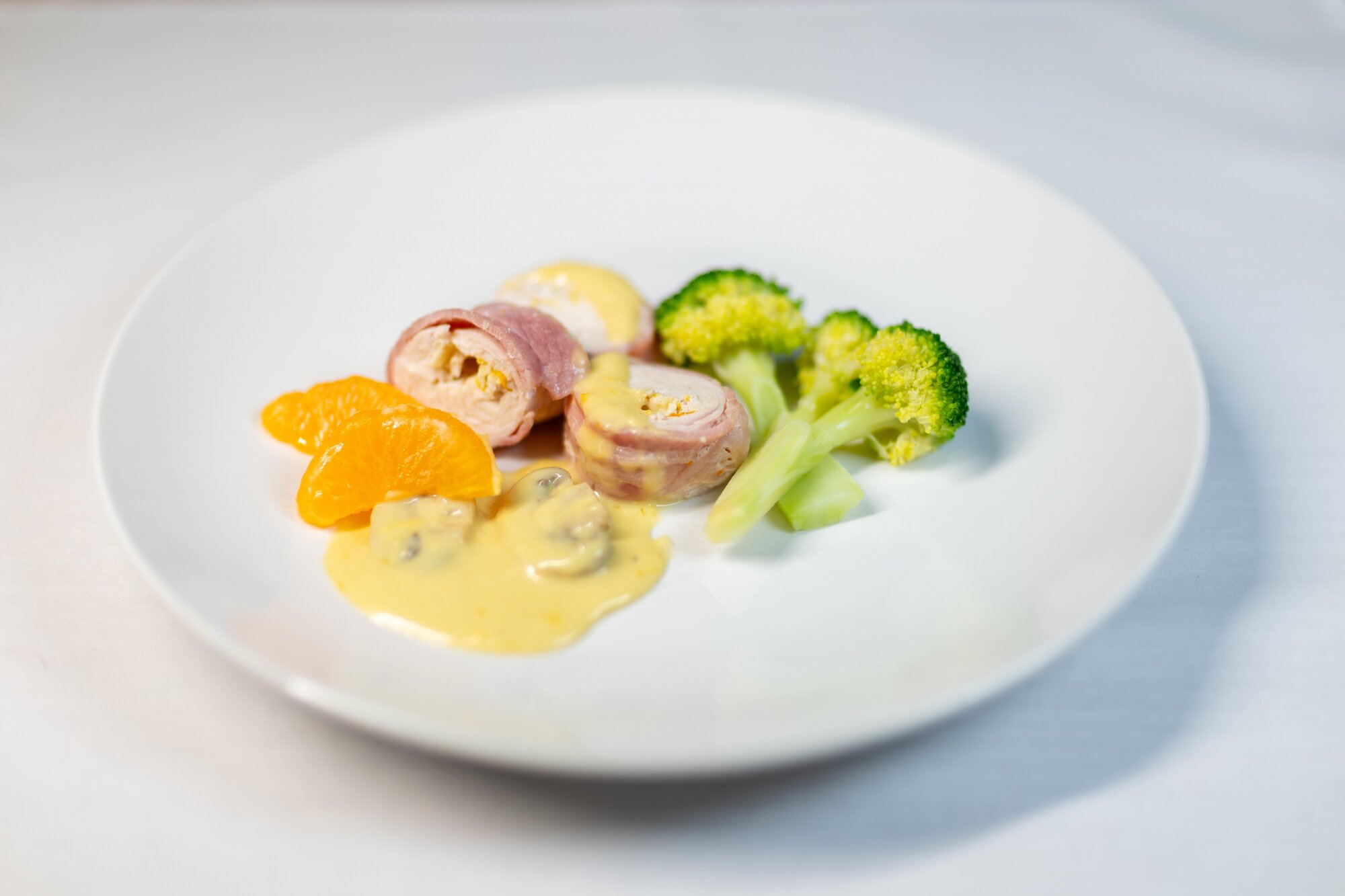
When I moved into my first flat in 1989, every second thing I ate was cooked in a wok or invented by Alison Holst. I was yet to convert to Langbein, but as I zest mandarin to add to her six-minute camembert and bacon chicken rolls, I reflect how much tastier life might have been had I been able to afford a microwave and cheese (“exotic”).
This is a recipe built for a decade where there were places to go, people to impress and an open bottle of wine in the fridge at all times. Microwaved bacon smells like soup sweat, but if you haven’t had skinless chicken breast since the actual ‘80s, I recommend you push through any discomfort – no Uber driver is going to deliver this level of deliciousness in six minutes.
The verdict: We baked brie and we stir-fried broccoli. Family dinner was a lazy lasagne or meat with fruit sauce. Everything was changing and we ate at either end of those extremes. We could have a cottage cheese and mung bean sprout sandwich on wholegrain bread for lunch – and then come home and microwave a wine, cream and orange sauce in the same amount of time it took Duran Duran to sing Hungry Like the Wolf. I’d go back in a (healthy) heartbeat.
2026: The after taste
Did our grandparents really eat healthier than we do today? Was dinner in the “good old days” actually any good? Some of the home truths I discovered were, frankly, horrible.
Consider spaghetti bolognese. My not very traditional midweek version includes carrots, mushrooms, zucchini, capsicum and, increasingly, lentils – but one historic rendition I encountered contained a can of tomato puree, one onion, dried herbs, butter and a lot of minced mutton.
If our grandparents did eat better than us (and that’s debatable), it’s surely only because they had no choice?
Meat has become leaner, pulses are normalised and our fruit and vegetable harvests and imports have never been more varied. We cook with less fat, our bread contains more wholegrains and we know the perils of too much sugar. Our ability to cook and eat “healthy” has never been greater. So why don’t we?
Celia Hay: “People are happy to look at recipe images on social media, but they don’t have the patience to cook. Phone addiction is driving salivation. ‘Oh, that looks delicious, I want it’. But they go for convenience food because they don’t have the patience or the ingredients to put it together ...”
Sally Mackay: “We’ve got so many people who think they know so much about nutrition and we’re just forgetting the basics. Eating more fruit and vegetables, eating less fast food and processed food, having less salt ... a lot of us just don’t have the time to utilise all the ingredients that we’ve got now. We see that with the [consumption of] convenience meals ... it’s a pretty simple message, but it’s just hard for people to do with their lifestyles.”
We are what we eat. And in 2026, we could and should be eating better than we did in 1966.
Kim Knight joined the New Zealand Herald in 2016 and is a senior journalist on its lifestyle desk. She has a Masters in Gastronomy and remembers her own grandmother as one of the most adventurous and curious eaters she has known.