I’m a model and my face is my currency. AI is cashing in – Seabrook-Suckling
In Mindy Kaling’s new show Not Suitable for Work (which premiered early June on Disney+) the character Kel – an aspiring actor struggling to pay his bills – takes a modelling job that sees him sell his complete digital likeness to an AI company. He’s later shocked when his perfect jawline is used to peddle a plastic surgeon’s services in an ad.
It’s played for on-the-nose comedy. But for models in New Zealand right now, it doesn’t feel like fiction after Kiwi brand Huffer was accused of using AI to recreate local model Elijah Timmins-Scanlon’s likeness from previous work he did for the company.
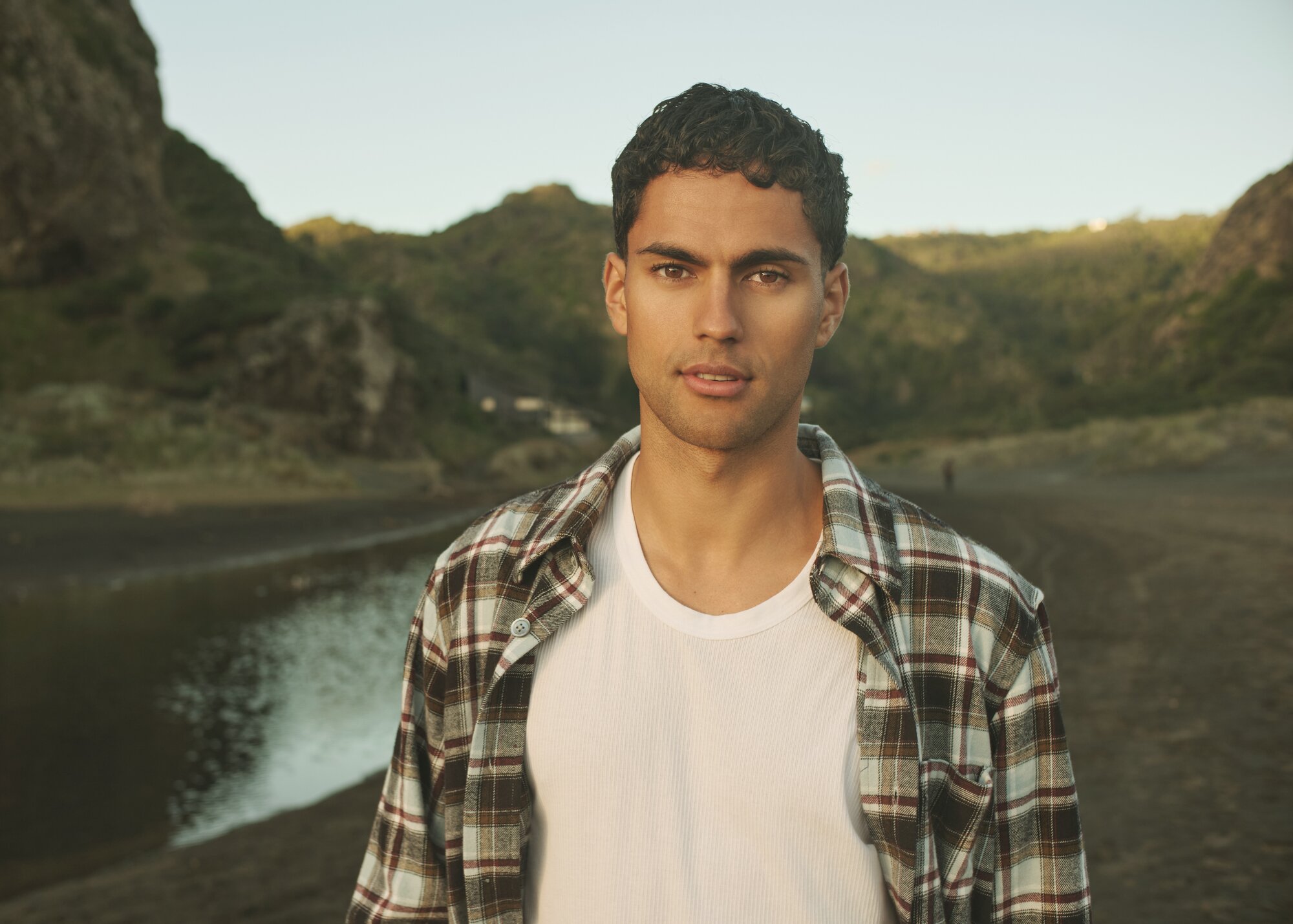
Today, Huffer clarified the situation on its Instagram page. “Around the specific imagery being discussed, we want to be clear. We did not use this individual’s face to create an AI model,” Huffer wrote. “We did generate the new image using an AI design tool – but the image was not engineered to resemble any specific person…
“This situation has also opened up a wider conversation about AI tools and how they can be used in a way that is thoughtful, responsible, and respectful.”
As a working male model with 20 years’ experience, I feel a jolt of cortisol every time I read about the use of AI models in advertising. For us Kiwi models, this issue cuts deeper than the general hysteria about AI-fuelled job losses. It is tangible, personal and already happening in the industry. AI may not use a specific person’s likeness, but it is trained on real faces to create a new model. In practice, this means a real-life individual loses out on a job in favour of a tacky artificial solution.
When OpenAI went viral in public consciousness a few years ago, its generative image capabilities were captivating. Fancy a realistic photo of yourself on the moon? It was just an upload away. How about you with a roided-up body and a Love Island-quality girlfriend on a Polynesian beach? A quick prompt and a few clicks and there you both were.
Reality soon set in – six finger hands and all – as generative AI images lost their sheen. They became corny. Brands such as Guess and Mango found this out through public backlash.
To an outsider, being in front of the camera looks like the easiest job in the world. Show up, look pretty, you’re done. No wonder generative AI feels like an easy replacement. The reality of the work as a model is something else entirely.
A shoot I did last month took nine hours and a crew of 10 to produce more than 700GB of photos and video. My job was not just to stand there. It was to embody a feeling, an emotion, a point of view. One given to me by a creative director and a photographer, and I was hired to produce authenticity from their vision.
Through my face, yes, but more importantly through my eyes, my body language, and my humanity. My job was to be believable and translate a mood that sold a product and an idea. I was the physical manifestation of a brand for the day.
What else can’t AI do? Bring energy to the set. Make every crew member feel valued and stay motivated, especially at the point of the day when everyone is cold, tired and just wants to go home. That energy gets forever frozen in the frame. This is what sought-after human models carry into a room. And it shows in the final product that will be viewed by thousands.
For all of this, we get paid a few hundred dollars for a day’s work. In New Zealand – especially as a male model like me – you’re lucky to get one job a month. We are hardly rolling in it.
This is the context with which the use of AI models must be understood. Companies hire us for the day, and during that day they can wring every last shot from us. We will do whatever scenes we are asked for, at whatever locations, wearing whatever number of outfits requested. We’ll embody as many moods as directed. Show our pearly whites to the point of pain. Contort our bodies into positions that will ache for days.
But like with any job, the work stops when we go off the clock. Neither we nor our agents have consented to anything beyond the time-bound reuse of our image (usually 12 months) specifically stated in our contracts. Brands are not buying our faces; they are renting them. Intentionally or not, when that rental agreement doesn’t account for AI tools, the model pays the price.
We cannot fight generative AI alone. But as talent, there is something we can do. Collectively, we have power over our own image when we refuse to sign loose contracts that don’t explicitly protect our digital likeness.
Hollywood actors’ strikes achieved such success (you don’t see AI “actor” Tilly Norwood replacing Scarlett Johansson) by banding together. This works if we guard our own faces and read the fine print. Not doing so is just devaluing our currency and handing it to the tech companies already profiting from our faces.