Our age-gap relationship didn’t bother us, but now I’m a widow at 43
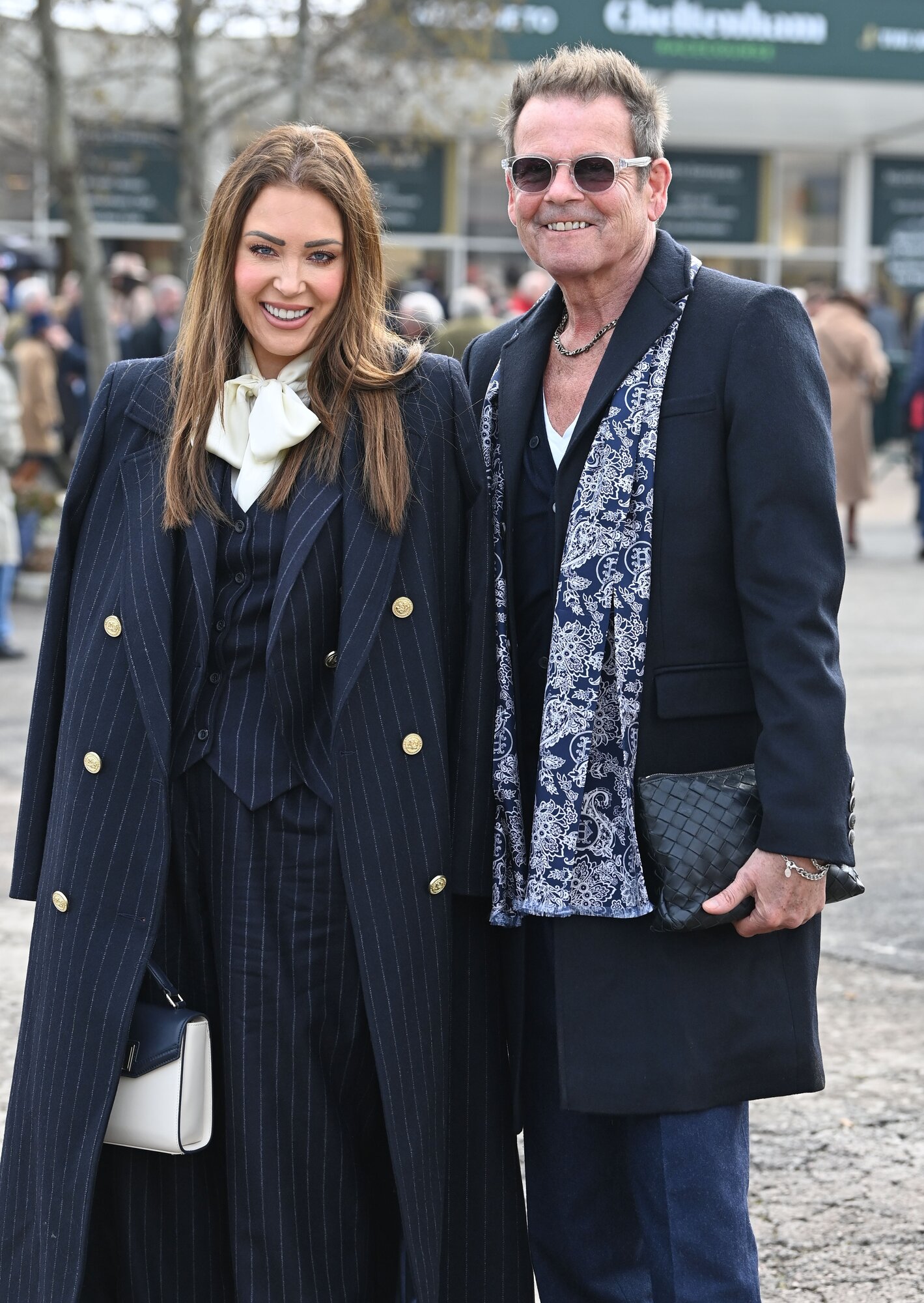
Last week I went on my first work trip abroad since the death of my beloved husband, John, four months ago.
Waiting in the plane on the Provence tarmac for a delayed flight home, grief snuck up, catching me off guard.
Around me, other travellers were anxiously checking their watches, wanting to get home to their partners or for their children’s bedtime.
I suddenly realised that no one was waiting for me, wondering where I was. I ordered a Hendrick’s gin and tonic and burst into tears.
I cried for about five minutes, then mopped my face, reapplied my makeup and carried on. That’s how grief has been for me these past few months: short bursts of overwhelming sadness, followed by the practical business of getting through the day.
Losing John to oesophageal cancer in February, after 16 blissful years of marriage, has been agony. Our 21-year age-gap never mattered; when you find your person, your true love, it doesn’t.
I honestly thought we had years left together – he was 64, too young to die really. Instead, aged 43, I’m navigating life as a widow. I can’t get used to that word – or the fact that he’s gone.
I’m still only sleeping on the left side of the bed and I haven’t yet parted with any of John’s belongings. The smell of his scarf gives me comfort.
Discovering his half-eaten packet of Hula Hoops in the car felt like a treasure almost as special as the comedy Valentine’s cards he’d thoughtfully posted to himself, knowing that I’d open his post after he’d gone. One had my face superimposed on the Mona Lisa, another had him as a cherub.
The first month after John died wasn’t only about mourning him, it was about figuring out how to live without him. We were married, but also worked together and were best friends.
John handled everything practical. I genuinely didn’t even have my own bank card. Anticipating that I’d struggle after he died, he’d left notes in his phone for me to find, detailing who I should contact about pensions, mortgages and finances. Even in death, he was still looking after me.
The man who changed my life
John and I met when I was in my mid-20s, fresh from a break-up and living in Brighton. John, then a 46-year-old banker, was twice divorced.
From that first moment in the bar, he always said, he couldn’t take his eyes off me. I thought he was attractive, for an old bloke, so agreed to have dinner with him at Browns, though I assumed we’d have nothing in common. I couldn’t have been more wrong.
I instantly loved that John was intelligent and worldly. He lived life to the full and had great taste.
He collected modern art, so introduced me to things I’d never encountered before. Those whirlwind first weeks showed that he was a true gentleman.
He made me feel so special, giving me presents after every date – usually luxury skincare, which he knew I adored.
The age-gap never bothered us. I was working in cabin crew at the time, and relationships with older men or pilots weren’t unusual, so my friends never questioned it.
I made him feel alive, excited; he made me feel safe and cherished. People have muttered about me having “daddy issues”. I don’t deny that, but I loved him because of the person he was, not because of his age.
John was nervous about meeting my mother though. She warned him that she’d kill him if he hurt me, but it was clear that he was absolutely besotted.
Within three months, he suggested we buy a place together. His solicitor thought he was mad, but I loved him almost immediately.
We married a year later on my birthday and I promised then that we’d always have dates, dress up for each other and keep the spark alive. Dirty weekends away were crucial relationship maintenance, he’d say.
Of course we bickered, but we remained in awe of each other. That dynamic (along with separate bathrooms – I’m all for keeping the mystery) worked perfectly.
I changed enormously between 25 and 35, but John was always steady. He helped me through my eating disorder and supported my career as I became a fashion influencer, posting my daily outfits online.
During lockdown, it was John who persuaded me to chat directly to the camera just as I chatted to him while doing my makeup. That’s when my online career exploded. Today, as Lorna Luxe, I have 1.8 million followers, which has allowed me to launch my own fashion label, LA-S, and beauty and haircare brand 98 Beauty.
John wasn’t threatened when I started earning more than he did. But I always said that, in public, I wanted him to pay for everything, which he gladly did. He adored treating me as his princess, and I adored feeling worshipped. Who wouldn’t?
Loving our freedom to travel and having too much fun, we chose not to have children. Would I have done things differently if I’d known how our story would end? Maybe.
Perhaps I should have frozen my eggs, but I didn’t, and I don’t live with regret. John would have been a brilliant father, but what we had was already extraordinary.
When cancer entered our world
The first sign something was wrong came after John’s retirement, at 60. We were in Venice when he mentioned that he was struggling to swallow. Before that, a friend noticed he wasn’t eating his steak. It was unusual, considering his appetite for life.
In February 2023, John received a diagnosis of oesophageal cancer over the phone. I rushed straight home from work. Then everything moved quickly.
He underwent chemotherapy to shrink the tumour and then a major 13-hour operation in June, during which much of his oesophagus and stomach were removed.
John remained positive, not once asking: “Why me?” His attitude was always: we’re going to kick its arse. Over the next two years, we squeezed in holidays between treatments, refusing to let cancer define our lives. It was gruelling though.
The cancer eventually spread, first to John’s adrenal gland, then his liver and finally, his brain. In May last year, he developed sepsis, spending a month in hospital. He told me that he’d begun to feel invisible, as if his illness had come to define him.
That’s when I began including him in more posts: I wanted to bring him into the limelight. To our surprise, people really embraced our quirky, loving relationship.
As his illness progressed, our roles reversed. For years, John had taken care of me, now it was my turn. I challenged doctors and chased answers, advocating for him when he couldn’t. Taking care of him became one of the greatest privileges of my life.
When the end came, in February this year, John wanted to be at home, not a hospice, and I wanted to care for him myself, with the help of district nurses who visited daily.
After his pain medication was increased, four days before he died, he never woke again. I slept beside him every night, telling him I loved him and how grateful I was for our life together.
His final hours weren’t like anything I’d seen in films. Death is hard work and traumatic to witness, yet I’d never have left his side or stopped holding his hand.
His final words to me were in response to my asking how he was feeling. “Rough but in love,” he replied. Even then, he was thinking of me. I’d give anything now for one last conversation.
Learning to live again
After John died, I stayed offline for a month. Posts of me crying into my sauvignon blanc with no makeup on? Not my style. But when I returned, I was overwhelmed by the support, and people still message to check on me, which keeps me getting up in the morning.
Throwing myself into work helps. I also need to learn to cook – I can’t live on chicken kievs forever! John used to make risottos, paellas and pizzas from scratch in the outside oven.
I’ve also started writing. I studied English at university and rediscovered my love of reading during the long hours in hospital. I want to pen a very sexy novel one day.
I wasn’t destined to become a young widow just because John was 21 years older than me. Life simply doesn’t work like that.
Both of John’s parents lived well into old age, reaching their 80s and 90s, so I genuinely believed that we’d have decades together. But if he had been younger, he wouldn’t have been John, so I wouldn’t change a thing.
As for the future, we never spoke about me meeting anyone else when John was alive, because I couldn’t even think about it. One of the jokey notes he left was a list of people I couldn’t date in the future, but he also clearly wrote on it “not to be shared”, so I’m respecting that.
I still talk to John every day. I’ll come home after work and tell him what I’ve been doing and what’s made me laugh. I like to imagine exactly what he’d reply. I hope I’ll make him proud.
Sign up to Herald Premium Editor’s Picks, delivered straight to your inbox every Friday. Editor-in-Chief Murray Kirkness picks the week’s best features, interviews and investigations. Sign up for Herald Premium here.