A Capital Letter: Government puts options on the table for mega ferry blowout
OPINION
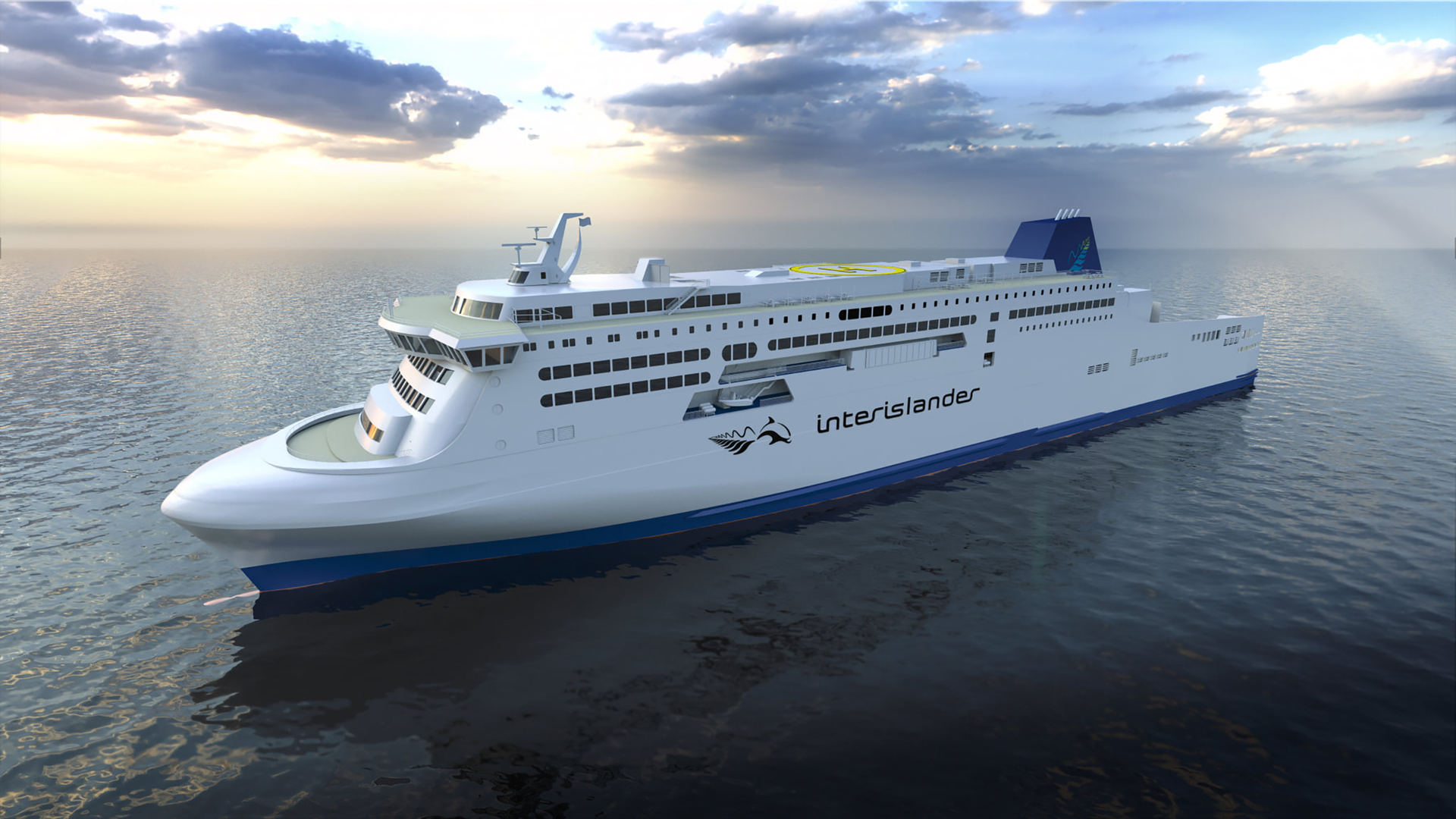
KiwiRail has serious budget troubles in store for the next Government as the future of the Interislander’s new mega ferries is once again put under the microscope.
The cost of the portside infrastructure on either side of Cook Strait to accommodate the new ferries has ballooned. Time is ticking with the new ferries due to arrive in 2025 and 2026.
We now know the current Government has put funding options on the table to ensure the programme can continue.
It is unclear what those options are or how much money is required. In fact, getting any information about what’s going on is like trying to get blood from a stone.
While the numbers remain secret, it’s worth noting that in an earlier stage of the project, there was a cost escalation as large as $1 billion.
That blowout ended with a stern letter from a “disappointed” Grant Robertson, but more on that later.
The plan to replace the Interislander’s ageing fleet, the iReX project (Inter-Island Resilient Connection), is high-stakes.
This was alarmingly exemplified in January when the Kaitaki lost power in Cook Strait, issued a mayday call, and started drifting towards Wellington’s rocky south coast with 864 people on board.
KiwiRail’s recently-published annual report said a comprehensive review of the iReX project found a funding shortfall to complete the project in its current form.
“The board has been in discussions with the group’s shareholder about options to address the cost increase and funding shortfall, and on 19 September 2023 the shareholder advised the board of funding options that will ensure the programme can continue,” the annual report said.
As a state-owned enterprise, KiwiRail’s shareholder is the Government.
“The board will continue discussions with the shareholder and officials,” the report said.
KiwiRail had wanted a decision from ministers on its “significantly more costly” mega ferry terminals much earlier- by July.
Instead, these funding options have come on the cusp of a general election.
National Party transport spokesman Simeon Brown told A Capital Letter he was concerned about the project.
“I have had those concerns now for some time due to the size and scale of it and the lack of transparency over the costings,” Brown said.
It’s not the first time this project has been the subject of a pressure-cooker wrangle between KiwiRail and the Government.
The $551 million contract to build the two new mega ferries was signed with a South Korean shipyard in June, but proactively released correspondence reveals how close that deal was to unravelling.
In Budget 2019, KiwiRail got $35m to undertake detailed design work for the iReX project.
Then, in Budget 2020, a further $400m was dished out to fund the ferries themselves. At that time it was expected KiwiRail would debt-fund the remaining $700m needed to complete the full project, including portside infrastructure.
But KiwiRail went on to submit a 2021 Budget bid seeking more money, this time for an additional $565m.
Treasury and Ministry of Transport officials were not happy.
Costs for the overall programme had ballooned from $775m in November 2018 to $1.76b in March 2021.
Portside costs alone had almost quadrupled to more than $1b.
Officials raised concerns about the increasing scale and cost of the project, including that its latest business case was still in draft form at that time and yet to be finalised by KiwiRail’s board.
Ministers agreed the Budget bid should be deferred.
The decision was not without risk. KiwiRail warned that without the $565m, the arrival of the new fleet would be delayed and the Interislander service would be compromised.
KiwiRail had signed a letter of intent with Hyundai Mipo Dockyard for the two new ferries, which was due to expire in a few months.
If it expired without a formal contract being signed, the terms and price could be renegotiated.
Eventually, Cabinet agreed to a contingency fund, and by that time KiwiRail had progressed the design of the port infrastructure and estimated the cost to be $1.45b instead of $1.76b.
This remains the publicly-available estimated cost.
Finance Minister Robertson sent a letter to KiwiRail’s deputy chairwoman outlining Cabinet’s decision.
He told her significant risks remained with the project and “elements of the business case fall short of expectations”.
But ministers were conscious of the pressing need to replace the ageing fleet, as well as the letter of intent’s looming deadline.
Robertson asked KiwiRail to ensure the total capital cost did not exceed $1.45b.
Fast forward to today and the cost has indeed exceeded that amount.
Robertson of course is privy to the extent of it, while Brown and his colleagues can only hope the blowout isn’t $1b this time around, if National gets in.
• Senior Wellington journalist Georgina Campbell’s fortnightly column looks closely at issues in the capital.