Auckland Council votes: Most of city to avoid sweeping plan changes, but billions of dollars could be lost
Most Auckland suburbs will likely be spared sweeping housing change after councillors today put aside the boldest planning visions for the city’s future, despite these being tipped to deliver billions of dollars more benefit over a decade.
Councillors instead voted in favour of two options concentrating future development around the city centre, train stations and bus routes.
That closely aligned with existing planning rules and would make room for at least 1.4 million homes,
Under these plans – named Option A and B – about 87% and 85% respectively of the city’s land area and most home owners would be unaffected and not subject to new planning rules.
The plans debated today now go to iwi and local boards for input, with public consultation to come later in the year.
The decision marked a major retreat from council’s vote last September to enable capacity for two million homes, a move that would have required rule changes across most of the city.
That plan was drawn up after the Government told councillors they must allow for drastically more housing to be built, a directive ministers later walked back, slashing the target to 1.4 million homes amid election-year backlash from home owners.
Councillor Julie Fairey was among councillors settling on the more development-friendly Option B, but fighting back against those wanting to push through the smallest change possible in Option A.
“We are not here to do the bare minimum, folks,” she said during the debate.
“If that is not something where we have ambition and vision beyond the bare legal minimum, then what are we doing here?”
Others, such as councillor Maurice Williamson, had pushed for as little change as possible, saying current rules under the Auckland Unitary Plan (AUP) provided capacity for building homes that the city hadn’t even come close to using.
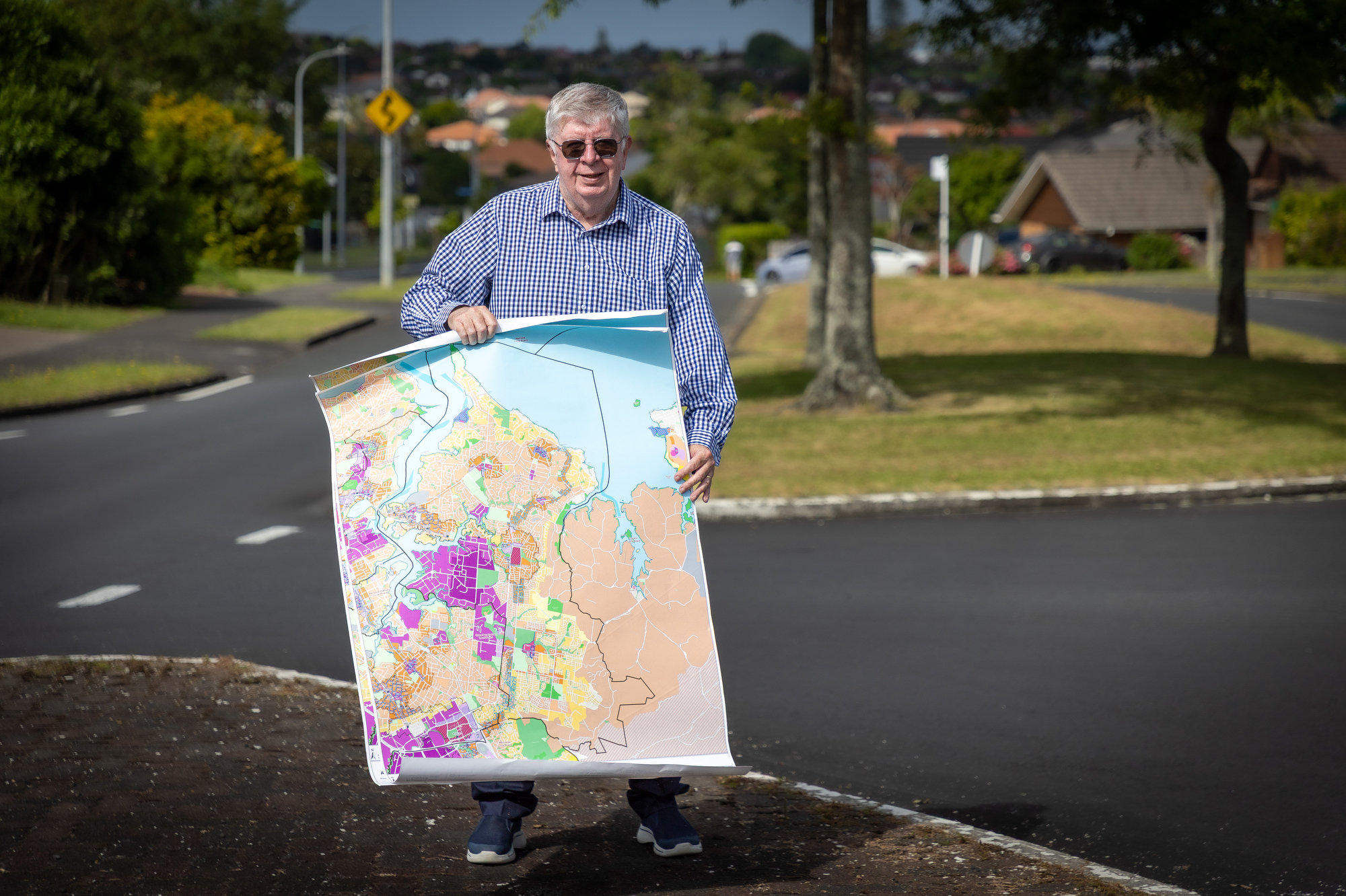
The debate has often pitted those believing that building more homes leads to more affordable housing, against home owners who fear clumsy intensification could put excessive strain on ageing pipes and roads.
It comes after successive Governments have pushed for ambitious national planning rules to create room for more houses, which in Auckland cleared the way for more than two million homes.
But as suburban backlash grew, the Government retreated and RMA Reform Minister Chris Bishop wound the capacity target back in two steps, to 1.6 million homes in February and 1.4 million in March.
That was still above the roughly 1.2 million homes allowed under the council’s existing AUP.
To reach the new 1.4 million target, council staff drew up four options.
Option A was the most cautious, adding minimal changes to the AUP in which only 13% of the city’s land area would be subject to new rules.
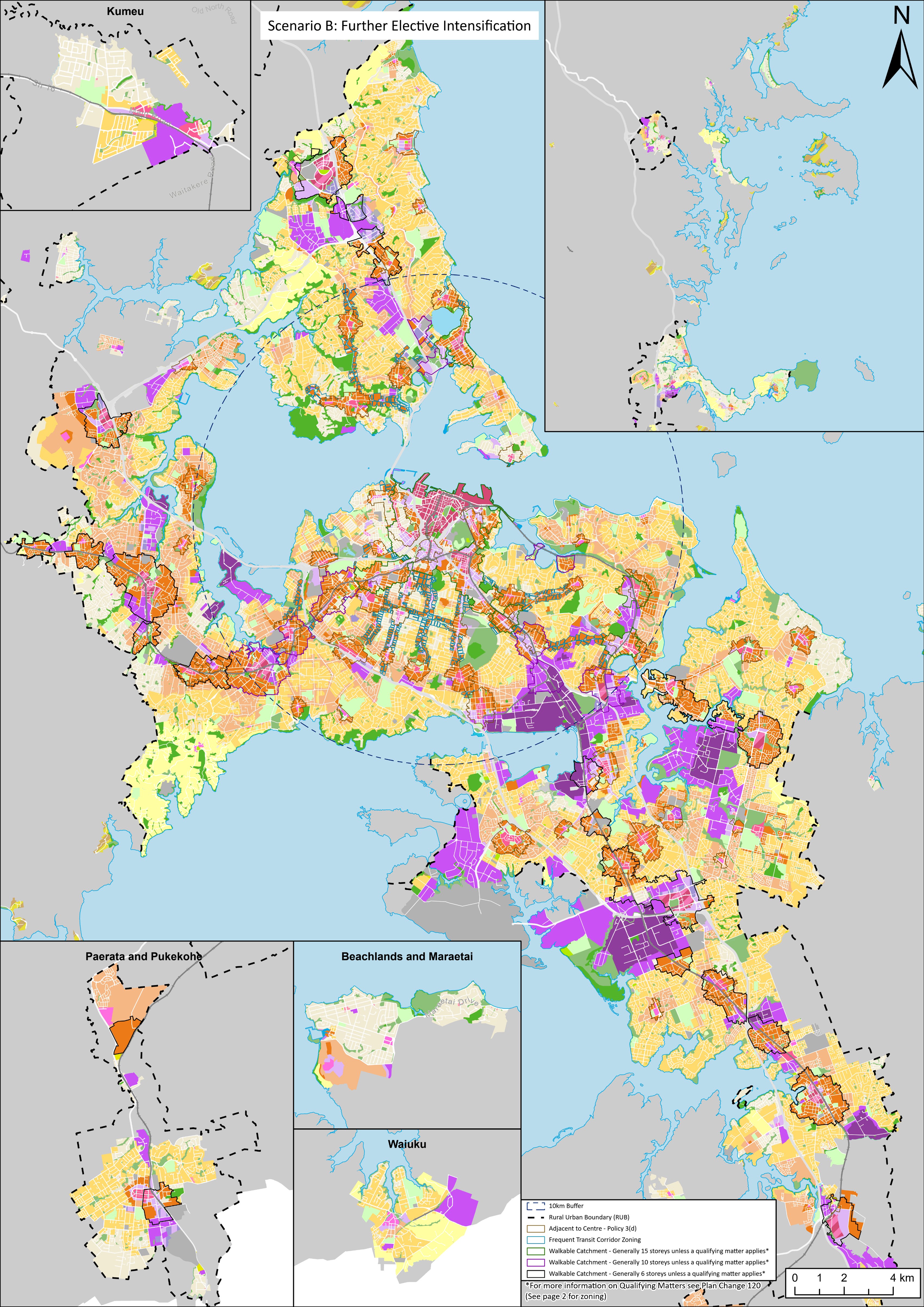
Council staff recommended Option B, which would leave room for 1.5 million to 1.7 million homes, concentrating on allowing intensive development around the city centre and more transport routes and hubs.
Officials said Option A and B focused on making room for new houses primarily by allowing high-rise and apartment blocks to be built in select intensification hotspots.
The main difference between the options, staff said, was that B allowed for more intensification hotspots.
These plans would likely be easier to get past a future planning panel, which would have to assess the plans, because they were similar to current rules, staff argued.

Options C and D by contrast would allow for more housing development in more locations, with the latter in particular making it easier to build three-storey townhouses and apartments in the suburbs without council planning consent.
They would allow new developments to spring up more easily across more parts of the city, rather than being largely restricted to intensification hotspots.
Council estimated Option D, the most intensive development plan, would deliver $3.9 billion in economic benefit over a decade, while Option A was put at $700 million.
‘Need more homes in right places’: Mayor Brown
From the get-go, councillors ruled out the more ambitious options C and D.
The fight instead centred on whether they should send only Option A out for consultation or options A and B.
Those backing the smaller changes in Option A argued residents in their electorates had spoken out against intensification.
Some councillors argued that benefits in more ambitious plans were speculative, questioning whether housing prices could be tamed by plans to allow greater housing intensification or saying that modelling of the financial benefits was an “academic” exercise.
“Ramping up the theoretical supply of dwellings actually impacts on the prices?” councillor Mike Lee asked.
“That’s gobbledygook. The facts don’t support that at all.”
Councillor Daniel Newman said the frequent rejigging of plans was costing ratepayers money. Sticking with the plan closest to the existing AUP posed the least risk, he said.
He feared complicated plans would require more costs to develop but could be rejected by the independent hearings panel.
Councillors also worried that with the Government scrapping the Resource Management Act and replacing it with a new system, the council could be forced back to the drawing board down the track.
“We’re going to have Groundhog Day here in 18 months’ time,” councillor Christine Fletcher said.
However, plans to put Option A out for consultation on its own were voted down 10-to-12.
Those opposing it and instead calling for consultation on options A and B said Auckland had a housing crisis and the next generation needed affordable homes.
They questioned how councillors could turn their back on economic modelling that suggested greater intensification could deliver billions more in financial gain.
Auckland Mayor Wayne Brown favoured more ambitious growth.
“We need to do this, rather than simply hearing from the loudest groups and individuals who are against virtually everything,” he said.
He joked at one point he was in favour of a 10-storey building being next door to David Seymour’s house, after the Act Party leader had been a vocal opponent of unbridled intensification.
Brown was also among councillors lambasting Government politicians for frequently changing the housing target and plans, accusing them of following election-year politics rather than serious long-term planning.
“Despite the fact that there was a range of views, almost nobody that’s approached me has not supported the idea that Auckland should decide what Auckland liked, not Wellington politicians,” he said.
Any changes are likely still a year away, given the process required of the council in making the plan change.
Preferred options
Option A
This option allows for the least amount of density and most closely resembles what is currently allowed under the Auckland Unitary Plan. It would allow capacity for between 1.4 million and 1.5 million homes.
Option B
This option is the preferred option of council staff. It represents a compromise between Option A and the original development options available under Plan Change 120.
It would allow apartment towers of 10 storeys at more train stations and blocks of six storeys on more bus corridors. It would allow for capacity of 1,515,000 to 1,715,000 homes.
Options put aside
Option C
It’s understood this option was preferred by Brown. It would enable more development in areas with better access and less development in areas with poorer access.
More 10 to 15-storey apartment blocks could be built across the city under Option C. This option would enable between 1.47 million and 1.67 million homes.
Option D
This option is essentially the same as Plan Change 120 and unlikely to be adopted, given the Government’s edict to the council to reduce the number of homes that could be built under its housing plan. Option D would enable two million homes.