Auckland mum joins world-first zinc study to help autism research
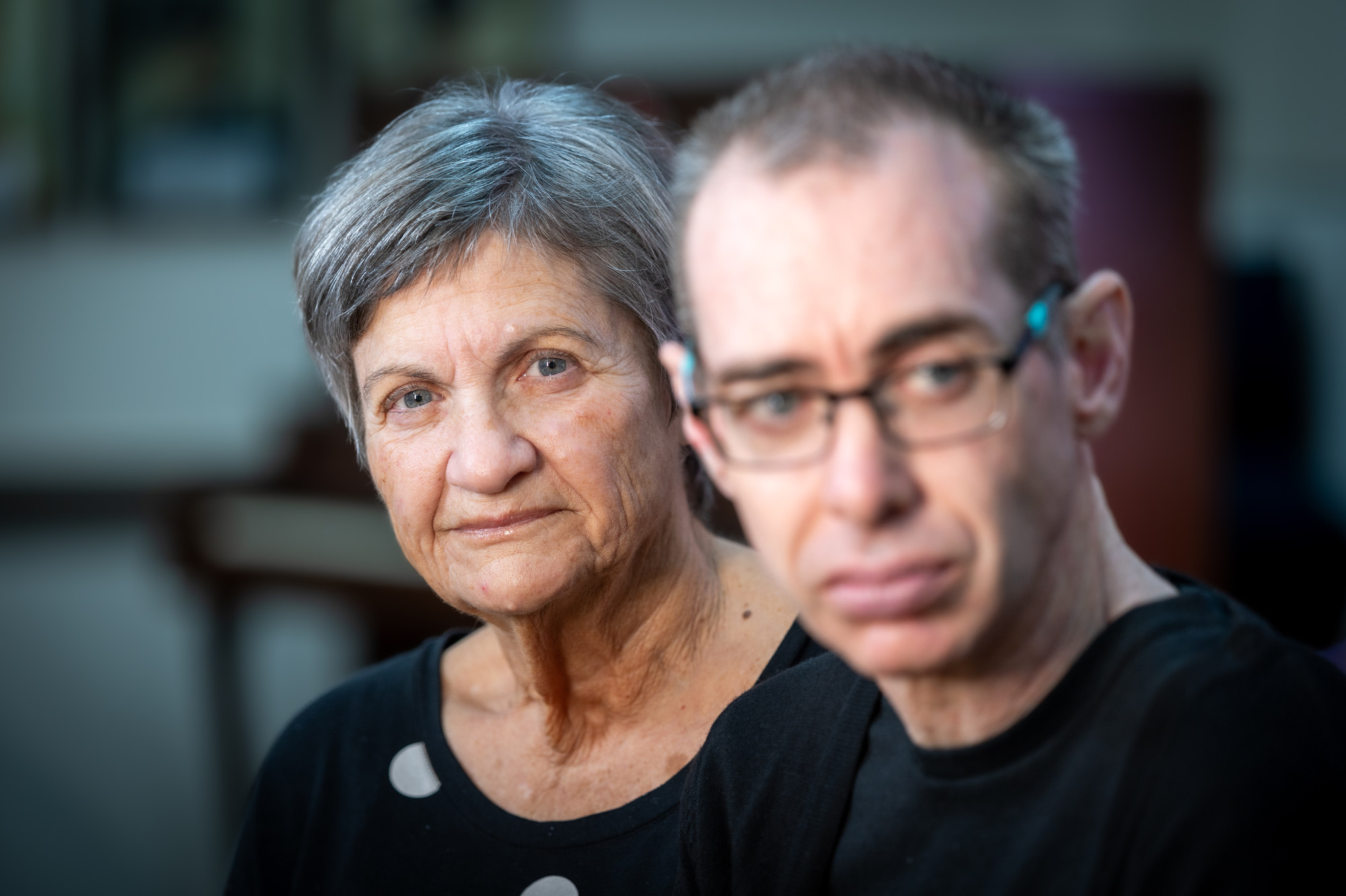
Debbie Sylva hopes signing up for a world-first study will help other New Zealand families avoid the heartache and pain she and her son have endured.
The Auckland mum’s 41-year-old son suffers from Phelan-McDermid syndrome, a developmental disorder that usually results in severe autism.
It’s understood around a dozen New Zealanders have the rare syndrome. Sylva believes her son, Michael Curtin, is the oldest New Zealander to have it.
In addition to his autism and intellectual delay, (his mum says he is “intellectually like an 18-month-old child”), Curtin also suffers from neurofibromatosis; a condition that causes non-cancerous tumours to grow along his nerves.
After decades of heartache, the pair have donated their blood to a promising Auckland University study, that involves the use of zinc, that researchers hope will help other Phelan-McDermid syndrome sufferers in the future.
Although, if successful, it would be too late to help Curtin, his mother said she hoped it would help others.
“The disease he has is a terrible thing,” Sylva - who is in her late 60s - told the Herald.
“I have contact with a lot of people around the world whose children have the same as Michael. And pretty much all of us are in the same boat.
“It’s an awful, awful disease for our children.”
In the world-first study, physiology professor Johanna Montgomery and her PhD student Zoe Mills have shown that the careful application of zinc to neurons grown from Michael’s blood corrects some of the deficits in the cells.
Zinc plays a key role in the passage of messages through the brain.
Previous research conducted 10 years ago showed that many people with autism spectrum disorders also have zinc deficiencies.
Phelan-McDermid syndrome is caused by the absence of the Shank3 gene. Shank3 is responsible for the flow of information in the brain. The gene encodes the part of the brain, called the Shank scaffold, that lets neurons communicate.
If the scaffold is missing or damaged then the information can’t get through, which can result in autism.
Sylva said her son was “severely autistic”.
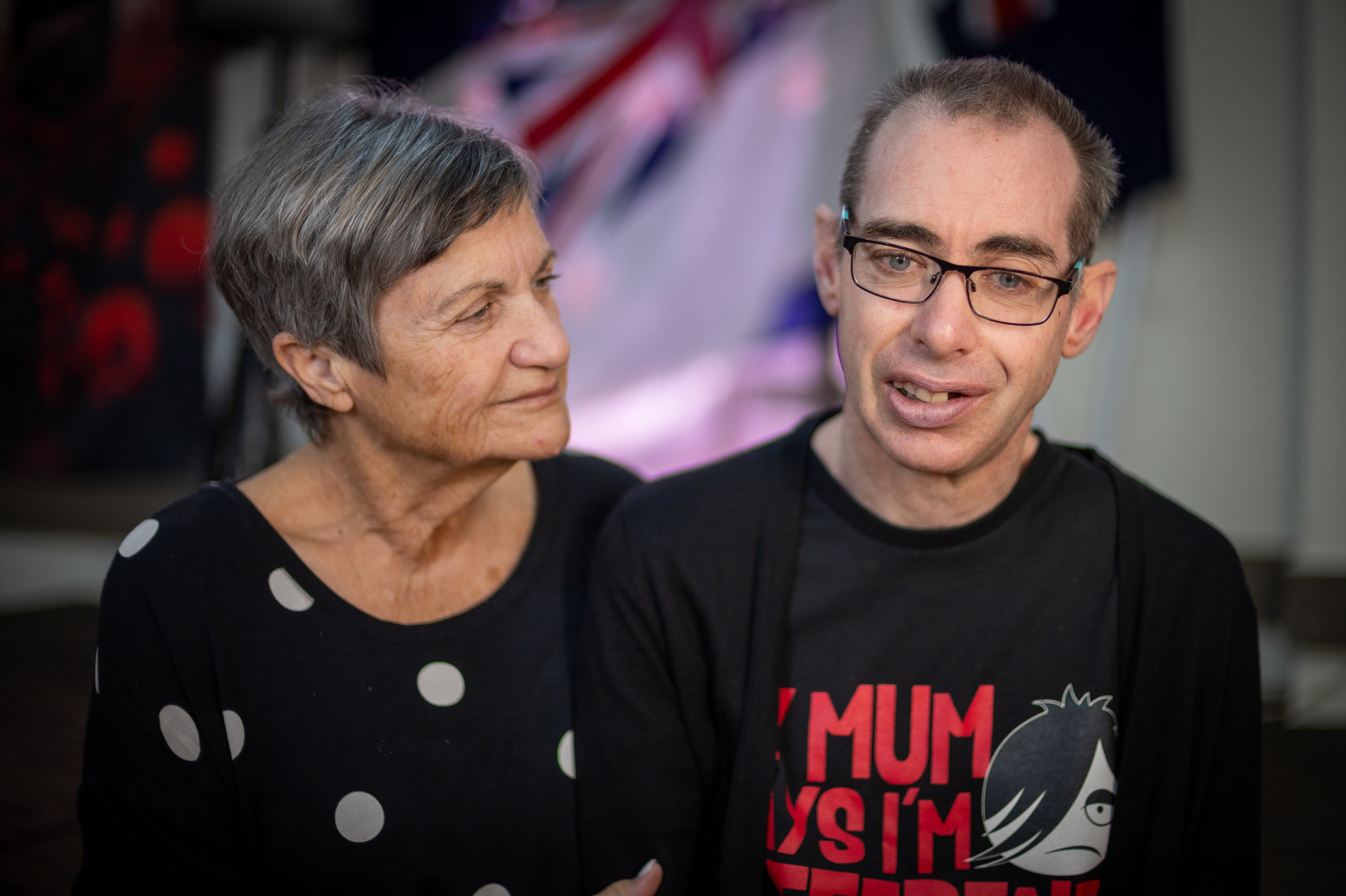
She said his “whole life has been ruled by his lack of communication”.
The neurofibromatosis had also “decimated his whole poor little body”.
“He’s severely autistic, he’s severely intellectually delayed,” she said.
“His body has a lot of tumours which will one of these days end his life.”
The severe nature of his autism had made him “very unpredictable”.
“It’s ruled my whole life from the time he was born,” Debbie said.
That had led to a breakdown in her marriage.
She also had to give up her career because of her son’s health.
“After giving up my career, now I work to keep sane, you know, because it takes me away from the life,” she said.
“When I am with my son at home, it just rules my whole life, I very rarely get a lot of sleep.”
Curtin went into care from Monday to Friday when he was aged 25 because of his autism.
“It was meant to be fulltime care, but I couldn’t leave him in fulltime care,” she said.
“So, we continued to bring him home Friday to Sunday or Friday to Monday.”
He was unable to communicate and “every time he got angry or was in pain, he would lash out at me”.
“If I had him home fulltime, I have to be honest, it would kill me, you know,” she said.
“The lack of sleep, the beatings, which he doesn’t mean to. He’s just intellectually like an 18-month-old child and when he’s angry and in pain, I become a bit of his punching bag.
“He doesn’t mean to, he just sort of loses control and afterwards I can see in his face he’s sorry. It’s tough and it’s very hard. I have to keep reminding myself... he’s in pain.”
One of the hardest things the parents of severely autistic children face is navigating the difficulty their children have communicating.
Montgomery told the Herald when during a visit to her lab, the mother of another child involved in the study said: “I just one day want to hear my child say ‘mum’“.
Curtin can sign the word pain, but cannot communicate where the pain is.
About a month ago he was in a lot of pain and hardly slept.
His mother said they thought he had pain in his bowel or bladder, but it turned out to be a tooth.
“Michael suffers horrifically from pain... maybe if there would have been something like the zinc treatment to help the autism, he may have been able to communicate with us a little bit more.”
Montgomery has spent 15 years looking at links between the Shank3 gene and autism.
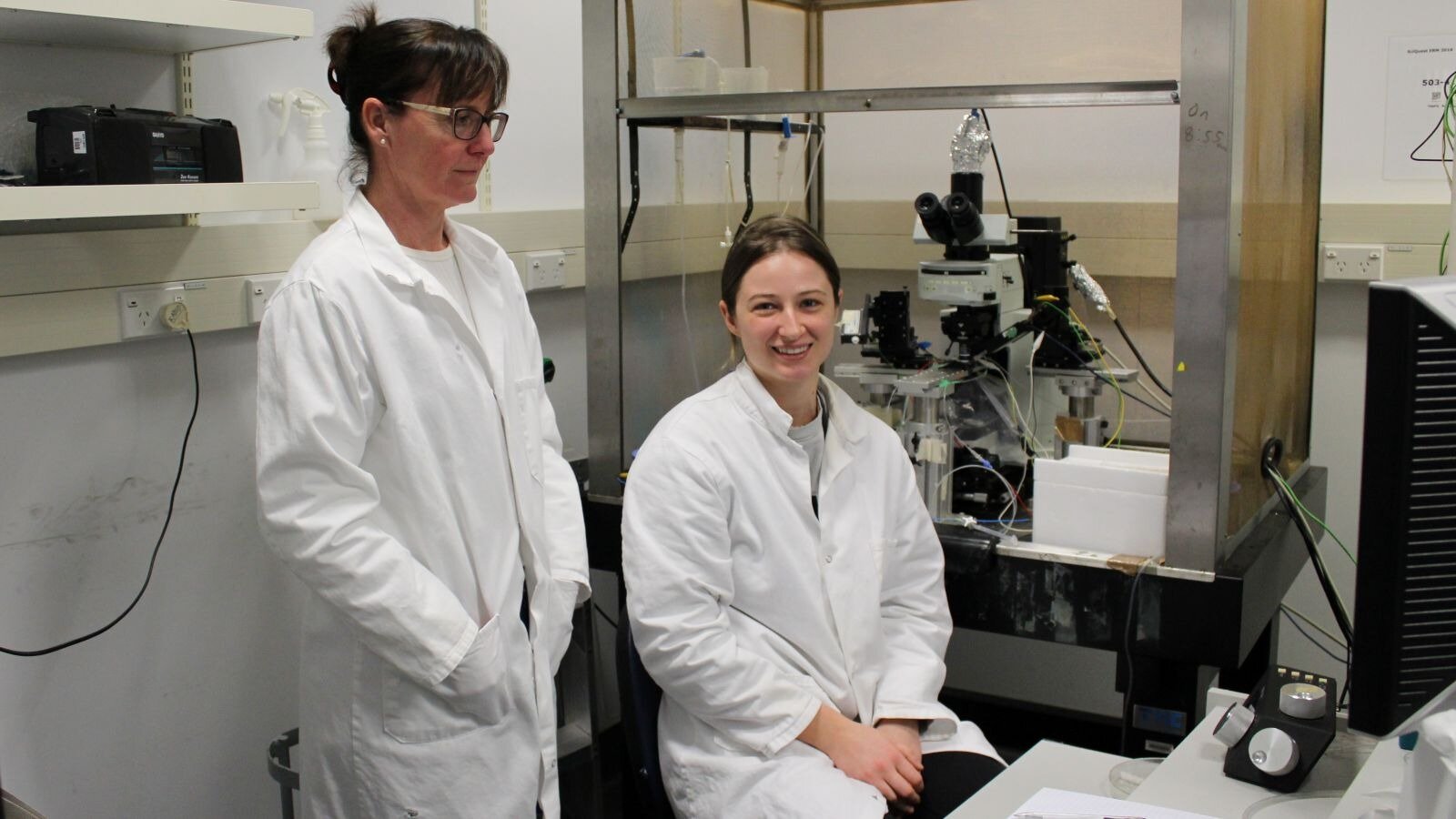
Most recently, this has meant growing neurons from the blood of both healthy donors and individuals with Phelan-McDermid.
In the lab, Montgomery and Mills use electrodes to measure how well signals travel in both healthy and Phelan-McDermid brain cells, before and after cells receive a dose of zinc.
Zinc is a key part of the Shank scaffold that helps pass messages between neurons. The theory is that dosing the cells with zinc improves the damaged scaffold’s ability to transmit messages.
Mills is in the final stages of her PhD and is in the United States presenting the results.
She was able to identify physiological differences in individual human neurons grown from Phelan-McDermid donors and then found that when the cells were treated with zinc that “that we can correct some of those deficits that we’re seeing in the cells themselves”.
The results are not just promising for sufferers of Phelan-McDermid.
Modifications to the Shank scaffold may be the most common genetic basis of a range of types of autism.
Montgomery also said zinc might potentially help treat more forms of autism.
“Because Shank is so important, if you strengthen it then you may actually help the communication between neurons even though the genetic variant in Shank is not present.”
Montgomery is looking to the next stage of research in the long journey to a viable treatment.
She has designed a pilot clinical trial in partnership with a clinical nutritionist and a paediatric neurologist and is seeking funding for it.
But Montgomery was very clear: don’t start taking zinc yourself or giving it to someone with autism.
Too much zinc can cause other neurological problems. Participants in any future trials will receive personalised doses after measuring their zinc levels, and will be carefully monitored.
Sylva hopes the study will provide life-changing impacts for other Phelan-McDermid syndrome sufferers and their families.
For now, she is committed to doing all she can to look after her son.
She described her most recent weekend with him.
After waking at 4am, he did not sleep again for 24 hours; and then it was for just one hour.
“He did sleep again last night because he was exhausted,” she said.
“But we’ve been awake since 3am. So this is how my weekends go.”
“He’s my child... you can’t give up,” she said.
“My one aim in life is to stay alive for my son because no one understands him like I do. After all these years I have learned to read a lot of it [his behaviours].”
Chris Knox is a scientist turned data-journalist who investigates the stories behind the numbers, and creates interactives for Herald readers to explore them.