City Rail Link opening nears after emergency crews tackle fires, explosions and derailment drills
Firefighters, special tactics police officers, ambulance crews and actors have simulated train fires, tunnel emergencies, derailments and explosions as part of final emergency testing before Auckland’s City Rail Link opens.
The exercises come as the rail network closes again this weekend for what authorities say will be the last full-network shutdown before the underground line welcomes its first passengers.
While Auckland Transport (AT) has yet to confirm an opening date, chief executive Stacey van der Putten told RNZ an announcement is “soon”, pending final testing and safety approvals.
The public opening date will be revealed once those approvals are secured, with commuters then given six weeks’ notice before services begin.
A spokesperson from Fire and Emergency said the testing included fires on trains or in tunnels, a person being hit by a train, medical emergencies, explosions, and natural events that might impact the network.
AT group manager for rail services Mark Lambert said the CRL’s emergency and safety testing programme was nearing completion, with only a handful of exercises left in the coming weeks.
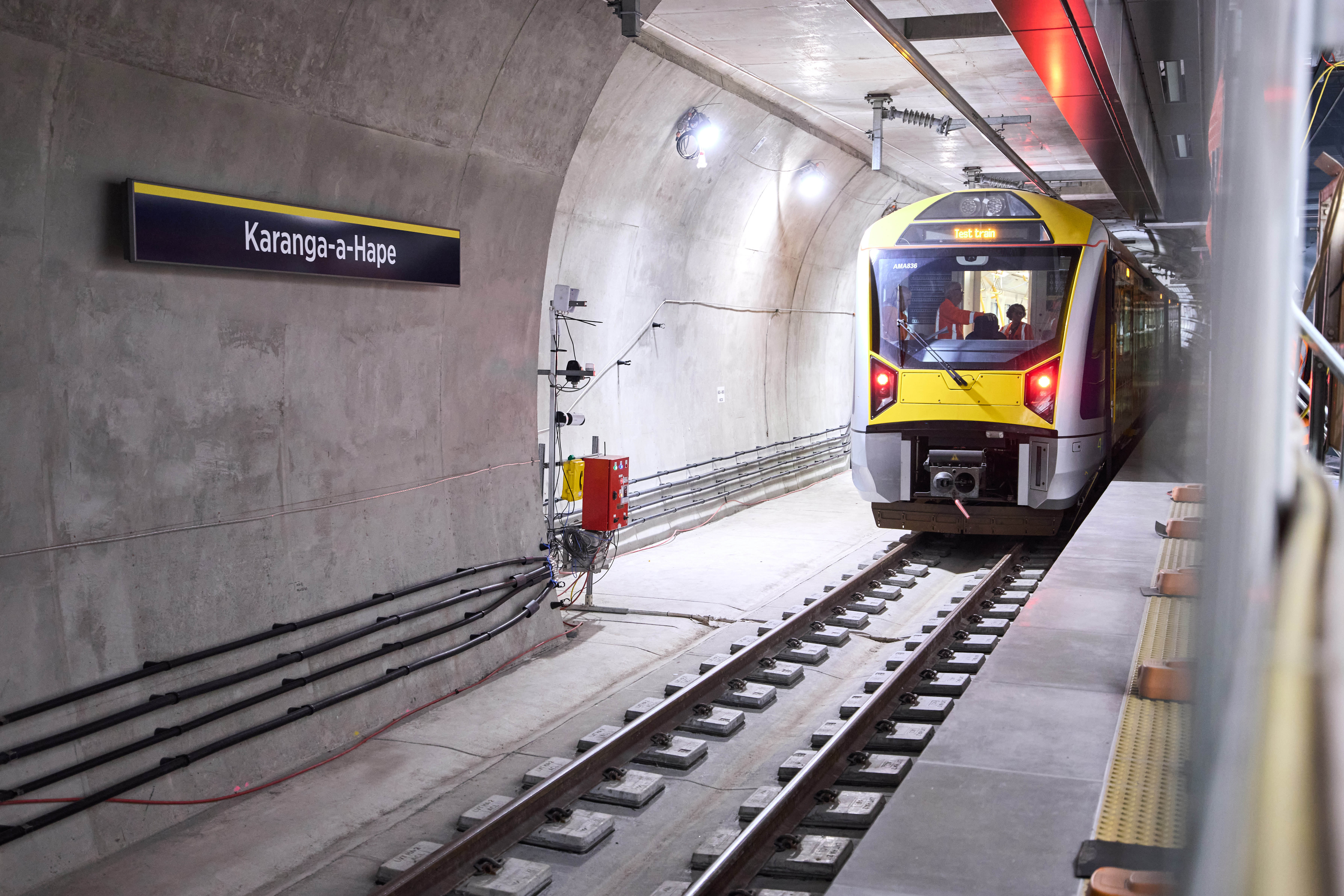
Fifteen live exercises have been completed, he said, including station fires, tunnel train failures, derailments, onboard medical incidents and large-scale evacuations.
“We are making good progress through our comprehensive emergency and safety testing programme, with only a small number of exercises remaining,” Lambert said.
The exercises had been coordinated across all CRL partners to simulate “high-pressure, real-world scenarios”, with KiwiRail leading tunnel emergency responses and AT and Auckland One Rail responding to incidents on trains and at stations.
Testing also assessed critical systems such as ventilation, smoke extraction, communications, CCTV, lighting and control room operations.
Volunteers and actors helped recreate a diverse range of passenger scenarios, Lambert said.
Inspector Beth Houliston said police had worked alongside multiple agencies in preparation for the CRL’s opening, taking part in a series of emergency exercises across May and June designed to test operational responses.
“A range of police staff took part, including frontline staff and some of our specialist tactical groups,” Houliston said.
She said officers regularly trained in simulated emergency scenarios to ensure they were prepared to respond in a range of environments, but the underground rail network presented a unique setting.
A spokesperson from Hato Hone St John confirmed about 40 of its personnel took part, including frontline ambulance crews, operations managers, members of the Special Emergency Response Team, and volunteers from the Major Incident Support Team.
Sign up to The Daily H, a free newsletter curated by our editors and delivered straight to your inbox every weekday.