Court of Appeal dismisses Kim Dotcom challenge to US extradition
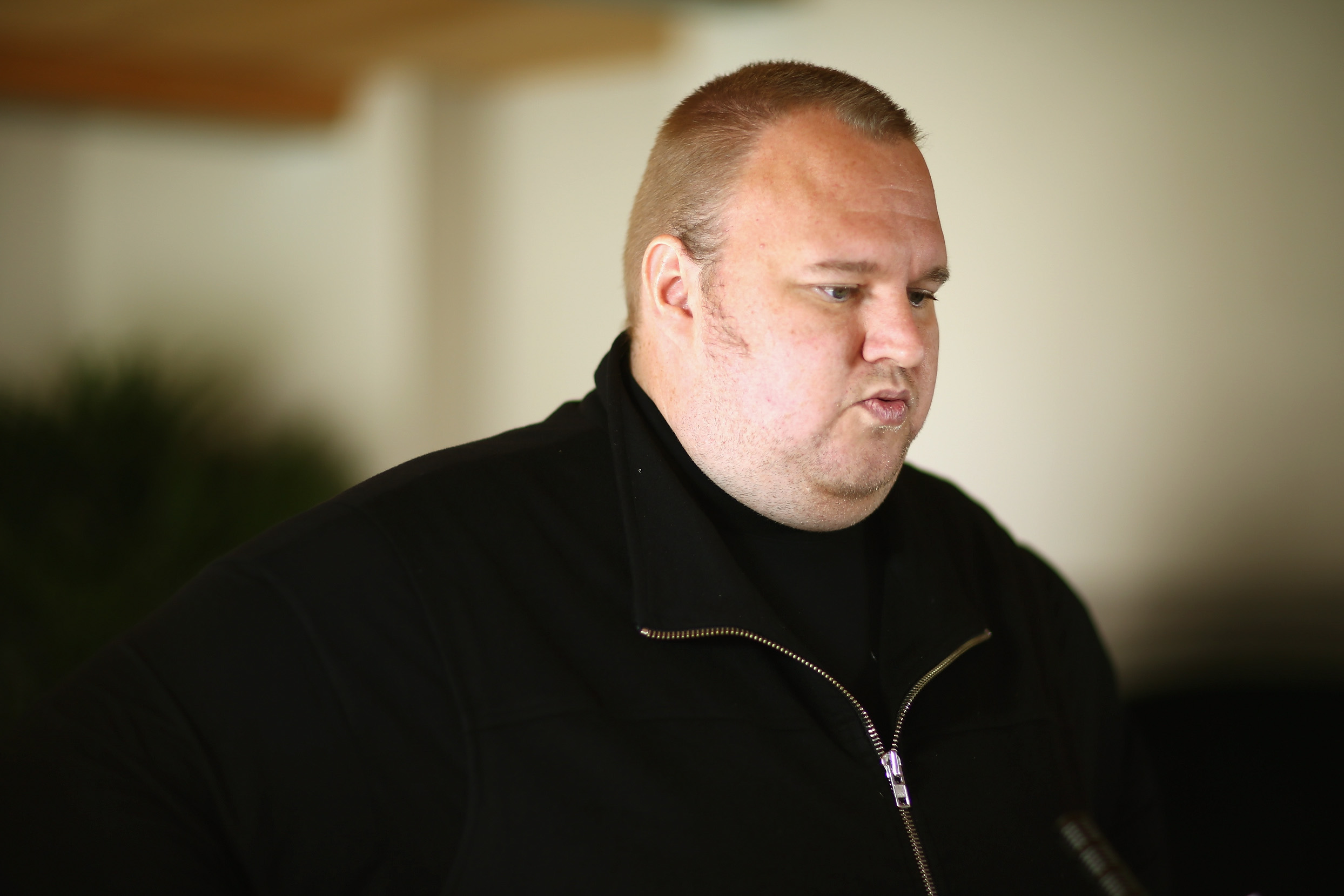
Kim Dotcom has lost his latest bid to challenge his extradition to the United States.
In a decision released today, the Court of Appeal dismissed the internet mogul’s appeal and ordered him to pay costs after his lawyer filed an application to adjourn the hearing the night before it was due to begin, despite the hearing date having been set five months earlier.
The US wants to extradite Dotcom from New Zealand, where he is a resident, to stand trial on 12 charges of criminal copyright infringement, racketeering, and wire fraud.
In 2020, the Supreme Court determined Dotcom was eligible for extradition, but left the final decision to the Minister of Justice, Paul Goldsmith.
In determining that Dotcom should be sent back to the US, the minister considered, but rejected, Dotcom’s contention that such an order would breach his rights under the Bill of Rights Act because he would receive a disproportionately severe sentence in the US were he to be tried and convicted there.
Dotcom then sought a judicial review in the High Court of that decision, as well as the Police Commissioner’s decision to decline to charge him in New Zealand for offences equivalent to those he faced in the US.
Justice Christine Grice subsequently dismissed the judicial review. It’s that decision that Dotcom fought at the Court of Appeal.
April’s appeal focused on the sentence Dotcom would likely receive in the US if he were found guilty, and on the disparity in treatment between him and his alleged co-conspirators, Mathias Ortmann and Bram van der Kolk, who pleaded guilty and served jail time in New Zealand.
Ortmann was jailed for two years and seven months, and van der Kolk for two years and six months.
Unfair not to prosecute Dotcom in NZ
At the hearing, Dotcom’s lawyer, Ron Mansfield, KC, argued it was biased and improper that police decided to charge Ortmann and van der Kolk, but not Dotcom.
He argued that it was erroneous in law for failing to comply with Prosecution Guidelines and that the High Court had erred in finding to the contrary.
“In short, according to Mr Mansfield, either all three should have been prosecuted in New Zealand or none of them,” the decision says.
The decision says Dotcom’s position differed from that of the other two men. He was the primary offender in terms of role and financial gain, but he was not offering to plead guilty to the agreed-upon facts.
“Most critically of all, the US was not prepared to withdraw its request for his extradition.”
The decision says neither the Treaty nor the Extradition Act contemplates a domestic prosecution as an alternative to an extant extradition proceeding.
It says New Zealand does not have what is known as a “forum bar”, namely an express statutory restriction preventing extradition to another nation where the alleged offending could be prosecuted domestically.
In contrast, the decision to prosecute Ortmann and van der Kolk was consistent with New Zealand’s obligations under the Treaty, because the US consented to that course of action and was substantially assisted by it.
“The decision thus accorded with the objectives of international co-operation and comity, which is central to extradition,” the decision says.
The decision to surrender Dotcom
At the appeal hearing, Mansfield submitted that it was unfair that the pair received sentences with a starting point of 10 years, when Dotcom faced a “magnificent” sentencing range of between 30 and 150 years in a United States jail, with no prospect of parole.
“One hundred and fifty years is an effective life sentence, but so is 30 years,” he said.
That sentencing range was contained in a report which the Justice Minister had commissioned and was discussed at the hearing.
The report also advised that early release on parole is not a feature of the US federal system, although a reduction of up to about one-seventh of the sentence for good behaviour is possible.
According to the report, while Dotcom might avoid a sentence as long as 150 years, there was a significant chance he would receive a sentence of at least 30 years.
But the Court of Appeal says it was evident from the report that any prediction of sentence was subject to several contingencies and assumptions.
“Importantly, the opinion also expressly acknowledges that it is difficult to predict how a judge would approach Mr Dotcom’s case because cases of this type are said to occur so infrequently”, the decision says.
“However, clearly doing the best he can and subject to the qualifications he identifies, [the report] predicts that Mr Dotcom would face significant challenge in receiving a downward adjustment that would bring his sentence below 30 years.”
The Court of Appeal says, given these circumstances, there was no error in fact or law with the minister’s approach, saying it took into account an expert opinion, which it says was a reasonable approach to take.
The court concluded its decision, saying it agrees with the High Court that it was open to the minister to find that Dotcom was not facing an irreducible life sentence.
“The minister did not err either in law or fact, and the decision was reasonable. None of the grounds of appeal having succeeded, it follows that the appeal should be dismissed.”
Costs awarded
The court also awarded costs in favour of the Minister of Justice and the Police Commissioner, based on a 50% increase in the amount of the costs payable.
In setting out its decision, it noted April’s hearing date was set in November last year.
At 7.30pm on the night before the hearing, Mansfield filed and served a memorandum seeking an adjournment of the hearing.
The memorandum was accompanied by an affidavit and a large volume of papers totalling some 130 pages.
The memorandum also advised that Dotcom was awaiting the minister’s decision on the further medical evidence which had been presented to him at the end of January.
“In a joint memorandum, the respondents strongly opposed any adjournment and suggested it was an obvious attempt by Dotcom to delay surrender to the US,” the decision stated.
“Their counsel told us that although they had recently been in contact daily, multiple times with Mansfield regarding hearing length and the list of issues, there had been no indication of any possible request for an adjournment.”
The respondents submitted that the health information had been the basis of four unsuccessful attempts in the High Court to adjourn the proceeding, the decision said.
Lawyers for the minister and Police Commissioner said the application for an adjournment should be declined and sought increased costs given the repetitive nature of the application, the proximity to the hearing, and the apparent attempt to mislead the court.
The respondents could not just ignore the application which was sprung on them at the very last minute, it said.
“They were put to unnecessary expense in having to review the material and then respond to it literally overnight under urgency.”
Catherine Hutton is an Open Justice reporter, based in Wellington. She has worked as a journalist at the Waikato Times and RNZ. Most recently, she was working as a media adviser at the Ministry of Justice.