Letters: Claude weighs in on Government’s AI plan
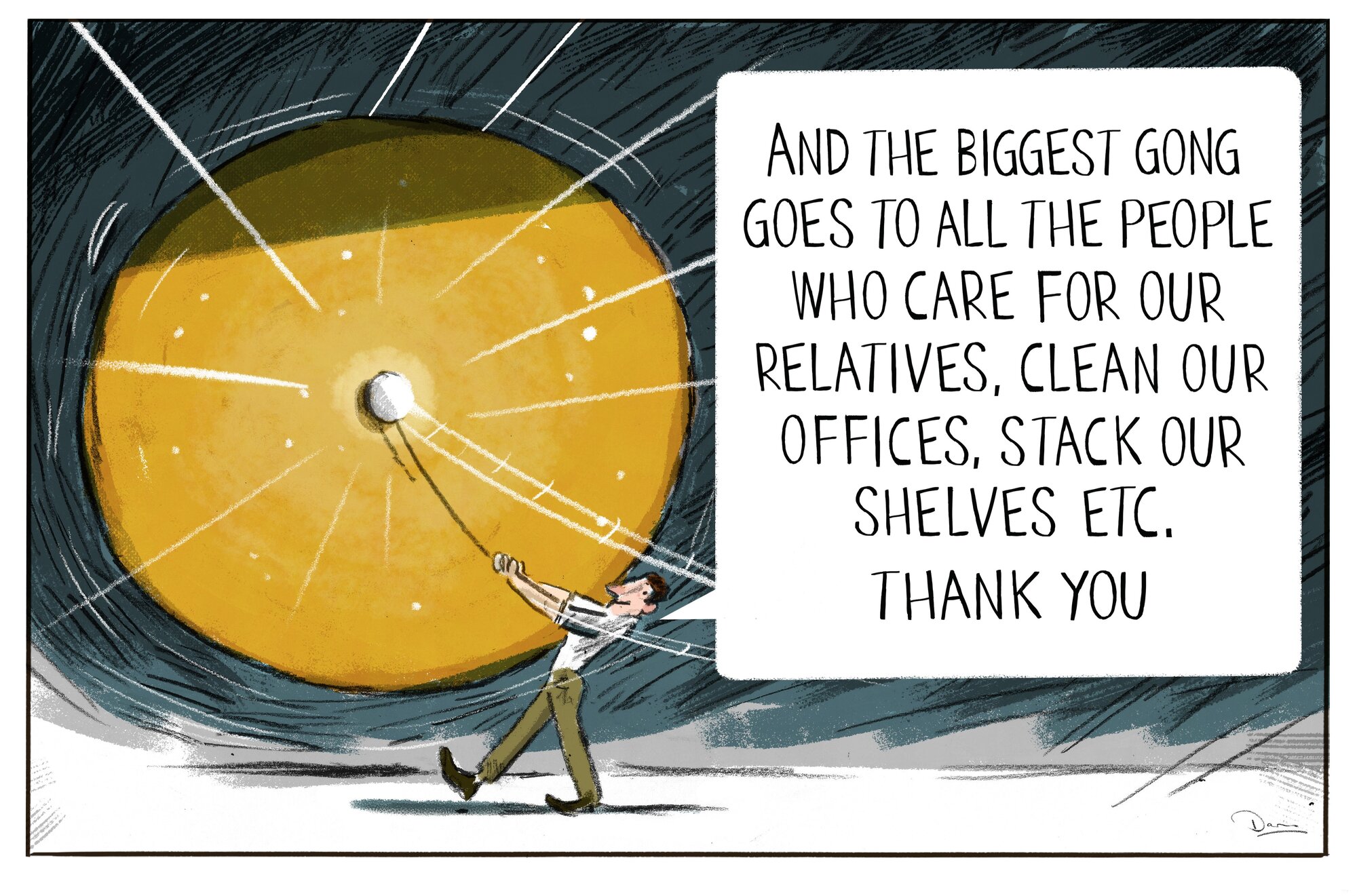
AI advice: Out of the mouths of bots
Here’s Claude’s response to Justin Flitter’s “Sequence wrong in Govt AI job-cuts plan” article (June 2):
“The ‘AI amplifies what’s already there’ framing is probably the most important sentence in the article. It’s a point that gets lost constantly in these policy discussions. If you cut institutional knowledge first and then bring in AI, you’re not automating competence — you’re automating the gaps where competence used to live. The workflows don’t redesign themselves, the context doesn’t reconstruct itself, and the minister not knowing the cost when asked in Parliament is a pretty telling signal about how mature this plan actually is.
“Where I’d push back slightly: Flitter’s alternative — build the context engine, redesign workflows, then realise efficiency — is correct in principle but he glosses over how politically difficult that sequencing is. Governments cut first because savings are visible and immediate. Building an ‘AI operating system’ before realising headcount reductions requires trusting a process whose payoff is deferred and harder to measure. That doesn’t make the cuts-first approach right, but the article could engage more honestly with why it keeps happening.
“The final reframe is good though: shifting the question from ‘which jobs can AI replace?’ to ‘how do we build the operating logic that makes AI a force multiplier?’ is exactly the right move. That’s the question most NZ organisations — public and private — haven’t started asking yet."
Rex McGregor, Auckland.
Complexity of conflict
The endless cycle of conflict in the Middle East is perhaps nowhere better illustrated than by Beaufort Castle in southern Lebanon.
Nearly 900 years after the Crusaders occupied the fortress, and with fortifications on the site believed to date back even earlier to Roman times, Beaufort Castle once again finds itself at the centre of military operations.
Over the centuries it has been captured, defended and recaptured by Crusaders, Muslim rulers, Ottoman forces, Palestinian fighters, Lebanese factions and, most recently, Israel.
The names, flags and weapons change, but the struggle endures.
The history of Beaufort Castle should give pause to anyone who imagines that a conflict rooted in centuries of religion, culture, identity and territory can be quickly resolved by diplomatic theatrics, military posturing, or political bravado.
Mark Crouch, Hamilton.
Killing v saving lives
Rex Beer wants the Government to spend a lot more on providing our armed forces with greater lethality (June 2). In simple terms; greater ability to kill people. Since we are not about to be invaded, that means killing people in other countries.
Personally, I would much prefer that our limited resources be directed to addressing our grossly understaffed health service. In simple terms; greater ability to save lives.
Keith L Muir, Mount Maunganui.
Corporatising healthcare
The current trend towards the corporatisation of medical centres may well improve their bureaucracy but will accelerate the rate that New Zealand moves towards US-style healthcare.
Companies and corporations are only interested in their bottom line.
Profit is not a dirty word but in healthcare, in particular, it is very difficult to maintain quality at the same time as increasing profit. That means that a business, to improve profit, has to charge more and reduce overheads, particularly reducing wages.
Healthcare is not like selling toasters, and allowing big business to insert itself in the patient-doctor relationship is simply a means to clip the ticket.
Neville Cameron, Coromandel.
Cats not only culprits
Cats may well kill 100 million birds a year and I find that figure appalling. However, how many birds have humans killed, and still kill, since they first arrived in New Zealand?
So let’s be realistic: blaming cats for the decline in New Zealand birdlife is only part of the answer, you humans have a lot to answer for, too.
Ian Pashby, Montesnelle, France.
Trouble for All Blacks
After watching the cream of New Zealand rugby perform at the weekend, I can only conclude that the All Blacks will be in serious trouble against South Africa .
Apart from Cam Roigard, the All Blacks have no one who can accurately kick the bomb.
This has been a problem for the last few years, without any sign of improvement in kicking and receiving the ball.
The South Africans will be rubbing their hands in anticipation, especially when they have all the extra provincial games to soften the All Blacks up with.
Let’s hope we have plenty of reserves to send, to cover the injuries sustained.
Jock Mac Vicar, Hauraki.
Community gems
Daron Parton’s special tribute to the gems in our communities, who toil away with hardly any recognition, was so true (June 2). Thank you.
Lorraine Kidd, Warkworth.