MP housing perks: Who has claimed the most accommodation allowance?
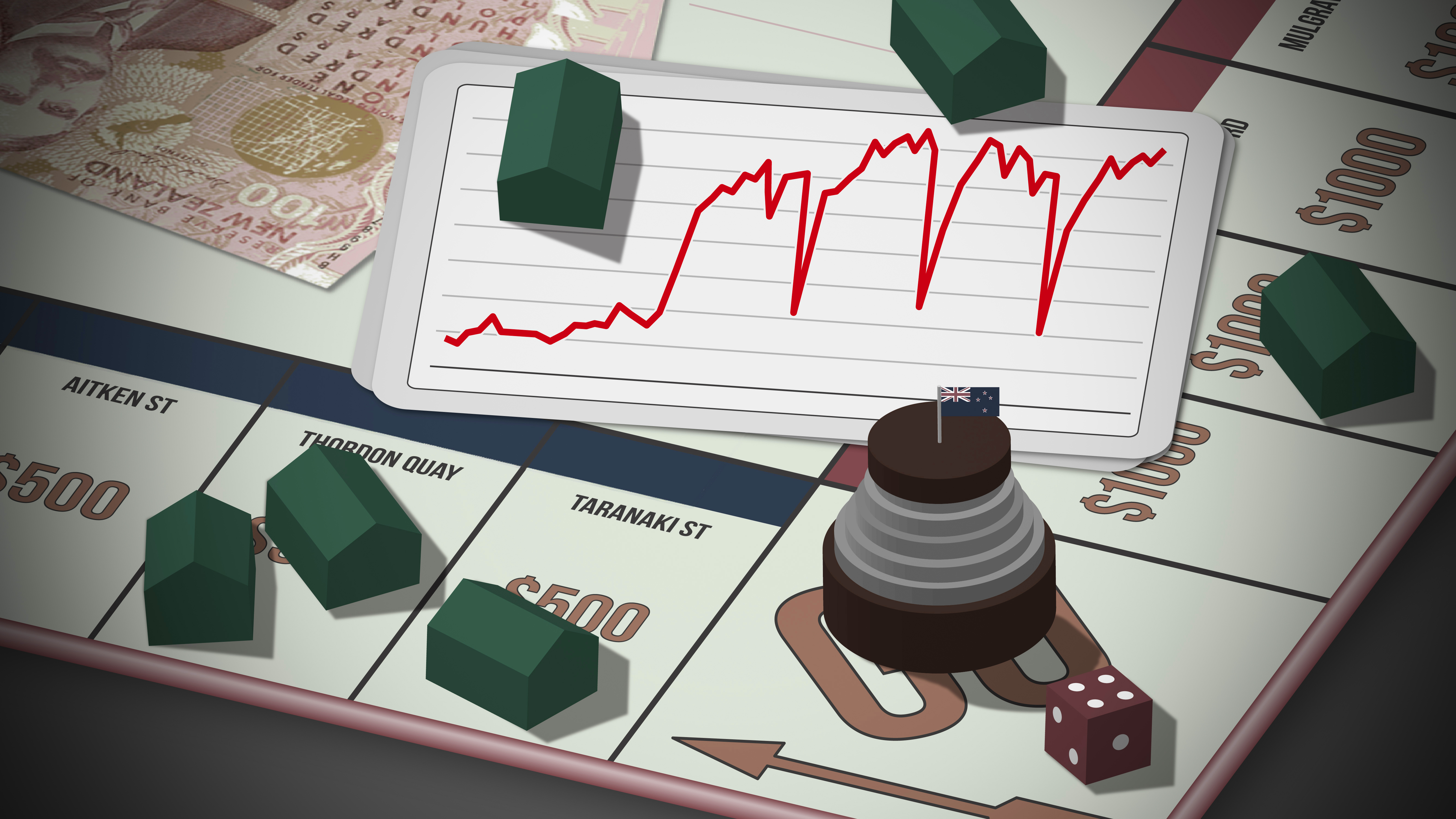
The number of MPs claiming the full Wellington accommodation allowance has increased dramatically – and some MPs have received a lot of money. Others have claimed less than they were entitled to, and we asked them why. Data editor Chris Knox reports.
A series of rule changes has meant that the number of MPs claiming full accommodation allowances has skyrocketed. In 2009, about 10% of eligible MPs claimed it – and 75% of them do today.
The rules are intended for MPs who aren’t from Wellington to be able to cover the cost of spending time working in the capital.
Specifically, MPs whose “home base is outside the Wellington commuting area” can claim $36,400 a year and ministers can claim up to $52,000 – regardless of how much they actually spend.
But 30 current MPs who have property interests in Wellington claim the accommodation allowance, and 28 of them claim the maximum amount.
Some MPs have – over time – received enough to buy an apartment outright. More on that below.
In the last year, the total cost of MPs’ accommodation allowances in New Zealand was $3.8 million.
Labour leader Chris Hipkins told the Herald the current system isn’t working the way it should and it’s something his party is looking at.
“I disagree with the change that John Key made many years ago, which was to bulk fund accommodation allowances for MPs.
“Before that, MPs had to produce evidence of actual and reasonable expenses to claim those allowances, which is no longer the case.”
National said in a statement that “the rules are set by the Remuneration Authority”.
A tidy return on investment
The bulk-funding changes – introduced between 2009 and 2014 – meant it was no longer against the rules for an MP to live in a Wellington property they owned mortgage-free and claim the full accommodation allowance, provided they had a “home base” outside of Wellington.
Last year, NZ First MP Andy Foster purchased a new house in Wairarapa. By declaring and using it as his home base, he was able to claim the accommodation allowance on his long-time Karori, Wellington home.
The amounts some MPs receive give them tidy returns on their property investments.
Minister of Justice Paul Goldsmith bought his Wellington apartment for $325,000 in December 2023 and claims the full $52,000 annual ministerial accommodation allowance – receiving 16% of the purchase price each year. He did not want to comment when approached by the Herald.
Some long-serving MPs and ministers have even received enough from their accommodation allowances to purchase an apartment outright – if they wanted to.
Recently retired senior minister Judith Collins tops that list. She received more than $612,967 in accommodation allowances over the course of her long parliamentary career.
Louise Upston comes in second. Her total is $549,222.
National’s Todd McClay comes in third with $516,386, followed by Labour’s Megan Woods with $502,488, and another recently retired long-serving MP, Labour’s David Parker on $496,637.
Although Hipkins has strongly opposed the current system, the percentage of out-of-town Labour MPs currently claiming the full allowance – 75% – is higher than National’s at 72%.
Accommodation scandals
MP accommodation allowances have regularly made headlines. In the past, they centred around whether MPs were breaking the rules. More recently the question has become whether the rules are too generous.
Upston was criticised in May for claiming the $52,000-a-year accommodation allowance to live in her own Wellington apartment. She said at the time she had followed the rules and was “comfortable” with them.
In 2024, Wairarapa-based Labour MP Kieran McAnulty made headlines for claiming the full accommodation allowance to rent an apartment from his wife.
Prime Minister Christopher Luxon’s own use of the accommodation allowance, while living in an apartment he owned, landed him in hot water in 2024 – and he repaid what he had received.
They were all operating within the rules. Rules that have made something that used to be rare – claiming the full accommodation allowance –– into something commonplace.
The MPs who claim less
Not all MPs take the maximum. Twenty eight non-Wellington MPs haven’t claimed the full allowance in the last year.
The Herald asked a number of them why they chose not to – two responded.
Independent MP Tākuta Ferris claimed $7529 for his accommodation and told the Herald the $36,400 entitlement shouldn’t be viewed as a target – especially when many whānau are struggling.
“MPs should claim what is necessary to do the job, not maximise what is available to them” Ferris said.
”New Zealanders should expect their MPs to incur costs as needed. Not electively. That view should especially be expected of Government MPs who are out here with their austerity policies."
Minister for Biosecurity and Act MP Andrew Hoggard claimed $21,078, which is less than half of the $52,000 he is entitled to.
Hoggard explained that since he drives to Wellington, he doesn’t need to store anything there.
“I just choose to stay in a hotel ... it’s simple – I’m only here for three nights a week generally, so the hotel room provides all that I need without any hassle.”
How and why the rules changed
Payments for out of town MPs have a long history. As far back as 1854, when New Zealand’s Parliament first sat in Auckland, MPs from outside the then capital received higher allowances.
In recent decades, the biggest changes to the rules happened under Sir John Key’s leadership. The Wellington test was changed from an MP’s primary place of residence to their “home base” – the place they normally live when not in Wellington.
Control of the accommodation allowance was moved from the Speaker’s office to the Independent Remuneration authority, and optional automatic bulk payments for “continuous” Wellington accommodation replaced the previous expense-based system.
In Australia, MPs claim a travel allowance for each night they spend away from their home base. They receive A$322 ($393) for each night spent within 30km of Parliament House in Canberra.
There are 10 Wellington-based MPs who aren’t eligible for any accommodation allowances. Five of them are electorate MPs, but the other five are list MPs: Nicole McKee, Nicola Willis, Ayesha Verrall, Ginny Andersen and Lan Pham.
There is nothing in the rules stopping them from doing what Foster did and claiming the allowance, but they haven’t.
The Prime Minister and Winston Peters live in official residences in Wellington, so they aren’t eligible either.
In 2009, the Department of Internal Affairs owned six properties for senior ministers to use. This accounts for a small fraction of the change in the number of MPs claiming the full accommodation allowance.
But the shift has been much larger. In early 2014, 11 MPs claimed the full accommodation allowance. This year, 81 did.
The Herald asked each party currently in Parliament to comment on the increase.
In addition to Labour and National’s responses above, NZ First stated that political parties have minimal impact on the Remuneration Authority’s rules, adding they would consider “sensible and workable changes”.
Te Pāti Māori simply stated that four of their MPs claim the full allowance.
Green Party MP Ricardo Menéndez March noted the importance of accommodation allowances in enabling the participation of MPs from a range of socioeconomic backgrounds, and the system “should not be for MPs to receive the allowance on their mortgage-free homes or to build their asset bases”.
Chris Knox is a scientist turned data-journalist who investigates the stories behind the numbers, and creates interactives for Herald readers to explore them.