Maternal mental healthcare: A third of mothers who need support are going without it
Warning: This story refers to mental health and suicide
About a third of mothers in “significant mental health distress” are not getting the specialist mental health care they likely need, according to reports commissioned by Health New Zealand Te Whatu Ora that remained largely secret for three years until the Herald forced their publication.
In some regions, care is even worse, with statistics showing that just a fifth of mothers in the old Waitematā District Health Board (DHB) who need specialist care are receiving it.
The reports found maternal mental health services were a postcode lottery, with people’s ability to get care highly dependent on where they lived.
Even if people are eligible for care, they might not receive it. A report on care in the South Island warned that “eligibility takes second place to availability and to interpretation”, which means that some people “may be eligible for a service but still may not get access”.
The findings come from four reports on perinatal and infant mental health commissioned by Health NZ under the previous Government. Three were handed over in December 2023, while one, for the Northern Region, was handed over in 2025.
Each of the four reports corresponds to one of the four regions of healthcare coverage under the new Health NZ model. Only two of the reports had concrete figures approximating the level of unmet need, with the other two reports do not break out this specific data.
The Herald requested them under the Official Information Act earlier this year. While one document was released prior to the Herald’s requests, requests for the other three were rejected until Health NZ decided to “proactively release” the documents. They were not public before then.
Health NZ director-mentally well Lisa Gestro said the reports were “undertaken to inform the development of the Kahu Taurima initiative” – a programme created to improve healthcare during pregnancy and in the first years of a child’s life.
She said the reports showed “opportunities to strengthen integration between primary, specialist and community-based services to develop more equitable and accessible maternal mental healthcare”.
Perinatal mental health remains one of the most pressing issues in New Zealand’s network of maternal health services. The Perinatal and Maternal Mortality Review Committee’s 2024 report found that between 2006 and 2021, suicide was the leading cause of maternal death, with 32 mothers dying by suicide during that period, representing 21.9% of all maternal deaths.
‘Not surprised’ – advocate
Perinatal mental health advocate Kristy Maguire told the Herald she “wasn’t surprised” by the findings in the four reports.
“It reflects the experience of many mums, including myself,” she said.
“If the reports are implying a third of women are not getting the care they need, the reality is it’s a lot more than this and you only need to speak to women who have experienced it, or the people who actually work on the ground in the perinatal space, to see this,” she said.
Maguire’s own experience of the country’s postcode lottery for maternal mental healthcare was published in the Herald last year.
Experiencing severe post-natal psychosis, Maguire was sectioned under the Mental Health Act and separated from her child while she received care in a general mental health unit (separating a mother from her child is generally regarded as not best practice).
Maguire later found out that had she been living in Auckland, where there is a Mother and Baby Unit (MBU), she would have been able to receive care without being separated from her newborn child.
“My big question when I found out about the Mother and Baby Unit in Auckland was why was I not taken there, why was this not given as an option?”
Maguire asked why her condition of postpartum psychosis was not treated the same way as a physical medical emergency, which would have seen her transported to the place most appropriate to treat her.
After a bipartisan effort, Parliament recently changed the Mental Health Act to recommend that, where appropriate, mothers should not be separated from their newborns while receiving care.
One in three not getting care
The four reports note widespread unmet need, based on a calculation that compares the number of people who receive specialist mental healthcare with the number of mothers who are expected to experience “significant mental health distress” during the perinatal period, which is estimated to be about 15%.
In the report on the Northern Region – which covers Auckland and Northland – the average was even lower.
It found only about 8% of mothers were accessing mental health services, or 1850 mothers referred from a total of 23,653 live births. Access in Auckland appears to be best, with 12% of women accessing maternal mental health services.
Access is worst in Waitematā, where just 3% of mothers are accessing maternal mental health services, followed by Counties Manukau, where the figure was 6%, and Northland, where access was 9%. The report said it was possible that the low access in Waitematā and Counties Manukau was because those regions had separate referral management teams responsible for triaging care.
The report noted that Māori mothers tended to get much higher referral rates while Asian mothers’ referrals were “notably low” relative to the Asian population overall.
The picture is similar in the report on the Central Region, which covers the central North Island down to Wellington. Across that region, about 10% of mothers received specialist mental health care services in the perinatal period, although that figure includes both specialist maternal mental health services and more general mental health services.
However, this figure includes mothers receiving care through general mental health services as well as specialist maternal mental healthcare.
Just 4% of mothers had contact with specialist maternal mental health service.
The Central Region had more uniform access to care than the Northern Region.
Eight to 13% of mothers in the former DHBs of MidCentral, Hawke’s Bay, Wairarapa, Capital & Coast and Hutt Valley accessed mental health services. The outlier was Whanganui, where 18% of mothers accessed care.
The other two Health NZ regions did not report comparable figures.
Postcode lottery of care
All four reports raised concerns about the postcode lottery of access to specialist services. One part of the country will have very different criteria for accessing mental health services from other areas.
Despite the creation of Health NZ, which was partly driven by a desire to streamline people’s access to care across the country, mental health services still vary widely, depending on which DHB area a person lives in.
The report on the Te Manawa Taki Region – an area representing most of the central North Island – detailed the case of a “severely distressed person turned away because they were only nine weeks pregnant”.
This person would struggle to get care in many parts of the country, where referral to specialist maternal mental health services is restricted to someone who is in their second or third trimester of pregnancy, or who has given birth in the past year. However, some parts of the country have extended access to include the first trimester as well.
A separate report noted that in the three DHBs areas covering Auckland, anyone who is pregnant can get care. In Northland, however, despite that former DHB now belonging to the same Health NZ region, someone has to be in their second or third trimester before they can get a referral.
Gestro, the Health NZ director, told the Herald these differences in care still existed three years after that report had been handed in.
“Currently, access to specialist maternal mental health services during the first trimester varies across districts, with some accepting referrals routinely while others assess referrals on a case-by-case basis,” she said.
One person interviewed for the report, whose remarks were printed anonymously, said the threshold for getting care was “very high”, adding “we often have to actively advocate and lobby for access to appropriate level of support for women”.
One mother said she was phoned “once” by maternal mental health, “but not ranked highly enough for ongoing care. There was no follow-up by them or my GP to see if I was okay or [to] offer of access to ongoing mental health support”.
Another mother who was actually referred to maternal mental health services said she was only contacted by maternal mental health four weeks after being referred by the hospital.
“That’s too long when you are feeling suicidal or feeling like you want to end a pregnancy due to severe hyperemesis,” she said.
The stage of pregnancy is not the only criteria for accessing mental health services that varies from region to region. Each region in the country has unusual and specific criteria for accessing care, with no universal standard applied across the country.
Across the Northern Region, women need to have a “mental health assessment associated with emotional distress related to pregnancy, birth or parenting in the first year of an infant’s life” before being referred to mental health services.
In Whanganui, the criteria are slightly different, requiring someone to have an “onset of an identified moderate to severe mood disorder or psychosis associated with pregnancy and or parenthood in the first year of the infant’s life”.
Over in Hawke’s Bay, the criteria for admission are different again, requiring “moderate to severe mental health concerns during pregnancy or up to 12 months after giving birth”.
And in Wairarapa, there is care for people who “require additional mental health support during the perinatal period”, while mothers with “moderate to severe needs” are not referred to specialist services at all and instead are referred to general adult community mental health services.
Quality of service usually good, but patients want longer in care
A survey of people who had finished receiving help from maternal mental health services in the Te Manawa Taki Region found that only 6% of people who had finished treatment agreed with the statement “I finished the service when I was ready”, suggesting many were discharged before they felt ready.
Only 4% said they agreed with the statement “My GP looked after me once I was finished with the specialist maternal mental health service team”.
There were some positives in the survey: only 4% of families were unhappy with the service they received.
‘I want to see the end of the postcode lottery’ – minister
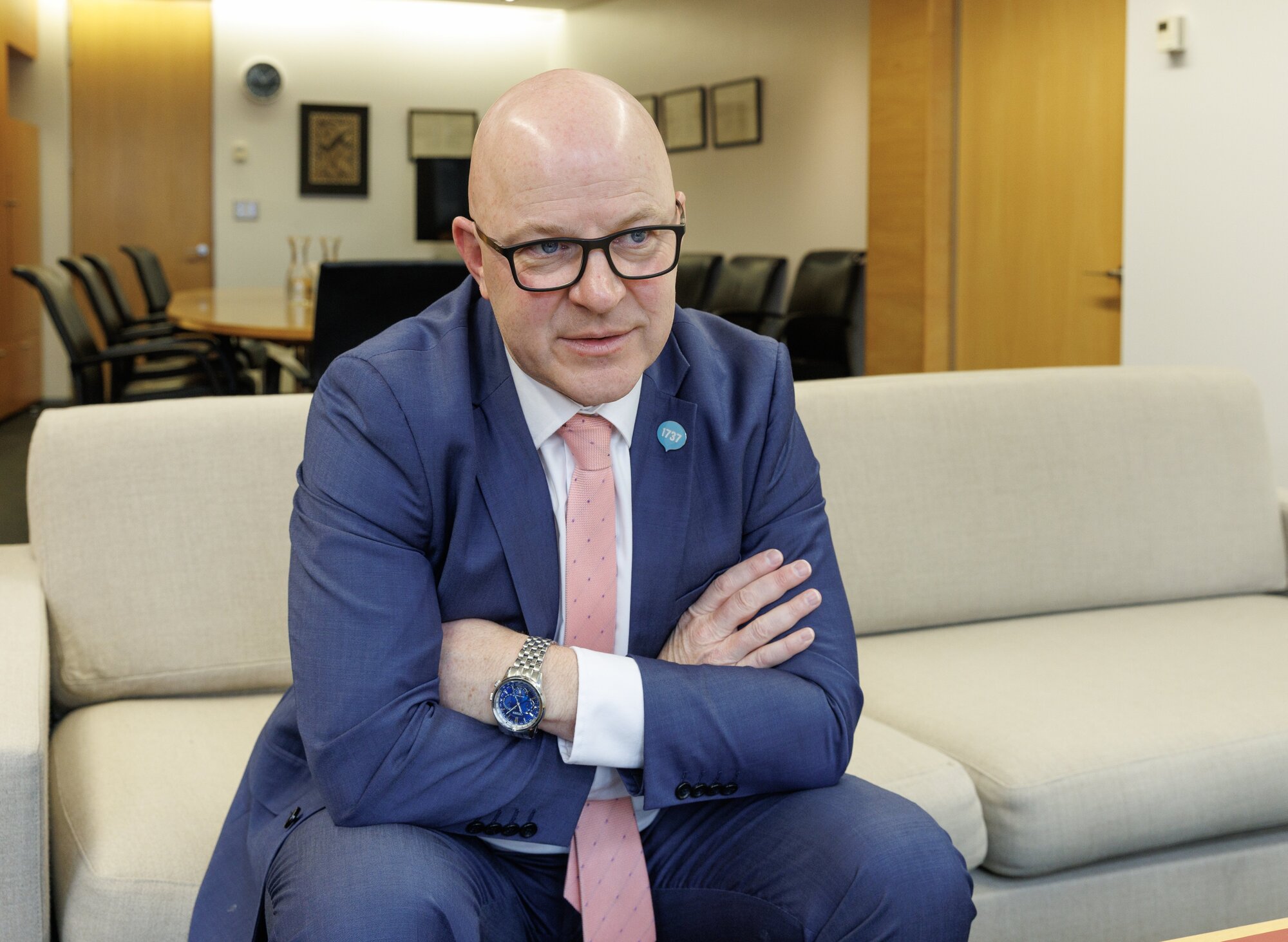
Mental Health Minister Matt Doocey told the Herald he wanted to “see the end of the postcode lottery”.
“That’s exactly why I set the first mental health and addiction targets, to ensure all regions, whether you live in Northland or Christchurch, have the same access to primary and specialist support,” he said.
Doocey added that he wanted to see all regions improving access to maternal mental health.
“Where any unmet need is identified, I expect Health New Zealand to look at what more we could be doing to see real improvements and ensure that, nationally, all mothers and families have the support they need,” he said.
Doocey said that sometimes unmet need was not a case of a lack of available services, but people not knowing where to go. He said not knowing where to seek care had been “reported as the reason for unmet mental health needs in one third of children and more than a quarter of adults”.
The most recent Budget included $20.18 million for maternal mental health, some of which will be spent on recruiting more frontline staff.
“Last year, we also announced more funding for regions in need that were identified as having lower levels of investment, where increased support would result in more women needing specialist mental health support during and after pregnancy having better access to care,” Doocey said.