Budget 2026: Boost to defence spending as surge to 2% of GDP continues
To follow the latest Budget coverage, click here for our live blog.
In a big boost to defence spending, $1.6 billion of new funding has been pumped into the military, with Minister of Finance Nicola Willis today warning of an increasingly unsafe world.
The increased funding to rebuild and expand New Zealand’s military capability continues the Government’s drive to lift defence spending to 2% of GDP.
There has been criticism that the money is too focused on equipment and not enough on people.
Today’s Budget detailed specifics of the spending, while the speech from Minister of Finance Nicola Willis came with a stark warning that the world is an increasingly dangerous place.
“New Zealand faces the most adverse and contested geostrategic environment in the past 80 years,” she told Parliament. ”While we cannot control the actions of other countries, we can ensure we have the capability to defend and advance New Zealand’s interests."
The Budget also included a significant increase in intelligence spending, with documents showing $155.7 million in new operating funding over four years. That was split between $71.4m for the Government Communications Security Bureau (GCSB) and $84.3m for the NZ Security Intelligence Service.
Combined, the two intelligence agencies’ annual appropriations rise from $405.3m in 2025/26 to $486.4m in 2026/27, an increase of about $81.1m, or 20%.
As in Budget 2023, the GCSB got the bigger single-year dollar increase with a boost to its annual allocated budget of about $57m in 2026/27.
In 2023, GCSB funding surged above $400m in what was believed to be linked to the new all-of-government secure data centre at RNZAF Base Auckland, Whenuapai. As usual, no actual detail was provided about what the GCSB would be spending the single-year $57m increase on.
The most significant spending in the national security package was in defence, with Willis saying this year’s Budget funded the second year of the Government’s Defence Capability Plan.
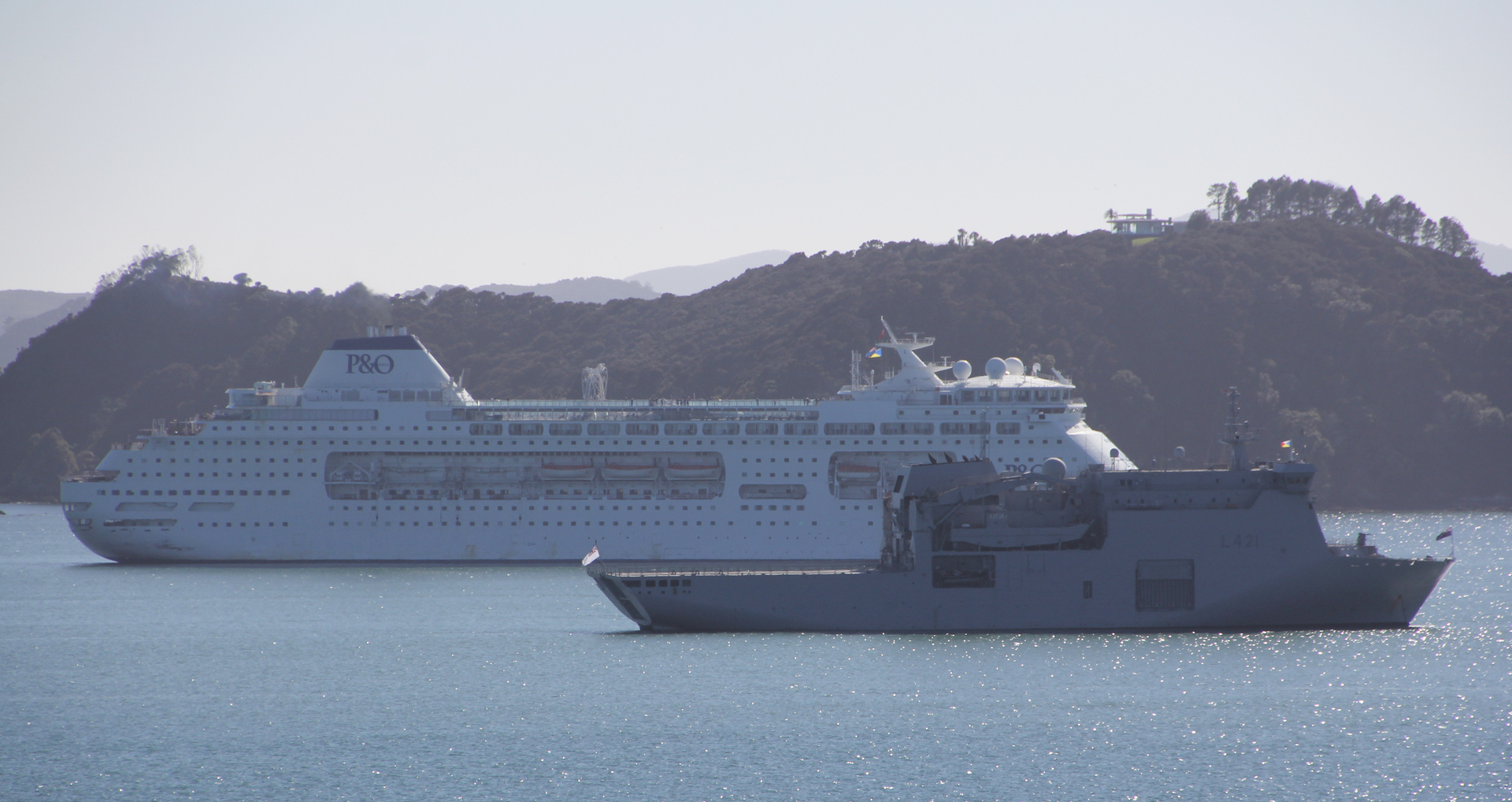
She said spending would go on extending the operational life of the Royal NZ Navy’s Anzac-class frigates and HMNZS Canterbury, buying drones for surveillance in the southwest Pacific and Southern Ocean, building modern housing on military bases and a new training facility at the army’s Linton camp.
The new military spending comes after years of pressure on people, platforms and infrastructure.
The NZ Defence Force (NZDF) has faced serious attrition problems, gutting some of its most critical and experienced personnel, which has led to difficulty sustaining some capabilities.
This year’s Budget aimed to keep old ships available for longer, pump money into personnel in key occupations and pave the way for new technology and a shift towards a more capable and modern force.
The spend lifts NZDF’s budget from $5.064b in 2025/26 to $5.491b in 2026/27.
Most of the money — almost $4.2b — is for NZDF’s day-to-day work. About $3.5b of that is to keep the military ready to do what the Government requires, while about $621m is for operations that protect New Zealand’s territory and support security work overseas and in the region.
NZDF also gets more money for equipment and infrastructure projects, with capital up from $892.7m this year to $1.062b next year.
Big-ticket spending was led by $76.8m to keep the frigates and HMNZS Canterbury operating. The frigates remain New Zealand’s main naval combat ships. Canterbury is the Navy’s sealift and amphibious support vessel.
The spending was intended to keep the ships available and current until replacement decisions are made.
The Budget also earmarked $64.4m for future air mobility – moving equipment, people and supplies by air – and $59.3m for Waiōuru housing. It also showed $58.8m for what is called “the Network Enabled Army programme”, which is about modernising the Army’s communications, intelligence-gathering and information-management systems. It was intended to allow soldiers and commanders to more easily share information and operate as a connected force.
Funding also provided for work to transform the Navy ahead of the introduction of the future naval fleet, including additional staff and specialist services.
The dollar figures for sensitive maritime projects are hidden from public view, with commercial sensitivities given as the reason for withholding costings for the frigate life extension programme, and for the surveillance drones intended for the southwest Pacific and polar region.
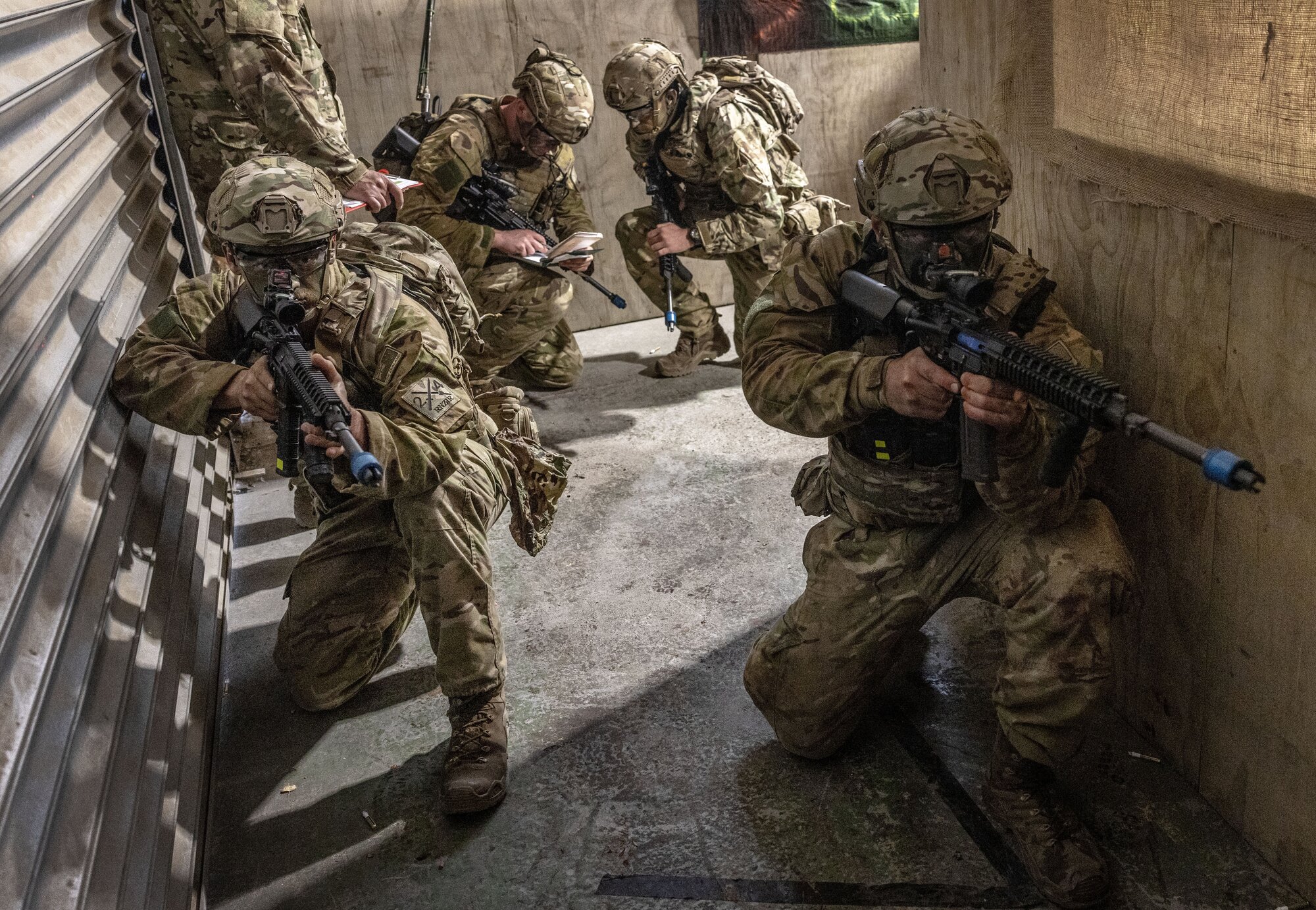
Years of neglect of defence estate continues to soak up Budget allocations, with funding for planning, design and delivery of modern homes for military personnel and their families at Trentham, Ōhakea, Linton, Woodbourne, Waiōuru and Burnham.
Poor housing and ageing estate infrastructure have been recurring problems for NZDF. Modern homes on bases are being presented as part of the effort to make the military a more viable career, particularly for personnel with families.
The Budget also allocated $30m a year – $120m over four years – to bring the pay of military personnel closer to market rates.
The Linton mission command training facility is intended to provide a secure facility for simulated military operations and networked training with partners, while also being able to act as a crisis headquarters for other agencies.
Willis spoke to a darker strategic environment.
“The world is more volatile than ever,” she said. “The rules-based global system is under strain. Countries are boosting their spending on defence.”
Massey University Associate Professor Bethan Greener – a strategic studies academic – said the defence spending had been signalled by the Government through the Defence Capability Plan and its commentary about an increasingly dangerous world.
She said the planned spending was conventional, with New Zealand appearing to again replace major platforms with updated versions of similar capabilities.
She said it continued single-service spending and missed an opportunity to reconsider the overall shape of NZDF and put joint operations at the centre.
Greener said there was some recognition of the changing nature of warfare, including a greater emphasis on drones, but less obvious attention to information warfare and other technical domains.
She also said New Zealand needed to more openly consider how interoperability with allies could affect sovereignty, particularly if partners became increasingly or less aligned in the future.
Greener said increased spending on defence housing was positive, as it had been “woefully ignored for decades”. She said the welfare needs of the people who staffed expensive military platforms needed to be “much more up front and centre”.
Hayden Ricketts, co-founder of service advocacy organisation Mission Homefront, said the $30m a year was short of the estimated $400m he believed was necessary to return NZDF to a position where it was an attractive and sought-after place to work.
He said pay continued to fall short of civilian comparators and conditions that existed when he set out on a 25-year military career no longer existed. That included medical insurance, dental cover and military housing areas providing good-quality homes to a community of families with shared experiences.
Ricketts said NZDF had “hemorrhaged” people in the years since Covid-19 emerged and needed to work hard to replace the experienced middle that had been hollowed out.
While spending on military equipment was necessary, he said spending was also needed on personnel to operate the equipment. Currently, among other issues, were ships tied up that could not be crewed and light-armoured vehicles “on blocks” because of a lack of trained people.
“I can’t understand why we have a recruitment problem and a youth unemployment problem at the same time.”
Ricketts, a recently retired Lieutenant Colonel, said NZDF was still 1000 people short of what it needed despite a recruitment drive.
He said service pay and conditions didn’t offer the “hooks” that would keep people in service beyond the point they had learned a trade and became aware of better pay in the civilian world.
Penk announced much of the funding before Budget Day, saying over the weekend that New Zealand’s security and prosperity depended on the sea. He pointed to recent disruptions to international shipping routes, saying they had shown how quickly economies and supply chains could be affected.
The Budget also includes $1.5m capital and $16m operating funding to begin work on a Technology Accelerator programme, intended to connect industry with defence to solve military problems. That is small in the context of the total package, but it signals the Government’s interest in a closer defence-industry pipeline.
The boosted funding for our military is the second instalment of a four-year, $12b plan over Budgets 2025 to 2028 after a commitment from the coalition Government to a major lift in military spending, saying defence expenditure will rise from just over 1% of GDP to more than 2%t by 2032/33.
The target was set out in the Defence Capability Plan released in April 2025, described by Government as a 15-year blueprint focused on the first four years of urgent investment to rebuild a “modern, combat-capable” Defence Force.
The $12b of planned commitments over four years included $9b of new spending, although the Government has said that remains subject to future Budget decisions and Cabinet approval of business cases.
Do you have questions about the Budget? Ask our experts – business editor at large Liam Dann, senior political correspondent Audrey Young and Wellington business editor Jenée Tibshraeny – in a Herald Premium online Q&A here at nzherald.co.nz at 9.30am, Friday, May 29.
David Fisher is based in Northland and has worked as a journalist for more than 30 years, winning multiple journalism awards including being twice named Reporter of the Year and being selected as one of a small number of Wolfson Press Fellows to Wolfson College, Cambridge. He joined the Herald in 2004.