Election 2023: TVNZ leaders’ debate - Labour’s Chris Hipkins and National’s Christopher Luxon go head to head
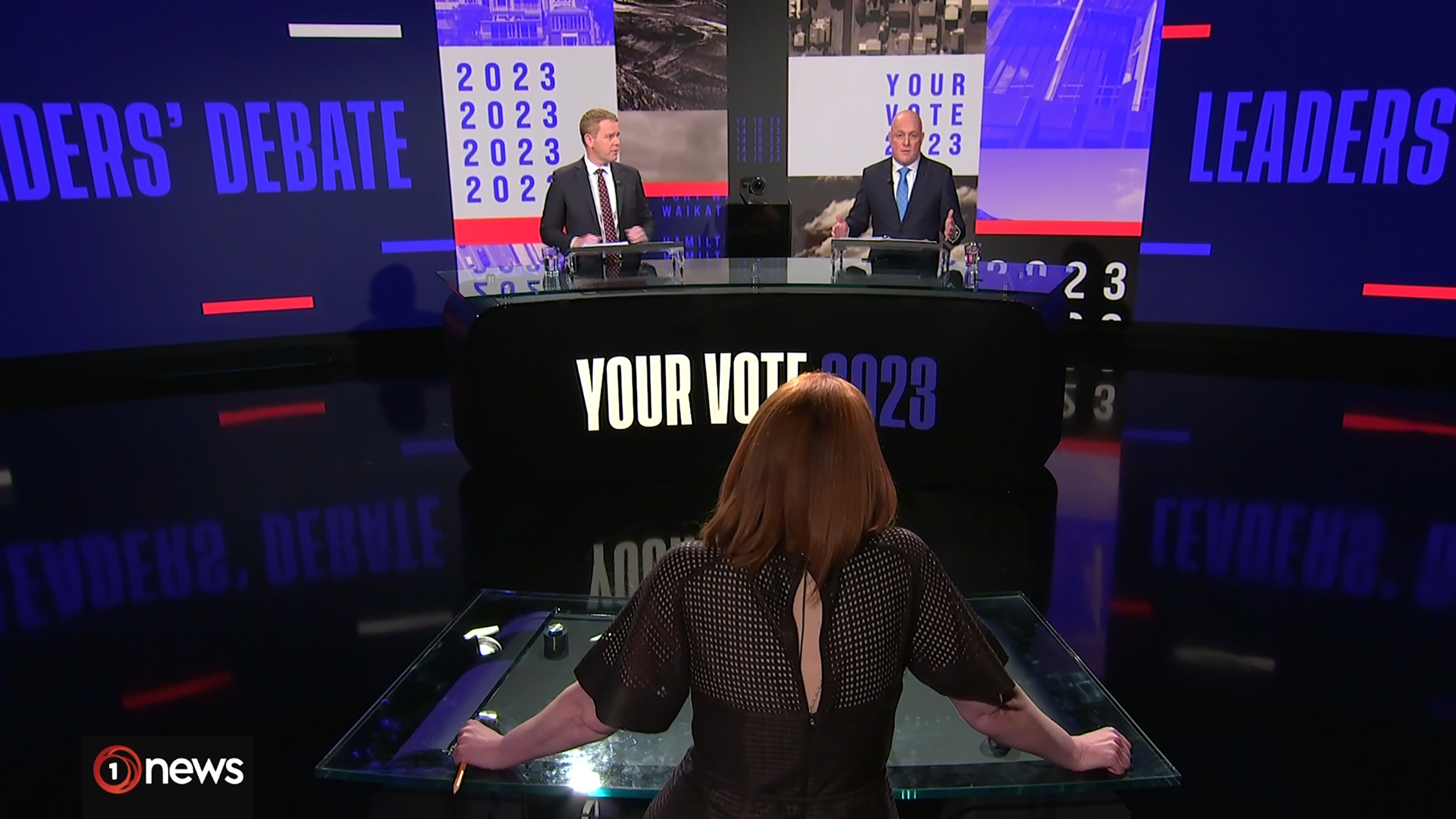
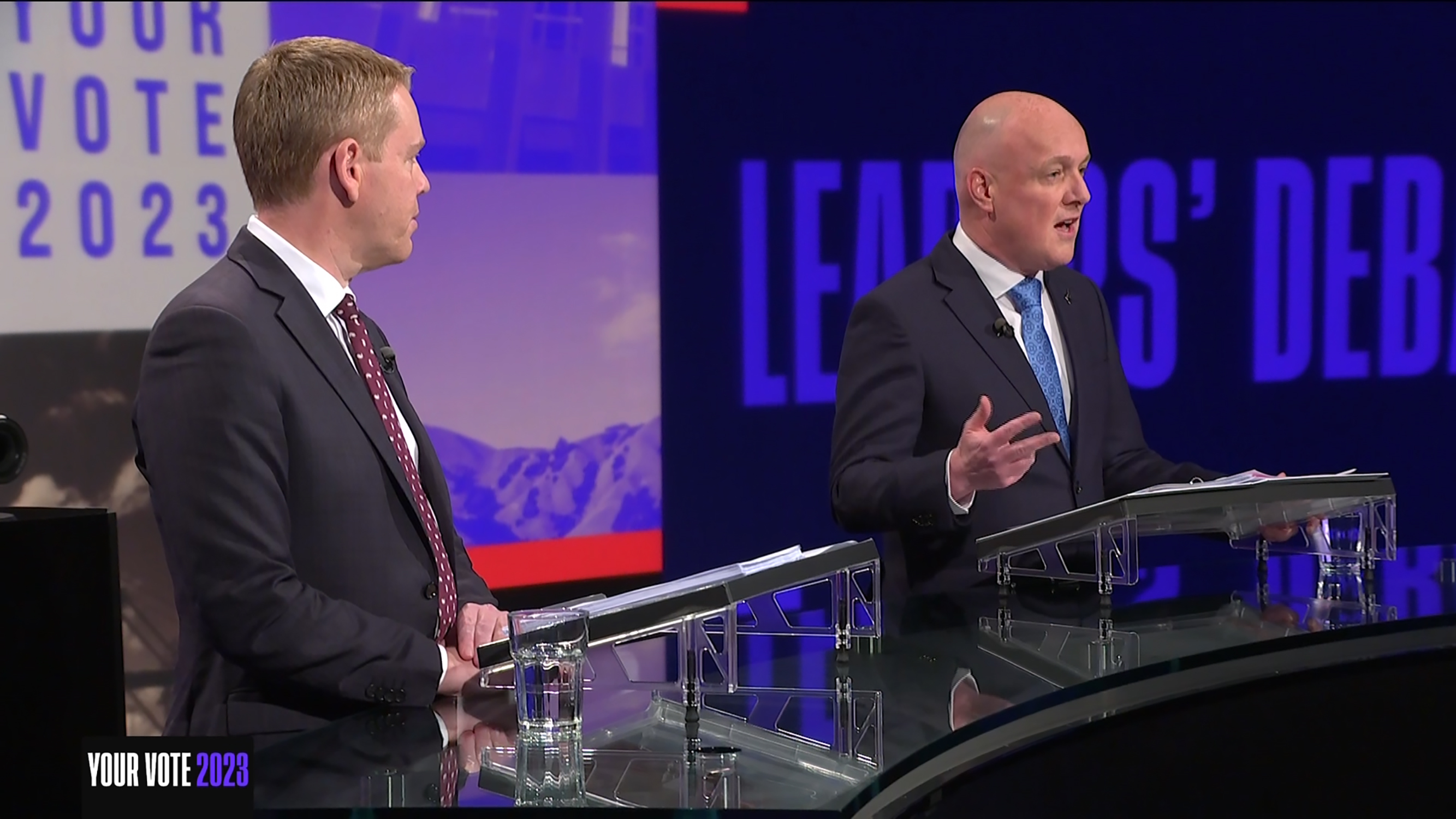
National leader Christopher Luxon and Labour leader Chris Hipkins rated themselves as an 8 out of 10 in their performance in the TVNZ Leaders’ Debate tonight - the first between the two men vying to be Prime Minister.
Speaking to media afterwards, they both said they enjoyed the sparring.
Asked what he did best in the debate, Hipkins said he answered the questions, while Luxon did not.
Asked whether it would change the dial with respect to recent polling, Luxon said: “the debate is only one aspect of a campaign”.
“I hope it was a good platform to hear us both speak,” Luxon said.
On tax and vegetables
During the debate itself, Luxon sidestepped questions about what he would do if the tax revenue he expects to pay for tax relief doesn’t come through.
National’s tax package has been questioned by some economists but also independently verified by strategic advisers Castalia, and took centre stage again at the start of the debate.
Luxon said he was confident in the numbers, and those included selling 1600-1700 homes over $2 million to foreigners a year, taxed at 15 per cent, which would bring in enough revenue alongside other measures to fund tax relief for low to middle-income New Zealanders.
Hipkins repeated a line of attack he’s been trying for over two weeks - that the numbers don’t stack up.
“They can’t sell $5 billion in Kiwi homes every year,” he said, adding New Zealanders would also have to gamble online more than now and also suffer through billions of dollars in public service cuts.
“I don’t trust him to be up-front and honest with New Zealanders ... if he was, he’d be releasing his secret costings.”
Hipkins claimed National’s tax cuts would fuel inflation, which Luxon said was rubbish because it had been costed as fiscally neutral.
Hipkins said National’s plan would cut a lot of policies to reduce the cost of living - like no $5 prescription fee - but Luxon said National’s tax relief would give $250 a fortnight to a family of four.
“It’s much better than a couple of cents off your beans and carrots,” Luxon said, in a reference to Labour’s GST-free fruit and vegetables policy where savings may not be passed on to consumers.
A median worker would be $25 a week better off, which would be useful as rents and food prices and fuel costs have increased, Luxon said.
“Help is on the way,” Luxon said, a line often used by New Zealand First leader Winston Peters.
On a coalition
When Luxon was asked whether he was prepared to manage the two party leaders in a potential coalition, Hipkins interjected: “Winston Peters and David Seymour would be running circles around you”.
Luxon responded that Labour had an absolute majority and got nothing done.
“Stable government does not come from working with Winston Peters,” Hipkins said.
Hipkins turned around a question on Labour’s poor polling by saying people couldn’t trust National.
On crime
Asked whether he knew what it was like to feel unsafe, Hipkins said he didn’t walk around feeling unsafe at the moment as Prime Minister.
He noted the 50,000 charges against gang members as part of Operation Cobalt, and the 75 per cent reduction in reoffending in the Circuit Breaker programme to break the cycle of crime.
“That what we need to turn their lives around.”
Asked if he personally knew how it felt to feel unsafe, Luxon said he had walked through downtown Auckland and he didn’t feel safe there.
Luxon said Labour had not been focused on keeping people safe. They had only had one target - to reduce the prison population by 30 per cent, but there had not been a 30 per cent decrease in crime.
Hipkins said Luxon’s response on crime, claiming Labour was soft on crime, contained no solutions. Luxon replied by saying he would “back police and tackle gangs”.
Luxon listed the party’s crime policies around gangs, taking a jab at Hipkins saying “mate, you’re funding the gangs”, referencing a drug rehab programme linked to the Mongrel Mob.
On gangs and tangi processions that stopped traffic, Hipkins agreed it wasn’t good enough and that was why Labour had proposed to change the law by giving police more powers to stop gang tangi processions.
“But Chris you’ve had six years,” Luxon shot back.
“I like our ideas,” said Luxon, which was to make the gang life unattractive. Part of that was to ban gang patches and give police powers to break up any gatherings, he said.
Vera Alves
Thanks for joining our live coverage of the first leaders debate. Stay tuned for expert analysis of the debate, and check back tomorrow as we resume our coverage of the leaders on the campaign trail.
Hipkins and Luxon at the media standup after the debate
Vera Alves
Photos / Dean Purcell
Vera Alves
He said he had more sympathy for the media now after seeing Luxon allegedly not answering questions.
Vera Alves
Asked what he did best in the debate, Hipkins said he answered the questions. Challenged that that wasn't a high bar, Hipkins claimed Luxon was not.
Vera Alves
Hipkins said he had voted in favour of decriminlising cannabis but he respected that it was voted down in a referendum and therefore informed his response in the debate that he would not decriminalise it.
Vera Alves
He said the viewers could judge who won. Hipkins said he thought he was 8 out of 10 in the debate, the same answer Luxon just gave.
Vera Alves
He said he learned that even with a lot of interjections, Luxon didn't answer questions.
Vera Alves
Hipkins said in the debate he was around 24 years of age when he bought a house but he since revised that to say he was 22-23.
Vera Alves
On his promise to rule out fizzy drinks in secondary schools, Hipkins said it had been ruled out primary schools and there was evidence now it could work, saying that's why it was now Labour policy.
Vera Alves
He said he supported KiwiBuild but said he thought when it was brought up, that it was "ambitious".
Vera Alves
Hipkins said he thoroughly enjoyed his debate and also referenced how it was 20 days since National had released its tax plan and hadn't released its costings.
Vera Alves
Luxon said he often spent time with victims of crime every second day or at least every week and he knew the realities they faced. He said it was disingenuous for Hipkins to say people felt safe.
Vera Alves
On how he often got flak on using common phrases like "let me be clear" and how he refrained from that during the debate, Luxon said he really appreciated the feedback and then stated he hadn't been a career politician and would continue to work on his communication skills.
Vera Alves
"We did everything to buy that house," Luxon said of buying his first house with wife Amanda at the age of 24. He also cited how interest rates then went up and that was painful. Luxon revealed during the debate that he bought his first house at 24. Hipkins said he had also bought his first house around the same age.
Vera Alves
"The time for talk and debate is over, we have to get nurses here," Luxon said on fixing the health system.
Vera Alves
Luxon said that whether he won the debate is for others to decide but he would give himself an 8 out of 10.
Vera Alves
Luxon said he wanted to see new measures targeting vapes and their impact but said if they didn't work, he was open to making them prescription only - as he said in the debate - because he didn't want to create a "bubble of addiction".
Vera Alves
"The debate is only one aspect of a campaign," Luxon said when asked whether it would change the dial with respect to recent polling.
He also noted that he had talked to 10,000-11,000 people in his nationwide public meeting tour.
Vera Alves
"I hope it was a good platform to hear us both speak," Luxon said of the debate.
Vera Alves
He said changes of government in New Zealand still meant that positions on big issues were maintained, like foreign affairs.
Vera Alves
Luxon confirmed he would rule out state asset sales.
Vera Alves
Luxon said he enjoyed the debate and said that it felt like it went fast.
Vera Alves
In a press conference after the debate, Luxon said he misheard a question on free school lunches, saying National would keep the status quo instead of what he said in the debate which was that he would offer it to all students.
Vera Alves
Fact check: Did National leader Christohper Luxon mean it when he said he believed all students should have access to free school lunches, or did he accidentally dig himself a fiscal hole?
Luxon might have accidentally blown a third of his 2024 budget.
According to figures published by RNZ, as of August 2023, lunches are being provided to 230,000 pupils in 995 schools and kura, at a cost of up to $8.28.
Assuming these lunches don’t go up in price (unlikely), we can get a rough estimate of how much Luxon might be on the hook for.
A quick look at figures from Prefu show we’ll have 503,793 primary school students and 312,859 secondary students in 2025, the year that corresponds to the first budget (Budget 2024) National would get to deliver.
Schools offer about 380 half days of teaching a year or 190 days (slightly more for primary schools).
Giving them free school lunches would cost about $790m of primary schools and $490m for secondary schools - $1.3 billion in new spending.
Remember there’s just $3.5b in new spending in Budget 2024, about $2.4b of which needs to go to rising costs of existing services.
Labour leader Chris HIpkins said it should be targeted, as they are now.
Vera Alves
The debate has now finished. Stay tuned for the media standup with the two leaders shortly.
Vera Alves
From earlier in the co-governance section: On “by Māori, for Māori” approaches, Luxon said it was a “great solution”.
“We invented it in the National Party and we will continue to do it.”
Vera Alves
Hipkins said climate change was New Zealand's nuclear free moment, something Luxon didn't agree with because he didn't like slogans.
Vera Alves
Luxon wouldn't call climate change our nuclear free moment but it was a serious crisis.
Vera Alves
Hipkins said he had an EV and he recycled, when asked how he had changed his life to be more climate friendly.
Vera Alves
Luxon said as a family they had embraced recycling "some time ago" when asked what he was doing for the environment.
Vera Alves
"We have a proven track record of reducing our emissions ... it's not just a bunch of slogans," Hipkins said.
Vera Alves
Hipkins says Luxon has the goal but does not have the way of delivering it.
Vera Alves
Hipkins said to Luxon that cutting the Clean Car Discount and winding back projects that reduced emissions wouldn't get New Zealand to its targets.
Vera Alves
Luxon said he thought Labour's policies would knock off 20 to 25 per cent of the sector, to which Hipkins responded "that's simply not true".
Vera Alves
Hipkins said we needed to act with "ever more urgency" on climate change, while referecning how National wouldn't set agricultural emission pricing until the next decade.
"I don't think we can afford to wait that long," Hipkins said.
Vera Alves
National would double the amount of renewable energy.
Vera Alves
Luxon said National simply had a different way to do it.
Vera Alves
Hipkins said we absolutely had a climate emergency and the focus should be on reducing emission.
He noted National had signed up to emission targets but had scraped methods to enable that.
Vera Alves
Luxon said National agreed there was a climate emergency and his party was committed to all of New Zealand's climate targets.
Vera Alves
The last segment the leaders would discuss appears to be climate change, with host Jessica Mutch-McKay citing a comment from Act MP Simon Court who reportedly said recently there was no climate emergency.
Vera Alves
Luxon said a world-class education system was the one thing National would focus on.
Vera Alves
Alva Storey, who asked a question by video, had been living in the country for a couple of years and had kids and asked how they would make New Zealand a better country in 10 years time.
Hipkins cited Labour's dental policy, saying it was affordable and would mean there would be less dental issues later in life.
Vera Alves
Hipkins didn't believe making life easier for landlords was the right way to go, as proposed under National's tax plan, to ensure more people became homeowners.
He said there were more "mega landlords" these days and that that wasn't right.
Vera Alves
Hipkins asked whether National would guarantee the incentives to landlords would be passed to tenants. Luxon didn't answer directly, to which Hipkins replied, "I think that's a no".
Vera Alves
Luxon said he could guarantee their policies would not see a $180 increase in rents as seen under Labour.
Vera Alves
Luxon said they agreed on the need to build more state houses but would work more with community housing providers.
Vera Alves
"We need to be a nation of homeowners, not a nation of renters," Hipkins said, while taking a shot at Luxon for offering incentives to landlords and how the last National government sold off state houses.
Vera Alves
Luxon said National would greatly expand the areas zoned to build houses and increase incentives.
Vera Alves
Asked how they would bring housing prices down, Hipkins said more houses needed to be built to build our way out of the housing crisis.
Hipkins accepted Kiwibuild was a "unrealistic promise" and said the house building momentum needed to be continued and he took a shot at National, saying its proposal to lift the foreign buyers ban would increase house prices across the country.
Vera Alves
Both said transgender people in sport should be left to sporting bodies.
Vera Alves
Luxon’s favourite beach was Onetangi on Waiheke Island and Hipkins’ Raumati South.
Vera Alves
Both supported free school lunches. Luxon said all students should get it while Hipkins said it should be targeted as is now.
Vera Alves
Luxon opposed renaming New Zealand Aotearoa and Hipkins said he didn’t mind.
Vera Alves
Neither supported a vacant house tax and both said transgender people in sport should be left to sporting bodies.
Vera Alves
They both purchased their first home around the age of 24.
Vera Alves
Both answer "no" to tax for vacant houses.
Vera Alves
None of them agree with a wealth tax.
Vera Alves
They both like the idea of a four-year term.
Vera Alves
Another round of quick fire questions. Both agreed to bilingual road signs.
Vera Alves
Hipkins said the health system was dealing with systemic issues and it would take time to build capacity within the system to fix them.
Luxon said every single health indicator had worsened under Labour but Hipkins countered that by saying smoking rates had decreased.
Vera Alves
He challenged Luxon on why he would keep Māori health providers if he didn't want two systems of health. Luxon said he supported Māori health providers.
Vera Alves
"The Māori health authority isn't having two systems," Hipkins said.
Vera Alves
"Why do you think you know better about Māori health than Māori do?" Hipkins hit back at Luxon over his comments about the Māori Health Authority.
Vera Alves
Luxon said he supported it in the space of local natural resources.
Vera Alves
Hipkins said co-governance simply meant shared decision making over natural resources and believed it had been successful.
He believed Māori and non-Māori working together benefited New Zealand.
Vera Alves
He thought the current government hadn't properly explained what it meant.
Vera Alves
Luxon said he felt the definition of co-governance had been expanded since the last National government.
Vera Alves
A bit of history on the fizzy drinks in schools - Hipkins said Labour would ban fizzy drinks in secondary schools if re-elected - it has already banned them in primary schools.
Labour last tried to ban fizzy drinks in secondary schools back in 2006 – but before the ban was due to come into place in secondary schools in 2009, National had won the election and repealed it all.
Will it be deja vu all over again?
Vera Alves
"I am not afraid of anything, Chris," Luxon said after Hipkins said he should "not be afraid" of Māori having control over their health services.
Vera Alves
Vera Alves
Māori waited longer for health services, something Hipkins said was not acceptable. He claimed Labour was addressing it but that it was unfortunate other parties were using it for "race baiting politics". "That's just not right," Luxon said.
The pair went back and forth on the topic, Hipkins challenging Luxon on why Māori should wait longer for the same healthcare if they had the same need.
Vera Alves
Luxon hit back at Hipkins' claim his party was race-baiting. He said coming through the needs lens was a better way.
Hipkins hit back and said that was happening but Māori and Pasifika were still waiting longer to be seen.
Vera Alves
Luxon said the prioritisation in public services should be on the basis of need, and ethnicity should not factor into those decisions.
Vera Alves
Hipkins said Labour's dental policy was a "fraction of the cost" of National's tax cuts. Luxon responded by saying there were other priorities currently to which Hipkins said, "You've indicated that tax cuts for you and me is more important."
Vera Alves
The health system was in crisis, we would all love to expand free dental but there were other priorities, he said.
Vera Alves
Luxon said all politicians would want to increase funding in dental, but there were other priorities. He was sceptical about Labour's ability to deliver.
Vera Alves
Labour had recently announced free dental for under 30s. Hipkins said he thinks fizzy drinks should be banned in secondary schools, like they are in primary schools, and if elected, Labour would do that.
Vera Alves
Asked about a ban on fizzy drinks, Luxon said they could look into it. He wasn't sure about banning them in schools.
Vera Alves
Dr Hugh Trengrove said the oral health situation was appalling. He said sugar was a key risk factor. His question was what they would do about the sugar epidemic.
Vera Alves
Hipkins was asked why $1.9b invested in mental health hadn't made much of a difference. He said it took time to build systems and he accepted how it may have taken a while but he was confident appointments were increasing.
Vera Alves
On mental health, Luxon said there needed to be a dedicated minister and specific targets.
He also wanted to get more funding to community organisations.
Vera Alves
Luxon said it took at least a week to get a physical GP appointment. He tended to do Zoom.
Vera Alves
Hipkins said he last went to a GP relatively recently and got an appointment relatively speedily. He denied it was because he was PM, the appointment had actually been for his child.
"Undoubtely there's always room to pay people more," Hipkins said to a question on whether GPs should be paid more.
Vera Alves
Luxon said it would have been great if Labour had started training more doctors six years ago.
Vera Alves
During the rapid fire questions, both Hipkins and Luxon said they would not decriminalise cannabis.
Vera Alves
Luxon spoke about nurses and health professionals heading over to Australia. He mentioned their policies to train more people here, and paying them more would be part of that.
Vera Alves
Hipkins said a priority was paying nurses more so that they would stay in New Zealand. "Christopher Luxon calls this wasteful spending." Luxon then pivoted to how he wanted to cut backroom staff and unnecessary spending on those roles.
Vera Alves
"The wasteful spending is 200 comms staff in Health NZ rather than nurses," said Luxon.
Vera Alves
Luxon said there would be no cuts to health spending and they would increase it every year. He said it was "outrageous" for Hipkins to claim the system was not broken.
Vera Alves
Hipkins guaranteed no cuts to health and education and claimed that was something National hadn't delivered on in the past.
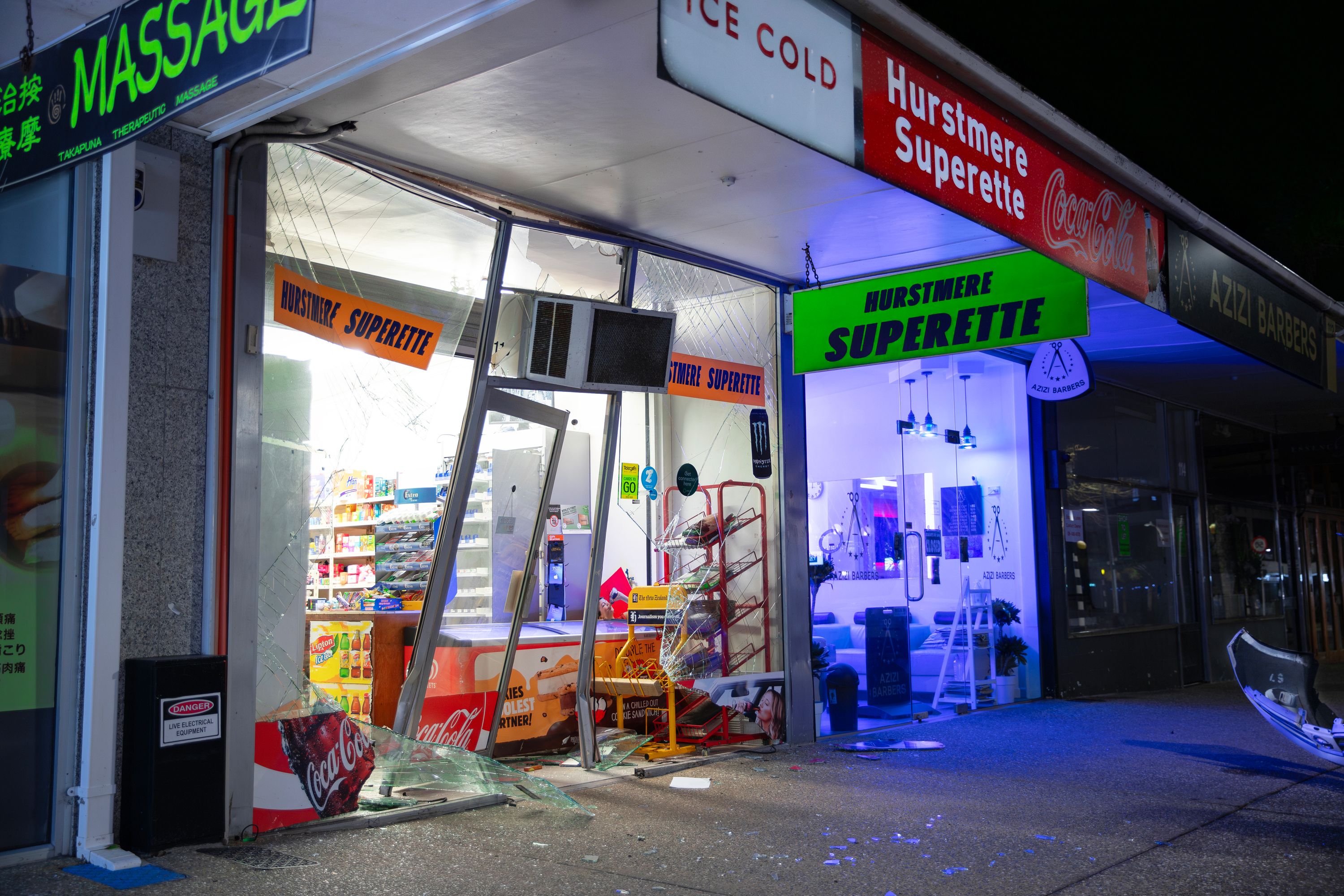
On ram raids, Hipkins said it was “absolutely shocking” that kids younger than 10 were committing ram raids.
“This is a cycle of crime, we’ve got to break that cycle”, Hipkins said while emphasising the importance of wrapping support around children who were often exposed to family violence.
“Christopher’s solution is boot camps.”
On their boot camps plan, Luxon said he thought they could improve the previous models used.
“I think we can make them work incredibly well. I am not prepared to write them off.”
“Bootcamps have a near 80 per cent failure rate,” Hipkins said, while referencing how Labour investments into circuit breaker programmes had led to 80 per cent of kids not reoffending.
Luxon said Labour was “soft on crime”, to which Hipkins replied “a slogan is not a solution”.
Hipkins said the law had been changed so police could “go after the gangs”.
On housing
Asked how they would bring housing prices down, Hipkins said more houses needed to be built in order to build our way out of the housing crisis.
Hipkins accepted KiwiBuild was an “unrealistic promise” and said the house building momentum needed to be continued. He took a shot at National, saying its proposal to lift the foreign buyers ban would increase house prices across the country.
Luxon said National would greatly expand the areas zoned to build houses and increase incentives.
“We need to be a nation of homeowners, not a nation of renters,” Hipkins said, while taking a shot at Luxon for offering incentives to landlords and how the last National government sold off state houses.
Luxon said they agreed on the need to build more state houses but would work more with community housing providers.
Luxon said he could guarantee their policies would not see a $180 increase in rents as seen under Labour.
Hipkins asked whether National would guarantee the incentives to landlords would be passed to tenants. Luxon didn’t answer directly, to which Hipkins replied, “I think that’s a no”.
Hipkins didn’t believe making life easier for landlords was the right way to go, as proposed under National’s tax plan, to ensure more people became homeowners. He said there were more “mega landlords” these days and that that wasn’t right.
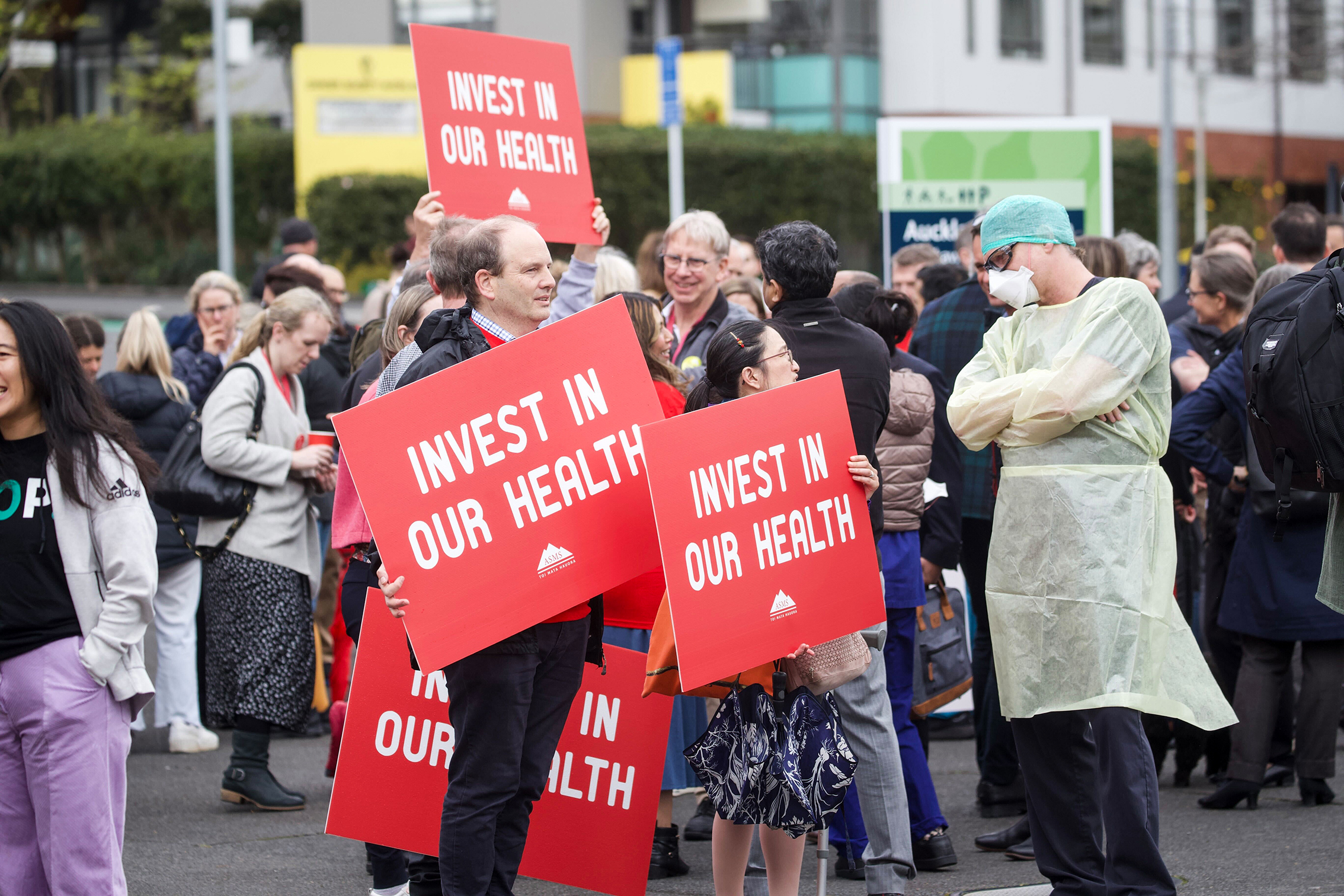
On health
Hipkins guaranteed no cuts to health and education and claimed that was something National hadn’t delivered on in the past.
Luxon said there would be no cuts to health spending and they would increase it every year. He said it was “outrageous” for Hipkins to claim the system was not broken.
Hipkins said a priority was paying nurses more so that they would stay in New Zealand.
“Christopher Luxon calls this wasteful spending.”
Luxon then pivoted to how he wanted to cut backroom staff and unnecessary spending on those roles.
“The wasteful spending is 200 comms staff in Health NZ rather than nurses,” said Luxon.
Luxon spoke about nurses and health professionals heading over to Australia. He mentioned National’s policies to train more people here, and said paying them more would be part of that.
“Undoubtedly there’s always room to pay people more,” Hipkins said to a question on whether GPs should be paid more.
Luxon added it would have been great if Labour had started training more doctors six years ago.
Hipkins said he last went to a GP relatively recently and got an appointment relatively speedily. He denied it was because he was Prime Minister - the appointment had actually been for his child.
Luxon said it took at least a week to get a physical GP appointment. He tended to do Zoom consultations.
On mental health, Luxon said there needed to be a dedicated minister and specific targets. He also wanted to get more funding to community organisations.
Hipkins was asked why $1.9b invested in mental health hadn’t made much of a difference. He said it took time to build systems and he accepted how it may have taken a while but he was confident the number of appointments was increasing.
Luxon said the prioritisation in public services should be on the basis of need, and ethnicity should not factor into those decisions.
Luxon hit back at Hipkins’ claim his party was race-baiting. He said coming through the needs lens was a better way.
Hipkins hit back and said that was happening but Māori and Pasifika were still waiting longer to be seen.
The pair went back and forth on the topic, Hipkins challenging Luxon on why Māori should wait longer for the same healthcare if they had the same need.
“I am not afraid of anything, Chris,” Luxon said after Hipkins said he should “not be afraid” of Māori having control over their health services.
On co-governance
Luxon said he felt the definition of co-governance had been expanded since the last National government.
He thought the current government hadn’t properly explained what the concept meant.
On “by Māori, for Māori” approaches, Luxon said it was a “great solution”.”We invented it in the National Party and we will continue to do it.”
Hipkins said co-governance simply meant shared decision-making over natural resources and believed it had been successful. He believed Māori and non-Māori working together benefited New Zealand.
Luxon said he supported it in the space of local natural resources.
“Why do you think you know better about Māori health than Māori do?” Hipkins hit back after Luxon objected to the Maori Health Authority.
“The Māori Health Authority isn’t having two systems,” Hipkins said.
Luxon said he supported Māori health providers.
Hipkins said the health system was dealing with systemic issues and it would take time to build capacity within the system to fix them.
Luxon said every single health indicator had worsened under Labour but Hipkins countered that by saying smoking rates had decreased.
On dental
Three voters were given the chance to put a question to the leaders.
Dr Hugh Trengrove said the oral health situation was appalling in New Zealand, and that sugar was a key risk factor. His question was what would the leaders do about the sugar epidemic?
Asked about a ban on fizzy drinks, Luxon said they could look into it. He wasn’t sure about banning them in schools.
Hipkins said he thought fizzy drinks should be banned in schools and if elected, Labour would do that. Labour had also recently announced free dental for under 30s.
The health system was in crisis, Luxon said, adding everyone would love to expand free dental care but there were other more important priorities. He was sceptical about Labour’s ability to deliver on free dental for under 30s.
Hipkins said Labour’s dental policy was a “fraction of the cost” of National’s tax cuts. Luxon responded by saying there were other priorities to which Hipkins said, “you’ve indicated that tax cuts for you and me is more important”.
On climate change
Luxon said National agreed there was a climate emergency and his party was committed to all of New Zealand’s climate targets.
Hipkins said we absolutely had a climate emergency and the focus should be on reducing emission. He noted National had signed up to emission targets but had scrapped methods to enable that.
Luxon said National simply had a different way to do it. National would double the amount of renewable energy, he said.
Hipkins said we needed to act with “ever more urgency” on climate change, while referencing how National wouldn’t set agricultural emission pricing until the next decade.
”I don’t think we can afford to take that long”.
Luxon said he thought Labour’s policies would knock off 20-25 per cent of the sector, to which Hipkins responded “that’s simply not true”.
Hipkins said to Luxon that cutting the Clean Car Discount and winding back projects that reduced emissions wouldn’t get New Zealand to its targets.
“We have a proven track record of reducing our emissions ... it’s not just a bunch of slogans,” Hipkins said.
When asked what he was doing for the environment, Luxon said as a family they had embraced recycling “some time ago”.
Hipkins said he had an EV and he recycled, when asked how he had changed his life to be more climate-friendly.
Luxon wouldn’t call climate change our nuclear-free moment but said it was a serious crisis.
Hipkins said climate change was New Zealand’s nuclear-free moment, something Luxon said he didn’t agree with because he didn’t like slogans.
Earlier, Hipkins spoke on his plan to grow the economy saying boosting exports and being the “cleanest greenest economy” was essential.
Hipkins said the Government had led the country to one of the lowest unemployment rates ever.
They sparred on fuel prices, with Luxon saying he wouldn’t raise petrol taxes for a first term, while Hipkins said an extra 4c a year was needed to invest in roads. He further claimed that Luxon’s climate policies could see an additional 40 cents a litre at a petrol pump, which National has said is rubbish.
Hipkins claimed Luxon thinks international investors wouldn’t give money for new roads without wanting something in return.

On poverty
Another voter, Sky Rens, a young waitress who lived on Auckland’s North Shore, asked whether rich people had any responsibility for poverty. Hipkins said “absolutely” and that they needed to pay their fair share.
Hipkins said he was clear a capital gains tax or wealth tax wouldn’t be implemented under his watch, but said he would be happy to pay one if a CGT did come in in the future.
Luxon said a more meaningful way to deliver to people like Sky was to deliver tax relief, reprising NZ First leader Winston Peters’ old line: “help is on its way”.
On making life better for children
A third voter, Alva Storey, who had children and had been living in the country for a couple of years, asked how the leaders would make New Zealand a better country in 10 years time.
Hipkins cited Labour’s dental policy, saying it was affordable and would mean there would be fewer dental issues later in life.
Luxon said a world-class education system was the one thing National would focus on.
On trustworthiness as leaders
On what he admired about Luxon, Hipkins appreciated his commitment to his family, saying Luxon continued to make time for his family. “Being the leader of the Opposition is a tough job.”
Luxon said he respected Hipkins for taking on the job as Prime Minister. He also admired how he spoke about his family when he took up the job and thinks he is a “great dad too”.
Luxon said he thought Hipkins had good intentions but he disagreed with how he wanted to take the country forward. He said he felt New Zealand needed someone with “real world leadership” but didn’t name a specific example.
Hipkins also disagreed with Luxon’s “prescription for New Zealand” but added he didn’t trust his ability to be up-front with Kiwis, given he hadn’t released National’s “secret costings” for its tax plan. Hipkins, when asked for the leader he’s worked under that he liked best, mentioned Jacinda Ardern and Helen Clark.
Asked how he could be trusted to carry out his promises, Hipkins said he’d be open about how Labour hadn’t fulfilled some of its commitments, citing “plenty of disruptions” along the way that had impacted delivery. However, he was confident what Labour had proposed for the next term could be achieved and the goals were realistic.
Luxon said he was not a career politician and was in the job because he wanted to do something for the country. He was an “outcomes” driven person.
Asked about his worst trait, Hipkins said he should probably delegate more, while Luxon said he was “pretty hard charging and pretty determined”.
On Covid
On Covid and lockdowns, Luxon said he thought the first part of the response was very well managed but the Government was too slow to come out.
Hipkins said being a former Covid-19 minister was an “enormous responsibility”. He said New Zealand needed to tread carefully during the pandemic and should be proud of one of the lowest death rates in the world.
He also accepted there would be changes looking back but said you couldn’t do that in Government.
“You don’t get the benefit of hindsight when you’re in Government. You have to make decisions.”
Quick fire rounds
Both Luxon and Hipkins said they had had speeding tickets.
Both said it was not the time to become a republic.
On te reo being compulsory in schools, Hipkins said it should be “universal” as an opportunity for everyone to learn and Luxon said no but more teachers were needed.
Both said they supported a new flag.
Both had been to a church service in the past year - as part of campaigning.
On bilingual road signs, they both said yes.
Luxon opposed renaming New Zealand Aotearoa and Hipkins said he didn’t mind.
Both supported free school lunches. Luxon said all students should get it while Hipkins said it should be targeted as is now. In a press conference after the debate, Luxon said he misheard the question on free school lunches, saying National would actually keep the status quo.
Both supported a four-year term.
Luxon’s favourite beach was Onetangi on Waiheke Island and Hipkins’ Raumati South.
Neither supported a wealth tax, while both said they had bought their first homes at age 24. In the press conference afterwards, both elaborated.
“We did everything to buy that house,” Luxon said of buying his first house with wife Amanda at the age of 24. He also cited how interest rates then went up and that was painful.
Hipkins revised his answer afterwards to say he was actually 22-23, and had gone in on a deposit with his brother.
Neither supported a vacant house tax and both said decisions on allowing transgender people to compete in sport should be left to sporting bodies.
Chance to prove themselves
Tonight’s debate comes after a couple of weeks of intense campaigning by Labour and National, with Hipkins and Luxon travelling the country trying to get the necessary votes to form a government after voting day on October 14.
Earlier Luxon said he had been practising with a “pretend” Hipkins as part of his preparation for tonight.
Hipkins, meanwhile, appeared to be playing it casual, saying he had not done quite as much preparation as that but had been spending most of the day swatting up on facts and figures.
For Luxon, a first-term MP and relative political novice compared to Hipkins, it was his chance to prove to the public he can handle the top job.
For Hipkins, it was his moment to attempt to turn around a run of poor polls recently that wouldn’t see his party back in government, and convince the public why they should continue supporting Labour.
Moderated by TVNZ’s political editor Jessica Mutch McKay, it was the first time that New Zealand voters could see the leaders of the country’s two main parties going head-to-head in a prime-time debate.
Luxon has repeatedly lauded Hipkins’ debating ability, seemingly in an attempt to lower expectations of his performance this evening, despite Luxon himself having been a champion debater at school.
Hipkins told reporters today he hoped people tuned into the “substance of the debate rather than the sport of it”.
“I know there’s a big undecided vote out there at the moment. So there’ll be people tuning in tonight to make up their minds about how they’re going to vote. And I’m looking forward to being able, through the debate, to speak to those people.”
Hipkins said he and Luxon were “both new at this”, both going into it for the first time. He said he would aim to stay “true to myself” and his values, rather than chasing “gotcha moments”.
“I think democracy relies on people making informed decisions when they vote. And a leadership debate is an opportunity for them to be more informed about what we’re proposing, what the National Party is proposing, what the issues are that are at stake.”
Luxon said he had never done a leaders’ debate, so he will “do my best”.
“The choice is pretty stark and simple,” Luxon said with regard to viewers of the debate.
“I just observe he’s a 20-year career politician,” Luxon said of his regular comments on Hipkins’ skills in debating.
Luxon’s debate preparation included someone pretending to be Hipkins - but he wouldn’t say who.
Earlier, Hipkins said he had spoken to MP Michael Wood about an incorrect post on social media that National would get rid of winter energy support payments.
National had claimed the post was another form of misinformation by Labour, and set up a webpage called “Get Back on Facts” with a list.
Hipkins said he accepted Wood got it wrong, but accused National of its own misinformation by claiming its tax plan added up.
Hipkins was speaking after the opening of Auckland University’s refurbished Faculty of Education and Social Work (EDSW) building.
The building received $200 million through the Government’s Covid-19 Infrastructure Recovery Fund - the largest project out of the $3 billion fund.
Hipkins also revealed that Labour had dropped its target of reducing the prison population by 30 per cent, as it had now reduced by about 25 per cent. He said when Labour came into Government in 2017 the country had among the highest incarceration rates in the OECD.
Hipkins said the party still believed in seeking alternatives to prison where safe and practicable, but there would always be a need for prisons for some offenders.
The Green Party, meanwhile, is promising to make free school lunches permanent and immediately expand the programme to cover another 135,000 children across another 400 schools.
The party says it will fund the programme - which when expanded would reach nearly 400,000 children across nearly 1400 schools - through its wealth tax plan.
The policy is costed at nearly $200m extra a year. The current scheme cost $263m in 2022/2023. The party estimates in three years, it will cost $544m a year.
Co-leader Marama Davidson launched the policy at Hay Park Primary School in Mt Roskill, Auckland.
She said the policy would include addressing waste issues and ensuring it was better targeted.
Labour has committed to funding another year of the policy, but Hipkins said today he would unveil the party’s future plans for the programme shortly.
National has said it would continue the programme, while Act wants to scrap it.