Fieldays: Prime Minister Christopher Luxon rolls out policies intended to lift rural productivity, address environmental issues
The Prime Minister came to the annual Fieldays in Waikato on Wednesday armed with policies intended to lift rural-sector productivity while also addressing climate and environmental concerns.
But a key climate target remains difficult to achieve, and with Christopher Luxon pledging not to send billions of dollars offshore to meet it, it’s unclear what additional steps, if any, the Government will take to reach it.
“We’ll give it a good go,” he told the Herald.
The Prime Minister and a host of Government ministers were in attendance at the Mystery Creek Fieldays on Wednesday.
The annual event, which had exhibition spaces sold out well in advance of kicking off on Wednesday, is expected to see about 100,000 people come through the gates over four days.
While walking from engagement to engagement under a clear Waikato sky, Luxon spent considerable time popping into exhibitors, like Honda Motorbikes and Farmstrong, and chatting with attendees.
The topic of conversation ranged from questions about health support for farmers to praising one young person’s mullet. He appeared chuffed meeting someone whose grandmother owned a mug with his face on it.
There was a general consensus amongst attendees and organisers that the stars had aligned: good weather, the rural sector seeing strong economic results and new technologies getting attention.
Among the announcements from the Government was a contribution of up to $51 million to accelerate the rollout of technologies on to farms to reduce emissions and remain competitive in the global market.
There was also $59 million from the Government going into six commercial projects across dairy, sheep and beef, horticulture, forestry, whenua Māori, and aquaculture, which it says will “further lift productivity and returns through innovation and greater land use flexibility”.
“Together, these projects matter because they will demonstrate, on real farms and orchards, what is possible when innovation, capital and ambition come together,” Luxon said.
In terms of reducing emissions, Agriculture Minister Todd McClay told reporters the Government “has a role to play, but it gives farmers choice, it doesn’t force them”.
“What we have to do is produce more whilst meeting our obligations, not do what many countries are doing and saying the way that you improve the environment or climate change is to farm less. We can’t do that.”
Luxon said it was up to farmers to use new emissions-reducing technologies.
“We just need to be able to provide the tools and it’s up to them to choose which tools they or don’t want to use.”
The Government’s announcements come amid questions over how it is planning to hit the first Nationally Determined Contributions (NDC) climate target.
The headline target is a 50% reduction of net emissions – covering all sectors and greenhouse gases – below our gross 2005 level by 2030.
Projections show it will be difficult for New Zealand to achieve that. That’s raised the spectre of having to purchase offshore carbon credits to reach the goal.
Finance Minister Nicola Willis has said the Government intends to meet its international climate commitments and talked down the need to send money overseas to do it. She’s also taken aim at the targets set under the previous Government as being unrealistic.
Treasury commented on the NDC target in the Budget released last month and noted that if New Zealand did look to offshore mitigation to hit it, it could have a sizeable impact on the books.
“Domestic action alone may not be sufficient to fully meet the NDCs. If there is a gap, New Zealand could use offshore mitigation to address this gap,” Treasury said.
“If offshore mitigation is used to achieve NDC1, substantial purchases of offshore mitigation are likely to be required within the Budget Update 2026 forecast period.”
It went on to say that while the Government had choices about how to hit the target, “it is likely that meeting this target would involve significant costs, starting within the current fiscal forecast period”.
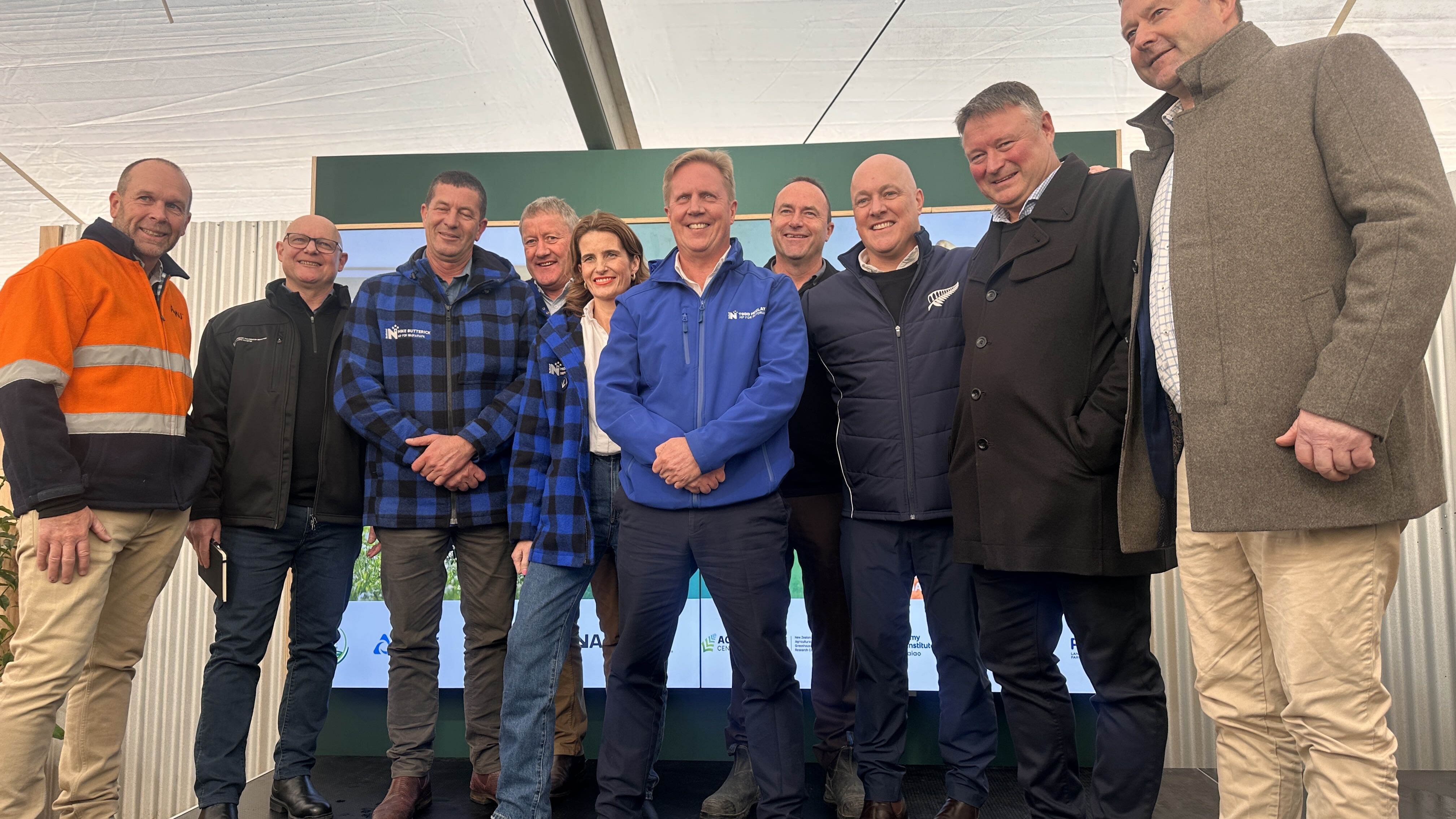
Luxon told the Herald it would be “difficult and tough” to hit that NDC target.
“We’re going to do everything we can, but I want to reassure everybody we’re not sending billions of dollars offshore.”
Asked if he would outline what steps the Government would take to reach the target, Luxon said there was still time.
“We’re going to keep going and we’re going to keep doing everything we possibly can.
“But I also say our commitment is delivering on Net Zero 2050. Different plans that we’ve seen suggest that we could get there earlier.
“Programmes like this, where we actually are adopting technology to drive up productivity and to grow this sector as well as to help make it more sustainable do both of those things at the same time, are important.”
He emphasised the coalition Government’s position was to remain within the Paris Agreement framework.
His coalition partners, including Act, have expressed scepticism about it, saying New Zealand’s farmers are “treated like climate villains”.
Act on Wednesday unveiled its own proposed NDC, which would treat long-life gases like carbon dioxide and short-lived gases like methane differently, revisit emissions reductions plans and keep agriculture outside the Emissions Trading Scheme.
Rural announcements from Government
Among the announcements from the Government was dollar-for-dollar investment – up to $51m – into the Early Adoption Accelerator programme.
It’s overseen by AgriZeroNZ, a public-private partnership launched in 2023 to help “farmers reduce emissions without compromising profitability and productivity”.
Willis said the initiative meant “everyone has skin in the game and we are all backing innovation that can make a real difference on farms and ensure New Zealand agriculture remains globally competitive”.
“New Zealand farmers are already among the world’s most emissions-efficient producers, this programme is about helping them adopt practical new technologies that support productivity, profitability and long-term competitiveness as global markets increasingly expect lower-emissions food and fibre production.”
McClay said AgriZeroNZ had to date invested $79.9m in 18 companies, research projects and trials to accelerate new tools, ranging from inhibitors to probiotics, pastures, animal wearables and vaccines.
There is a pipeline of new technologies expected to roll out to farmers over the coming years, with the aim of reducing emissions while maintaining production.
“One emissions reduction technology, EcoPond, is already available in New Zealand, with additional tools such as boluses expected later this year,” McClay said.
“Other technologies, including methane inhibitors, probiotics and vaccines, are expected to follow over the next few years.
“This is not about telling farmers what to do. It is about giving them more choices to adopt technologies that fit their farm systems and business models.”
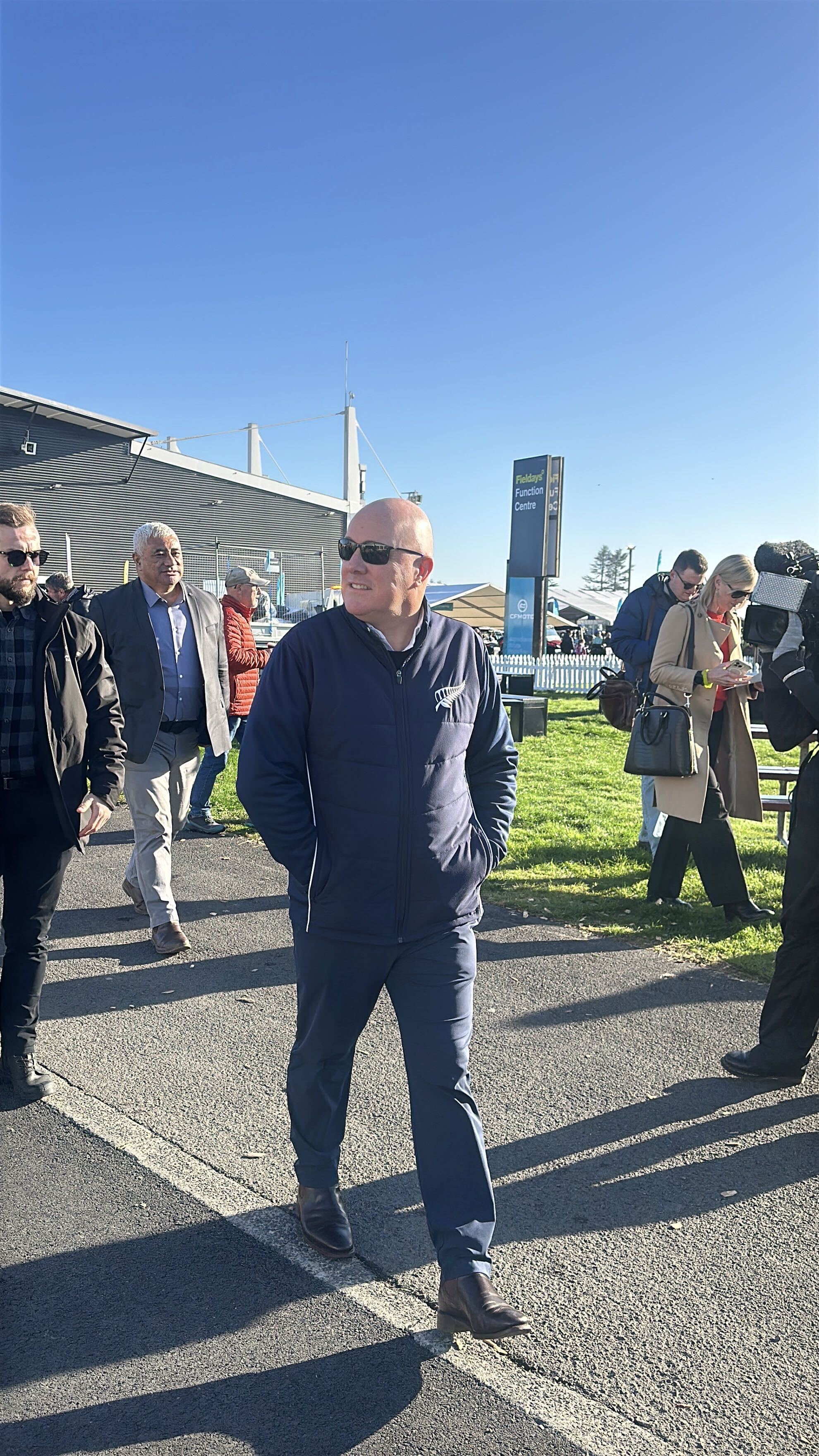
The Government also announced $143m – $59m from the Crown and $84m from the sector – would go into six commercial projects intended to improve land use flexibility, enable more innovation and sustain productivity while having a “better environmental footprint”.
This includes the Government contributing $3.55m to a five-year project to boost beef and sheep production and $18.34m into a seven-year project to grow dairy output.
The beef and sheep project includes supporting the transition from physical to virtual fencing, as well as modelling land use potential and analysing environment and performance data.
The dairy project, which the Ministry for Primary Industries says will “demonstrate how farm systems can support profitable dairy farming with improved environmental outcomes”, is expected to deliver a 20% reduction in nitrogen leaching per hectare.
Another example is a five-year project to “unlock greater value from kiwifruit orchards by integrating on-orchard innovation, advanced decision-support tools and new science”.
“It focuses on increasing yields, improving fruit quality, and using water and nutrients more efficiently while reducing environmental impact, and is expected to lift national kiwifruit tray volumes and export sales to $7.9 billion by 2035/36, with a total implied economic impact of about $15.8 billion,” the Government said in a statement.
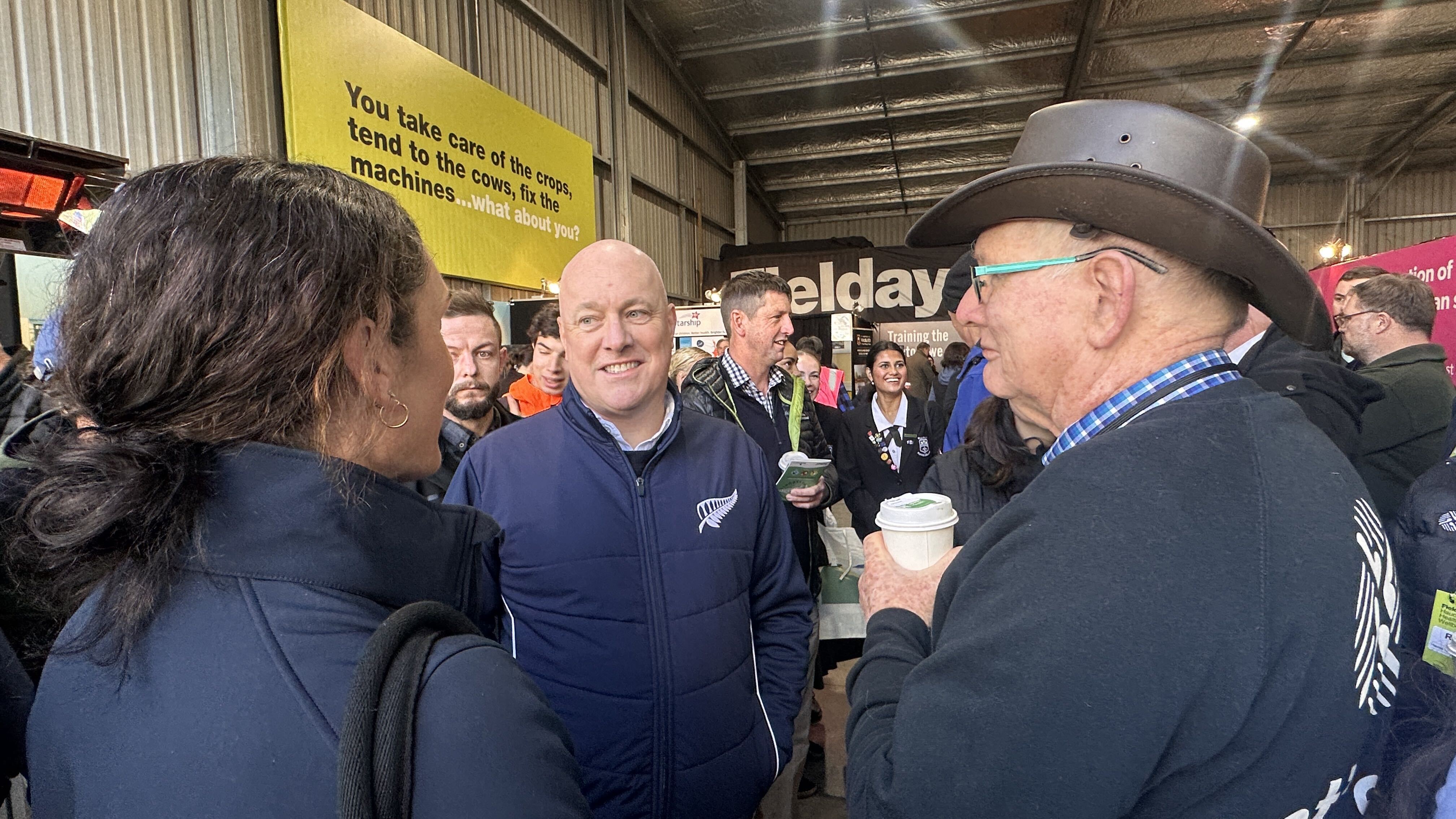
Rob Hewett, a farmer from South Otago, chairs AgriZero as well as a range of other organisations related to the rural sector.
He told the Herald a range of technologies and products previously invested in were expected to become available over the next four years.
Asked whether New Zealand was moving fast enough on the uptake of new technologies to help reduce emissions, considering it is something the Government and sector has been talking about for years, Hewett said the period from research to commercialisation has “actually been remarkably short”.
“The reality of this situation is that when the announcement was first made about our [climate] targets, and the [emissions] reduction with regard to 2030 and then 2050 targets, the technology wasn’t available.
“Yeah, they might be conceptually available on a research setting, but they certainly aren’t commercially available. So we have had to invest in companies to bring those products to market and we’re seeing that starting to happen now.”
Hewett said AgriZeroNZ’s “farmers focus group” was open to using new technologies, but farming like “every population has a bell curve”.
“The early adopters will be there come what may and then there’ll be a bunch of laggards that won’t be. We’re working with those that want to be worked with.”
Ultimately taking up these new technologies was positive for both the environment and the economy, Hewett suggested, as global customers were wanting to see biogenic methane and carbon reduction.
“If we don’t do something about that as a country, we’re asking to be taken to the cleaners because our cost of operation here, agriculturally, is high,” Hewett told the Herald.
He said if our exporters can’t “premium-ise” then they will “get beaten on commodity prices every day”.
Jamie Ensor is the NZ Herald’s Chief Political Reporter, based in the press gallery at Parliament. He was previously a TV reporter and digital producer in the Newshub press gallery office. He was a finalist in 2025 for Political Journalist of the Year at the Voyager Media Awards.