Gap grows in maths, writing: More than 90% of poor children fall behind by Year 3
Almost all socio-economically disadvantaged children fell behind in maths last year by Year 3, with 95% below curriculum level and 70% more than a year behind.
The proportion for this cohort of disadvantaged kids was almost as high for writing: 91% were already below curriculum level in Year 3, with 80% already more than a year in arears.
That’s according to the latest foundational assessment data, for 2025, which shows the inequity gap widening not only in maths and writing but also in reading, where two out of three disadvantaged kids in Year 3 were more than a year behind.
This indicates that socially disadvantaged kids appear to fall behind very early on in their school years or even before they get there, an educational divide experts describe as “heartbreaking”.
The Government is trying to address achievement in schools with several policies including structured literacy, which some have trumpeted as successful but at the risk, critics say, of leaving vulnerable learners falling further behind.
Recent years have also seen the introduction of new curricula, an hour a day of reading, writing and maths for every year up to Year 8, and foundational assessments for these subjects in Years 3, 6 and 8.
The assessment data in recent years has been mostly flat, according to the latest Curriculum Insights and Progress Study, with small improvements in writing at Year 6 and in maths at Years 3 and 6.
A Herald analysis of the data by Equity Index (EQI), grouping students by fewer, moderate and more socio-economic barriers, shows the latter group falling further behind in all three subjects.
For reading, in 2023, 52% of socio-economically disadvantaged Year 3 students had fallen more than a year behind curriculum level. In 2025, it was 67%.
The proportion for the same cohort for Year 6 kids was 61% in 2023, barely moving to 62% in 2025. For the same grouping of Year 8 students, the leap from 2023 to 2025 was from 56% to 66%.
For writing, in 2024, the Year 3 “more barriers” cohort who were more than a year behind was 56%. Last year, it swelled to 80%.
The share of the same cohort for Year 6 kids was 74% last year (up from 65% in 2024), and for Year 8 students it was 79% (up from 69% in 2024).
The pattern is mirrored but far less pronounced for maths, when comparing the cohort’s 2023 and 2025 data: 67%-70% for Year 3 and 79%-83% for Year 8.
Year 6 bucked the trend, though the proportion of socially disadvantaged kids more than a year behind remained stubbornly high: 84% in 2023, and 82% in 2025.
The maths data might actually indicate higher achievement than in reality because the benchmark assessment was based on the 2023 draft curriculum, which many in the sector consider easier than the current curriculum.
Caution should be taken with the EQI-grouped data, according to Charles Darr from the New Zealand Council for Educational Research, which runs the study with Otago University.
That’s because the sample size is much smaller when broken into EQI bands, where it’s also possible that students cross between bands. This makes the data inherently less robust than data for the entire year group, which captures all the same students in a much larger sample size.
“This is a sample. It hasn’t measured every student in New Zealand, but is an estimate of the population,” Darr told the Herald.
“When we get down to a group like more [socio-economic] barriers, we’re dealing with smaller groups of students. We’re absolutely at the limit of what we can say, statistically.”
The trend over time should also be taken with caution because, so far, the data only covers two different years for reading (2023 and 2025) and writing (2024 and 2025), and three for maths (2023, 2024 and 2025).
The average scores for the three subjects across Years 3, 6 and 8 have been mostly flat in recent years, though there have been some small improvements.
While maths had seen the most improvement, only a quarter of students in Year 3 and Year 8 were at curriculum level or above in 2025.
Students didn’t fare much better in writing. Only 41% of Year 3 students reached the curriculum benchmark in 2025, while for Year 8 students it was 28%.
And though the achievement level is higher in reading, there’s been no improvement; just over half of the students in Years 3 and 6 were at or above curriculum level in 2025, while for Year 8 students it was 45%.
The reasons for the low achievement are complex. There are innumerable factors that contribute to student achievement, both inside and outside the classroom.
The data is also indicative. It doesn’t necessarily say anything definitive about, for example, the impact of requiring structured literacy from 2025 on inequity.
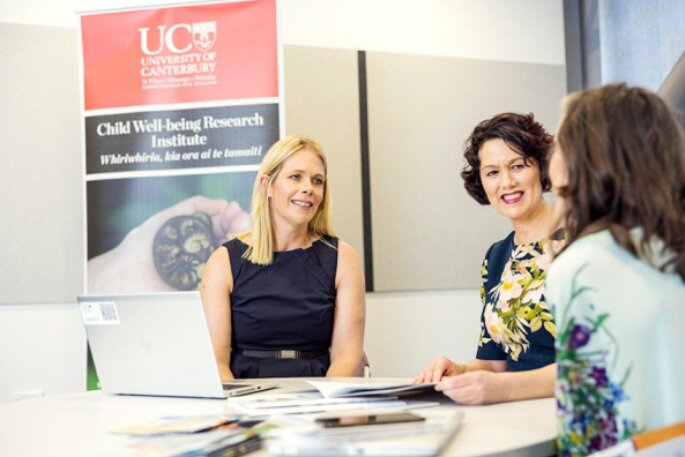
“People are interpreting data as if all structured literacy approaches are the same, and they’re not,’ Professor Gail Gillon, director of Canterbury University’s Child Well-Being Research Institute, told the Herald.
“What schools did they sample, what types of structured literacy were they doing, how long had they been doing structured literacy? The professional learning and development for structured literacy is a 30-week training course.
“It’s not like you go to one workshop and then suddenly you’re changing your entire practice and getting results.”
Inequity in education has been an ongoing issue, which the Herald has frequently highlighted. NCEA attainment data for 2024 showed the first signs of overall improvement since the post-Covid slump, but the gap between rich and poor remained as pronounced as ever.
Despite the latest data indicating the gap is worsening, an Education Review Office (ERO) report last year found some areas of improvements:
One key area where more support was needed was how to help the most vulnerable learners, the ERO report said. Teachers and leaders “are not always sure what the core components of structured literacy or maths are, and where there is flexibility”.
“Some teachers report being unsure about adapting their teaching to meet students’ needs, in particular to support or extend students in multi-year classrooms, or when there is a wide range of ability within a year group.
“They are also uncertain about adapting for neurodivergent or disabled learners. They want further guidance for when and how to escalate support for students who need additional help and more resources to enable this.”

Concerns over structured literacy
The supposed lack of flexibility in structured literacy is what critics said would widen learning gaps, due to less freedom for teachers to help those with complex learning needs.
“We haven’t seen the kind of step change that this one-size-fits-all model promises. In actual fact, all we’ve seen is growing inequity,” Liam Rutherford, primary teacher leader for teacher union NZEI Te Riu Roa, told the Herald.
This was a symptom of the system, he said, rather than a byproduct of teachers who are stretched under additional demands – such as getting familiar with a new curriculum – leaving them with less time to help struggling students.
“Kids are being forced into whole-of-class teaching, which doesn’t give teachers the space to be able to tailor learning to meet the needs of individual children.
“It does seem to work for those kids who traditionally find that school works for them. But for those that don’t, we’re seeing low engagement, we’re seeing them being left out of the learning.”
It cuts both ways, he added.
“The way the curriculum is structured, it’s largely pitched for the middle. Kids at either end of the spectrum are either given content that is too challenging for them, or not challenging enough.”
He conceded there would be some flexibility in how structured literacy is implemented, depending on the teacher in the room, the depth of the school’s available resources and the school principal’s view of the best approach.

Professor Gail Gillon, who co-developed the Better Start Literacy Approach (BLSA) for students aged 5-7, said a multi-tiered system was one way to keep children from falling through any structured literacy gaps.
“Tier one is universal class teaching: really high-quality, explicit, direct, following the curriculum. We have lesson plans to guide them to build confidence, but they’re not so completely scripted that we’re taking teacher’s choice out of it.
“Then, at tier two are students are identified through the monitoring data who need more direct support.”
A study last year with a sample size of 5000 kids using BLSA since they started school found:
“Teachers at scale who are implementing BSLA are absolutely seeing significant growth rates in the early foundational literacy skills in reading, writing, and oral language," Gillon said.
“Students who traditionally have come into school with lower levels of oral language ability are making really rapid gains. That’s the kind of shift we absolutely need if we’re going to raise literacy achievement for those that need it the most.”
‘The joy on our children’s faces’
Too much freedom in the old system was part of the problem, according to Ravi Naidoo, principal of primary and intermediate Robertson Road School (EQI 507, indicating many socio-economic barriers) in Māngere.
“Your maths curriculum, your whole language literacy was absolutely loose. There was such variability within year levels in schools. There was no coherence,” Naidoo said.
“There was basically no systematic structure in place where someone can tell you, ‘This is what writing looks like, this is what reading looks like at any particular school or any particular region.’”
He said the school adopted structured literacy in stages, and it’s been in place across the whole school for five years.
“It gave absolute direction to our teachers about where to go, where the next steps are. There was no variability between year levels, from Year 1 to 8.
“More importantly, it actually built their own capability. And we invested a lot of resources in terms of building teacher and learning support capability,” he said, pointing to some funding support from the Ted Manson Foundation.
Last year, Naidoo said 73% of the school’s students met the writing standard (different to foundational assessments) in their respective year levels, up from 57.8% when he became school principal a decade ago.
The proportion for reading last year was 80% and for maths it was 81%, up from 67% and 55% respectively a decade ago.
“That’s a huge leap for us, considering the challenges we face. And if you look at neurodiverse children, they benefit tremendously from this approach," Naidoo said.

He said kids who need more help still have individual learning programmes, supported by specialist help such as three speech language therapists.
“Ultimately, you’ve got to meet the needs of an individual child.”
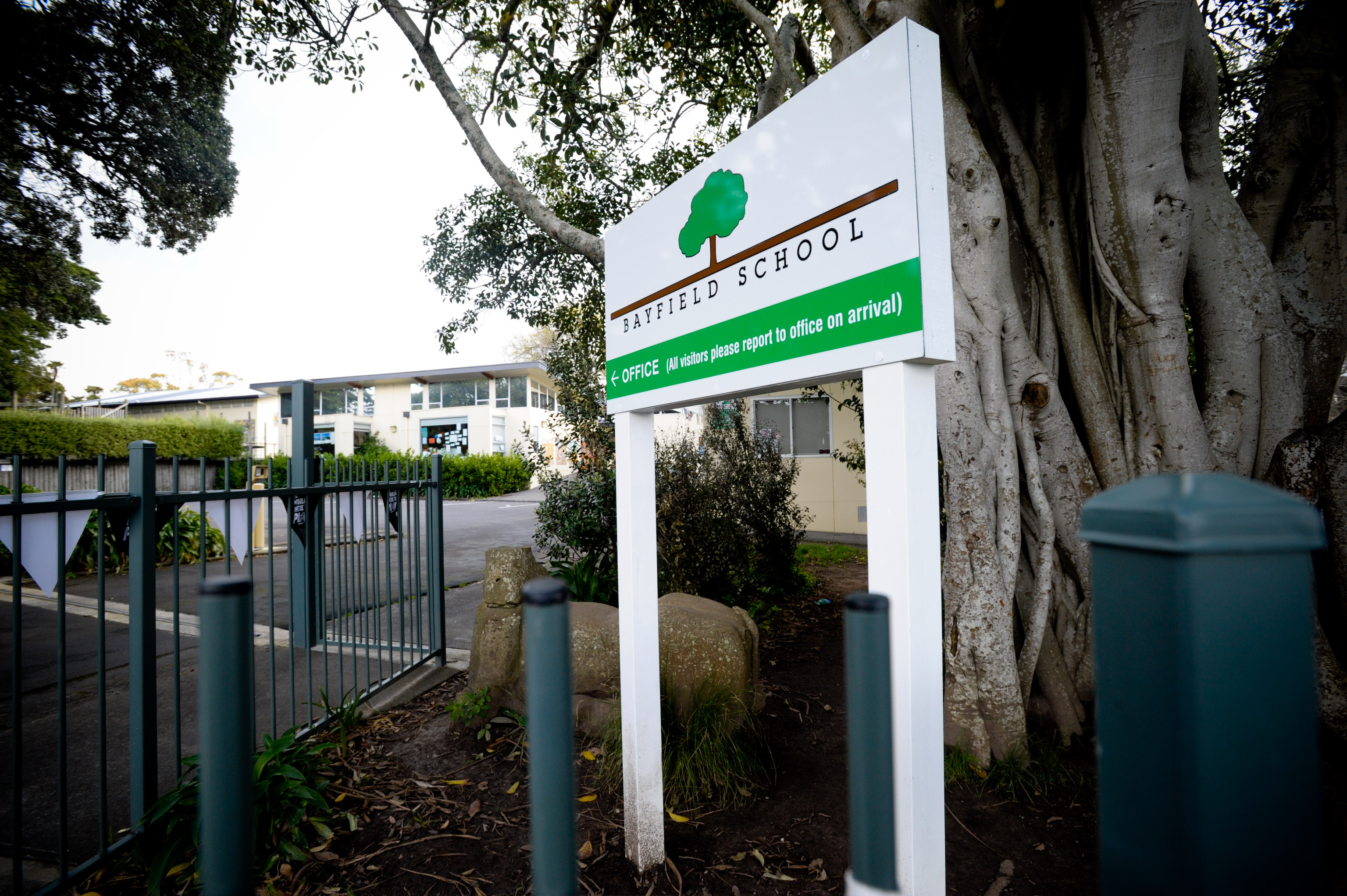
At Bayfield School (EQI 356, indicating the fewest socio-economic barriers) in Herne Bay, principal Kerri McKay said structured literacy had been “transformational”, including for the 10% to 15% of the Year 1-6 students with more complex learning needs.
“We actually have quite a high number of children with either diagnosed or undiagnosed dyslexia, neurodiversity, other learning challenges that might be working memory or executive functioning, English as a second language,” she told the Herald.
“We wanted an approach that was consistent from the very beginning of school to the end of school, which teachers all understood the purpose and the reason – equitable access to learning.
“It puts all the kids on that nice, even playing field that they’re getting good quality teaching across the school.”
McKay said structured literacy, which the school embraced five years ago, was in simple terms about moving information from the working memory to the long-term memory.
“To do that, you need some repetition, routine, structure. We start from the very beginning with sounds and words that we have to learn, and we do that throughout the whole school.
“Even our big kids, who are getting into paragraphs, essays, more complex language, it’s still the same: we learn, we repeat, we review. We have seen exponential growth in ability to write, to read, compared to five years ago.”
Teachers also have flexibility to work with kids who are struggling more, McKay added.
“We have a multi-tiered support system where we have children for targeted learning. Once they’ve taught the lesson, teachers can still get that flexibility with smaller groups.
“Sometimes that’s part of our second-language learning. We have children from other countries and we’re able to get them from nothing at all to writing a basic sentence in a 10-week period.”
The benefits were much more than educational, she said.
“What I see is the joy in our children’s faces when they are able to read, able to write. I talked to a 5-year-old today and I said, ‘Can you believe that you’ve gone from writing a letter to writing sentences?’
“And this little boy’s face just lit up because he knew he was making progress. For our Year 6s, it’s exactly the same. To be able to access novels, nonfiction, science, history, everything that they want: being able to read opens that for them enormously.”
Derek Cheng is a senior journalist who started at the Herald in 2004. He has worked several stints in the press gallery team and is a former deputy political editor.