Government concedes it can’t deliver on coalition commitment to repeal controversial law, will have to wait until next term
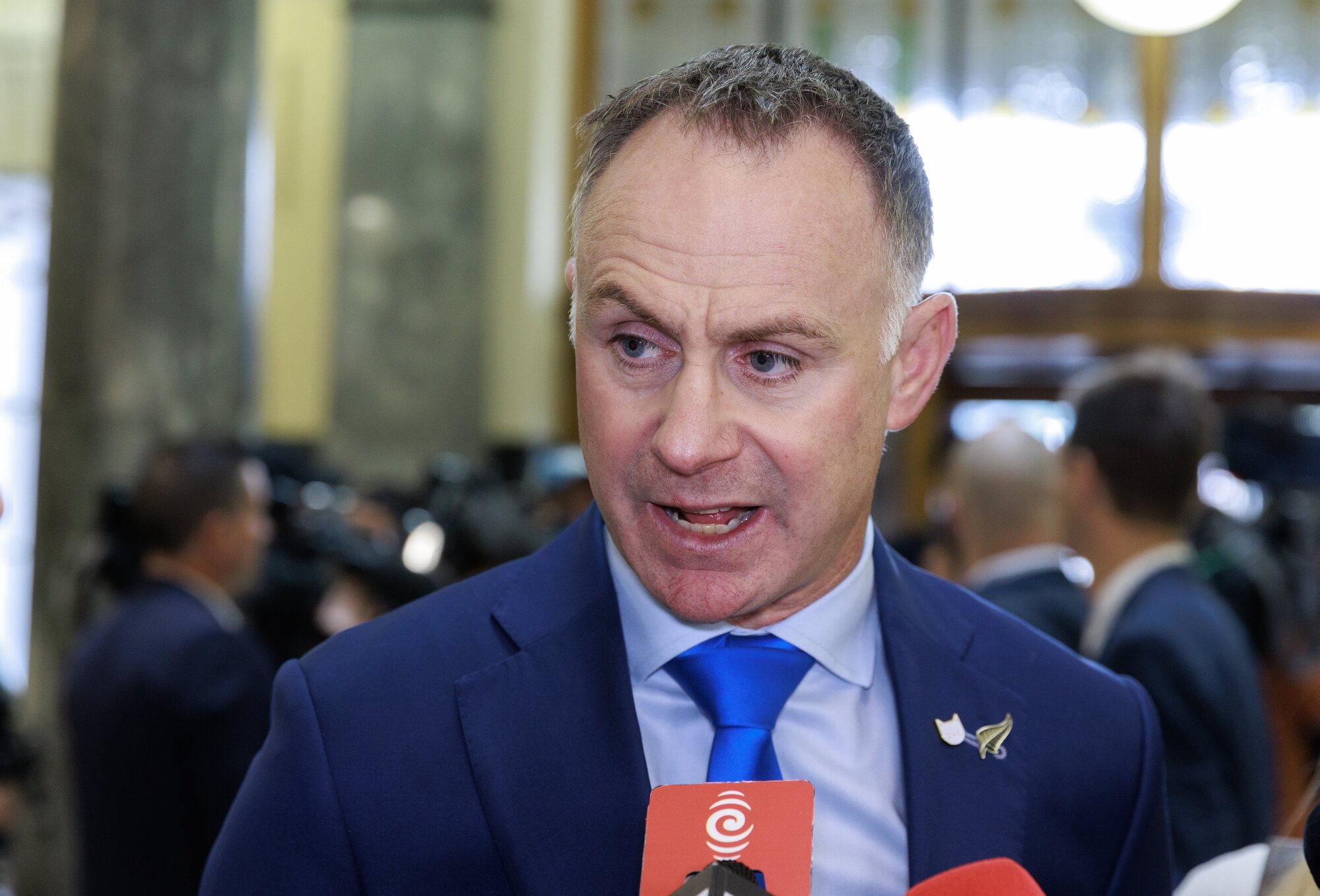
The Government has conceded that a promise in the coalition agreement between the National Party and Act will not be met this term.
In fact, it seems doubtful the commitment, which is to repeal the Canterbury Regional Council (Ngāi Tahu Representation) Act 2022, can be met at all. The law allows Te Rūnanga o Ngāi Tahu to directly appoint up to two people to ECan, the Canterbury Regional Council.
Instead, members of the Government have told the Herald they will achieve the broader aim of that promise by following through on plans to abolish all regional councillors, including the two provided for by this particular law, by 2028.
In a statement to the Herald, Local Government Minister Simon Watts said “our Government is progressing its Simplifying Local Government programme, which is focused on improving the effectiveness, efficiency and accountability of local government”.
“The Government does not intend for there to be regional council elections in 2028 and will make final decisions on regional level governance in 2027,” he said.
All three coalition parties voted against the law when it was first introduced and have said they wish to repeal it. However, thanks to a parliamentary quirk, they cannot do so.

The law is a local act, which is a type of law that is requested by a local authority and, despite being passed by the national-level Parliament, only applies to the area stipulated in the law.
A local act must be “promoted” or requested by the local authority to which it applies, which is ECan in this case. A repeal bill must also be “promoted” by the local authority – the Government, even if it has the numbers in the House, cannot introduce a local bill without it being requested by the local authority.
In this case, ECan does not want the law repealed, meaning the coalition is powerless to repeal it. It has to wait until the broader, sweeping reforms of local government.
Canterbury Regional Council chair Dr Deon Swiggs confirmed to the Herald that the council had not changed its view on the bill and would not be requesting a local bill to repeal it.
“Environment Canterbury has not requested the repeal of the Canterbury Regional Council (Ngāi Tahu Representation) Act 2022, and our position on this remains unchanged,” Swiggs said in a statement.
“It’s worth noting, the Government has signalled its intention to remove appointed iwi representation from regional councils from 2028,” he said.
Watts told the Herald the Government had actually asked ECan to consider promoting a local bill to repeal the act, “however, the council chose not to do so”.
Without this, the Government is stuck.
“The Canterbury Regional Council (Ngāi Tahu Representation) Act 2022 is a local act. Any repeal or amendment of that Act would require another local bill to be introduced and passed by Parliament,” Watts said.
Act leader David Seymour said he remained “committed to removing unelected appointees with voting powers at ECan”.
“Canterbury ratepayers should choose the people who exercise voting power over their rates, services, and land,” he said.
Seymour agreed that the Government would get the outcome it wanted by more wholesale reform of local government.
“Regardless of whether it is possible for the Government to repeal the 2022 legislation, we expect the same outcome to be delivered via wider local government reform currently in progress,” Seymour said.
The law has a fractious history.
The Sir John Key Government replaced the elected council with unelected commissioners in 2010. During this period, the terms of reference for the commissioners asked them to seek impact from Ngāi Tahu on issues that affected the iwi. At least one of the commissioners also had the endorsement of the Te Rūnanga o Ngāi Tahu to act in their interests.
In 2016, a transitional bill was passed as ECan transitioned back to full democracy. This law provided for two Ngāi Tahu appointees.
Unlike other councils whose catchments include several iwi who might be represented via a Māori ward, Ngāi Tahu is the only iwi whose interests overlapped with ECan’s catchment. Recognising this, the transitional act allowed Ngāi Tahu to appoint two members of the council.
This transitional bill was repealed in 2019, once the transition to full democracy was complete. ECan wanted to replace it with permanent Ngāi Tahu representation and requested a local bill to do so.
The Labour MP for the Te Tai Tonga electorate, Rino Tirikatene, introduced the bill. However, it was voted down when Labour’s then coalition partners NZ First joined forces with National and Act. After Labour won an outright majority in the 2020 election, it reintroduced the bill and passed it.
Ironically, Tirikatene was revealed this weekend to have joined NZ First as a member.
National’s decision not to support the bill, despite being supportive of Ngāi Tahu representation in government, was thought to play a role in the decision of MP Nuk Korako to decide to retire from Parliament. He was widely believed to back the bill.
Korako, despite being whipped to vote against the bill, now sits on the council as one of the Ngāi Tahu appointees.