Greens say Treasury is ‘out of step’ and politicised after wealth tax analysis
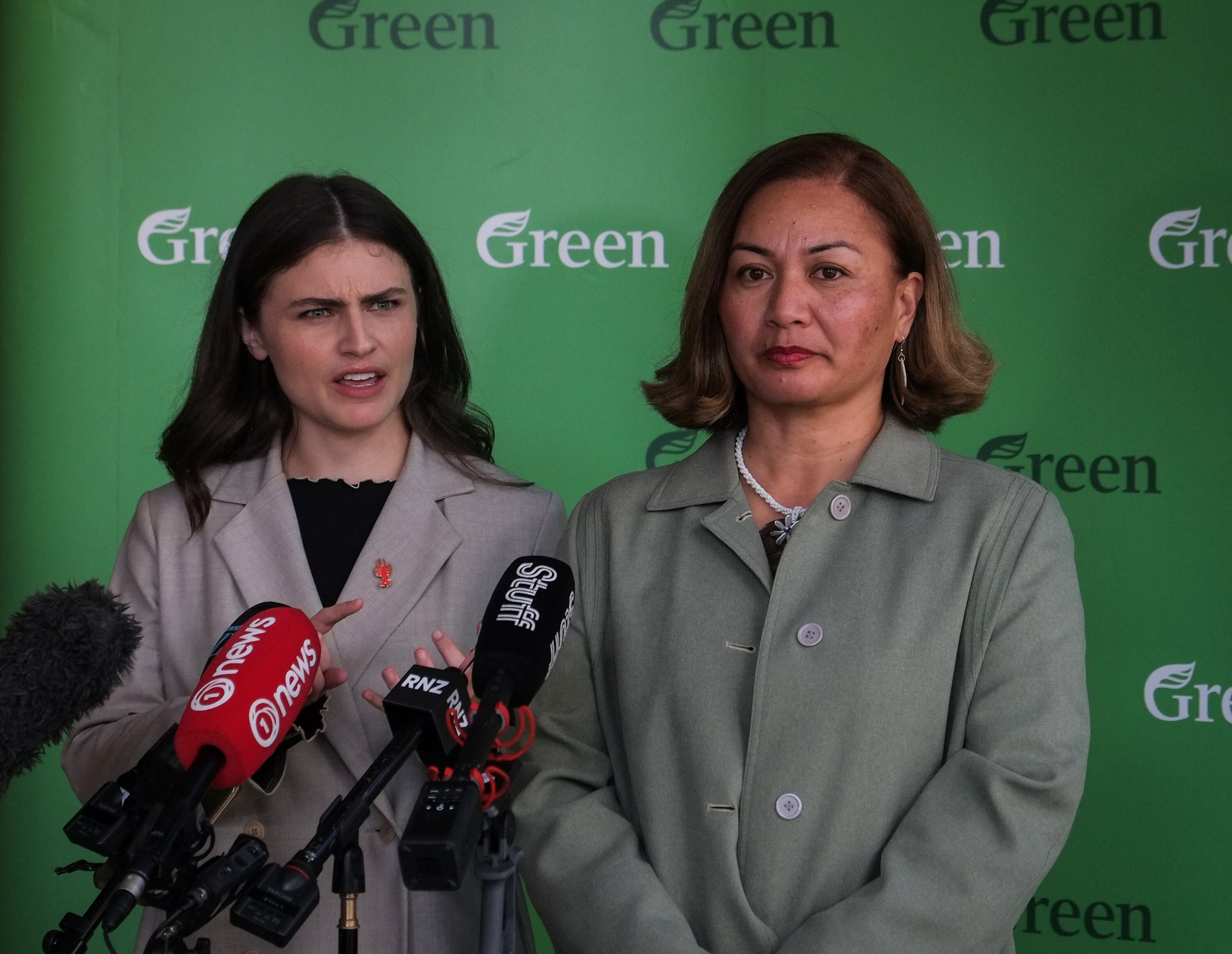
The Green Party is accusing Treasury of politicisation after the department suggested a more conservative reading of its own wealth tax analysis than what the Greens had used to model their “super-rich tax”.
The Greens had previously said their “super-rich tax” policy - a form of wealth tax announced in June - used assumptions about avoidance that had been based on modelling by Treasury prepared in a paper for Labour’s abandoned 2023 wealth tax.
The Greens policy document said their modelling about how much people would change their behaviour to avoid the tax was “informed by Treasury advice”. The Greens later pointed to revenue figures in a specific Treasury paper when asked how they modelled avoidance.
The paper modelled the amount of money a wealth tax would raise and considered how much people would shift their wealth out of the country or re-arrange their tax affairs to avoid paying it - a phenomenon called a “behavioural response“ to the new tax.
The modelling matters because the level of “behavioural response” alters the projections on how much tax would be collected by hundreds of millions of dollars.
As recently as Friday, the Greens had been saying Treasury’s modelling was in line with their own.
By Saturday, when the Herald presented commentary from Treasury that suggested the party’s reading of that advice was incorrect, the Greens hit out at the department itself, saying the organisation’s view was “out of step with recent research and experience”.
By the numbers
In the paper, Treasury estimated that for every 1 percentage point of wealth tax, there would be a “17.5% reduction in the in-scope wealth base” thanks to the behavioural response
That means that if wealth is taxed at 1% then 17.5% of the taxable wealth will go elsewhere, if it is taxed at 2%, then 35% would go elsewhere and so on, either offshore or lost through some other behavioural response to avoid paying the tax. The Herald, in a previous story, noted that this would suggest the Greens’ 2.5% wealth tax would see avoidance of 43.75% — although Treasury did not model a 2.5% rate.
The Greens interpreted the same paper differently. In a statement to the Herald, they said the paper showed the “implied reduction due to a behavioural impact at the two percent rate is 26 percent” — a lower rate than the 35% behavioural response estimated by Treasury for the same level of tax.
They said this backed up their assumption of a behavioural response of 28.5% for their 2.5% “super-rich tax” which is the centrepiece of their tax policy.
The wording of the Treasury paper was slightly ambiguous, which caused the Herald to check with Treasury that this particular reading was correct. Treasury confirmed this prior to a story published on Thursday, and again, after receiving further questions on Friday.
The Treasury on Friday confirmed the Herald’s reading of the paper showing that a 2% tax would see a 35% avoidance rate was correct — although the department clarified that it would reach that level only after the tax had been in place for three years.
“The broader point they [questions sent by Herald to Treasury] are getting at is broadly correct. The modelling approach we used would assume that by the third year the tax is in operation, a 2% wealth tax would result in in-scope wealth reducing by 35%," Treasury said in a statement on Friday evening.
The 35% reduction is a higher behavioural response to the tax than the Greens modelled, which was 28.5%. The difference amounts to hundreds of millions of dollars in tax collected each year.
Infometrics chief executive Brad Olsen, who independently vetted the Greens’ numbers on Saturday agreed subsequent information released by Treasury showed the Greens’ modelling was different from Treasury’s — although he said the Greens’ assumptions were reasonable and represented “different views” of what would happen if a wealth tax were implemented, which he believed was more plausible than Treasury’s own modelling.
He said the Greens and Infometrics had both thought they had modelled the behavioural response in line with the Treasury paper — until Treasury confirmed to the Herald that the Greens’ understanding of the paper’s behavioural response was different to what the paper actually said.
“They’re different views. They’re still based on a broad approach, but taking different assumptions,” Olsen said.
Treasury’s emails made it clear they were commenting on assumptions for Labour’s 2023 tax, which the Greens had used as the basis for their wealth tax — rather than the Greens’ tax itself.
A 35% avoidance of wealth tax ‘broadly correct’ - Treasury
The Herald on Thursday published excerpts of this Treasury paper, including the fact Treasury assumed for every 1% of wealth tax there would be a 17.5% behavioural response — a fact confirmed by Treasury prior to publication.
The Greens later sought a retraction of that story, arguing that Treasury had misunderstood its own modelling.
On Friday, Treasury responded to that criticism saying the Herald was “broadly correct” to assume a 17.5% behavioural response to every 1% of wealth tax. The Herald declined to retract the story on the basis that the characterisation of Treasury’s modelling was in line with what Treasury itself said about it.
Treasury explained the reason why the figures the Greens had cited showed a smaller behavioural response was because a revenue table in the paper only showed Treasury’s estimates for the first year of the wealth tax, rather than the wealth tax once it was fully bedded in.
In the first year of the tax, Treasury said just half of the behavioural response would trigger. That means that the 17.5% for each percentage point of tax would be just 8.75% behavioural response in the first year.
By the third year, however, the full 17.5% would be phased in - meaning a response of 35% for a 2% wealth tax, which was the highest rate modelled by Treasury.
Assuming the same proportional level of behavioural response, a 2.5% rate would have avoidance of 43.75% — although Treasury never modelled a 2.5% rate.
Explaining the paper, Treasury told the Herald: “We reduced the amount of revenue by 17.5% times the rate of the tax times 0.5″.
“The 0.5 is to account for a phase in of behaviour – which we assume is 50% for the first year, 75% for the second and behaviour is fully bedded in by the third.
“This means the revenue is reduced by 8.75% for the 1% wealth tax, 13.13% for the 1.5% and 17.5% for the 2% wealth tax,” Treasury said in a response to the Herald.
This means that the table the Greens used to inform the behavioural response to their tax plan only showed about half of the final behavioural response that Treasury was modelling.
The original paper included a comment that made clear the response would be phased in over three years, although it appears the Greens did not consider this in their modelling.
“We are forecasting the behavioural response to increase over forecast period as people engage in increasing behaviour to avoid the tax... We have assumed that after 3 years the behaviour responses would be fully phased-in,” the paper said.
Treasury also told the Herald that wealth tax assumptions were uncertain and reiterated that its modelling was done for the 2023 Labour wealth tax, not the Greens’ 2026 policy.
Treasury ‘out of step with recent research and experience’ - Greens
On Saturday, when asked whether the Green Party would update their tax policy in light of this information showing the policy did not appear in line with Treasury’s methodology, Green Party Co-leader Chloe Swarbrick accused the Treasury of creating a “new“ reading of its three-year-old paper.
“The approach newly revealed by Treasury, three years after the initial paper, is out of step with recent research and experience,” she said.
Earlier in the week, the Greens said their behavioural response was in line with the Treasury paper. By Saturday, Swarbrick admitted that Treasury and the Greens “differ” on the matter of behavioural responses to the tax.
“Our document says the work is ‘informed by Treasury advice’, which it is. Where we differ is on behavioural change extrapolation, and we have a very strong rationale for our figures,” she said.
She accused the Treasury of politicisation for the way it had commented on the paper.
“We are incredibly concerned that Treasury is currently allowing itself to be politicised with ad hoc incursions into one part of one political party’s policy.
“We have written to the Secretary of Treasury accordingly, and request that they now release the fulsome modelling that is currently being drip-fed through media responses,” she said.
Swarbrick said other international evidence backed up the Greens’ modelling.
She defended the party’s modelling:
“Two international papers show behaviour change of 7 to 17% for a 1% tax, and 9 to 27% at higher rates.
“The Herald says Treasury implies a response above 40%. That figure only appears if you assume the response scales in a straight line, adding another 17.5% for every extra percentage point of tax.
“That isn’t what the international evidence says, and it isn’t standard in tax modelling. The illogic of this linear adding-up is exposed when you understand this would mean a 6% rate would result in 105% behavioural change. That’s mathematically impossible,” Swarbrick said.
She said the Greens’ “took Treasury’s revenue projections and made reasonable assumptions from them”.
“Those assumptions have been checked by the Parliamentary Library, Infometrics, Tax Justice Aotearoa and other economists, and they sit at the conservative end of the international literature.
“Our document says the work is ‘informed by Treasury advice’, which it is. Where we differ is on behavioural change extrapolation, and we have a very strong rationale for our figures,” she said.
Swarbrick said the Greens’ numbers had been “independently audited” and were “based on the best available public information domestically and internationally”.
As said earlier in this story, Olsen now concedes that Treasury took a different approach to the Greens - although he said he believed the Greens’ approach is more robust.
Ironic to see Greens reject advice after calling for costings unit - Willis
National’s finance spokeswoman Nicola Willis said she concurred with Treasury’s 2023 advice in her assessment of wealth taxes, which her party opposes.
“The simple fact is that when you hit an economy with a wealth tax, people flee taking their wealth and jobs and income they create with them,” she said.
“Yet again they’ve got their numbers wrong,” Willis said of the Greens.
“I stand by the advice of Treasury which is that wealth taxes of this sort are highly destructive and cause massive capital flight,” she said.
Willis who had previously joined with Swarbrick in calling for an independent agency to cost party promises said the imbroglio showed the Greens might not listen to such an institution even if it existed.
“It is very ironic to see the Greens rejecting official advice when this is the same party that has seemingly never seen a problem they didn’t think more bureaucracy was a solution to.
“In this situation, they are picking and choosing the advice and evidence to suit them,” she said.
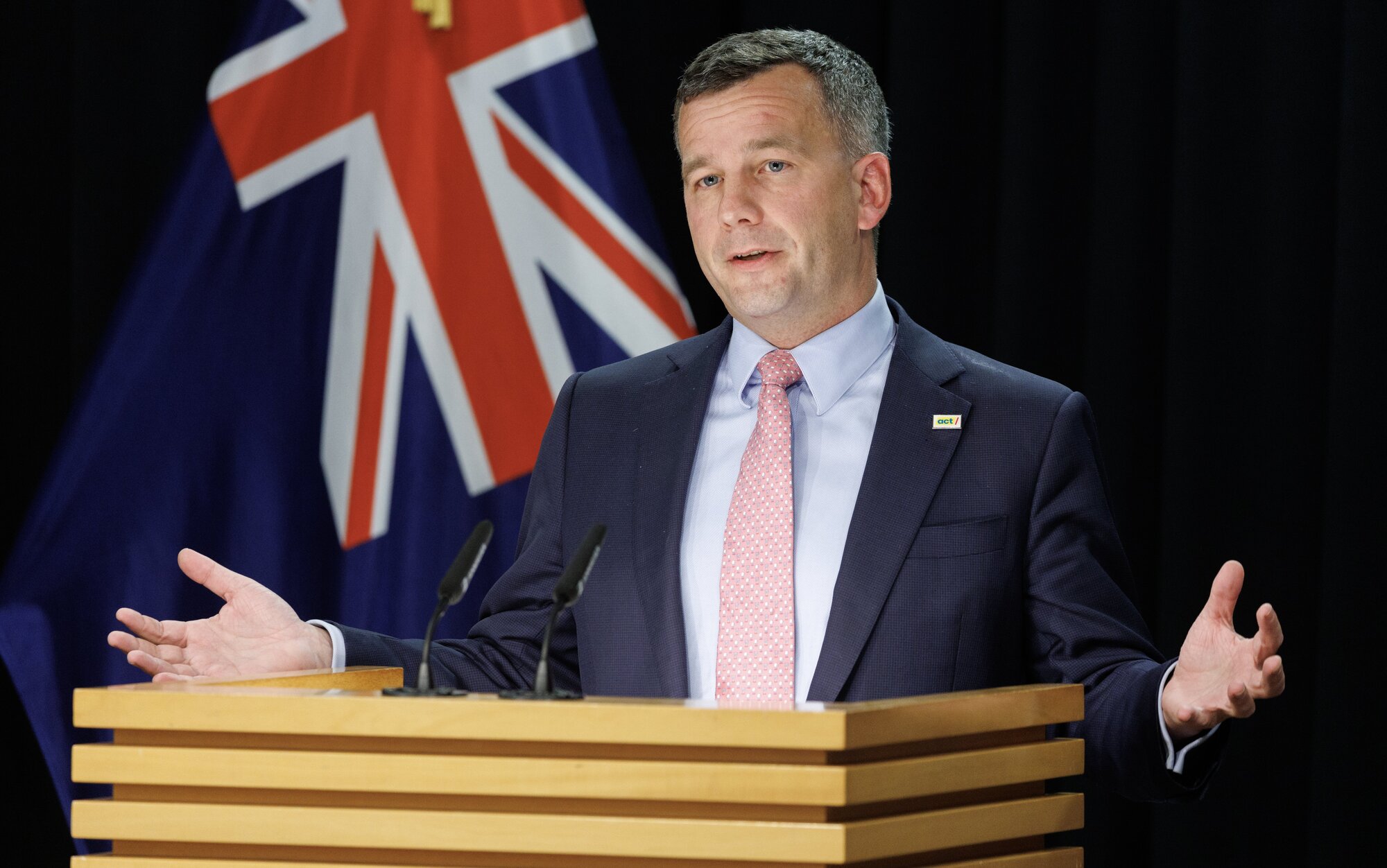
Act leader David Seymour noted that the Greens have in the past wanted to establish a unit to cost party policies and it was ironic that in this instance the party chose to ignore evidence from Treasury, the closest thing the country has to such a unit now.
“I would just point out that the Greens are known for smug sanctimony when it comes to evidence-based policy — they believe they have a monopoly on evidence-based policy, but it turns out they don’t like it at all," he said.
Seymour said he believed the avoidance rate for a wealth tax could be higher than Treasury had modelled once you get to higher rates of tax, particularly once it started to exceed reasonable returns on equity.
“If their wealth tax was greater than a reasonable return on equity then the value of assets would be zero,” he said.
“A higher rate would increase the incentive to take avoidance measures and people would take them,” he said.