Helen Clark and Ruth Richardson critique MMP – has it been good or bad for New Zealand?
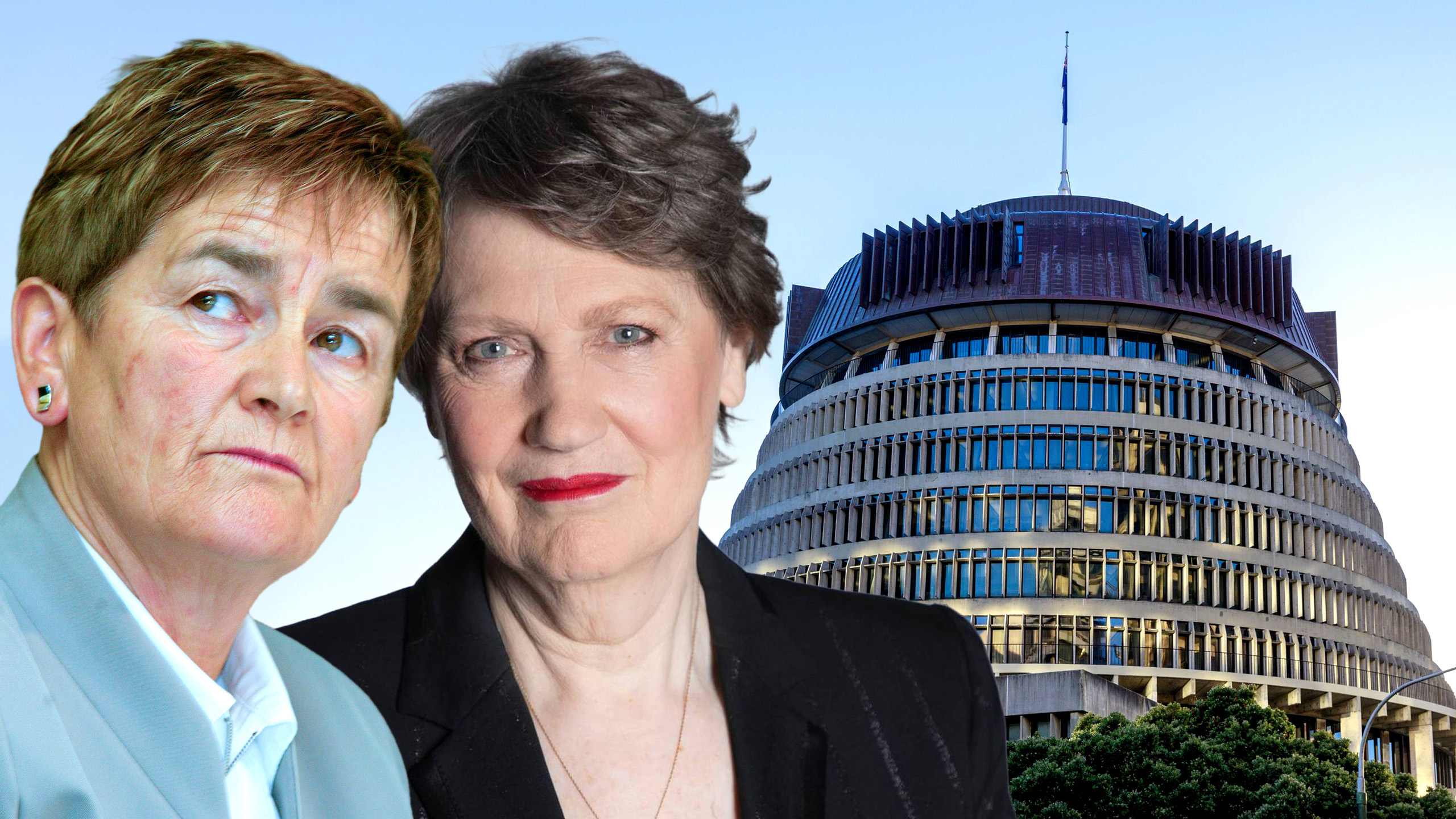
Helen Clark and Ruth Richardson were both in Parliament when voters decided to switch to an MMP voting system – and both opposed it. After 30 years of MMP, they reflect with senior political correspondent Audrey Young on whether it has been good or bad for New Zealand.
Ruth Richardson is sometimes given the credit or blame, depending on your viewpoint, for having secured MMP among voters because of her controversial economic reforms hard on the heels of “Rogernomics”.
“I think it was a form of political utu,” she tells the Herald.
“There was a sense that we, Roger Douglas and I in particular, we’d reformed them and they were going to reform us.”
She was National Finance Minister in 1992 at the time of the indicative referendum on the electoral system, and overseeing a continuation of major economic reforms.
The result was a change from First-Past-The-Post (FPP) governments that almost always produced majority governments to the Mixed Member Proportional (MMP) system, in which the seats a party gets in Parliament are based on the percentage of votes a party gets across the country.
Richardson had taken the reins from David Caygill and Sir Roger Douglas before him in the Fourth Labour Government, which had swung from wild popularity in the 1984 and 1987 elections to a humiliating defeat to National in 1990.
Despite the electorate believing National would slow down the pace of reform, it doubled down with welfare cuts, higher state house rents, increases to the superannuation surcharge and fiscal discipline designed to get the books back into order.
The economic reforms of Richardson and Douglas were only part-players, however, in the decision to throw out the old voting system.
The FPP electoral system had already been discredited in the 1970s and 80s for two main reasons: smaller parties such as Social Credit and the New Zealand Party received large proportions of the votes but few or no MPs (eg in 1981, Social Credit won 20.7% of the vote but only two MPs; in 1984, Sir Bob Jones’ New Zealand Party won 12.3% of the vote but got no MPs) and in 1978 and 1981, Labour won more votes overall than Sir Robert Muldoon’s National Party but fewer seats and remained in Opposition.
Two years in, National held a standalone referendum in which 85% of voters rejected FPP.
“The best way I can describe it is this,” Richardson said. “We did live in that time in a system, and still do, of representative government. And the feeling in the public at large was we’d had too much government and not enough representation.”
The economic reforms and economic pillars that were in place and had remained in place had stood the test of time, she insists.
“But the representation was seen as sorely lacking. And so, as is often the case, the pendulum swung completely the other way.
“Now we have a high level of representation and a low level of government.
“Government is completely compromised in that environment.”
New Zealand’s MMP system was modelled on the German system at the time and is commonly credited with improving representation of minorities and women and, because majority Governments are rare and compromise is more common, with preventing radical change.
It is criticised for preventing radical change when radical change might be required, for giving smaller parties disproportionate power in government, and for encouraging a ballooning executive and bureaucracy to satisfy sometimes multiple players.
But MMP was reaffirmed by voters in a referendum alongside the 2011 election, by 58% to 42%.
So has Richardson got anything good to say about MMP?
“No. I think it’s been unequivocally bad for New Zealand.”
It had been corrosive of good decision-making because of the compromise required from partners in Government, she said.
“So you get the lowest common denominator and it means that there is a structural handbrake on the ability of the Government to make the best decisions in the interests of the country at large.”

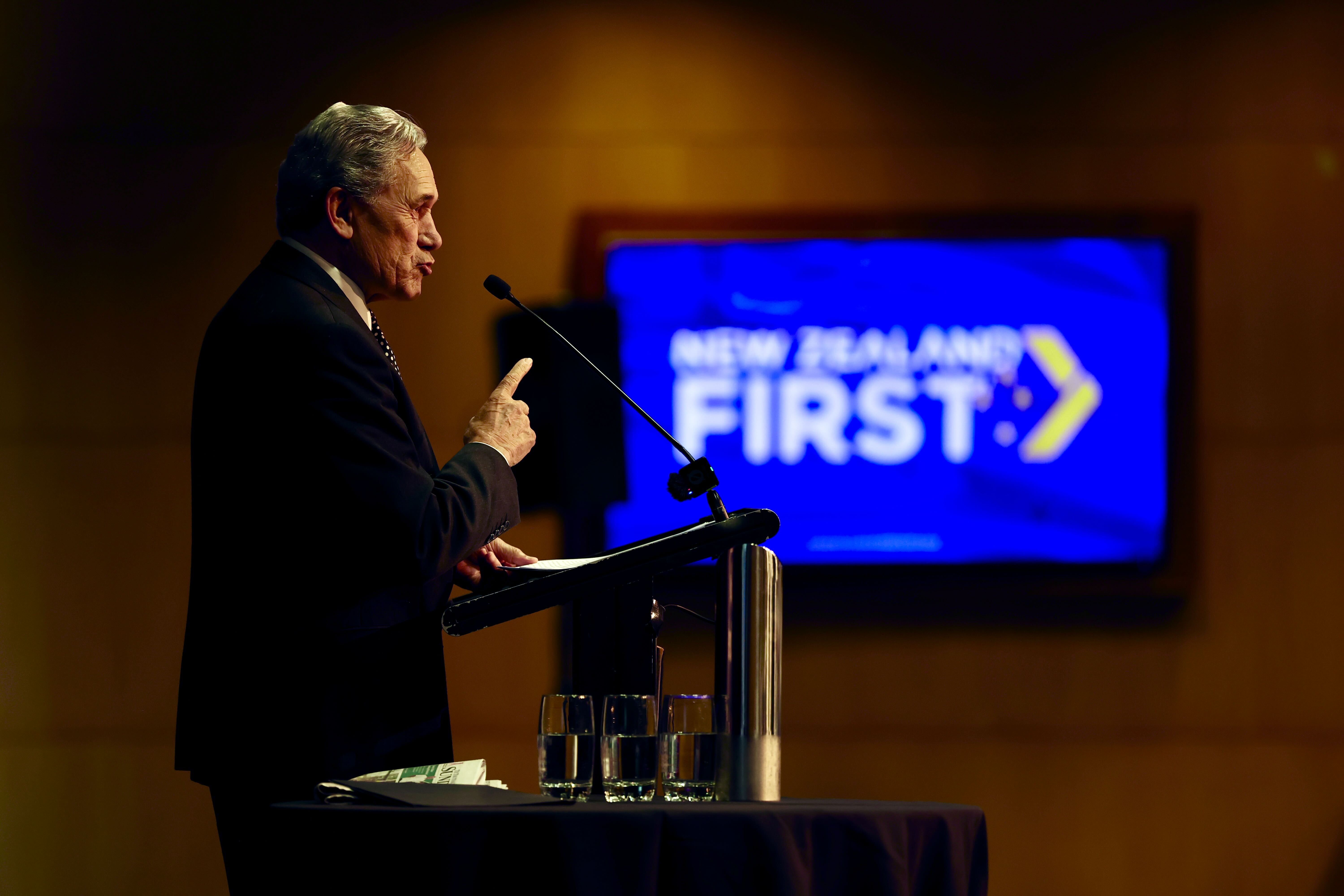
New Zealand First leader Winston Peters liked to see himself as a handbrake, she said.
“It’s much worse than that. The system is a handbrake.”
One of the improvements Richardson would like to see is the establishment of an independent fiscal institution such as the Office for Budget Responsibility in Britain, which precipitated the downfall of Liz Truss.
“The one thing we could do if MMP is here to stay, we could seek to take more of the decision-making into a different forum,” she said.
Three weeks after becoming Prime Minister in 2022, Truss unveiled an unfunded tax-cut package of £45 billion (about $100b) but she refused to submit it to the Office for Budget Responsibility. The ensuing chaos in the financial markets forced her resignation after only 49 days in office.
“Her refusal to submit her plans to the Office of Budget Responsibility was the big, big red flag,” Richardson said.
She said new fiscal architecture in New Zealand would take more of the decision-making out of the day-to-day political domain, where the lowest common denominator prevailed.
“You have a principal framework, a set of rules that govern, if you like, the conduct of that policy.”
It would be like an electric fence, she said.
“The electric fence is there and you don’t dare go too near it. Otherwise, you know it’s curtains.
“In the end, bond markets are going to have a big say and we are paying one of the highest rates in the Western world on our debt. That should be telling us something – a big red flag for us.”
Richardson did not believe the Royal Commission that sat in the 1980s was the best forum to identify other electoral options but is not averse to one now.
“Perhaps it is time to have another Royal Commission and look at the circumstances that we’re in and what is the electoral system most consistent with us being able to address and improve our circumstances,” she said.
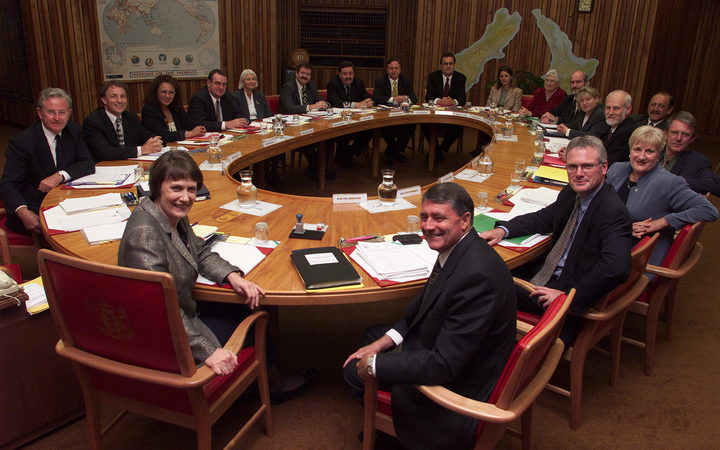
Helen Clark has served longer than any other Prime Minister under MMP, a full nine years leading three minority Governments. She was in coalition at different times with the Alliance and Jim Anderton’s Progressives, and supported at various times by the Greens, United Future and New Zealand First.
Clark is more equivocal than Richardson in asserting whether MMP has been good or bad for New Zealand.
“My view is nuanced,” she said in an interview from Seoul.
“I well recall the original campaign around it, where it was almost Pollyanna-ish that this would transform the political system into one of greater collegiality, co-operation and dialogue, which, which clearly hasn’t really been the case.”
However, it had brought a more diverse range of people and parties into Parliament, “so that’s a positive”, Clark said.
“But I think one thing it hasn’t done is create a stable centre party that can navigate between the two major parties, which would give the system some stability.”
It was what Germany long had with its Free Democrats, and a role the Liberal Democrats in Britain had played to some extent. And there were examples in northern Europe that had developed centrist parties that could go either way.
“I think that has been a shortcoming,” Clark said.
She does not put New Zealand First in the category of a true centrist party, implying that its positions on issues such as trade, immigration and scepticism over the World Health Organisation push it more to the fringes.
While it was centrist to the extent it endeavoured to defend New Zealand and therefore an aspect of the welfare state and it liked public enterprise, it had “more eclectic elements, shall we say”, Clark said.
“It’s nothing remotely like the centrist force of the Liberal Democrats, the German Free Democrats or the Swedish or Norwegian centrists.”
Asked if the MMP system encouraged a more short-term approach to problems, Clark said she did not think that MMP was the problem.
“I think it is a leadership issue.
“You’re starting to see in recent Governments that there hasn’t necessarily been people who’ve had a longer experience to know how to make the system really work when they have the opportunity to wield power,” she said.
“You need to know what you’re doing in a short-term political cycle like three years to be able to get longer-term policies and visions established.”
Clark believes there is a greater role for discussion in the middle ground of politics for policies that “any sensible party would want to advance”.
The Helen Clark Foundation had tried to do that with a range of policy documents for a long-term view on issues such as infrastructure.
“Otherwise it’s stop, go, stop, go. We spend zillions on one thing, the next Government decides it doesn’t want it, so we dump that, we spend zillions scoping the next thing. The result is nothing much ever gets done.
“So we do need to form some longer-term consensus around major areas of, of spending like that.”
Trade policy was definitely one that needed cross-party discussion. Clark’s Government passed the Singapore trade deal and the China free trade agreement with National.
She also pointed to a book her husband, Dr Peter Davis, was compiling for the foundation and getting experts to look at big policy choices ahead for New Zealand.
One of those choices included the prospect of an independent Office of Budget Responsibility, similar to that in Britain.
“I think that could be quite useful,” Clark said.
When told that Richardson had also mentioned it in an interview, Clark said: “Ruth and I wouldn’t necessarily agree on a lot, but you know this sort of fundamental process and processes and ways of doing government business ... we should all be able to agree on.”
She also pointed to Treaty of Waitangi and Māori policy as one where there could be greater discussion between major parties, and referred to the valedictory speech by former National leader Todd Muller.
“He said on issues to do with Māoridom and the Treaty, New Zealand works best when the two major parties are working together in a common direction, and I believe that to be so. There has to be a lot more communication.”
Clark agreed with the suggestion that MMP weakened election promises and manifestos.
“That is tricky because even as a major party, you’re drawing up a manifesto saying you will do this, but you may end up with a partner that says ‘no way, Jose’.”
MMP required “political literacy” from the electorate to know that’s what a party would like to do, but that it might actually not be able to, Clark said.
It required even more political literacy for the minor parties because “they promise things which are never going to happen, like never going to happen”.
Clark said the principle underlying all her experience with coalition and support partners was one of constant communication.
“No-surprises policy. What I’ve noticed in this current term is there’s a lot of surprises. Parties don’t seem to be fully in the loop with what others are doing, and that always makes for trouble.”
Since the first MMP election in 1996, the system has been subjected to many reviews and inquiries and reports for improvements in its design.
The New Zealand Initiative is the latest body to produce a report. A Wellington-based think-tank that promotes free markets and limited government, it was set up in 2012 through a merger of the New Zealand Institute and the Business Roundtable.
The 104-page report by senior fellow Nick Clark looked at constitutional issues such as the parliamentary term, which he recommended be extended to four years with enhanced powers for select committees, reducing the size of the executive, and design issues such as reducing the party vote threshold to 4% or 3.5%.
Oliver Hartwich, the executive director of the New Zealand Initiative, has a special interest in MMP, having experienced it in both Germany, where he grew up, and New Zealand, where he now lives.
Hartwich believes that New Zealand has not yet shaken off its FPP mentality and too much emphasis is put on constituency battles.

And he believes there is not enough flexibility among parties about which other parties they would work with.
“We’ve had it now for 30 years. We’re still not playing it properly.”
Hartwich uses as an example the outcome of the 2017 election, in which New Zealand First held the balance of power, held parallel talks with National, which had polled highest, and with Labour – and eventually chose Labour.
If the same election result had happened in Germany, National would have considered all other parties. It would have known that Act alone was not enough, that a revitalised Labour under Dame Jacinda Ardern, then the new leader, would unlikely be interested in being a junior partner in a grand coalition and that it had a fractious relationship with New Zealand First, and was more likely to go with Labour.
So instead of celebrating on election night because it had polled well, and spending the next few weeks waiting for the final result, National would have reached out to the Green Party.
It would have made the Green Party an offer better than the crumbs it eventually got with Labour and New Zealand First (which refused to have the Greens in Cabinet or in the coalition).
It might have included four or five Cabinet positions, and policy gains from the Greens manifesto that National could live with.
And it would have made the offer public.
“I think under a German system, we would have been far more likely to end up with a National-Greens coalition because that’s how it would have been played.
“You can see how the mentality actually shapes the outcome of the election straight away.
“If you played MMP properly, the parties would have had way more options and the outcomes would have been completely different.”
On the issue of grand coalitions between major parties of government, Hartwich said he had become very sceptical because of the German experience.
During the 16 years when Angela Merkel was Chancellor, 12 of them were spent in a grand coalition.
First, the two main parties blocked each other so often there were no decisive reforms.
But it also strengthened the far-right AFD Party, because people became increasingly grumpy with the old parties and were looking for an alternative.
“And this is where Germany is now,” Hartwich said.
The grand coalition of the centre-right CDU/CSU (Christian Democrat Union/Christian Social Union) and centre-left SDP (Social Democrats), which combined used to command about 80% of the vote, polled about 34% last year.
“It’s completely destabilised the political system so that even the so-called grand coalition doesn’t have a parliamentary majority anymore,” Hartwich said.
“I would be very careful with that here,” he said.
Hartwich said one of the shortcomings with MMP generally was the ability of parties to blame others for not keeping promises.
The best example was in 2005, when Merkel campaigned on increasing the German version of GST by 2%. The Social Democrats opposed it, saying it was regressive and it could not live with such an increase. After the election, it found itself in coalition and increased GST by 3%.
“So you can always hide behind the coalition talks and you can blame the other side,” Hartwich said.
He was not sure there was an appetite for fundamentally rethinking the way the system would work.
“My question would actually be: how long will it take New Zealand to fully become an MMP country?
How MMP works
Under MMP, voters get two votes: one for their electorate MP, in which the candidate with the highest number of votes wins, and one vote for their preferred party.
The party vote is the most important. It determines the overall number of seats in Parliament. If a party gets 15% of the party vote, it will get 15% of the seats in Parliament. If it does not win enough electorate seats to get 15%, its entitlement will be topped up from party lists of ranked candidates that are chosen by parties as part of the election process.
If a party wins more electorates than its share of the party vote, it creates an “overhang” and the size of Parliament increases. For example, Te Pāti Māori’s party vote across the country in 2023 meant it was entitled to four MPs, but because it won six electorate seats, there was an overhang of two seats and Parliament was expanded by two seats.
Over 10 MMP elections, five have produced overhangs of between one and two seats. The current Parliament has an overhang of three seats but one of them was created through the unusual circumstances of a byelection in Port Waikato.
To get any share of the party vote, a political party must either reach a threshold of 5% of the party vote across the country or win at least one electorate seat. The one-electorate rule is often called “coat-tailing” and is one of the more contentious design issues of MMP.
Across 10 elections, Act has benefited the most from coat-tailing, with the election of five list MPs over two elections, despite getting under 5% of the vote. New Zealand First is next, with four MPs elected that way in 1999. But it doesn’t happen often. A total of 14 MPs over 10 elections from five different parties have been elected that way.
Reviews and votes on the electoral system
A Royal Commission into the Electoral System was set up by the Fourth Labour Government in 1985 and it released its report in 1986 recommending MMP, a proportional system. Its last remaining commissioner, Sir Kenneth Keith, died just last month.
National’s Jim Bolger and Labour went into the 1990 election promising a referendum on the electoral system. It was delivered two years later, in the middle of Richardson’s reforms.
It was a standalone indicative referendum, and only 55% of voters took part. But 85% of them voted for a change in the electoral system and of the four options offered, 70% voted for MMP.
Voters got a second chance to keep FPP. A binding referendum was held in 1993 and because it was held alongside the general election, the turnout was much higher, at 85%.
The result was much closer: 54% voted for MMP versus 46% who voted for FPP. But that was enough and MMP began in 1996.
A statutory review of the system was held by a special cross-party select committee in 2001, chaired by Speaker Jonathan Hunt but there was no agreement on any change on issues such as: whether or not MMP should be retained; whether there should be another referendum on MMP; the number of MPs; whether the Māori seats should be abolished or retained; and whether the thresholds for party votes should be changed.
Voters got a third chance to vote on MMP at another referendum in 2011 alongside the general election and 58% voted to keep MMP, with 42% against. Voters were also asked which of four options they preferred if there was a change and overwhelmingly, FPP was favoured, by almost a third.
The 2011 was followed by a review of MMP in 2012 by the Electoral Commission, chaired by Sir Hugh Williams. It recommended lowering the threshold to 4% and abolishing coat-tailing. It received over 1200 submissions and made 10 main recommendations in a 79-page report.
And in 2022, the Government commissioned the Independent Electoral Review, chaired by lawyer Deborah Hart. Its 525-page report was delivered in November 2023 and released in 2024.
Its work was much broader than just MMP and possible improvements. It also looked at voting-related issues such as the voting age, prisoner voting, political donations, advertising and campaigning and the parliamentary term. It received more than 7500 submissions and made 140 recommendations.
The other members of the review team were academics Professor Maria Bargh, Professor Andrew Geddis and Associate Professor Lara Greaves, disability advocate Alice Mander and former Chief Electoral Officer Robert Peden.
Who won power and when?
The 10 MMP elections beginning in 1996 have thrown up quite different types of Government.
1996: National-NZ First majority coalition, with 61 of 120 seats (the coalition collapsed in 1998 and National held on with support from independents).
1999: Labour-Alliance minority coalition, with 59 of 120 seats, supported on confidence and supply by the Greens, making 66 in total.
2002: Labour-Progressive minority coalition with 54 of 120 seats, supported by United Future, making 62 in total.
2005: Labour-Progressive minority coalition, with 51 of 121 seats, supported by NZ First and United Future, making 61 in total.
2008: National minority Government with 58 of 122 seats, supported by Act, the then Māori Party and United Future, making 69 in total.
2011: National minority Government with 59 of 121 seats, supported by Act, the Māori Party and United Future, making 64 in total.
2014: National minority Government with 60 of 121 seats, supported by Act, the Māori Party and United Future, making 64 in total.
2017: Labour-NZ First minority coalition, with 55 of 120 seats, supported by the Greens, making 63 in total.
2020: Labour majority Government with 65 of 120 seats, supported by the Greens, making 75 in total.
2023: National-Act-NZ First majority coalition with 68 of 123 seats.