Inside Government’s fuel disruption response: Document dump reveals how ministers decided on financial support, worst-case scenario
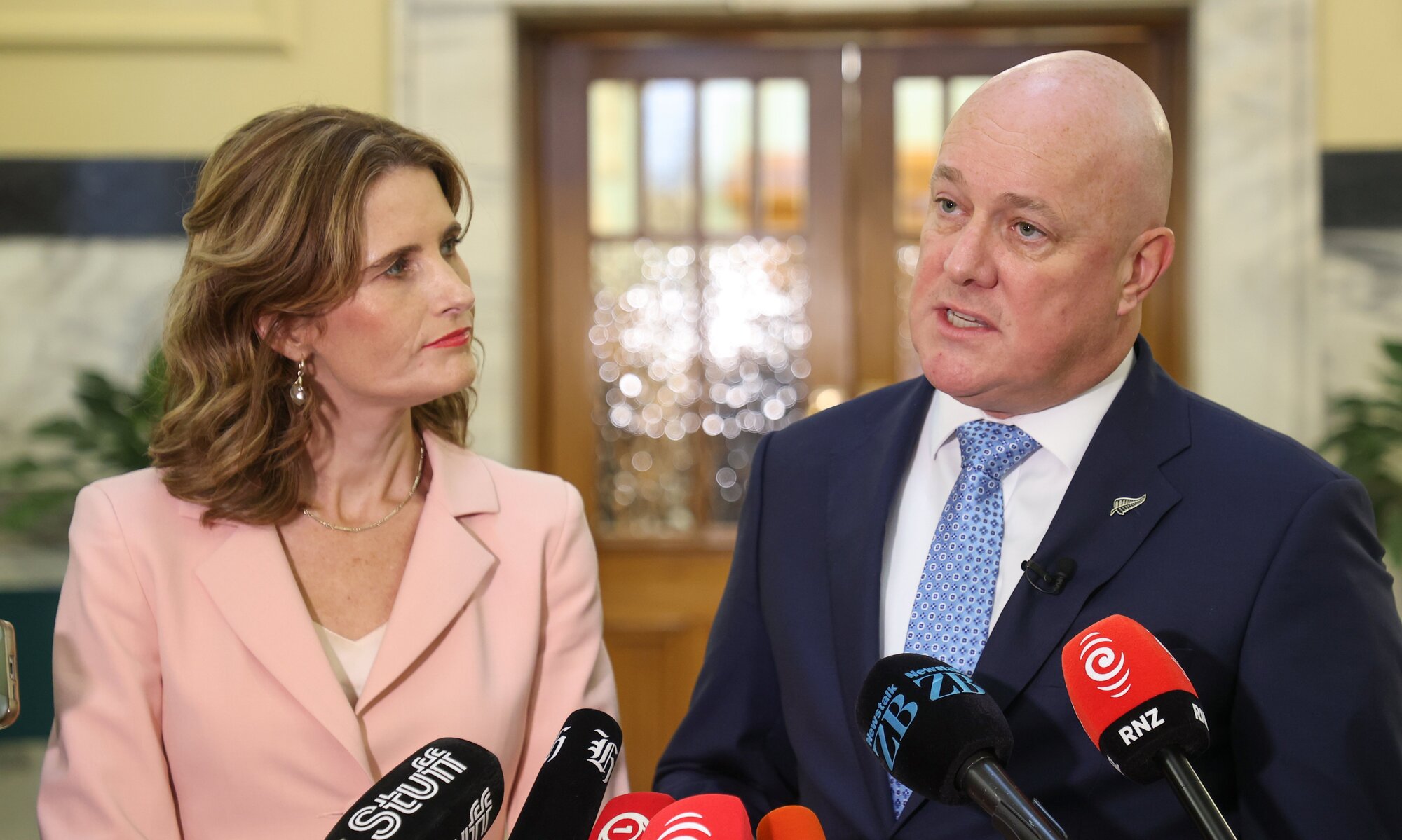
The Government has today dumped a tranche of documents revealing Treasury advice on the economic and fuel security risks arising from the Middle East conflict. The Herald’s political reporters are sifting through the details.
Advice on financial support for Kiwis
Treasury advised Finance Minister Nicola Willis there would be “value in waiting” before providing low-to-middle-income working families with a $50-a-week tax credit boost.
Just four days out from announcing the financial support amid the fuel disruption, Treasury said it was difficult to judge what the “potential trigger points for action” were.
Going ahead with the increase “commits the Government to a large fiscal cost” at a time of uncertainty due to the nature of the Middle East conflict, Treasury told the minister.
It was also focused on one specific population group, which might generate pressure for others to be supported, adding to the cost, the advice said.
Ultimately though, Willis clearly opted to progress with the support within days. That came amid questions from the Opposition about what the Government was doing to help New Zealanders hit hard by the fuel disruption.
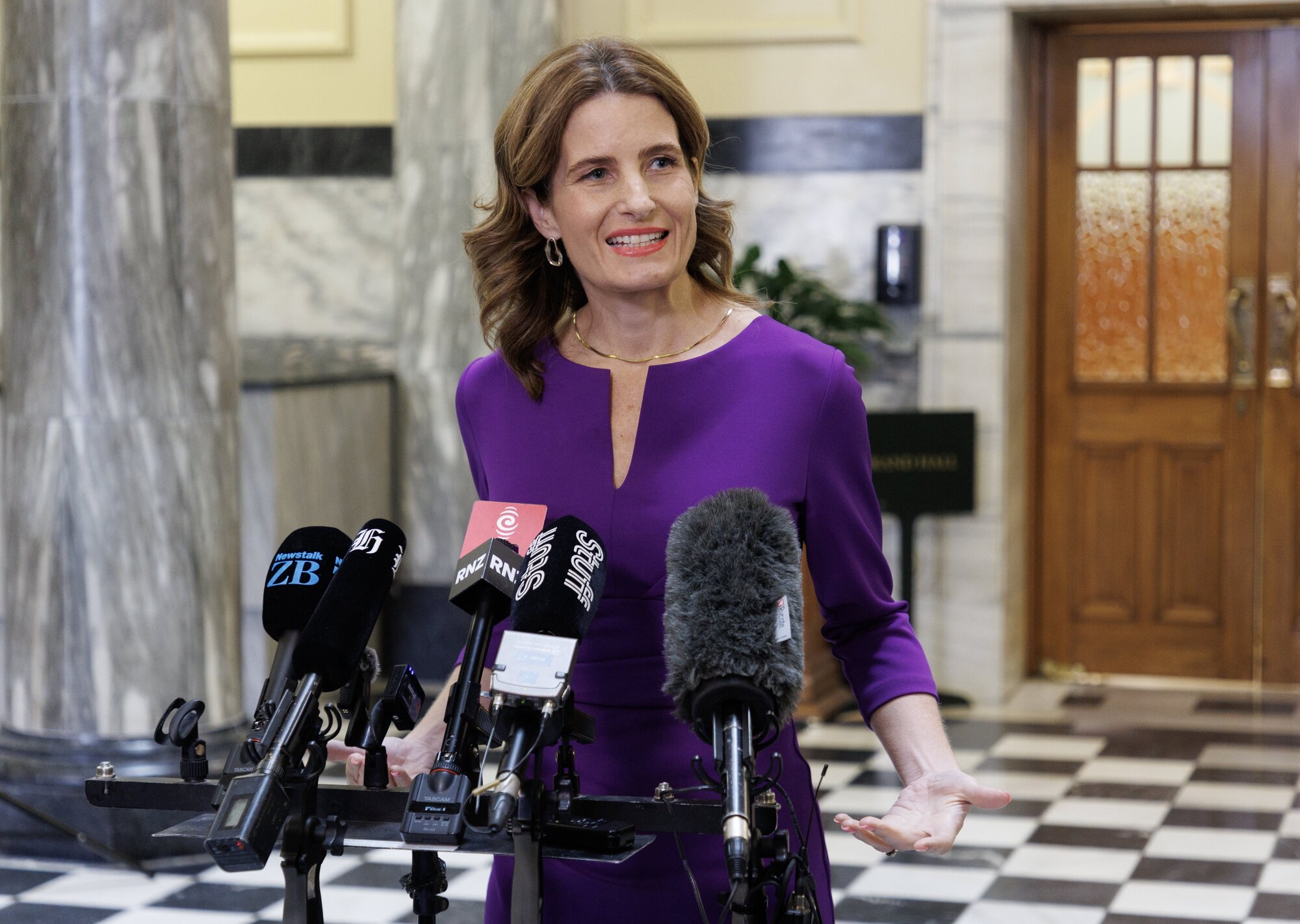
A tranche of documents released by Treasury on Wednesday includes an aide-memoire provided to Willis on March 20 about her proposal for a temporary $50-a-week increase in the in-work tax credit (IWTC).
That was eventually announced on March 24, to come into effect on April 7. The Government said it would last one year or “until the price of 91 octane petrol drops below $3 a litre for four consecutive weeks”.
The aide-memoire was “intended to support your discussion with your Cabinet colleagues” about the proposed financial support. A separate Cabinet paper on the assistance had been “produced at pace”.
“It is difficult to identify precise trigger points for proceeding with an IWTC increase. Ultimately it will involve a difficult judgment call for ministers. But the kinds of factors that you would consider include the projected cost of living or economic impacts, including the price of fuel, general price increases and increases in unemployment.”
Treasury told Willis she had received initial economic scenarios on March 6 “that showed the impact of different durations and intensities of the conflict on oil prices, GDP and inflation”.
“You are due to receive updated material on scenarios as part of the all-of-government response to the Middle East conflict next week and the Treasury will continue to assess the impact and feed into Budget 2026 forecasts in the coming weeks. We are modelling the increases to household expenditure that would result from different scenarios.”
Ministers were also set to receive advice on what different levels looked like under the National Fuel Plan.
“What the higher levels of the fuel plan look like in practice could have implications for demand for business and household support from Government, so you may want to consider the generosity of settings for an IWTC increase with this in mind.”
Treasury told Willis that a one-year increase was estimated to cost $373 million.
“The option has attractive features, including that it can be implemented quickly using an existing legislative mechanism (a tax bill that is already in the House).
“Implementing the increase for one tax year is easier for Inland Revenue to implement in its systems, and it does not involve having to apply composite rates across the tax year, which would involve more complicated calculations and potential confusion for recipients.”
However, agreeing to the increase from April 1 – it later came into effect on April 7 – would commit the Government to a “large fiscal cost at a time when there is considerable uncertainty about the magnitude and length of the Middle East conflict, and its impacts on New Zealanders”.
“It is also focusing on a specific population (low-to-middle-income working families with children: around 28% of families with children receive IWTC) and might generate pressure to widen the support to a larger group of stakeholders (both individuals and businesses), which would add to the fiscal cost.
“The situation may prove to be short-lived, in which case a one-year increase may be unnecessary.”
Willis was told that “there is option value in waiting”.
“There would be value in waiting to see how the situation develops. Waiting also gives you more flexibility around how long you want the support to be available for.
“However, waiting would have the downsides of potentially not providing timely support to those who need it, needing to use composite rates across the tax year, and requiring subsequent stand-alone legislation.”
Treasury said the Cabinet paper proposed funding be held in a contingency if ministers choose to delegate decisions on start date and length of payment.
“This would then also give you more flexibility to respond to events with smaller fiscal risks (eg, you could at a later date decide to proceed with a shorter increase period and use the underspends for other measures to respond).”
Willis got advice on Covid-style subsidy for Air NZ
Willis met with the chair of Air New Zealand, Dame Therese Walsh, on March 17.
In that meeting, Willis requested Treasury pull up information on the Maintaining International Air Connectivity (MIAC) scheme, which was created during the pandemic to subsidise airlines to keep flying so New Zealand’s trade routes for essential supplies remained open.
By the time the scheme ended in March 2023, $890m in subsidy had been paid out.
Treasury said a similar scheme was “less relevant” to the fuel crisis.
“[T]he key issue for the aviation sector is not the high (and volatile) price of fuel, but if fuel supply is sufficiently constrained that rationing is required,” Treasury said.
“Disruption as a result of the current conflict would be more of a supply-side shock if fuel is rationed. In this situation, the focus will be on establishing clear objectives and identifying fewer key routes to fly.”
Treasury reckoned there would still be enough demand, even at high ticket prices, to sustain the company.
It said the subsidy may be needed for domestic routes, rather than international ones.
“Air NZ has verbally indicated that its balance sheet and capital market framework can, generally speaking, absorb jet-fuel prices at [REDACTED]. Regional operators have smaller balance sheets and route networks, and are more exposed to demand changes in, or the closure of, particular routes,” the advice said.
Fuel worst-case scenario
Willis received advice on three scenarios for potential impacts of the fuel crisis.
“Scenario 3” was the worst-case scenario. This would see diesel prices rise to $8 a litre and real GDP crash by about 5% below the baseline scenario in the quarter affected by the shortage.
Treasury said this was “roughly half of the impact of the initial Covid-19 lockdown but larger than that associated with later Covid-19 restrictions”.
However, Treasury anticipated a “rapid bounce back as fuel supply returns to normal”.
In this scenario there would be “extreme and severe” disruption to the diesel supply chain, with the country receiving only 50% of its usual diesel shipments for three successive months.
“This assumes a severe breakdown of the supply chain with a long time for fuel companies to find alternative sources of supply.
“We assume that supply would be augmented by drawing down on existing buffers ... and the release of any further strategic reserve. This would result in a reduction in diesel supply equivalent to approximately 20% of pre-conflict diesel consumption over the September 2026 quarter,” Treasury said.
Treasury described the shock as “rare and extreme”.
Treasury advised against fuel tax cut
The Government got advice on cutting fuel taxes and road user charges – a policy deployed by the last Labour Government in response to the war in Ukraine, and by the Australian Government.
Treasury advised against this, saying cutting fuel taxes would “provide limited relief”, would be “poorly targeted” and would “dampen the effect of price increases”, which were meant to signal scarcity to consumers and encourage them to drive less.
“The price of fuel is an important signal for managing and prioritising fuel use. Universally reducing the price of fuel could risk undermining mitigation measures put in place to ration fuel,” Treasury said.
Treasury warned the fuel tax cut in response to the Ukraine war cost $1.8 billion ($120m a month).
Fuel reserve could cost $167m
The Government’s Fuel Security Arrangement – an extra diesel reserve above importers’ minimum stockholding obligations – could have a fiscal cost of $167m.
The arrangement involves the Government agreeing to underwrite losses on the stockpiled fuel if and when it is released.
Treasury said it commissioned independent modelling on the potential costs of the scheme; the average fiscal outcome was a loss of $45.5m – although the largest potential loss was $167m.
Overall, the model assessed the reserve as having a modest negative expected value at minus $35m.