Lies, conspiracy theories and Deborah Russell’s scone – tempers flare in parliamentary clash
Tempers flared during a meeting of Parliament’s finance and expenditure committee this morning, which saw Finance Minister Nicola Willis accuse Labour revenue spokeswoman Deborah Russell of being a conspiracy theorist and Willis accused of telling lies.
The committee met for its annual interrogation of the Government’s accounts for the last fiscal year.
This is usually one of the committee’s drier meetings, with the fireworks usually reserved for interrogations of the Budget or the Reserve Bank’s Monetary Policy Statements.
Willis opened the meeting by attacking Labour over its allegation that the coalition Government’s $14 billion tax cut package from 2024 had worsened the fiscal position.
This set of accounts is the first to show the impact of those tax cuts.
‘We’ve got the receipts’
Willis conceded the fiscal position had worsened, but said the accounts showed that this worsening was because of downgraded economic forecasts, which buffeted the Government’s books, rather than discretionary fiscal decisions made by the Government.
“Members will be aware that economic forecasts have generally been revised down over the past two years as a greater understanding has developed about the nature and duration of the downturn and the recovery.
“These revisions have made the Government’s fiscal strategy harder to achieve. Earlier this year, I asked the Treasury to do a breakdown in changes to the operating balance forecasts over time. This confirmed the biggest reason by far for the change in ObegalX forecasts over time has been downward revisions in Treasury’s tax revenue forecasts excluding tax policy changes – it has not been a result of discretionary fiscal policy.
“In fact, ObegalX would be billions of dollars worse than currently forecast if we hadn’t made significant savings to achieve much tighter Budget allowances. Those savings cumulatively amount to $43 billion over the Government’s first two Budgets – all of those savings were opposed by the Opposition."
Willis told media outside the committee meeting that the Government had been working on a tally of all of the savings decisions it had made in order to calculate how much worse the books would be if it had not decided to cut spending. She said the tally would be released sometime next year.
“We’ve got the receipts,” Willis said.
As if to make Willis’ point, about an hour-and-a-half after her appearance ended, BMI, a unit of the ratings agency Fitch, published a report downgrading New Zealand’s economic growth forecasts for next year from 2.7% to 2%, and more than halved expected growth in the current year.
‘Which table?’ x 16
Things got particularly heated when Labour MPs accused the Government of talking a good game on building new infrastructure to plug the infrastructure deficit, but not putting up the money to fund it.
Willis alleged this was a misrepresentation which the Labour MPs were likely basing on a table in the Budget Economic and Fiscal Update (Befu).
Labour’s three MPs on the committee, Barbara Edmonds, Deborah Russell and Megan Woods, asked Willis to specify which table she was referring to.
The MPs asked that particular question 16 times.
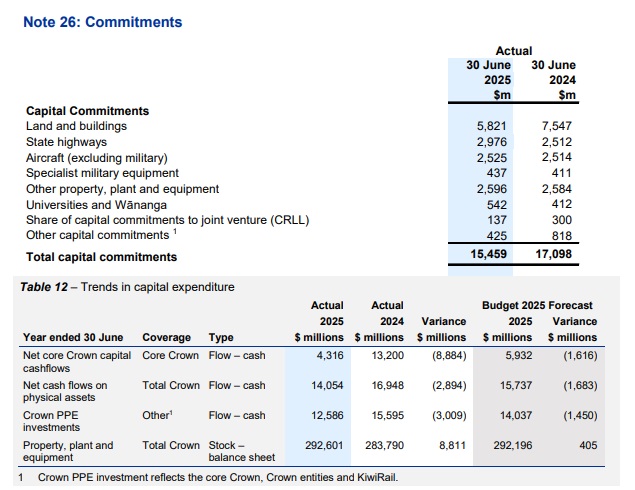
After the meeting, Russell was asked where the figures relating to Edmonds’ questions came from. She did not know and said that if Willis said they came from a Befu table, it was up to her to show where those figures came from.
The Herald asked Labour where the figures came from. The party pointed to two tables in the most recent annual statements of government: table 12 on page 24 and note 26 on page 122.
The table shows that the Government has been slow to get money that it has said it would spend out the door and that contracted capital commitments were lower in the 2025 fiscal year than the 2024 fiscal year by about $1.6b.
‘When you’re a conspiracy theorist, you see conspiracy everywhere’
Russell then asked Willis about recent changes to the ETS, which decoupled the ETS from New Zealand’s Paris target.
Russell said the decision might improve the Government’s finances.
“It looks very much like a decision that was taken just to get your books in order,” she said.
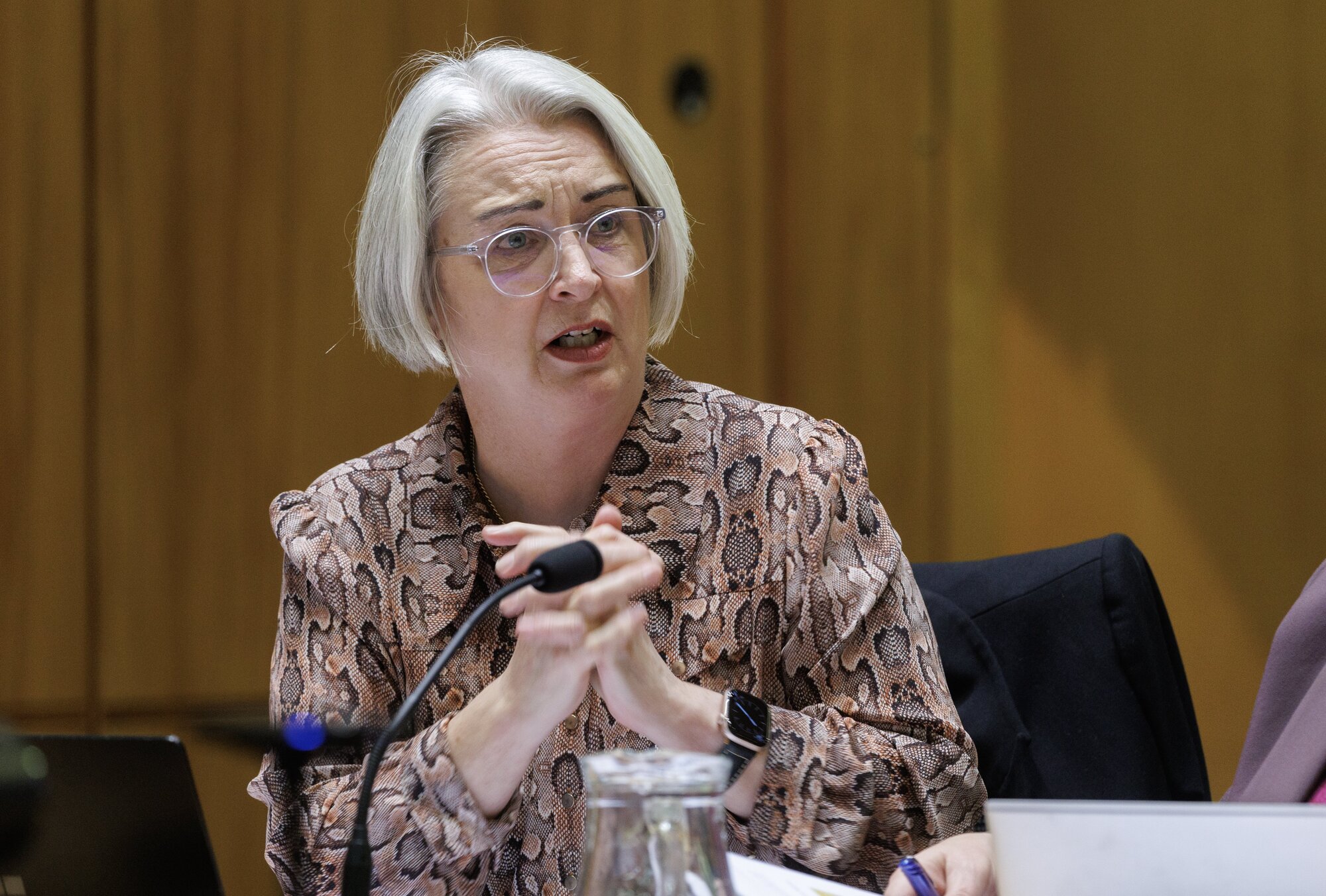
Willis accused Russell of being a conspiracy theorist.
“When you’re a conspiracy theorist, you see conspiracy everywhere,” she said.
‘I was called a liar’ – but was she?
Outside the committee meeting, Willis was asked about the hot tone of the meeting by media.
Edmonds was overheard from some on the press bench as saying Willis’s remarks were “just lies”, a remark put to the Finance Minister.
“I was called a liar in that committee, that is unparliamentary, it is actually against standing orders and I chose not to take issue with it. I was then accused of taking policy decisions in order to flatter the books,” Willis said.
“I utterly reject that allegation, I think the conduct of that member and other members in that committee was unbecoming of them, and I am hopeful that after the New Year and a break, they’ll all do better.”
Edmonds, the Labour MP accused of calling Willis a liar, but said she probably had used the word “lies”.
Speaking outside the committee, Russell wouldn’t say whether she agreed Willis was a liar, if that is what Edmonds had indeed said.
“I don’t recall using that word myself and I do think the minister was less than straightforward in some of her answers,” Russell said.
Russell said she wanted to see the transcript of the meeting before delivering a verdict on the alleged “liar” remark.
“I’ll have to look at the transcript, I haven’t seen it myself, it was a very heated meeting,” she said.
Russell, speaking after a long morning in which the committee interrogated not just Treasury but also the new Reserve Bank Governor Anna Breman, was called away from her stand-up with media and into a lift by her colleague Megan Woods.
“I do have to go, I do actually have a scone. I’ve only got a few minutes and I’m really hungry,” she said.
MPs have only a brief break between Scrutiny Week hearings.
A big liability
Green Party co-leader Chlöe Swarbrick pushed Willis on why the potential cost of meeting the Government’s Nationally Determined Contribution (NDC) was not included as a specific cost in the books.
New Zealand is forecast to fall short of meeting the NDC, the main emissions target under the Paris Agreement. The Government is likely to have to go offshore to meet the target, purchasing offsets from other countries at an estimated cost of $3.3b to $23b between now and 2030.
Under the last Government, Climate Change Minister James Shaw tried to have these costs recognised by Treasury in the books but was rebuffed.
Swarbrick wants to see the cost quantified and put on the books, in part because it would likely encourage the Government to put more effort into reducing emissions domestically to avoid having to send money offshore.
Willis said it was both “Treasury’s judgment and the judgment assessed and approved by the Office of the Auditor-General” judgment to not include the figures in the books.
The reason, according to those agencies was that “there is no legal obligation to achieve the NDCs, nor has there been a constructive obligation to meet the target”.
It is highly unlikely New Zealand will meet its 2030 Paris target domestically – no forecasts show the country anywhere close. This means that offshore offsets would be the only way to hit the target.
Willis reiterated that these offsets would not be purchased, meaning that the first Paris target may be missed.
“We’re not prepared to send billions of dollars offshore to meet that NDC,” she said.
“I will always put New Zealanders first,” she said.
Outside the committee meeting, Willis said the Government was “making best endeavours” towards hitting the Paris goal, but there was no “legal or constructive” obligation to hit the target.
Swarbrick’s reading of Treasury’s analysis is that if Willis and the Government wanted to, it could put the figure on the books.