New Russian Ambassador keen to shift relationship from war crimes to pavlova
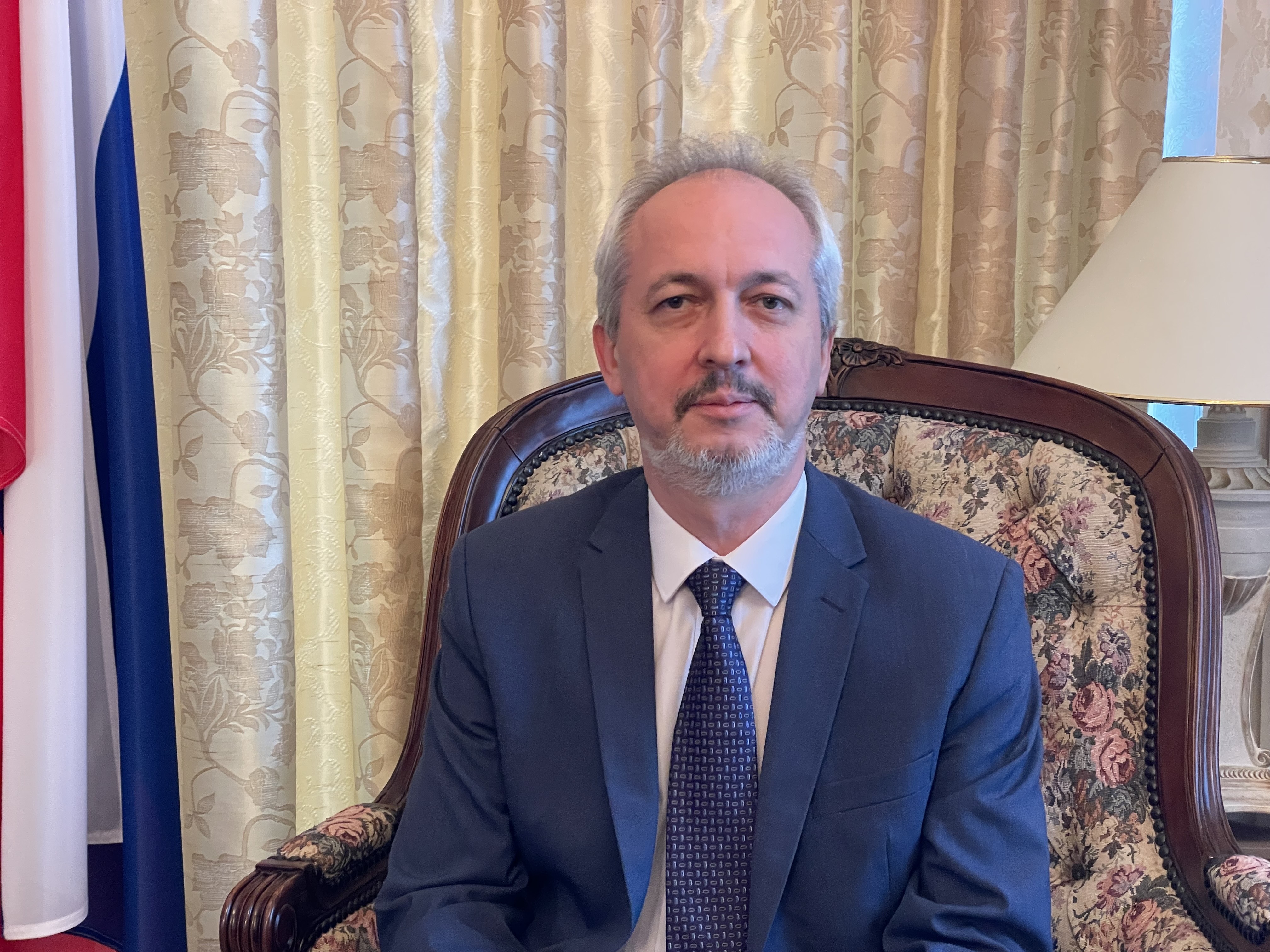
Russia’s new ambassador to New Zealand wants to do a big reset.
Sitting down with the Herald at the Russian Embassy in Wellington, Stanislav Krans said he wants to reset relations with New Zealand, which are at a low ebb after Russia’s invasion of Ukraine that is considered illegal in the eyes of the New Zealand Government and many others.
Krans is keen to increase cultural links, noting Katherine Mansfield was “under the influence of great Russian writer Anton Chekhov”.
“That could be considered something in common for our countries,” he said.
Krans then brought up that it is the centenary of Russian ballerina Anna Pavlova’s tour of New Zealand, which sparked one of the origin stories of the famous dessert.
“And after that New Zealanders invented the cake,” Krans said, potentially giving up any hope of resetting relations with Australia.
Krans is keen for the relationship with Russia to move on from the topic many New Zealanders – and certainly the Government – most want to hear from him on: the war in Ukraine.
Unsurprisingly, the subject dominated most of the Herald’s 45 minutes with him.
“I know that Ukraine will be the most interesting thing you would like to hear from me... but we should make it more understandable for New Zealanders that Russia is not only the conflict in Europe,” Krans said.
The invasion hangs over New Zealand’s relations with Russia. Contact has been broken off at the political level, meaning Krans will be unlikely to have a proper meeting with Foreign Minister Winston Peters during his time here, which does not have a fixed term.
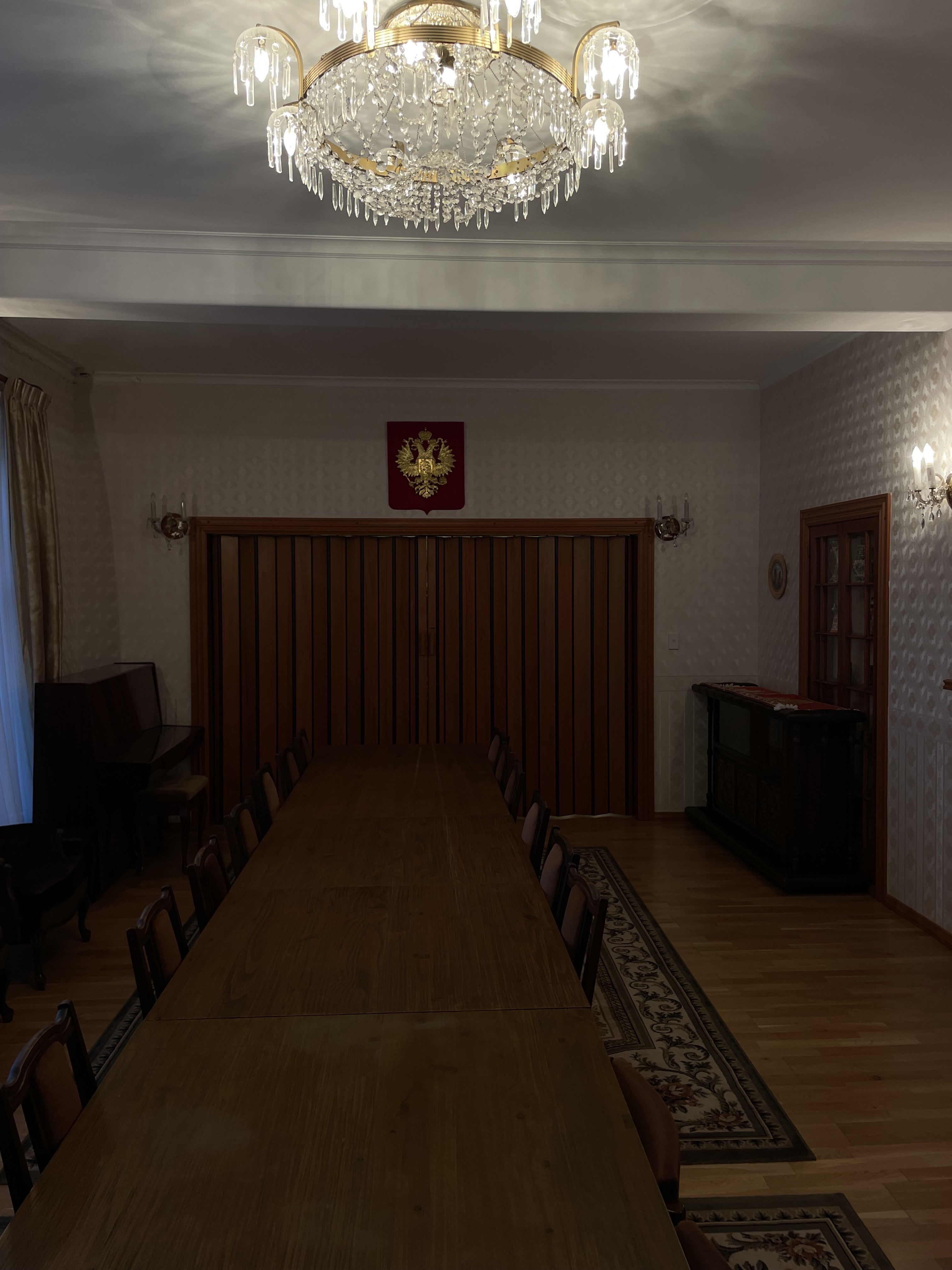
As Krans showed the Herald through the embassy, he noted the large dining room had not hosted New Zealand politicians for some time.
He viewed New Zealand’s economic sanctions on Russia as unlawful and said he was unhappy with the travel bans New Zealand and Russia have imposed on one another, although he does not see these travel bans as sanctions.
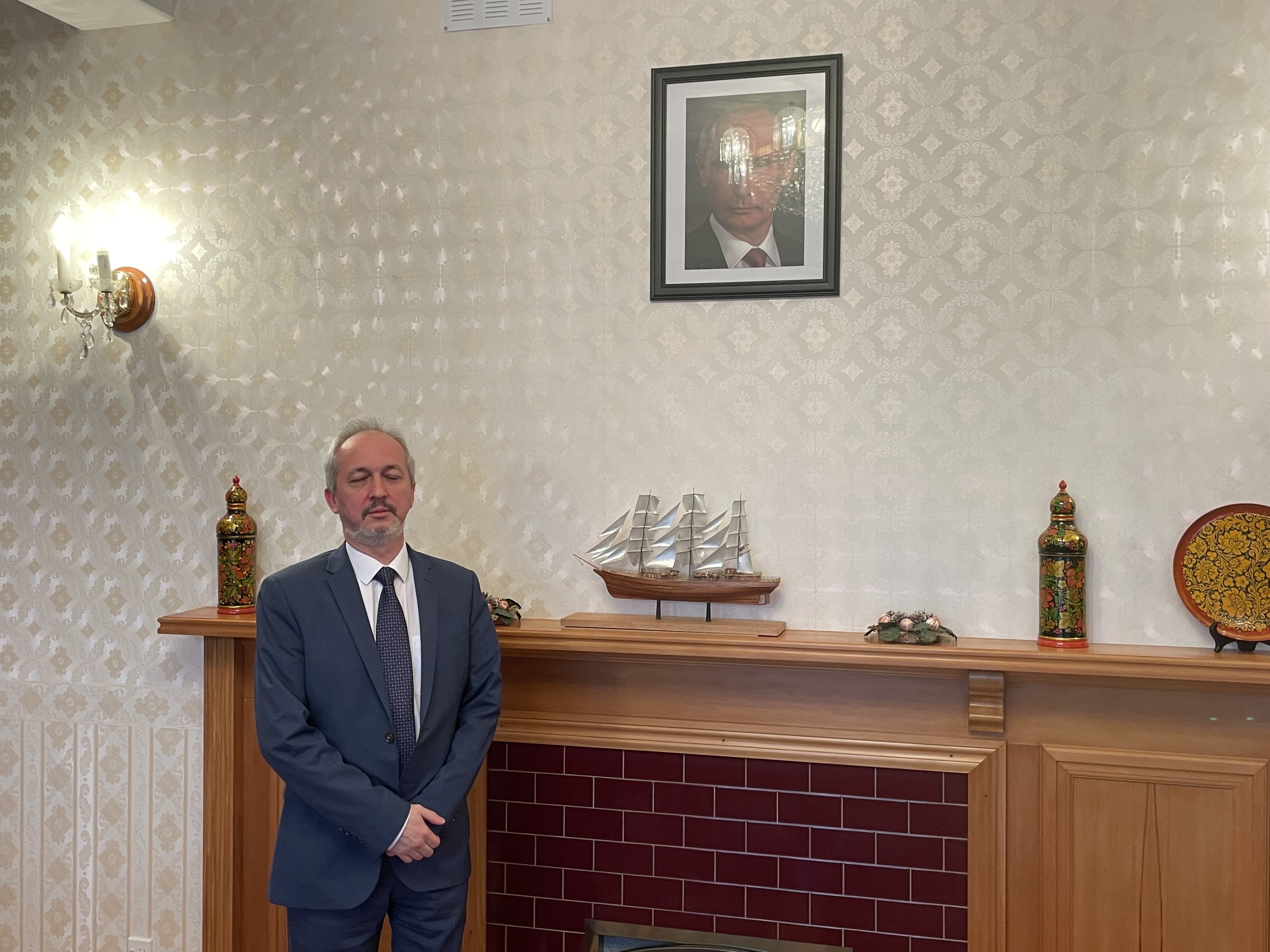
In 2024, I was one of several journalists hit with a travel ban, which adds a dark irony to the “Discover Moscow” brochure the ambassador handed me.
New Zealand’s intelligence agencies have warned that Russia, along with China and Iran, are actors involved in “covert or deceptive activity in order to influence discussions and decisions, or gain access to technology and information”, according to a threat assessment published by the NZSIS.
The same threat assessment said there were “several states undertaking foreign interference in New Zealand”, although it only named China, not Russia.
Asked whether the embassy’s public outreach is simply another form of foreign interference, Krans leaned forward and said, “do you feel any interference in your affairs from us?”
On the matter of spying, Krans noted “your former Prime Minister said there is no Russian spies here”.
He could not remember which Prime Minister this was, but the remarks are similar to those made by former Prime Minister Dame Jacinda Ardern that there were no spies in the country.
At the time, security analyst Paul Buchanan said Ardern’s statement about Russian spies threatened to make “New Zealand a laughing stock”. The remarks were made in the context of Russia’s likely culpability in the poisoning of former double agent Sergei Skripal and his daughter Yulia Skripal in Britain.
Ardern’s Foreign Minister, Winston Peters, later said there was Russian “intelligence activity” in New Zealand but no one fitted the definition of a spy, which would be used to expel them.
Krans described Russia’s invasion of Ukraine as an “internal” matter.
“We do not interfere in your internal affairs. That is your own decision what to do within your state,” he said.
“Whatever is your assessment of what is in this conflict, our position has nothing to do with New Zealand.
“Both sides have to sit together to talk together to restore political dialogue.”
While the International Court of Justice did not accept jurisdiction on the question of the war’s legality, a Special Tribunal for the Crime of Aggression against Ukraine was established by the Council of Europe to prosecute the question.
The International Criminal Court has arrest warrants out for President Vladimir Putin and Children’s Rights Commissioner Maria Lvova-Belova. Former Defence Minister Sergei Shoigu and senior general Valery Gerasimov also have warrants out.
The warrants mention a number of alleged war crimes; in Putin and Lvova-Belova’s case the warrants relate to the alleged unlawful deportation and transfer of Ukrainian children. Shoigu and Gerasimov’s warrants related to the alleged directing of attacks at civilian objects and the war crime of causing excessive incidental harm to civilians or damage to civilian objects.
Krans took his time to answer questions on war crimes, pausing at points to correct himself.
“War crimes... it means... when you are saying about any local conflicts. Many countries start wars, start military operations, start some actions against other actions and everyone stays silent and tries not to be involved other than in a diplomatic way, not talking about courts, tribunals and so forth.
“In respect of Russia, we consider this kind of instrument also cannot be applied because there is no war crime... during the military conflict we understand it is very difficult to avoid any casualties,” he said.
“There is no war crime there,” he added.
Krans said that when Russia alleges war crimes against Ukraine “nobody believes us”.
He said Russia has “a lot of instruments that could punish the violator of rules”, such as the “military police and the courts”.
The World Justice Project gives Russia a rule of law score of 43, suggesting scepticism the rule of law operates properly in the country. A higher score means better adherence to the principles of the rule of law. New Zealand’s score is 83.