New Zealand to explore joining Fiji-Australia defence alliance; announcement follows China missile launch
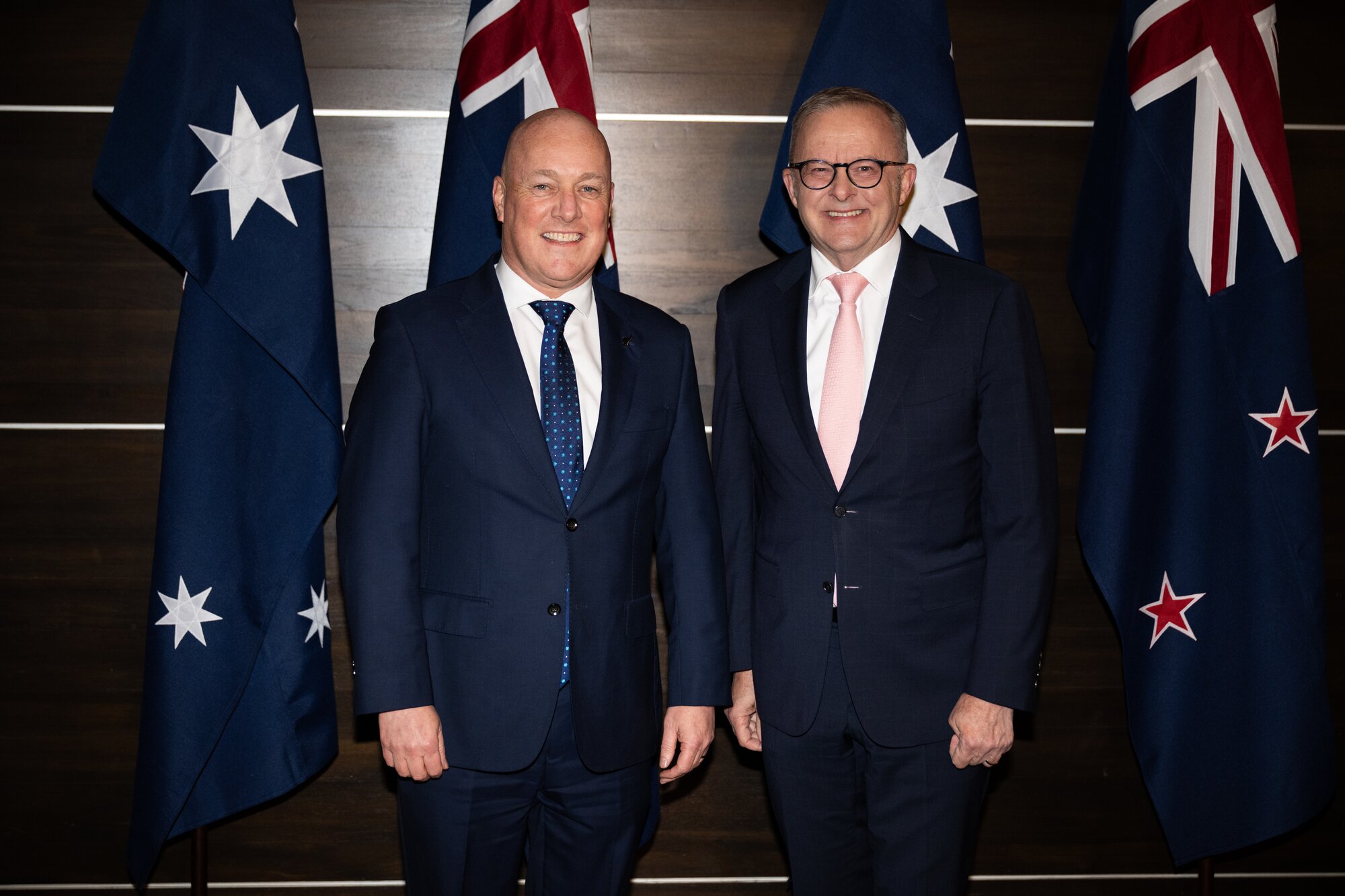
New Zealand will explore the possibility of joining the recently signed defence alliance between Fiji and Australia, Prime Minister Christopher Luxon has announced.
Should the Government sign up to the alliance, Fiji would become New Zealand’s second defence ally, in addition to Australia.
The announcement comes after China fired a missile into the South Pacific, a move the New Zealand Government quickly criticised as being concerning and inconsistent with peace in the region.
However, Luxon denied the move to explore joining the alliance was in any way related to the Chinese missile test. He said he has been in conversations with the Australian and Fijian leaders about the alliance in recent months.
“We’ve always said we want Pacific solutions to Pacific challenges. With respect to security concerns that exist within the Pacific, this is a really good move.”
The final decision on joining the alliance will be taken by the Cabinet, followed by the usual parliamentary treaty process, a statement said.
It’s understood a decision would be months away and unlikely to come before the general election, meaning a new Cabinet will likely make the decision.
Luxon would not commit to a timeline.
“It will take as long as it takes ... I think we can move through it hopefully very quickly.”
The alliance commits its parties “to co-operate and consult, and to act to meet common danger”, the Government said in a statement.
Luxon said New Zealand and Australia shared a “close bond, with a military alliance that continues to go from strength to strength, and we also have a strong and enduring relationship with Fiji”.
“We already work with both countries on how we can develop a safer region for all, so engaging with them on this alliance is logical.”
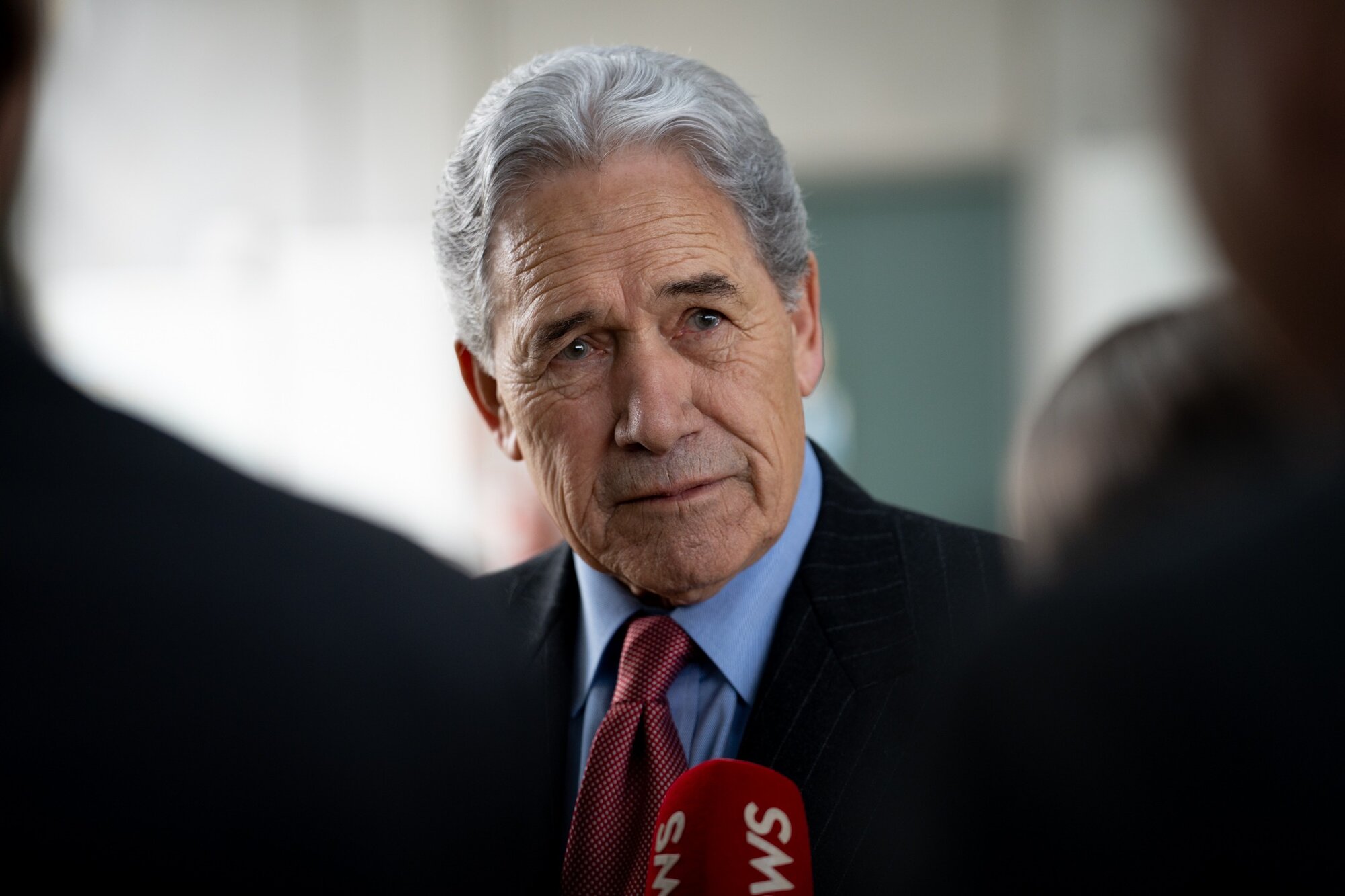
Foreign Affairs Minister Winston Peters said Pacific leaders had for decades operated under an approach of having Pacific-led responses to regional security issues. He said this alliance underscored that stance.
“Elevating our long-standing relationship with Australia and Fiji – and other Pacific nations – to the next level through an alliance would mean we become even closer partners.”
Defence Minister Chris Penk said it was an opportunity for further co-operation in the Pacific as New Zealand and Australia marked 75 years of their alliance.
“New Zealand values the opportunity to grow Pacific unity and build stronger defence and security partnerships within our region. We are committed to the implementation of deeper defence and security cooperation with Fiji.”
The Chinese Embassy has been approached for comment.
In a statement to the Herald, a United States Embassy spokesperson said defence arrangements were “sovereign matters” but endorsed enhanced Pacific cooperation.
“Decisions about defense arrangements are sovereign matters for each nation to determine in accordance with its own interests and security needs.
“The United States is committed to a free and open Pacific; we welcome and support efforts by Pacific nations to strengthen regional cooperation.”
The Ocean of Peace Alliance between Fiji and Australia is a “mutual defence treaty”, with one section stating that the parties recognise “that an armed attack on any of the parties within the Pacific would be dangerous to each other’s peace and security as well as the security of the Pacific, and declares that it would act to meet the common danger, in accordance with its domestic processes”.
Victoria University international relations expert David Capie told the Herald that it was too early to say whether New Zealand would join the alliance, but acknowledged that Luxon had shown a “real enthusiasm” to join.
While he found it unsurprising that New Zealand would seek to strengthen defence ties in the Pacific, Capie said it represented a shift in approach.
“Alliances have not been a way we have thought about pursuing our foreign policy interests. We’ve tended to lean towards more multilateral frameworks, whether globally or in the region, so turning to an alliance as a way to advance our defence interests is a new development, so in that sense it’s quite interesting.”
Capie, who doubted China’s missile launch was purely in response to the alliance’s announcement, said the launch was likely to have been a reminder of the contested geopolitical environment within the Pacific.
He also speculated that New Zealand’s decision to explore joining could reflect a desire to keep pace with Australia’s presence in the Pacific.
On Monday, after the Ocean of Peace Alliance was signed, Luxon indicated New Zealand could become involved.
“I think New Zealand being in early would be a good thing ... you would have an ability to ultimately determine which other countries could join from across the Pacific,” he said.
Asked if it would aggravate China, he replied, “No, really what it’s about is … in the unlikely event that if Fiji gets, you know, attacked, Australia has said that they have an ally relationship and they would backstop them and vice versa.”
On the same day that the alliance was struck, China conducted the test launch of a strategic missile by a nuclear submarine. The missile carried a dummy warhead towards the South Pacific.
China described it as a “routine arrangement” as part of its navy’s “annual training” – the same language used by China after a 2024 missile launch.
But Peters said it was an “unwelcome and concerning development” and “not consistent with regional stability, and peace in the South Pacific”.
“We, like our neighbours in other Pacific countries, have no interest in China using the South Pacific as a testing site for missile capability.”
In February last year, Chinese warships carried out live-firing exercises in the Tasman Sea, which led to airlines changing their flight paths.
Luxon said at the time that China had not informed the Government about its activity in the sea west of New Zealand. However, he said the vessels had been within international waters.
Months earlier, in September 2024, China fired a dummy warhead into the Pacific as part of what it called a “routine arrangement in our annual training plan”.
That was raised by Luxon with Chinese President Xi Jinping when the pair met on the sidelines of the Apec summit in Peru. Luxon called it a “concern for many of us in the Pacific”.
“There hadn’t been a missile fired for 44 years, and it ended up just north of Tahiti. In the Pacific, we have a history around nuclear testing.”
Former Defence Minister Judith Collins previously said China “changed the game” when it fired the missile.
“The intercontinental ballistic missile that China launched from its launch site in China to past Kiribati is about the same distance as it would be from that same launch site to New Zealand,” she said.
“I do think it sent a very strong signal. It was launched into the South Pacific nuclear-free zone. It didn’t have a warhead on it, but it could have, but it was very concerning.”
Jamie Ensor is the NZ Herald’s chief political reporter, based in the press gallery at Parliament. He was previously a TV reporter and digital producer in the Newshub press gallery office. He was a finalist in 2025 for Political Journalist of the Year at the Voyager Media Awards.