New Zealand warned by China of missile test in South Pacific, Winston Peters expresses concern
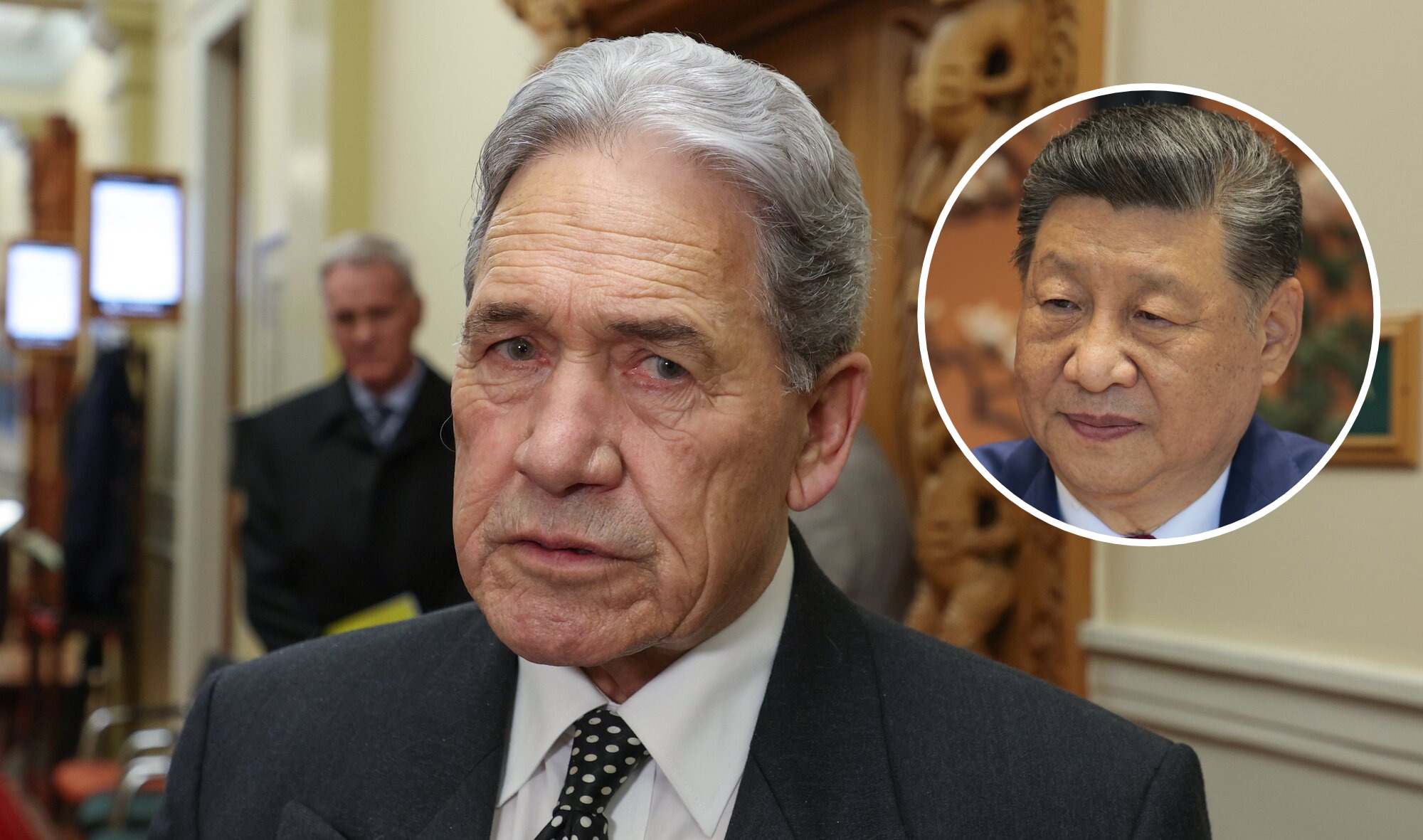
Foreign Affairs Minister Winston Peters says New Zealand is “deeply concerned” by China testing a “nuclear-capable” missile in the South Pacific, characterising it as inconsistent with peace in the region.
Chinese state media Xinhua on Monday night said the People’s Liberation Army (PLA) Navy successfully conducted the test launch of a strategic missile by a submarine.
“The PLA Navy said that one strategic nuclear submarine of the navy successfully launched a strategic missile carrying a dummy warhead toward relevant high seas of the Pacific Ocean at 12:01 p.m., which landed precisely within the designated waters,” the agency said.
It described the test launch as a “routine arrangement” as part of the PLA Navy’s “annual training”, the same language used by China following a 2024 missile launch.
The agency said the Navy claimed the test launch “complies with international law and international practice, and is not directed at any specific country or target”.
Peters said China told New Zealand earlier today of its plan to launch a long-range ballistic missile into the South Pacific and then carried out the test “within hours of informing us”, despite “our long-standing concern about this type of activity”.
“New Zealand considers this an unwelcome and concerning development,” Peters said.
“We, like our neighbours in other Pacific countries, have no interest in China using the South Pacific as a testing site for missile capability.
“Launching ballistic missiles into the South Pacific is at odds with the spirit and intent of the Blue Pacific Ocean of Peace. This missile was fired into the South Pacific Nuclear Free Zone established by the Treaty of Rarotonga. China’s action goes against the object and intent of that Treaty.”
Peters said New Zealand would speak with Pacific partners about the development as the leaders “have been clear we do not want to see the region become a theatre for outside military competition”.
“This launch is not consistent with regional stability, and peace in the South Pacific,” the minister said.
“We are also concerned that this now seems to be a recurring pattern by China, following its test firing of an intercontinental ballistic missile into the South Pacific in 2024. We as a region should not sit by and allow such tests to become normalised or routine.
“New Zealand will continue monitoring the situation in close coordination with regional partners.”
It comes as the Australian and Fiji Governments today signed the Ocean of Peace Alliance, a “mutual defence treaty”, according to Australia’s Minister of Foreign Affairs.
Article 6 of the new treaty states that each party to the agreement “recognises that an armed attack on any of the parties within the Pacific would be dangerous to each other’s peace and security as well as the security of the Pacific, and declares that it would act to meet the common danger, in accordance with its domestic processes”.
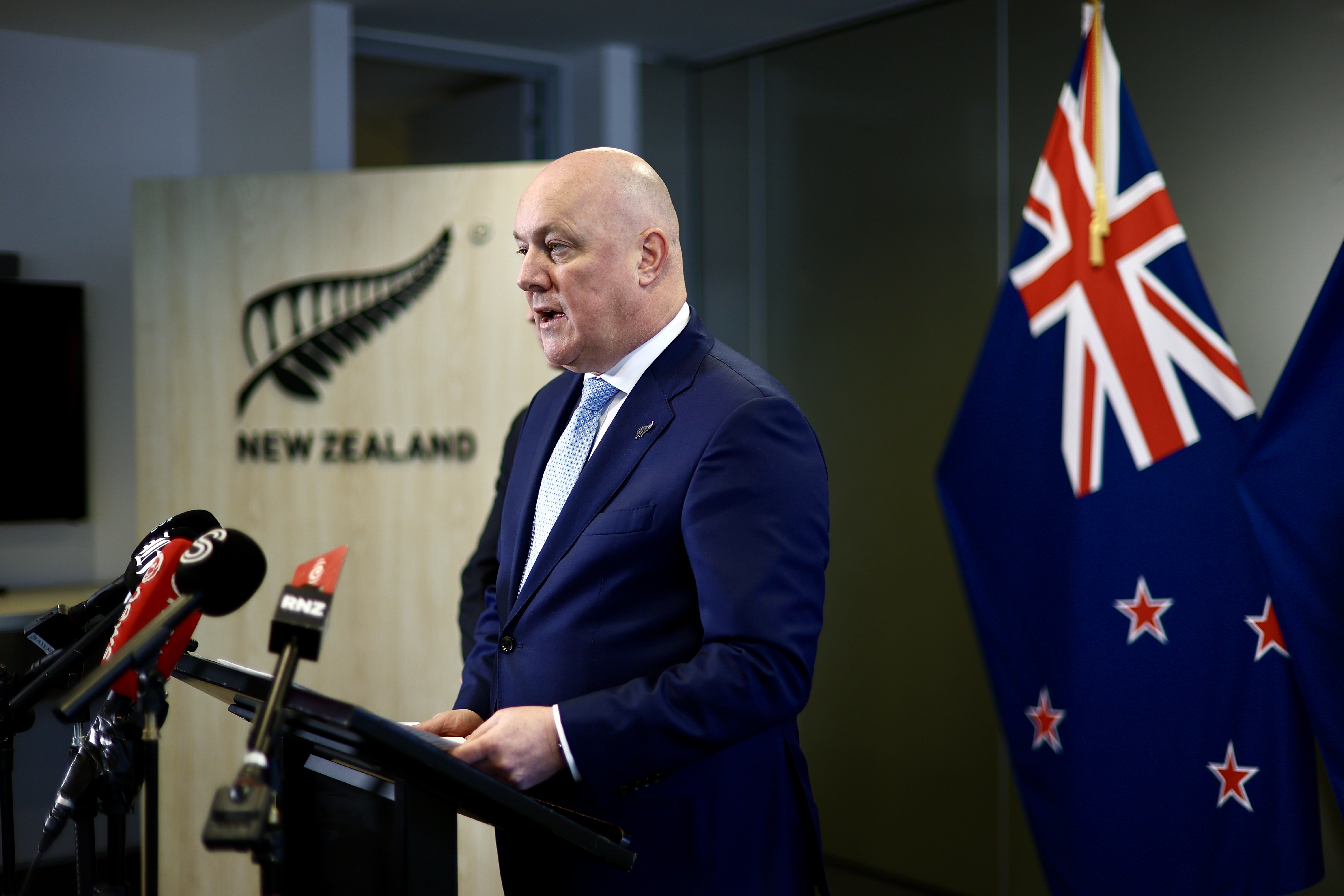
Speaking today, Prime Minister Christopher Luxon acknowledged the agreement was “new” but indicated New Zealand could become involved.
“I think New Zealand being in early would be a good thing ... you would have an ability to ultimately determine which other countries could join from across the Pacific,” he told reporters.
Asked if it would aggravate China, Luxon replied: “No, really what it’s about is … in the unlikely event that if Fiji gets, you know, attacked, Australia has said that they have an ally relationship and they would backstop them and vice versa.”
In February last year, Chinese warships carried out live-firing exercises in the Tasman Sea, which led to airlines changing their flight paths.
Luxon at the time said China hasn’t informed the Government about their activity in the sea west of the New Zealand mainland. However, he said the vessels had been within international waters.
Months prior, in September 2024, China fired a dummy warhead into the Pacific as part of what it called a “routine arrangement in our annual training plan”.
That was raised by Luxon with Chinese President Xi Jinping when the pair met on the sidelines of the Apec summit in Peru. The New Zealand leader called it a “concern for many of us in the Pacific”.
“There hadn’t been a missile fired for 44 years and it ended up just north of Tahiti. In the Pacific, we have a history around nuclear testing.”
Former Defence Minister Judith Collins has previously said China “changed the game” when it fired the missile.
“The intercontinental ballistic missile that China launched from its launch site in China to past Kiribati is about the same distance as it would be from that same launch site to New Zealand,” she said.
“I do think it sent a very strong signal. It was launched into the south Pacific nuclear-free zone. It didn’t have a warhead on it, but it could have, but it was very concerning,” Collins said at the time.
Earlier today, Australian leader Anthony Albanese said the new agreement was a significant development.
“The signing of these two agreements represents one of the most significant endeavours Australia has undertaken with any country.
“This level of ambition is possible because Australia and Fiji are Vuvale – family – with a relationship grounded in trust, loyalty, understanding and respect."
New Zealand and Fiji signed a Status of Forces Agreement (SOFA) in 2023 to strengthen the two countries’ defence relationship.
The agreement says the two countries “shall facilitate defence relations between each other by undertaking cooperative activities between them”.
These activities can include “the conduct of joint or unilateral visits, exchanges, maritime, air and land based exercises”, providing training for military personnel, logistical support and the exchange of information.
The Australian described China’s expected test as a “nuclear-capable missile” with a dummy warhead.
It reported that regional governments, including that of Australia and New Zealand were given warning of the test. Australia’s Foreign Minister Penny Wong was alerted by her officials in Canberra, who received a warning directly from the Chinese Embassy.
The Australian reported a high-level source familiar with the warning said the test appeared to be a retaliation to the Ocean of Peace Alliance.
Jamie Ensor is the NZ Herald’s chief political reporter, based in the press gallery at Parliament. He was previously a TV reporter and digital producer in the Newshub press gallery office. He was a finalist in 2025 for Political Journalist of the Year at the Voyager Media Awards.