NZ First got a glimpse of what life was like without Winston Peters – and it wasn’t good

Three facts:
For years now, one of the biggest questions hanging over New Zealand politics has been what happens to NZ First and the place it holds in the political landscape, when Winston Peters – the party’s leader since its founding three decades ago – makes way for a successor.
The past week has demonstrated many unsavoury things about our politics and the people who engage in it, but it’s also demonstrated just how far we are from an answer to that question.
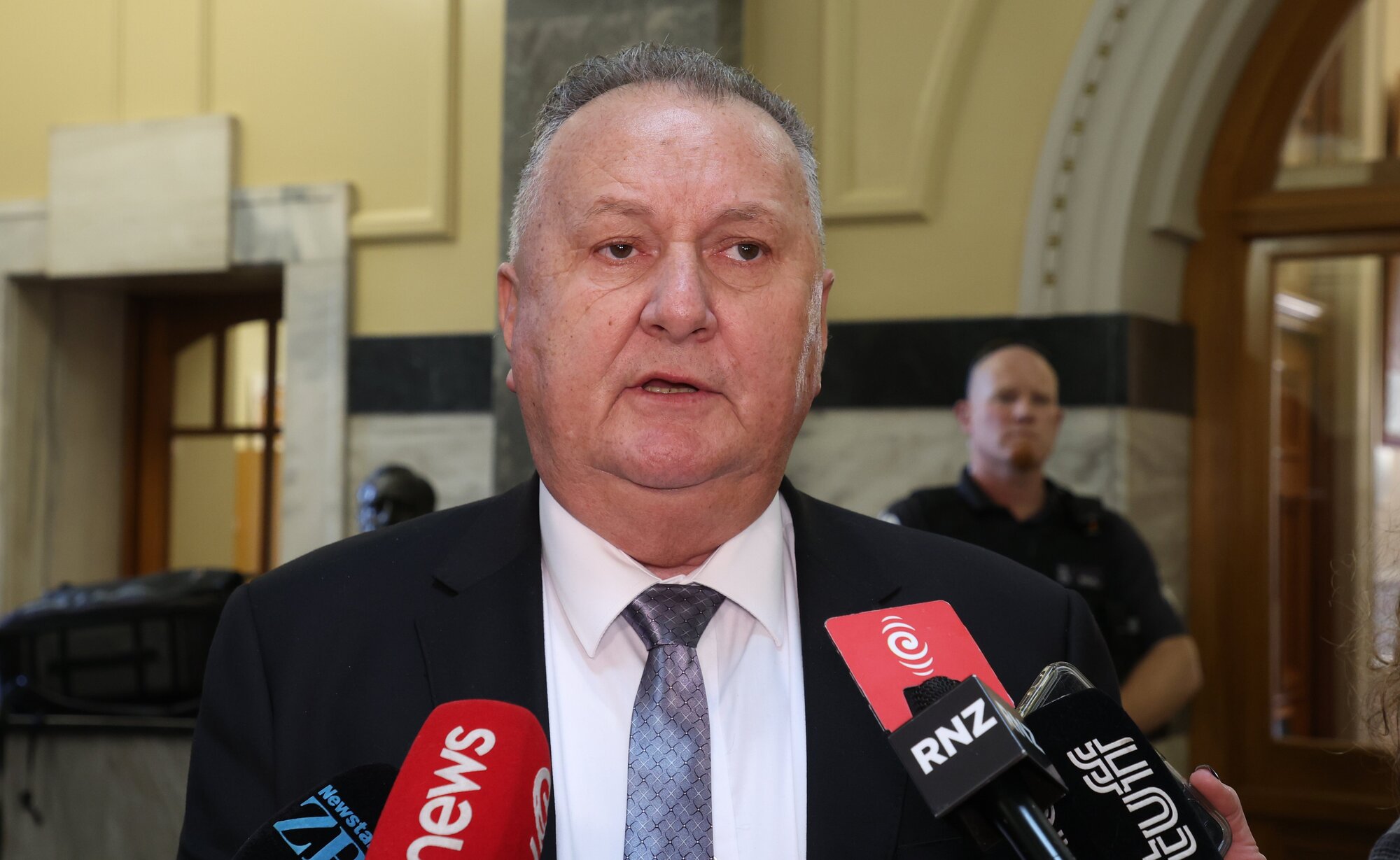
The party’s deputy, Shane Jones, was in a huff all week over an exhortation made to other politicians after Indian Prime Minister Narendra Modi’s visit to Auckland: “The next time you go to an ethno-nationalist rally to receive a foreign leader, take off your knee pads”.
There was much tiptoeing around Jones’ wording and his intent – Jones maintains there was no lewd subtext, and the remark referred to the act of bowing.
Labour leader Chris Hipkins had the unfortunate task of articulating what many other people were thinking, when he upbraided Jones for the remarks which he said referred to “oral sex” – the first time most of us can remember seeing those words used in a party press statement.
Jones was unhappy with this reading of his remarks, arguing that any double-entendre was the fault of the listener, not him.
Jones’ speech was clearly designed to be controversial – and that comes with risk that the party either wasn’t ready for, or didn’t know how to handle.
Whingeing about the reaction is the equivalent of lobbing a grenade, only to complain about the size of the explosion.
However, Jones wasn’t the NZ First member in the most trouble this week.
That honour belongs to the now former Napier candidate Stuart Nash, whose ham-fisted attack on Katie Nimon, the National incumbent in the seat, saw him forcibly resign as a candidate within a few hours of the remarks getting wider public attention.
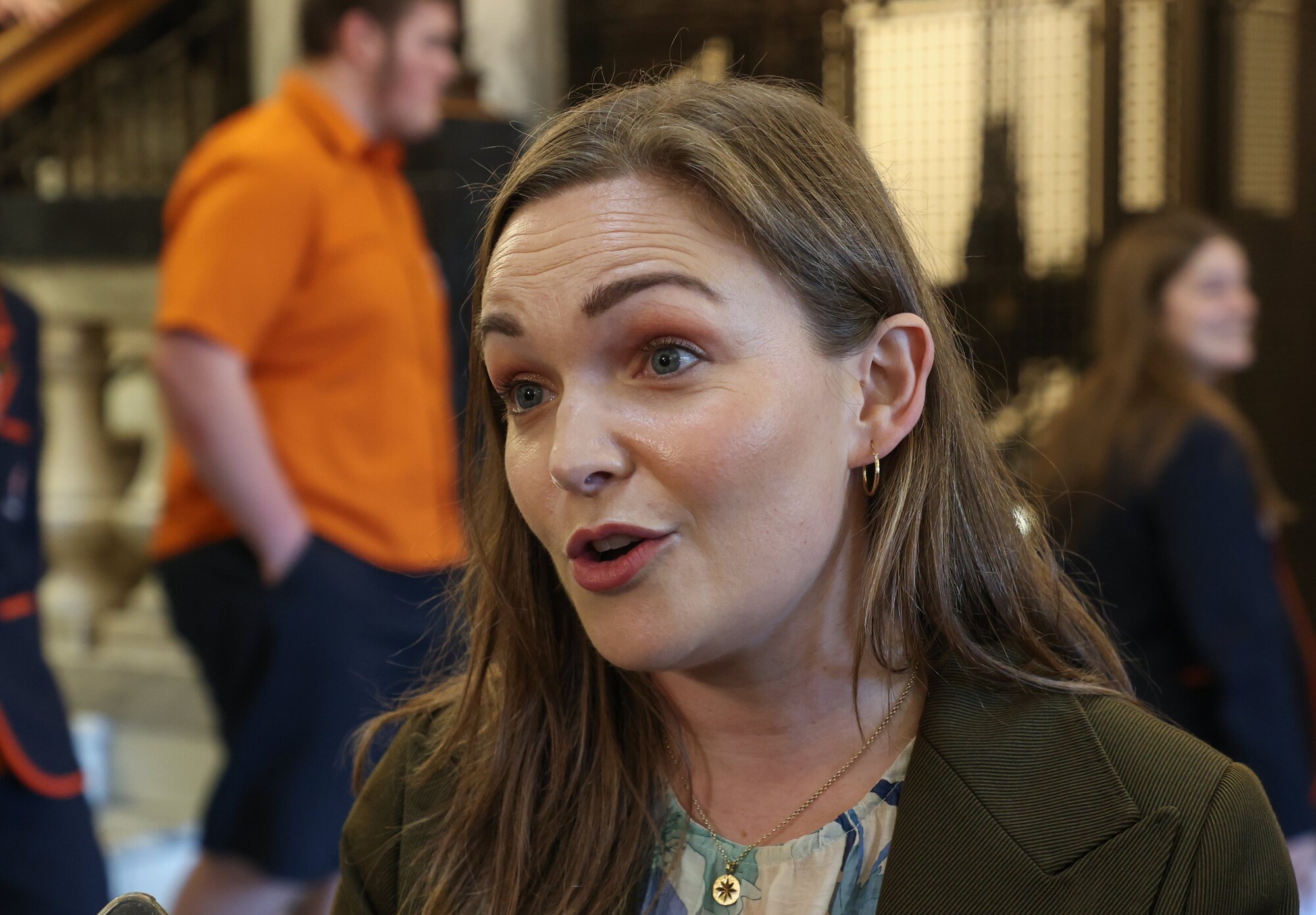
Nash accused Nimon of being lazy for taking too much leave from Parliament after having a baby.
Nimon first disputed the length of time she was away from work, and with back-up from across the House, launched a searing attack, that anyone taking parental leave could be considered lazy to begin with.
As much a sin as the remarks themselves, was the forum in which they were made: a private text message to former National MP and now podcaster, Christopher Finlayson.
It doesn’t seem like an off-colour remark made by mistake, but rather a line that may have been deployed at other points on the campaign, perhaps even on the doorstep.
The public at large very rarely get to listen to the semi-private conversations politicians have on the doorstep.
You don’t get to hear your local candidates quietly distancing themselves from their unpopular leader or tactfully disparaging their opponent in a way they would never do in a more public forum.
Nash’s message lifted the veil on his door-knock spiel and showed just how ugly it could be.
You just know there’s a good chance that this line had been rolled out quietly on the doorstep and the corner of public meetings – away from microphones and the prying eyes of the media.
He’s not the only candidate to use these underhand tactics – but he’s a rare example of someone who got caught.
The remarks were clearly different to Jones’.
Jones can survive a brief embarrassment, rebuild, and go on. Nash, as we now know, could not.
Peters was in the Philippines during all of this.
His last major public appearance was at his party conference last weekend.
After that, he laid down his metaphorical MAGA hat, put on his statesman hat, and jetted offshore, representing the country’s interests (well, by all accounts) in Manila, meeting with the local government there and Asean (Association of Southeast Asian Nations) foreign ministers.
With Peters away during a busy parliamentary sitting week, the public got a look at how his party might function without him: the answer is; “not very well”.
It wasn’t a total disaster.
Chief of staff Darroch Ball clearly had a line of communication to Manila directing traffic, as the wheels were set in motion for Nash’s forced resignation, which had to be achieved in between diplomatic engagements on the ground.
While the Nash affair was an absolute shambles, the party handled the resignation itself rather well, culling him after hours, rather than letting the scandal drag on for days. Nash’s end was sealed by about 6pm NZ time, but only announced some hours later.
The story only blew up in New Zealand just after lunch time, when the Herald and other mainstream outlets got a hold of the message, which was first read out by Finlayson on his Cross Party Lines podcast.
It appears Nash’s fate was sealed after an internal push from women within the party, including Dot Jones (married to Shane), who sits on the party’s board.
One of the ironies about NZ First is that it is full of big personalities who don’t like being bossed around or told what to do – and yet at the same time it – more than any other party in Parliament – operates on a principle of absolute fealty to its leader.
This leads to some awkwardness and even instability.
Nash and Jones were known to dislike each other, with each probably seeing the other as a potential threat for the leadership succession, if and when that ever occurs.
Jones, correctly as it turned out, was widely known to be critical of NZ First being the vehicle of Nash’s political resurrection.
The dislike seems mutual.
They also represent two poles of the current party.
Although always socially right-wing and economically left-wing, the party has a remarkable ability to orient itself to catch whatever direction the wind of dissatisfaction may be blowing, changing a great deal from one election to the next.
The current party is more interesting than most iterations. While the story of the last 12 months has been about NZ First’s success – its comfortably polling in the double-digits in most polls, and likely to improve on its 2023 performance – it’s not doing nearly as well as other insurgent right-wing movements around the world.
The United Kingdom’s Reform and Australia’s One Nation – parties that once looked to NZ First as an example of what populist parties could achieve – are polling at levels NZ First could only dream of, despite electoral systems in those countries being less favourable to minor parties than our MMP.
In fact, even in Germany – another MMP country – the populist AFD is comfortably the most popular party, polling almost 50% higher than its nearest rival.
Why can’t NZ First harness that same angst?
The economic and social sturm und drang gripping the UK, Australia, and Germany are no different to the situation in New Zealand – in fact, arguably, things are worse.
There are many reasons; unlike in those countries, NZ First has a much weaker claim to being anti-establishment, having spent nearly four terms in MMP Governments of one flavour or another.
The other problem is that it’s not quite clear what the party is.
One wing of the party – which would include Jones, and the likes of Mark Patterson and Jenny Marcroft – could be compared to the likes of Australia’s Nationals ... an economically interventionist party rooted in the regions with populist tendencies, and strong governing credentials.
The other wing of the party is more similar to Australia’s One Nation, concerned more with cultural issues, angst of migration, foreign religions and cultures, and which is untested in government.
NZ First, in a bid to emulate the success of other populist movements, seems to be building this wing of the party with selections of people such as Elliot Ikilei, Alfred Ngaro and Michael Laws.
The balance is an unstable one.
One side of the party wants to govern and has a governing agenda, the other wants to turn the world upside down.
Doing two things at once may help electorally, soaking up votes wherever they can be found, but it can make for instability.
That instability is costly. While NZ First was clearly propping up the wider coalition vote earlier this year, the slow atrophy of its support is hurting the coalition’s election year chances.
It’s not the first time that NZ First, seeking glory, chokes on its own ambition.
The rising factionalism in NZ First comes at a time when the question of succession is in the air.
The winner of this factional conflict doesn’t just get to decide what kind of party NZ First will be next term, but if they survive long enough, they may get to decide what NZ First is, in its first iteration without its founding leader.
While Jones ends the week as he began it, the most obvious eventual successor to Peters, his own stuff-up exemplifies that he too, isn’t a perfect fit for the job, lacking Peters’ unique ability to cause just the right quality and quantity of controversy – and to get away with it.
No one got away with controversy this week.