NZ First’s candidate conundrum and how it will shape its next caucus - Adam Pearse
THE FACTS:
New Zealand First’s 2026 candidate collection has boosted the party’s position and prominence, but it brings with it a problem.
Attracting high-profile faces to fill party hoardings can have mixed success. At the party’s 2023 convention, among the more well-known candidates was Lee Donoghue.
Voters will be forgiven for drawing a blank. Donoghue, better known as Hunter McKay on Shortland Street from 2006 to 2012, had returned to New Zealand after learning of the “wokeification” of the US acting industry and launched his political career warning of a “woke virus” in New Zealand schools that led to the “ever-increasing sexualisation of children”.
He wasn’t the only new candidate. Casey Costello, then the Hobson’s Pledge spokeswoman, revealed she would also be running for NZ First. She would eventually find herself third on the list, with the party eager to give her a good chance of entering Parliament.
A 1News-Verian poll at the time put NZ First at 3.1%, which would have been a rough average of the party’s polling throughout the first half of 2023. It wasn’t until August that its vote started to pick up and put NZ First in contention for a return to Parliament.
In the end, Donoghue, ranked 12th on the list, was only four spots away from bagging a seat.
Fast-forward to 2026, and the candidate who finds themselves 12th on NZ First’s list will be sitting pretty, based on current projections.
This week’s RNZ Reid Research poll has the party at 11.5%, its best return in that poll since July 2017, and one that would bring it 15 seats in the House.
The party has a larger pool of experienced candidates than it had in 2023, throwing up several issues to navigate before and after November 7.
While it might be hard to claim the crown for the most impactful and surprising candidate announcement thus far (that belongs to Paul Henry and Act), NZ First has been amassing a string of high-profile names this year as it seeks to add experience to its caucus.
Stuart Nash, the former Labour Cabinet minister, would have trumped Henry in both value and shock factor had it not been for the array of scandals he suffered before and after his exit from politics and the clear signalling that he was due to come aboard.
Nash is joined by former National Cabinet minister Alfred Ngaro, whom the party sees as crucial to appealing to Pasifika and religious communities; former All Blacks captain Taine Randell; and former National MPs Michael Laws and Harete Hipango.
Hobson’s Pledge spokesman Elliot Ikilei is also worth noting, although he will be regarded among the party’s more fringe candidates, despite Costello’s impressive record this term as a first-time MP going straight into Cabinet.
Winston Peters has wasted no time in highlighting the switching of allegiances to undermine political rivals to his left and his right. And he’s laid the foundation for their elevation to ministerial positions and even the Cabinet as the party eyes a greater vote share.
But it leaves the current caucus in an awkward position. Setting aside Peters, Costello and Shane Jones, what does it mean for the five other MPs who can claim they’ve contributed to NZ First effectively doubling its support and deserve recognition for it?
For argument’s sake, let’s say NZ First doubles its vote share on election day and forms a government with National and Act. Setting to one side the possible impact of an overhang, that gives the party 16 seats. NZ First’s current caucus, plus the aforementioned candidates, comfortably make it in with a few spaces spare.
Four NZ First MPs are ministers, three of whom (Peters, Jones, Costello) are in the Cabinet, while Mark Patterson is outside. Double that, and you’ve got eight ministers, with six in the Cabinet.
Assuming Peters, Jones, Costello, Patterson, Nash, Ngaro and Laws are in line to become ministers, that leaves just one spot for a handful of MPs who could make a claim for it.
Even with a doubled vote share, the party’s ministerial positions may not increase by the same margin.
Act is ramping up its calls for a smaller executive, and it seems likely the demographic-focused ministries and portfolios, such as Patterson’s Rural Communities role, could be in the gun.
Of course, it’s all academic with more than three months of the campaign to go. But it’s worth considering the make-up of the next NZ First caucus and whether it could maintain the discipline it’s shown this term.
Consider Jenny Marcroft. A parliamentary under-secretary to Jones on fisheries and Paul Goldsmith on media, she might have had broadcasting minister in her sights in the next term, although not helped by Laws declaring he wants the portfolio so he can get rid of RNZ.
As much as any MP says their motivations are to serve the people and their party, all vie for ministerial portfolios, especially those who spend years as under-secretaries or select committee chairs, which are given to MPs considered to be possible future ministers.
While no disgruntlement appears publicly visible now, there is a risk it grows in a new caucus that features big personalities who won’t shy away from exerting their influence.
It is a political inevitability that with increased popularity comes interest from those wanting to jump on the bandwagon and provide competition for those who have done the hard yards.
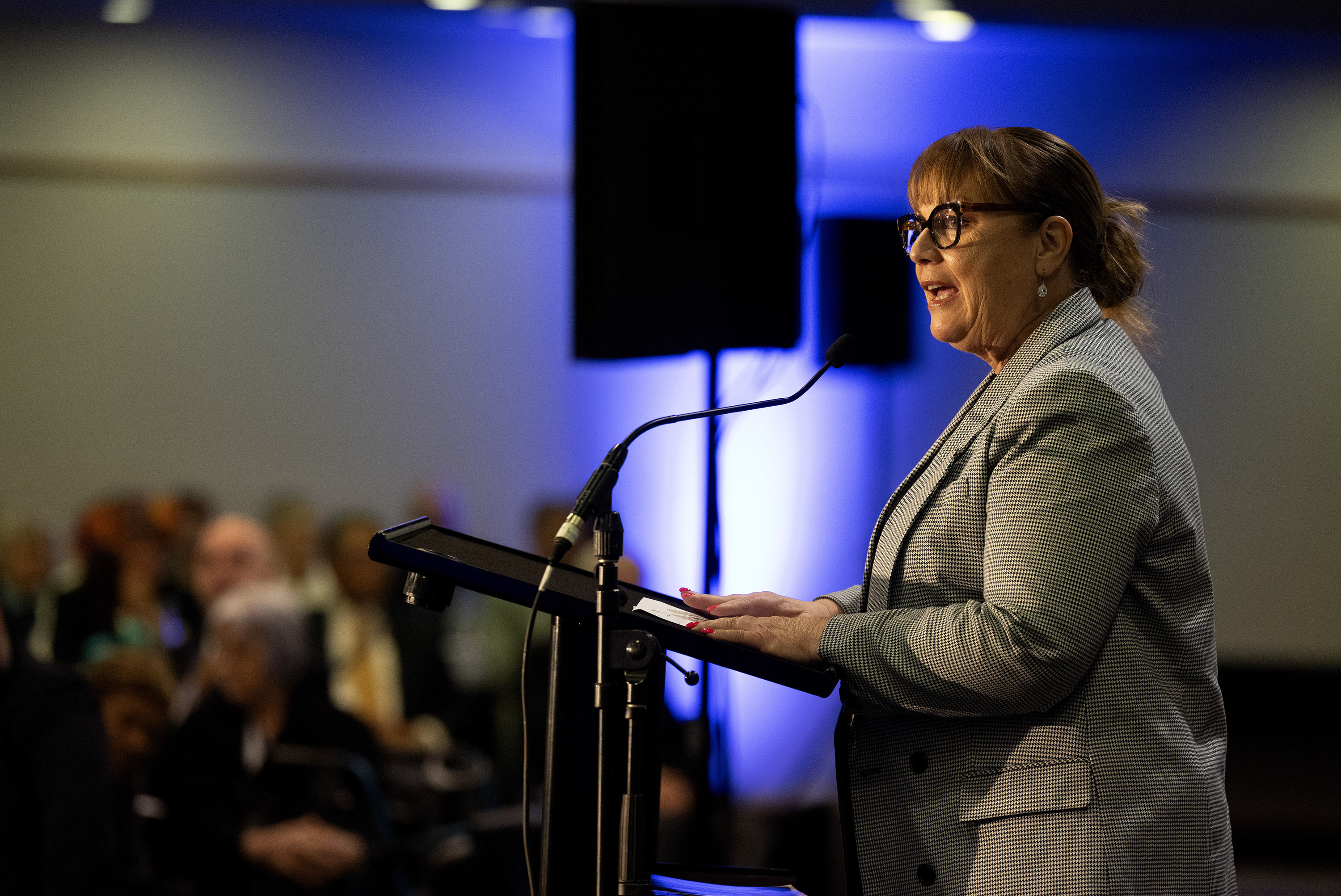
There is a level of scepticism within the membership about the new recruits. Many deserted the party after the devastating 2020 election result, and it was left to the few remaining to keep it alive.
This weekend’s party convention in Auckland will be a key test for the new candidates in convincing members of their commitment to the cause.
It’s understood most of the high-profile candidates are expected to make speeches, including Randell, who is being encouraged to expand on his business experience to avoid being typecast as simply a famous All Black.
How the candidates perform at the convention, and in the campaigning that follows, will be closely watched by the party hierarchy, who will hold off on deciding the party list until the Electoral Commission’s deadline of four weeks before the election to see which candidates thrive and which ones struggle or misstep.
They’ll have no shortage of an audience. More than 350 party delegates are expected to attend the convention, the most in NZ First history.
Peters will be hoping that number exceeds 1000 for his 2pm public meeting on Sunday, which doubles as his official campaign launch.
His speech is expected to take a more aspirational tone than in previous public meetings, amid wariness of the party appearing too divided from its coalition partners.
Recent jabs between Act and NZ First haven’t helped; Act made fun of NZ First skimming over the benefits of the India FTA, while Peters pumped oxygen into what David Seymour described as an “online conspiracy theory” that claims Henry’s candidacy was announced to distract from Act’s former president being sentenced in court.
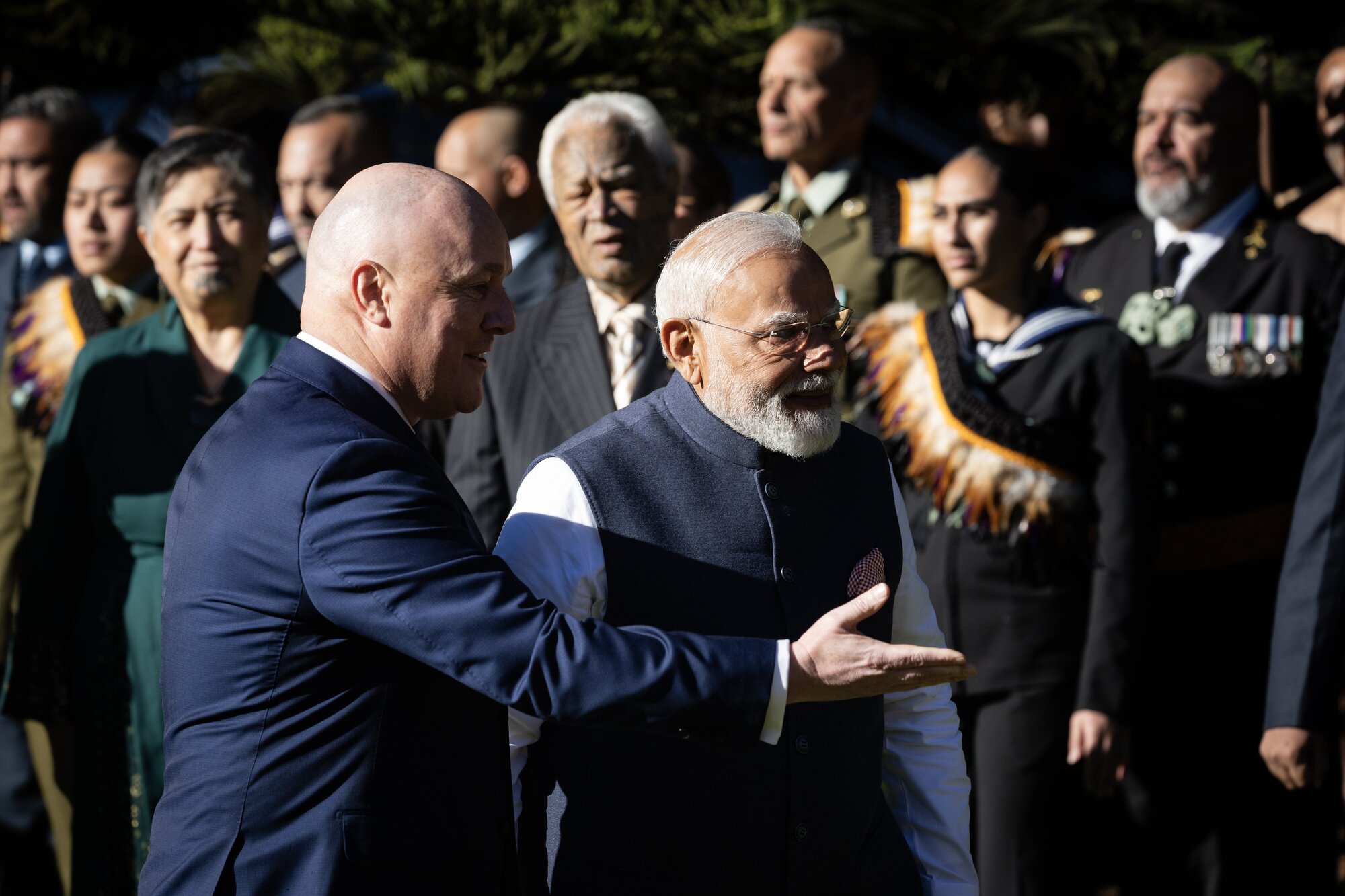
The FTA has been at the centre of coalition infighting in the past month, with Peters alleging that National ministers have been “covertly” changing immigration settings to come from the deal without telling India, something National rejects as misinformation.
Peters has also honed in on the deal’s investment clauses which say New Zealand will aim to increase investment in India by US$20 billion within 15 years. The Foreign Minister has insisted that India views this as a commitment, and could punish Kiwi exporters if it’s not achieved.
Prime Minister Christopher Luxon and Trade Minister Todd McClay have made a decent fist of hosing down Peters’ concerns, relying on the language in the agreement that says New Zealand will aim to reach that level of investment.
Unfortunately for them, that argument was undermined repeatedly by Indian Prime Minister Narendra Modi who, during his visit last week, described it as a commitment.
Modi’s comments give Peters an ideal platform to declare that his warnings are warranted and he will no doubt wag his finger at his coalition partners. However, delving into the weeds on yet-to-be-announced immigration settings could clash with an intended hopeful vision.
The ongoing Middle East conflict will likely feature, and its resulting impacts on New Zealand could form the basis of Peters’ policy announcement.
Aspiring candidates in the crowd will be hoping Peters can also offer them some more personal relief and continue the party’s momentum going into November 7.
Adam Pearse is the Deputy Political Editor and part of the NZ Herald’s Press Gallery team based at Parliament in Wellington. He has worked for NZME since 2018, reporting for the Northern Advocate in Whangārei and the Herald in Auckland.