Officials slam Justice Minister Paul Goldsmith’s 11th-hour suggestion for Treaty clauses
Justice officials have lambasted Justice Minister Paul Goldsmith’s proposals to amend legislation with Treaty of Waitangi provisions, especially his late suggestion for the Treaty to be no more than taken into account.
In its regulatory impact statement (Ris), the Ministry of Justice assessed this as having “no apparent benefits” while posing “significant risk to the Māori-Crown relationship, including because it is likely to be seen as intended to reduce the legislative Treaty protections available to Māori”.
It could have “wide-ranging impacts on Māori social, cultural, economic and environmental interests”, though the extent could not be quantified due to insufficient time “as this was a late proposal from the Minister of Justice”.
The National-New Zealand First coalition agreement committed to reviewing Treaty clauses in legislation over concerns references were too varied and difficult to interpret.
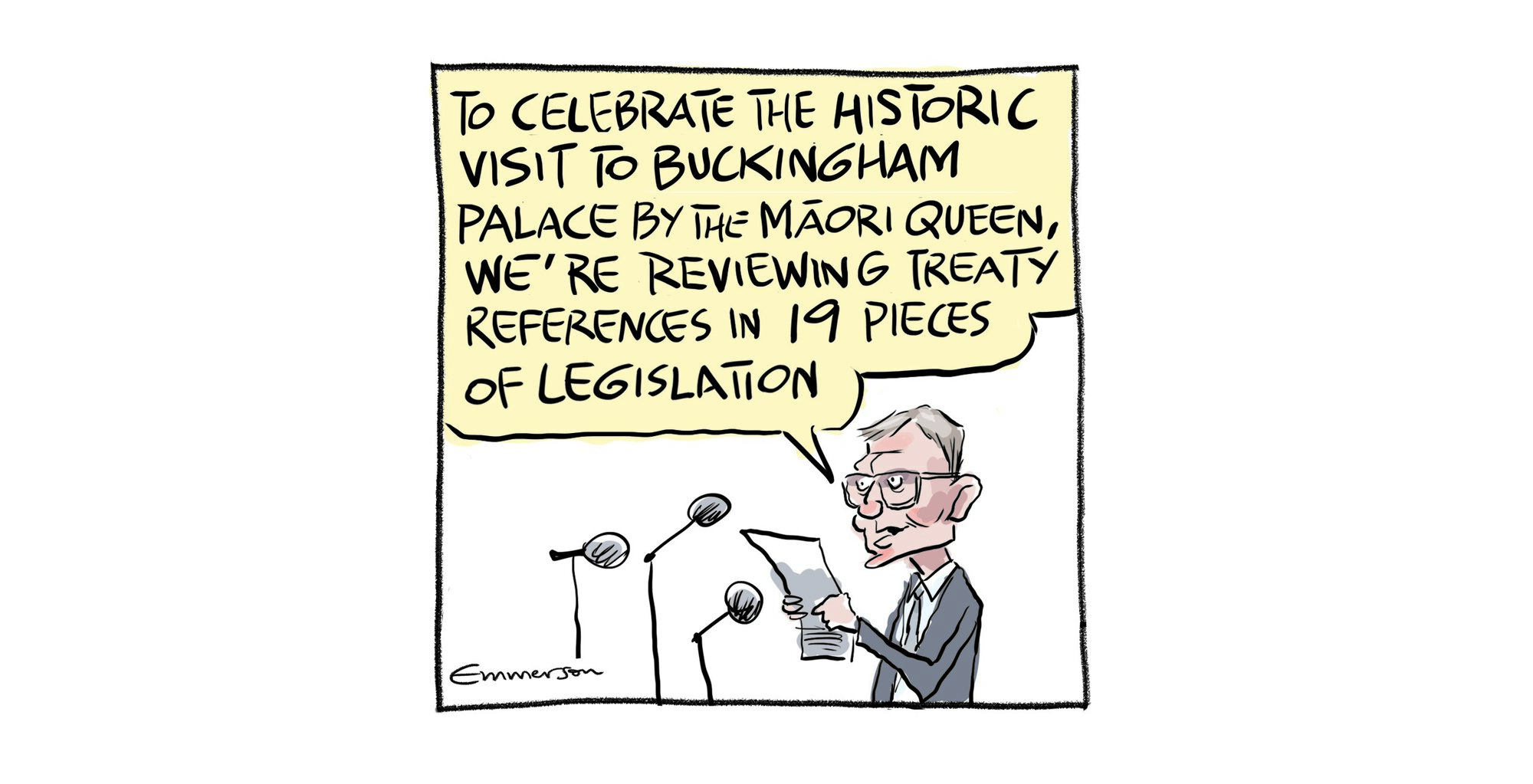
Last week, Goldsmith announced proposals to change or remove Treaty references in 19 pieces of legislation.
Two references would be amended, seven would be repealed, and 10 would have no higher standard than to “take [the Treaty] into account”.
“Sometimes it’s ‘honour’, or ‘have regard to’, or ‘give effect to’, or ‘take into account’,” Goldsmith said of the references.
“We need to create some consistency here, in the interests of increasing certainty and supporting compliance.”
‘Significant risks’
But officials said the variability of references to Treaty provisions in many cases was “by design”, while the current jurisprudence on what they mean is “now relatively settled”, meaning few Treaty-based judicial reviews were successful.
A Ministerial Advisory Group on the issue also pointed to the level of jurisprudence in not recommending the removal of references to Treaty principles, which would increase rather than decrease uncertainty.
Officials added that Goldsmith’s proposals, if implemented, could also invite new legal action, which would trigger litigation costs for the Crown.
This is because the proposals “may reduce legal certainty as it will become less clear how Parliament considers the Treaty to be relevant to each act”, the Ris said.
“Overall, the suite of proposals in the Cabinet paper carries significant risks due to the lack of consultation with Treaty partners and the potential for some proposals to negatively affect Māori interests. The potential benefits of the proposals are low and do not outweigh costs to the Māori-Crown relationship and Māori interests.
“There is limited evidence available to support the assumption that existing provisions are causing uncertainty and that the proposals would result in greater certainty. In all instances, repeal is likely to increase, rather than decrease, uncertainty. This is consistent with advice from the independent [Ministerial] Advisory Group to the review.”
The lack of engagement with Māori for the ministry’s consultation was “directed” by Goldsmith, the Ris said.
The Waitangi Tribunal has said this is inconsistent with the principle of partnership, while the proposals would impact Māori treaty rights as well as their rights to access justice.
In his Cabinet paper, Goldsmith proposed consultation with the National Iwi Chairs Forum. A bill to enact the changes would also go through a select committee process.

“I consider the opportunity to provide input during select committee, and the targeted engagement during drafting, will be sufficient to ensure any views are considered before enactment.”
The amendments and removals relate to specific sections within the different pieces of legislation.
The two laws with references being amended are:
The seven laws with references being repealed are:
The 10 laws where references are being specified to be taken into account are:
Goldsmith, in his Cabinet paper, said a “take into account” provision was better than to “give effect” to Treaty principles. The latter failed to “promote the balanced consideration of all relevant factors in decision-making”.
The Government initially intended to assess 28 pieces of legislation in its review but had reduced the number to 19.
Acts being reviewed separately are:
The Government had also agreed references to the Treaty should refer to both the English and Māori texts and should be used “in all relevant provisions” going forward.
Derek Cheng is a senior journalist who started at the Herald in 2004. He has worked several stints in the press gallery team and is a former deputy political editor.