Pharmac chairwoman Paula Bennett gets 63% pay increase approved by David Seymour
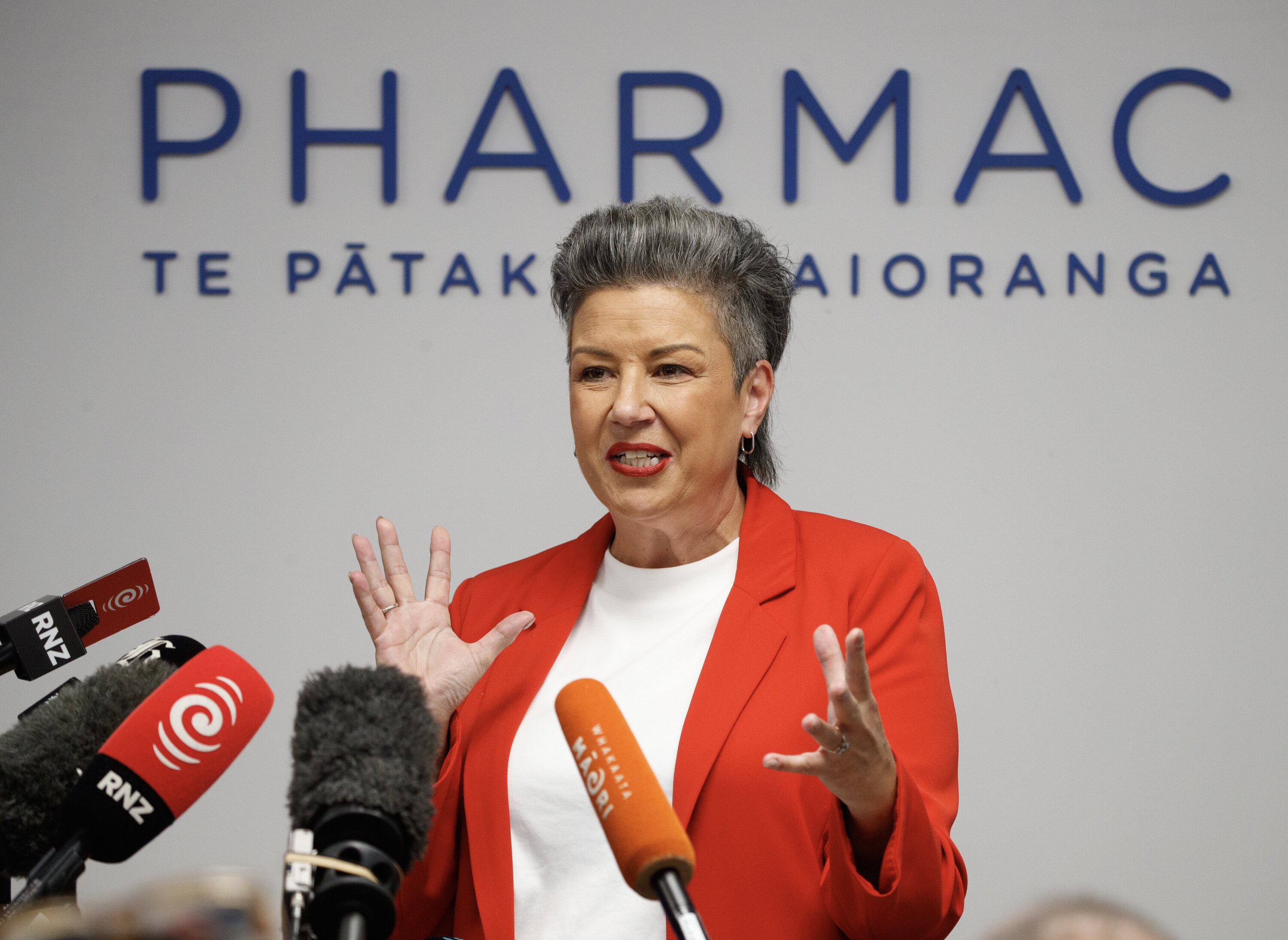
David Seymour is standing by his decision to sign off a 63.2% pay rise for Pharmac chairwoman Paula Bennett.
Bennett, a former National Party Cabinet Minister and Deputy Prime Minister, is set to see her pay rise from $66,000 a year to $104,360 a year, backdated to September 2025.
The Ministry of Health confirmed the decision was approved by Seymour, the Associate Health Minister, in his capacity as the minister in charge of the drug-buying agency.
Seymour said he had compared the fees for the agency’s board with those of similar organisations in the private sector and found the Pharmac role was paid a third of what similar chairs in private firms were receiving.
“With this increase, the Pharmac chair will be paid half as much as a similar chair of a private company. It is important we get good people running critical organisations like Pharmac. I think we’ve struck a good balance here,” Seymour said.
The Ministry of Health said Pharmac’s fees will be paid from the agency’s operating budget and backdated to September 1, 2025, in line with the Cabinet Fees Framework.
A proactively-released Ministry of Health briefing to Seymour on the drug-buying agency’s fees review shows the ministry recommended the 63.2% rise for the chairwoman and other members and a 66.3% increase for deputy chairman Dr Peter Bramley.
The briefing quoted a Public Service Commission review that found a “substantial gap” between private and public sector board fees, with Crown entity board fees about 30-50% of comparable fees in the private sector.
Officials said allowing increases were designed to “narrow the gap” while maintaining an “appropriate public sector discount”.
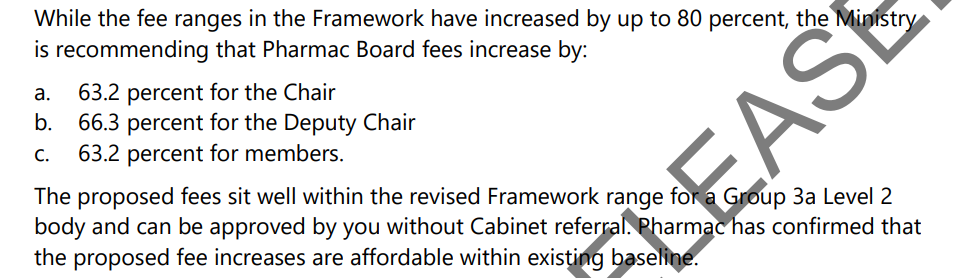
“For Pharmac, the revised settings allow fees to better reflect the sustained scale, complexity, and risk profile of the organisation, while remaining materially below the fees paid for private sector governance roles.”
The officials said they had looked into the scale, functions, and complexity of Pharmac, including the governance of $1.76 billion to purchase medicines.
“The proposed board fee increases reflect these sustained governance demands, Pharmac’s current operating budget and its financial and non-financial performance, and the need to attract and retain suitably qualified and experienced governors, while remaining below private sector organisations of comparable scale.”
The fees for the deputy chair rose from $41,250 to $65,250 a year. Fees for a board member rose from $33,000 to $52,200 a year.
The ministry proposed the increases be backdated to September 1, 2025, to reflect when Cabinet agreed to the framework to lift fees.
Late last year, the Government supported changes to the Cabinet Fees Framework, allowing fees of governance boards to be raised by 80%.
At the time, Prime Minister Christopher Luxon said public service director fees had gotten “out of whack” with those in the private sector, and stressed the importance of attracting talent on boards.
Prior modelling has suggested the changes allowing for fee increases could cost $11 million.
Bennett has been Pharmac’s chairwoman since May 2024.
Azaria Howell is a multimedia reporter working from Parliament’s press gallery. She joined NZME in 2022 and became a Newstalk ZB political reporter in late 2024, with a keen interest in public service agency reform and government spending.